



Measuring student progress based on subject mastery — rather than amount of instructional time — will be key to the future of Wyoming’s education system. The state should also double down on addressing the mental- and behavioral-health challenges plaguing students and educators.
Those are among the takeaways from Gov. Mark Gordon’s Reimagining and Innovating the Delivery of Education Advisory Group’s final report, released Monday.
The efficacy of government-funded studies has long been scrutinized, and how the recommendations will translate into policy or classroom changes remains to be seen. The RIDE Advisory Group recommends the governor works with the superintendent of public instruction and state board of education to develop implementation plans, which it acknowledges will “require relatively fundamental changes to the state’s education system.”
“It is expected that those plans will need to address statewide definitions of competency; provide guidance to school districts; support education professionals in delivering student-centered learning; and communicate clearly to families and the public about just what the change means,” a press release from Gordon’s office said.
History
Gordon established RIDE in May 2021 to study and develop recommendations for elevating Wyoming’s K-12 education system. The 11-person committee consisted of three state legislators, two Gordon staffers, two business owners, one educator, one school board trustee/parent, one education advocate/parent and Laramie County attorney John Masters, who served as chairman.
The group surveyed more than 7,000 stakeholders and held 17 listening sessions to gather feedback from the state. Most survey respondents identified themselves as parents or guardians. Nearly 60% of respondents said they do not believe children are being adequately prepared for the future, and the themes for improving the preparation of children identified by the most respondents included “learning outcomes and expectations” and “class content and structure.”
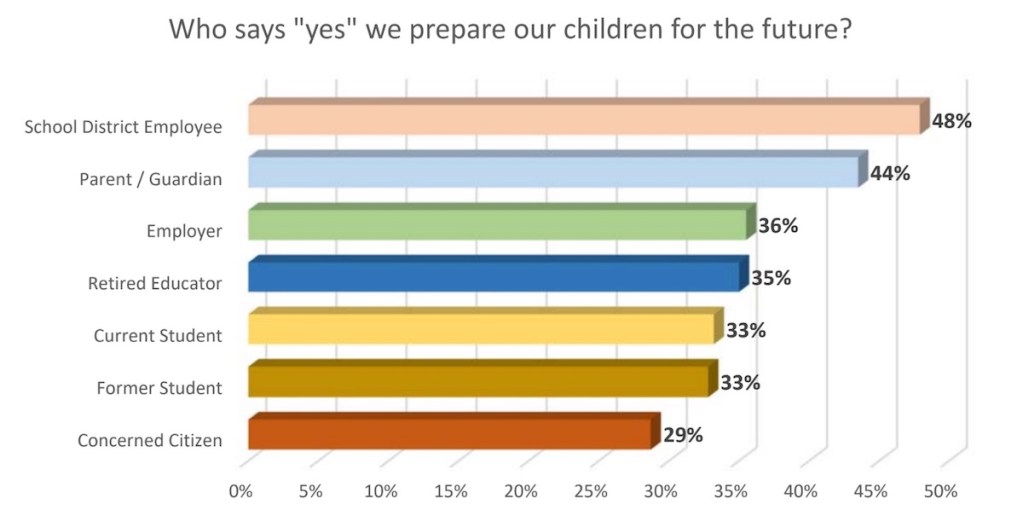
Based on the information it gathered, RIDE proffered two top-line recommendations in its Monday report:
• Students should be able to progress through academic content as soon as they are ready; advancement should be a product of mastery, not seat time. This shift to student-centered learning, the report said, “should allow children more freedom and control of their educational experience.”
• Students should have more opportunities for career and technical education, regardless of whether they want to attend a four-year college. “A strong focus on pathways leading to high skill, high wage, and high demand employment will benefit students – and the state’s economy,” the report read.
Other key priorities for the education system include improving mental health supports and raising kindergarten readiness, according to the report.
Standout ideas
Student-centered learning breaks from the familiar model in which students are assigned to a grade based primarily on their age and spend fixed amounts of time to complete required class material before progressing. Yet, the report states, “it is well known that students learn at different speeds.”
What if, the report posits, “each student could progress at their own pace, moving forward when they have mastered the material and getting additional time and support on areas of need?”
More than any other issue, the report states, this topic energized stakeholders involved in the process, “and the Advisory Group sees it as critical to the future of Wyoming’s education system.”
The group also heard stories about students and education professionals across the state struggling with mental illness, the report said, and more support for these resources can be transformative for Wyoming.
“Simply put, this is a capacity challenge, and more capacity will be needed for schools to be successful,” the report said. “It will take real resources to attract and retain professionals in roles that make a difference in students’ lives.”
While moving toward student-centered learning is a years-long process, the report said, “addressing the mental health crisis and disruptive behaviors demands urgent action.” RIDE suggested the governor and Legislature ensure schools have the resources they need to address the crisis.
Wyoming is trying to do the right thing for students. Sounds like a great idea. Hope it comes to fruition
Core Knowledge has been around for decades, and is very successful.
Good piece. I hope they follow through with specific actions, goals, objectives, etc.
Since about 2010 the state cut support for community mental health by about half in real dollars. In a position paper, the association of mental health centers warned that this would lead to increased suicides, increased incarceration, and increased serious emotional and behavioral problems in children/students. All of these predictions have sadly been realized in Wyoming. Community mental health centers have provided the mental health services schools need, but currently lack the capacity to serve the need. Addressing this problem cannot be met without substantial restoration of funding for mental health resources.
“What if, the report posits, “each student could progress at their own pace, moving forward when they have mastered the material and getting additional time and support on areas of need?””
AND…..
WY: 21-4-302. Age for registration in first grade and kindergarten; preschool programs.
(a) A pupil may register in the first grade in the public schools of this state in the year in which his **SIXTH** birthday falls on or before August 1, or September 15 if the child started kindergarten pursuant to an approved request under W.S.21-3-110(a)(xxxviii).
Change the starting age to 7 for 1st grade.
Why age 7? I started ay age 5, after kindergarten, and went on to be successful. Age is not the criteria–preparation and maturity are the determining factors.