

As I attempted to show in Part 1, several common claims made by abortion rights proponents to support the pro-choice view miss their mark when clarified and subjected to further scrutiny. Continuing this theme, I’ll critically examine several more common pro-choice arguments and demonstrate that they are equally unpersuasive.
Opinion
You’re only pro-birth and not pro-life
This claim wrongly assumes that opposing abortion commits someone to specific views or additional obligations regarding care for others. Individuals may be pro-life and still differ as to the proper sociopolitical roles and policies best suited for cultivating and preserving a well-ordered society. As an analogy, abolitionists were not committed to housing freed slaves or agreement on how best to care for them upon release to be consistent in their demand to abolish slavery. This claim also ignores the massive impact of pro-life pregnancy centers across the United States that provide a huge amount of resources to new mothers and their families, the Charlotte Lozier Institute found.
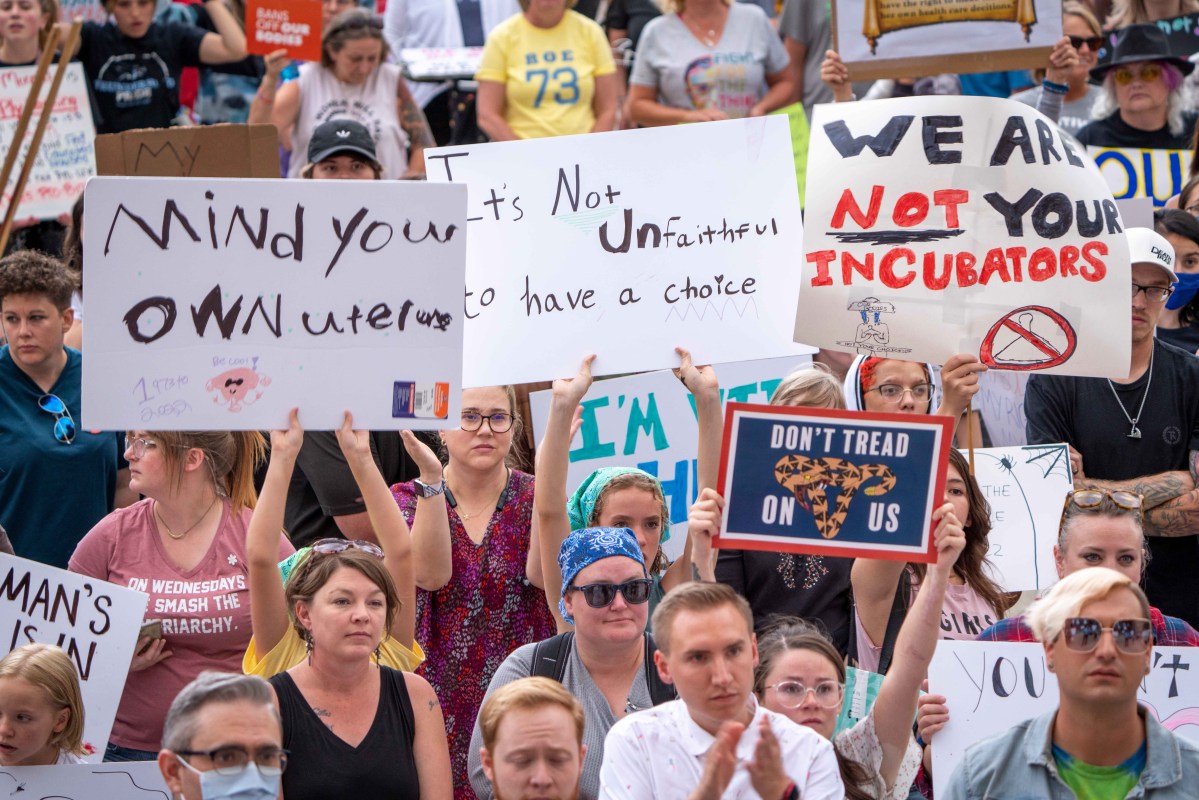
No uterus, no opinion
If taken literally, this view would exclude the opinions of women who, due to hysterectomy or genetic defect, do not have a uterus. Taken to exclude only the opinions of men, the claim does not fare any better. First, if the opinions of men regarding abortion are inadmissible in public discourse, then this includes the opinions used to substantiate the decision in Roe v. Wade with a SCOTUS composed entirely of male justices, and in Casey v. Planned Parenthood with a SCOTUS composed of eight men and one woman. This would mean that the decisions are void, and there was never any legitimate constitutional right to abortion. Second, even if the opinions of men are excluded, pro-life women exist, and they hold identical views to their male counterparts, so the can has only been kicked down the proverbial road. Finally, as just mentioned, pro-life views are not sex-specific, which means men and women can, and often do, hold identical views, so denying men a seat at the table does nothing by itself to refute the pro-life position or strengthen the pro-choice position.
My body, my choice
This claim rightly emphasizes the importance of bodily autonomy while arriving at false conclusions regarding abortion. Bodily autonomy presumably belongs to every individual with a body. If a woman has a right to control her own body, then this same right also belongs to the fetus. When two individuals are involved the circumstances and additional considerations must be further evaluated to determine the rightness or wrongness of acts performed by one that affect the other. This is precisely the case with abortion because a woman is not making a decision about her body alone, but about her body and the body of another.
Rights are either natural or legal and ordered hierarchically. Circumstances determine when new rights are granted, how rights are surrendered voluntarily or involuntarily, or when rights are superseded by those more fundamental. For example, the right to private property ownership will yield to the right to life in a scenario where a person uses the vehicle of another without consent to save the life of someone else. Under normal conditions the theft would be wrong, but because of the circumstances the right to private property ownership is temporarily overridden.
Because the right to life is the most fundamental of all natural rights—indeed, no other natural rights could be recognized or legal rights conferred without an individual first being permitted to exist—bodily autonomy will, under certain circumstances, be restricted or superseded, especially in cases where the right to life is in question. This is something nearly everyone recognizes. Imagine the following scenario: A medical emergency occurs in a public place where a person is in cardiac arrest. Now imagine that someone nearby is a certified paramedic, and they immediately begin administering CPR. The victim is incapable of granting or withholding consent, so the paramedic has violated the victim’s bodily autonomy while attempting to preserve their life, correctly understanding that this violation is permissible under the circumstances. Similarly, while the right to bodily autonomy of both the mother and fetus are incredibly important, safeguarding the right to life possessed by the fetus will rightly restrict the mother’s exercise of autonomy to procure an abortion because the former is more fundamental than the latter. Preserving this hierarchy of natural rights is indispensable to sound moral reasoning and just legislation.
Abortion is health care
It’s clear this claim is false when we recall the definition of abortion provided in Part 1 of this column. What tends to happen is that pro-choice proponents will often lump together different meanings of the term “abortion” and use it as a single term. For example, a miscarriage is sometimes referred to as a spontaneous or natural abortion, while procedures to save the life of a pregnant woman during a medical emergency are sometimes referred to as therapeutic abortions. In the case of miscarriage, the fetus is deceased and you cannot intentionally kill what is no longer living, so this does not qualify as an abortion in the narrow sense. While scenarios involving saving the life of the mother are certainly more complex — and space dictates a more thorough discussion at another time — procedures utilized do not necessitate intentionally killing the fetus, so they will not qualify as abortions in the narrow sense either. What this means is that “abortion” is only ever legitimately health care when the term is used in the broad sense to cover either miscarriage or certain procedures to save the life of the mother, but neither is what the pro-life proponent has in mind as a human rights violation and what pro-life legislation intends to prohibit. In no sense, then, is abortion in the narrow sense legitimate health care, but pro-choice proponents rely on this equivocation when claiming otherwise.
While much more could be said in response to the claims analyzed in parts 1 and 2, I believe this column sufficiently neutralizes them all. My hope after writing this is that pro-choice readers will reevaluate their views and the support used for them, and that those on the fence will begin to take more seriously the pro-life position. In the end, more charitable engagement and good faith dialogue will lead to better understanding on all sides, and that sounds like a win for everyone in Wyoming.