This is part 1 of a two-part series on Wyoming’s suffrage history. Part 2 will explore Wyoming’s role in the 19th Amendment and beyond.
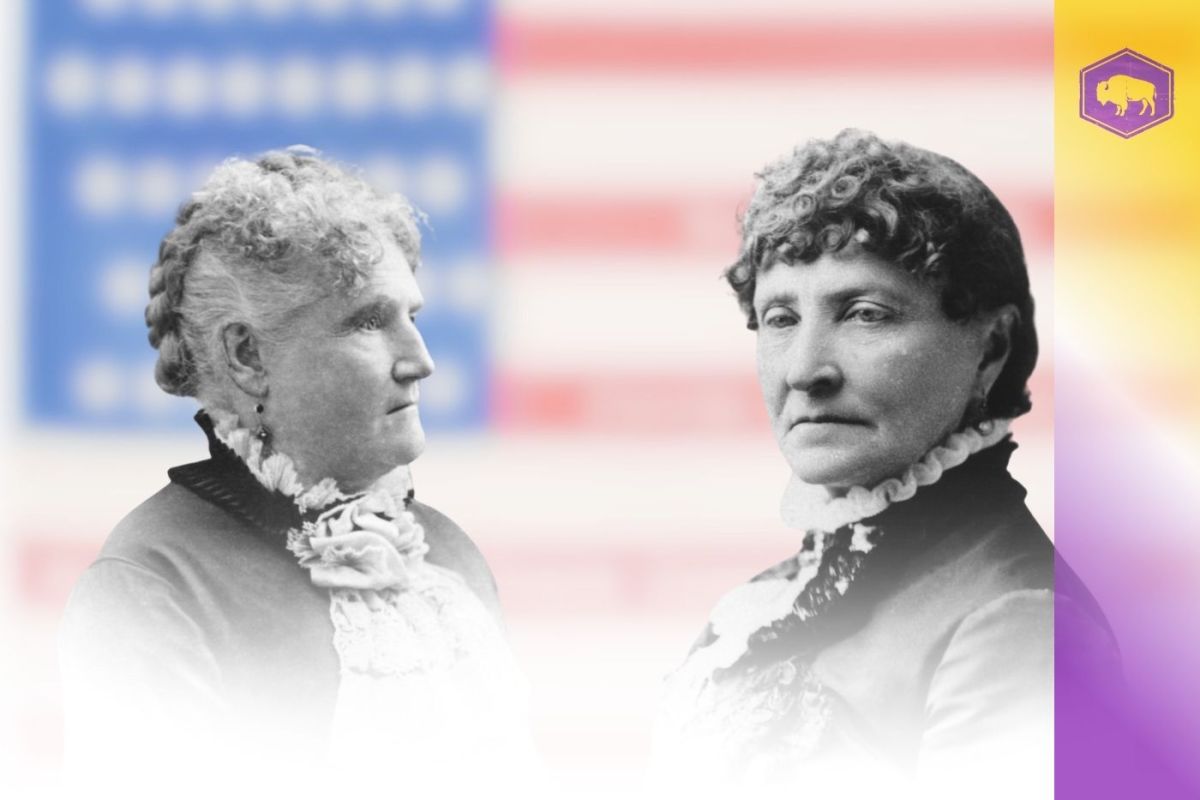
When Esther Hobart Slack’s husband died in 1843, he left her with a 7-month-old infant and a tricky legal situation. New York law prevented her from inheriting her late husband’s land and money despite his will explicitly leaving his estate to Esther and their son. She briefly worked as a milliner before she was compelled to move to Illinois, where she could lay claim to the lands in her late husband’s will. While laws restricting women’s inheritance were more liberal in Illinois, Esther still faced difficulties as a widowed woman, and in 1846 she married John Morris and gave birth to twins in 1851.
In 1868, news of the gold fields in South Pass City, Wyoming lured the family West. While Esther’s oldest son and her husband went ahead to the new territory, she spent 10 months in New York City with her nieces, Lib and Julia Browne. During their stay in New York, Esther’s nieces began working as clerks for the weekly women’s suffrage publication, The Revolution. Lib’s work impressed Susan B. Anthony so much that she became Anthony’s private secretary. Esther’s neighbors and friends recalled that when she arrived in South Pass City in May 1869, she talked all the time about women’s suffrage, “her great hobby.”
In 1862, Amalia Nichols’s husband abandoned her for the second time. A woman abandoned by her husband in the 1860s had very few options. In fact, the first time that Amalia’s husband abandoned her in Nebraska Territory, she had to borrow money to return home to her father in Michigan. Amalia was determined not to go home again.
Upon moving to Colorado Territory, Amalia had more opportunities than she would have back in the states. She filed for divorce and supported herself by raising chickens and giving out loans. In 1864, she married one of her business partners, Morton E. Post. He relocated to Cheyenne, Wyoming, in 1867 to establish a store, and Amalia joined him there in 1868.
The hardships faced by Esther Morris and Amalia Post were typical for women of their time. Under the doctrine of coverture, women did not have their own legal identity — they were “covered” by their husband. This legal framework meant a woman’s wages, property, children and even her own body belonged to her husband. There were, of course, loopholes, especially in the West. Vestiges of these policies can still be found today, but they started to truly unravel in Wyoming shortly after Amalia and Esther moved to the territory.
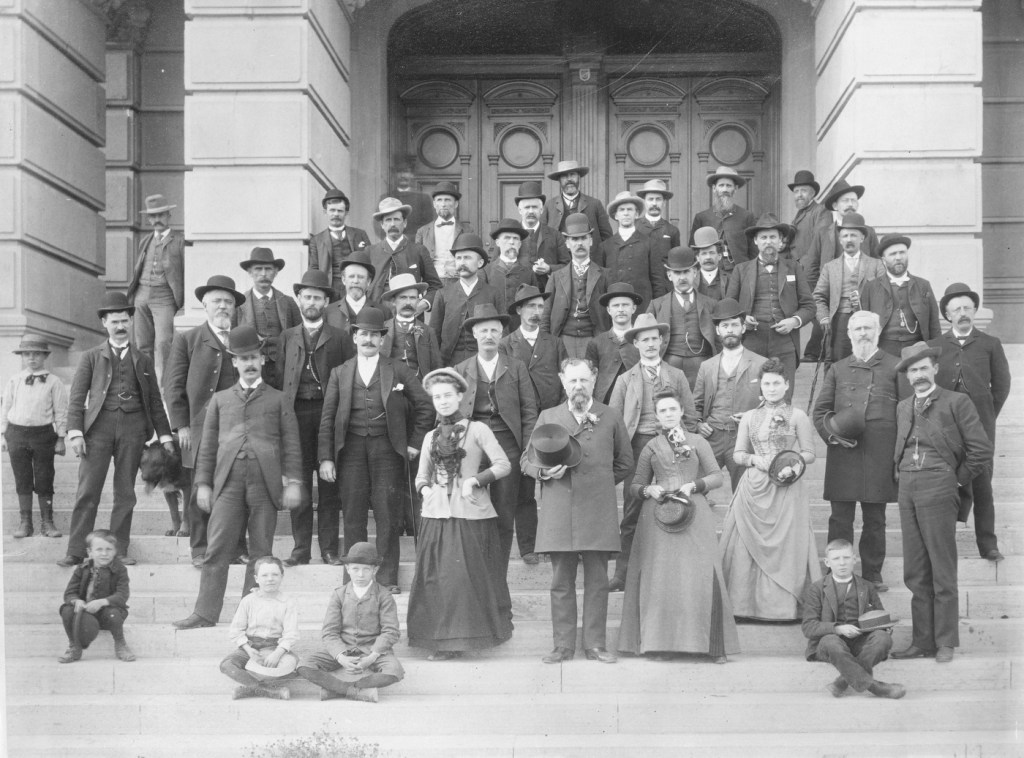
On Dec. 10, 1869, territorial Gov. John Campbell signed a bill into law recognizing women’s right to vote and hold office. In 1902, the author of the suffrage law, William Bright, gave credit for the bill to Esther Morris and her “great hobby” of talking about suffrage. He shared, “Esther Morris had loaded me down with woman suffrage before I went to the Legislature. I had never thought much about it before knowing her.” It wasn’t the only law established by the first territorial Legislature that untangled coverture. The Legislature also passed a law “protecting married women in the enjoyment of their property and the fruits of their labor,” signed into law on Dec. 3. As part of a broader law setting up school districts and education regulations, one section read, “All teachers shall be paid according to their ability, and the work done by them, and no discrimination shall be made on account of their sex.” (Despite this early head start, in 2022 Wyoming women working in education made 85 cents to every dollar made by men working in the same field, according to the latest wage gap report by the Wyoming Survey Analysis Center at the University of Wyoming.)
Esther Morris became the first test of the new law allowing women to hold office. In February 1870, Esther entered the Miners Exchange Saloon to fill out an application for Justice of Peace. The previous justice resigned in December, perhaps in protest of the new suffrage law, leaving an unexpired term. The three county commissioners tasked with appointing a new justice split their vote on Esther: the newspaper editor backed Esther, the saloon owner opposed her, and her eldest son’s employer cast the deciding vote, making her the nation’s first woman judge. She served for eight and a half months, mostly presiding over cases of assault and battery or debt suits. National newspapers sensationalized her service, fictionalizing what she wore to court on her first day and claiming she performed marriages. Some papers even claimed she stepped down from the bench to give birth to a 10-pound baby boy, or invented a scene of her husband begging her to come home to clean and nurse a baby. The truth was that, at 55, Esther proved herself to be a capable and competent judge with none of her cases overturned, while still cooking dinner and washing dishes for her adult sons and husband. Her success was celebrated by national suffragists.
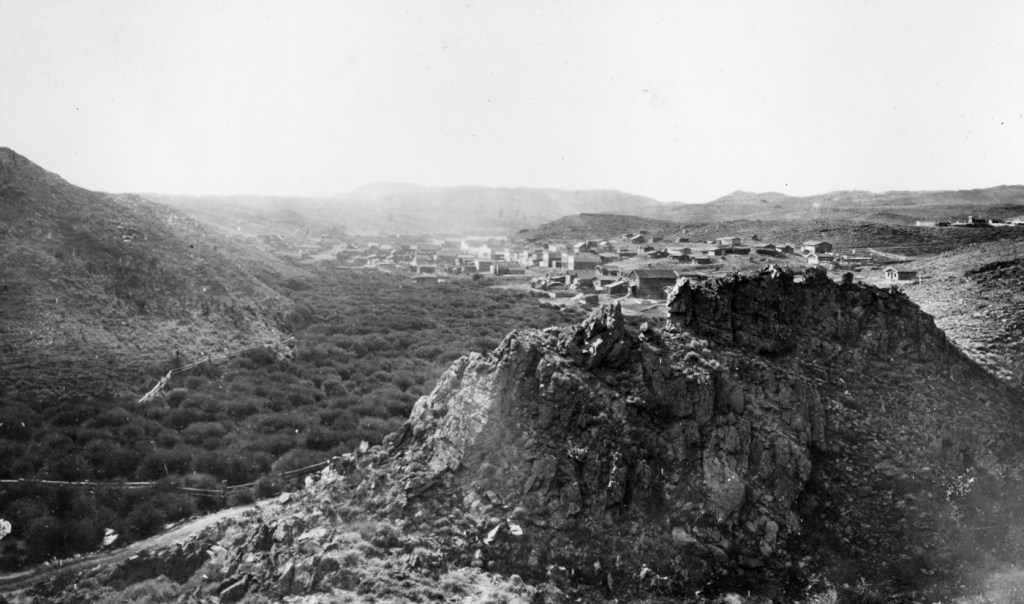
A month after Esther took the bench, Territorial Supreme Court Justice John Howe called women to the jury in Albany County — another national first. Addressing the “ladies and gentlemen of the jury,” Howe assured the women that they would “not be driven by the sneers, jeers and insults of a laughing crowd from the temple of justice, as your sisters have from some of the medical colleges of the land.” Women continued to serve on juries in Laramie and Cheyenne until Justice Howe left the bench in 1871. Amalia Post served on several juries during this time — even serving as foreman for a murder trial in 1871. She wrote about the experience to her sister, “There is no fun in sitting on a jury where there is [sic] murder cases to be tried.” While it was difficult, Amalia was proud of her service.
Amalia took advantage of the other laws passed by the 1869 Legislature — she invested in real estate and even owned a flock of sheep. She built up capital in her own name, ensuring that she would never again have to rely solely on a man for survival. She bragged to her sister about her new home, “I suppose you are aware that Women can hold any office in this territory. […] I am intending to vote this next election…”
In January 1871, Susan B. Anthony visited Cheyenne and called on Amalia. Later that month, Amalia shared her experiences with a crowd of 5,000 people at the National Woman Suffrage Association convention in Washington, D.C. Amalia continued to advocate for suffrage, both at home and on the national stage. She was credited with petitioning Wyoming’s governor to veto the 1871 attempt to repeal the suffrage law, as well as serving more than 20 years as one of the vice-presidents for the National Woman Suffrage Association starting in 1873. When Morton Post served as Wyoming’s territorial delegate to the U.S. Congress from 1881 to 1885, Amalia spent time in DC continuing to advocate for suffrage.
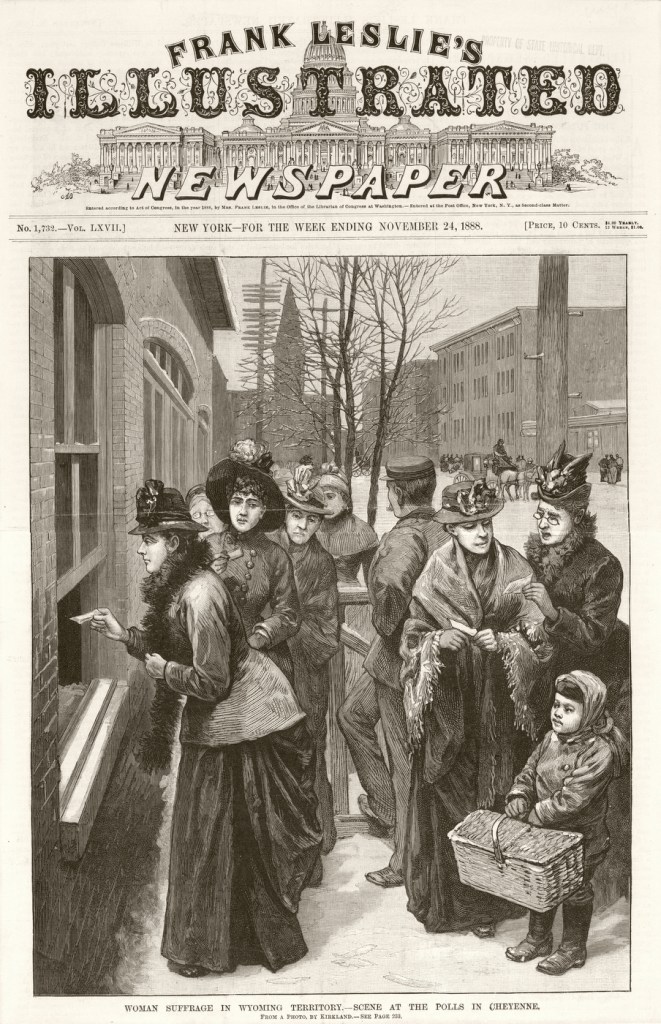
In 1889, Wyoming Territory began to prepare for statehood. After Gov. F.E. Warren called for a constitutional convention, the women of Cheyenne organized a rally to call for the election of pro-suffrage delegates. Amalia presided over the rally of 100 women, giving an aspirational speech: “May we all hope that woman will be accorded an honored place in building up and maintaining the Great State of Wyoming.” Esther, who had moved to Cheyenne in 1882, also appears in the newspapers advocating for both suffrage and statehood.
While there was a delegate who proposed leaving woman suffrage out of the constitution and presenting it to the people of Wyoming as a separate proposition, the idea had very little support. So many delegates gave speeches in defense of suffrage that it was decided they would be wasting their time to continue the debate. The constitution, ratified in November 1889 by the people of Wyoming, was the first written constitution recognizing woman suffrage and guaranteeing political equality without distinction of race, color or sex.
The vote to admit Wyoming into the Union was close, with 139-127 in the House and 29-18 in the Senate. In Congress, minority Democrats, wary of Wyoming’s Republican leanings, tried to keep the territory out by ridiculing its suffrage law and questioning elections decided by women voters. Wyoming entered the Union anyway, constitution intact, on July 10, 1890.
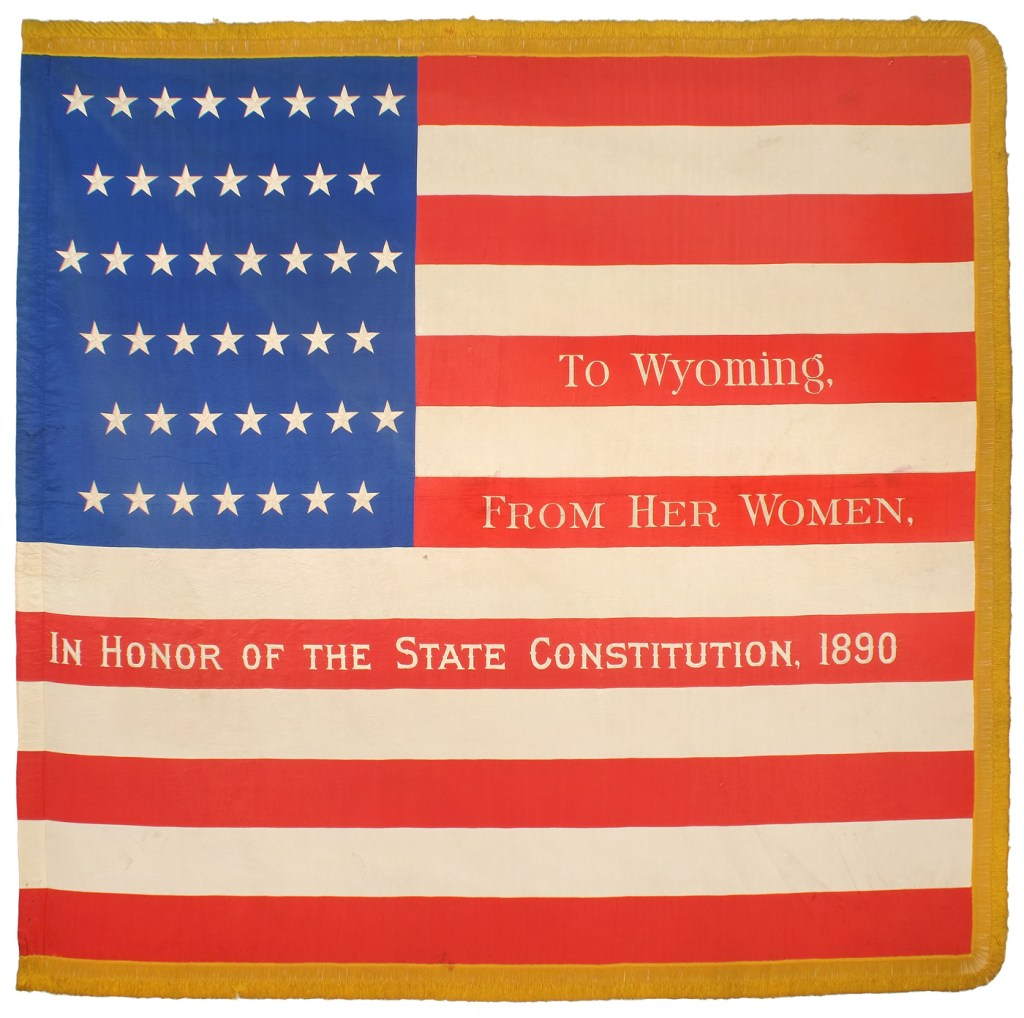
During the statehood celebration on July 23 in Cheyenne, both Esther and Amalia were honored. Esther presented Gov. Warren with a 44-star flag on behalf of Wyoming’s women. Shortly after the exchange, the president of the Wyoming Constitutional Convention, Melville C. Brown, presented the new state constitution to Amalia, the representative of Wyoming’s women.
From 1869 to 1890, Esther and Amalia became national inspirations for their remarkable accomplishments. Also, both women were married to men who opposed women’s rights and suffrage. When it came to voting, Amalia wrote to her sister that “Mr. Post [is] very indignant as he thinks a Woman has no rights.” Esther’s husband John had a reputation as an abusive drunkard, which sparked rumors of Esther throwing him in jail during her time as justice. The records show that in the year after she stepped down from the bench, she filed an assault and battery suit against him, which was later dropped due to the parties resolving the matter outside of court. Even accomplished women like Esther and Amalia continued to face discrimination and deal with domestic violence. Still, the experiences of suffrage in Wyoming and the examples set by Esther and Amalia inspired the rest of the nation to strive toward equality.
Related articles on WyoHistory.org
Esther Hobart Morris, Justice of the Peace and Icon of Women’s Rights
Amalia Post, Defender of Women’s Rights
Right Choice, Wrong Reasons: Wyoming Women Win the Right to Vote
Women’s Suffrage in the Wyoming Constitution
“Then I breathed freely:” Black Women Vote in Wyoming, 1870
Wyoming Becomes a State: The Constitutional Convention and Statehood Debates of 1889 and 1890 and Their Aftermath
Women on the Jury: Wyoming Makes History Again
“Those Damn Women:” Louise Graf and Women on Wyoming Juries
To ‘Hold a More Brilliant Torch:’ Suffragist and Orator Theresa Jenkins
A List of Firsts for Wyoming Women
Wyoming Lawyer Melville C. Brown: A Man for His Time
Francis E. Warren: A Massachusetts Farm Boy Who Changed Wyoming
Bibliography
- Notes from Janet Sherlock Smith interview, circa 1920. Box 29, Folder 21, Grace Raymond Hebard Papers, American Heritage Center, University of Wyoming.
- Mr. Bright’s Speech, “The Woman’s Journal”, Vol. 33, no. 9, March 1, 1902, Schlesinger Library, Radcliffe Institute, Harvard University.
- Council Journal of the Legislative Assembly of the Territory of Wyoming, First Session, Convened at Cheyenne, October 12, 1869. (Cheyenne: S. Allan Bristol, Tribune Office, 1870), page 50, page 123.
- Chian Jones Ritten and Anne Alexander, The Wage Gap in Wyoming in 2022: How Gender, Race and Ethnicity Affect Pay Equity, (Laramie: Wyoming Survey Analysis Center (WYSAC) at the University of Wyoming, 2022), page 13. The report was funded by the Wyoming Women’s Foundation (WYWF), in partnership with the Wyoming Council for Women (WCW) and the Equality State Policy Center (ESPC).
- Kathryn Swim Cummings, Esther Hobart Morris: The Unembellished Story of the Nation’s First Female Judge, (Glendo, WY: High Plains Press, 2019), page 112.
- Docket of Esther Morris, Justice of the Peace, Sweetwater County Wyoming Territory, 1870. Courtesy of Wyoming State Archives, Division of Cultural Resources, Department of State Parks and Cultural Resources.
- The Daily Phoenix. (Columbia, S.C.), 28 Oct. 1871; Urbana Union. (Urbana, Ohio), 30 March 1870. Chronicling America: Historic American Newspapers. Lib. of Congress.
- The Daily Boomerang (Laramie, WY) 14, Oct. 1899, Page 4, Column 4, Wyoming Newspaper Project, Wyoming State Library and the University of Wyoming.
- Grace Raymond Hebard, The First Woman Jury, The Journal of American History, Volume 12, Number 4, 1913, Box 21, Folder 5, GRH Papers, AHC, UW.
- March 1871, April 4, 1870, Amalia Post to her sister Ann. Box 1, Folder 11, Morton E. Post Family Papers, American Heritage Center, University of Wyoming.
- Frances E. Willard and Mary A. Livermore, Woman of the Century: Fourteen Hundred-Seventy Biographical Sketches Accompanied by Portraits of Leading American Women in All Walks of Life, (Buffalo: Charles Wells Moulton, 1893) page 584.
- Cheyenne Daily Leader, Volume 22, June 16, 1889; Wyoming Newspaper Project, Wyoming State Library and the University of Wyoming.
- October 29, 1889, page 3, Cheyenne Daily Leader, Wyoming Newspaper Project, Wyoming State Library and the University of Wyoming.
- Journal and Debates of the Constitutional Convention of the State of Wyoming, (Cheyenne, WY: The Daily Sun, Book and Job Printing, 1893) pages 344-359.
- Phil Roberts, “Wyoming Becomes a State: The Constitutional Convention and Statehood Debates of 1889 and 1890 and Their Aftermath,” WyoHistory.org, November 8, 2014. Accessed June 30, 2026.