

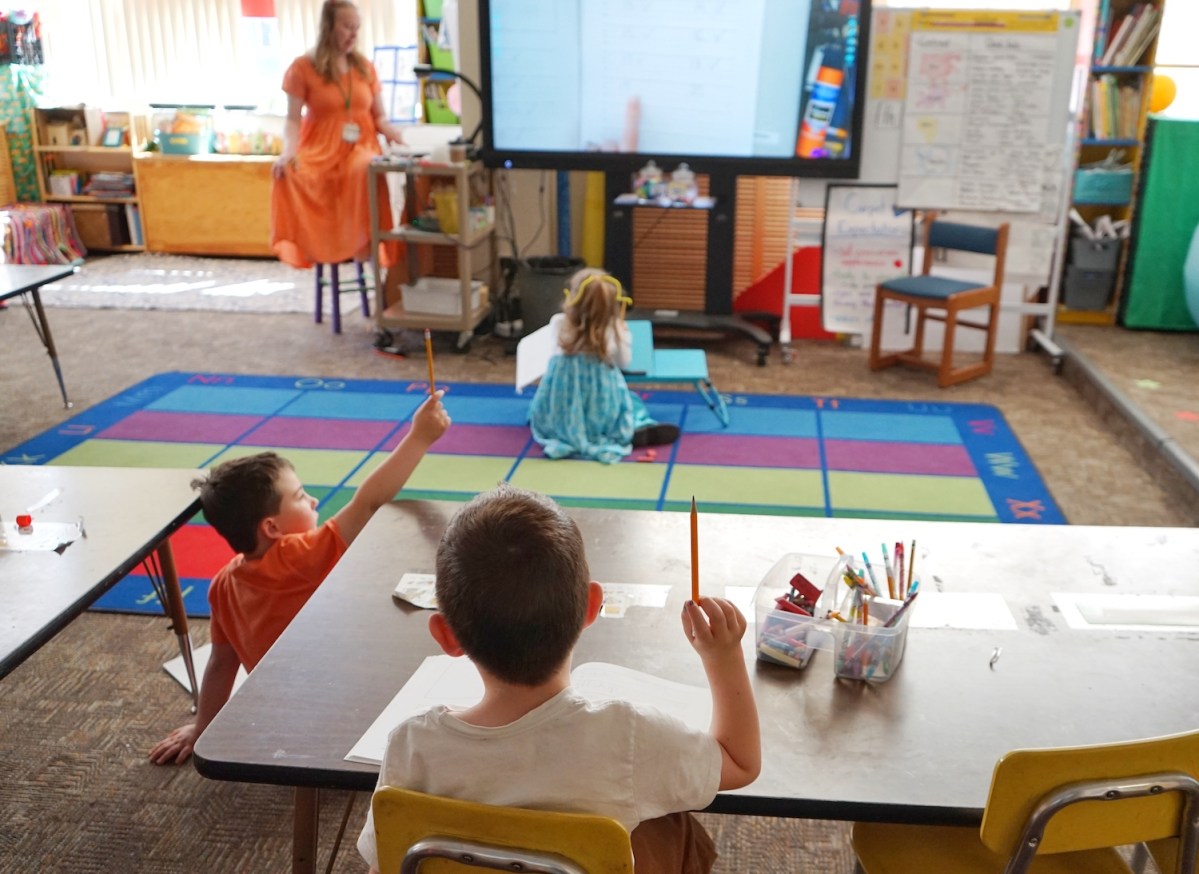
Wyoming lawmakers have launched the state’s 2025 school recalibration, an exhaustive and tedious assessment of public education funding mandated every five years.
This time, however, they are doing so in the shadow of a district court ruling that the Wyoming Legislature violated the state’s constitution by underfunding public education and must amend that.
The new ruling loomed large during the Legislature’s Select Committee on School Finance Recalibration’s two-day meeting in Casper this week.
Due to the court decision, school finance consultant Dr. Larry Picus told the committee, “we really recommended that probably all of the elements [of Wyoming’s model] needed to at least be looked at as part of the recalibration, so that’s what we intend to do.”
Picus’ team has been enlisted to lead the assessment — the sixth recalibration he’s worked on for Wyoming. For this one, he said, the court ruling has also spurred his team to bring in additional experts on issues such as teacher pay. The judge determined some of the past state-hired experts on public school funding had “diminished credibility.”
The recalibration effort, which will entail more than a dozen meetings and a thorough look at everything from student-to-teacher ratios to school lunches, will shape what public education looks like in Wyoming into the future.

Though the byzantine and laborious endeavor could make it easy to ignore, public interest is high this year. On Tuesday, the Casper meeting room was packed with people, including many affiliated with Better Wyoming, a nonprofit that encourages civic action. Many attendees — galvanized into action by a Republican lawmaker’s online statement — urged the committee not to underfund public education.
“We are asking you as elected officials, as stewards of the public good and as human beings to fully fund public education, to meet your constitutional duty obligations,” said retired teacher Robyn Edwards, “because without a robust public school, our small towns will unravel, our communities will erode, and our children, especially those in poverty, will be more vulnerable to falling through the cracks.”
What is it?
The recalibration process is required every five years to ensure the Legislature fulfills its constitutional duty to “provide for the establishment and maintenance of a complete and uniform system of public instruction.”
It basically entails “asking what do schools look like to be successful, what do they need to be successful and what that costs,” Picus told the committee.
To do that, consultants will hold meetings with Wyoming educators, analyze data and make recommendations over the course of several months.
This year, they will be doing so with the February court ruling in mind. The ruling, which the state is appealing, is the latest in a string of court cases that have further delineated the state’s education obligations.

In his 186-page ruling, Laramie County District Court Judge Peter Froelicher found the Legislature failed to properly fund the “basket of quality educational goods and services,” that the Wyoming Supreme Court in 1995 ordered lawmakers to set, update and fund every two years. The judge also found the state failed to properly adjust funding for inflation; failed to provide funding for adequate salaries for teachers and staff; and failed to provide sufficient funding for mental health counselors, school safety resource officers, nutritional programs and computers for students. Lawmakers have failed as well to properly assess school buildings for “educational suitability,” and have allowed inadequate facilities to exist for too long without repair or replacement, he ruled.
The recalibration, he added, makes for “an excellent window of opportunity to address these issues.”
Emerging issues
In a preliminary audit, consultants identified issues that most need to be recalibrated this time around: “educational personnel salaries — which many in Wyoming argue are too low; pupil teacher ratios at the secondary level; adjustments for inflation and regional cost differences; educational technology; and the number of mental health professionals in schools.”
School resource officers and school nutrition programs in particular “also need to be considered in the 2025 recalibration,” the audit states.
During two days of presentations and testimony before the recalibration committee in Casper, many echoed these concerns. School officials repeatedly told committee members that teacher pay in Wyoming has not kept up, a fact that’s hurting the public education system and contributing to a teacher shortage.
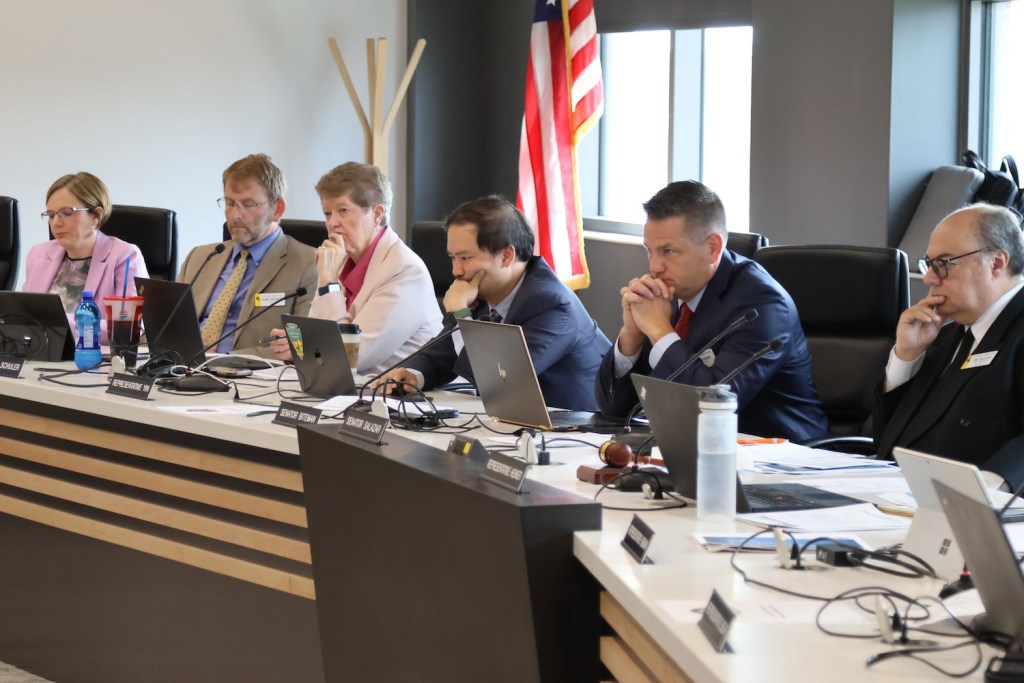
“The price of labor has changed over time. Our model hasn’t,” Johnson County resident Travis Pearson told the committee. “If we adjust that model base pay … That’ll straighten out almost all of the issues” identified.
The message on teacher pay was consistent as a number of curriculum directors, superintendents and special education directors testified. Wyoming, they said, is losing out to neighboring states because it doesn’t pay as well comparatively as it once did.
Sen. Wendy Schuler, R-Evanston, a former teacher herself, said she remembers when Wyoming was consistently among the top states for teacher salaries. “We’ve dropped considerably,” she said.
During sessions held with school staff and experts so far, Picus said, that sentiment was also clear. “There was a consistent view that the salary levels are too low.”
Educators also testified about high insurance costs, the need to supplement school lunch programs, growing mental and behavioral health needs and career-and-technical-education resources.
Legislative duty
This recalibration comes at a time when lawmakers have been expressing growing interest in cutting spending and promoting private education alternatives. That has led to rising public concern.
Wyoming passed a new universal school voucher program this spring that gives up to $7,000 for private school costs, for example. Many worry this will lead to an exodus from public schools and result in smaller funding pools. That voucher program was challenged last week in court.
The state also passed a roughly 25% reduction in property taxes, which will lead to declining mill levy revenues for local school districts, among other things.
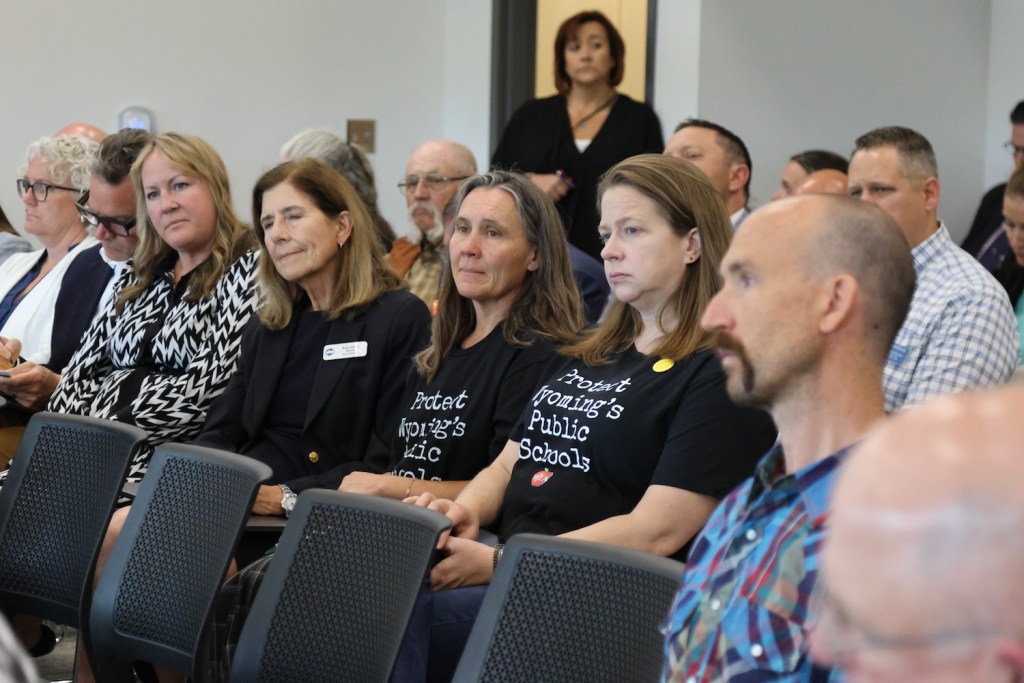
A Facebook conversation about those tax reductions helped motivate the Better Wyoming crowd to show up in Casper. In that post, former state lawmaker Scott Clem asked how the Legislature plans “to cut education by 50-80M annually to pay for the 25% permanent tax cut exemption, especially in light of the legislature being 0-6 in the courts for not adequately funding education.”
“Recalibration,” Rep. Ken Pendergraft, R-Sheridan, answered.
Potential actions like that, Better Wyoming Executive Director Nate Martin said, have people worried.
“Our public school system is a major driver of our state’s economy,” Martin said. “And there’s also a growing perception that some of the people who are tasked with upholding and supporting a complete and uniform system of public instruction per the constitution are instead working to undermine it.”
The Legislature’s recalibration job, Rural Wyoming Matters Executive Director Joey Correnti testified, is nuanced and complicated. It is also, he added, “not to take a chainsaw to the budget.”

How does teachers hourly slary compare to say nurses, truck drivers, labor, etc on an hourly basis?
The misnamed Freedom Caucus, taking direction from groups associated with Project 2025, has a single focus– to undermine democratic institutions. The voucher boondoggle is a perfect example. There is nothing more egalitarian than the public education system in Wyoming–elected and controlled by voters. F.C. cynically attempts to deceive voters that somehow a sop of money siphoned away from public education (unfortunately attractive in a right-to-work, underpaid state) is somehow going to make kids better educated and ready for the job market. “Where did you go to school, son?” “On my smart phone–which we’ve been paying for with voucher money–while mom and dad were out looking for better jobs.”
So let me see if I have this right. The Court has told the Legislature they are not putting enough money into education. Rep. Ken Pendergraft’s solution to that problem is to put less money into education. It is becoming more apparent why so many people are calling it the FreeDumb Caucus. Perhaps the recalibration should start with the thinking of the majority in the Legislature.
The Freedumb Caucus wants to manufacture more baby freedumbs to keep their legislative stupidity alive.