


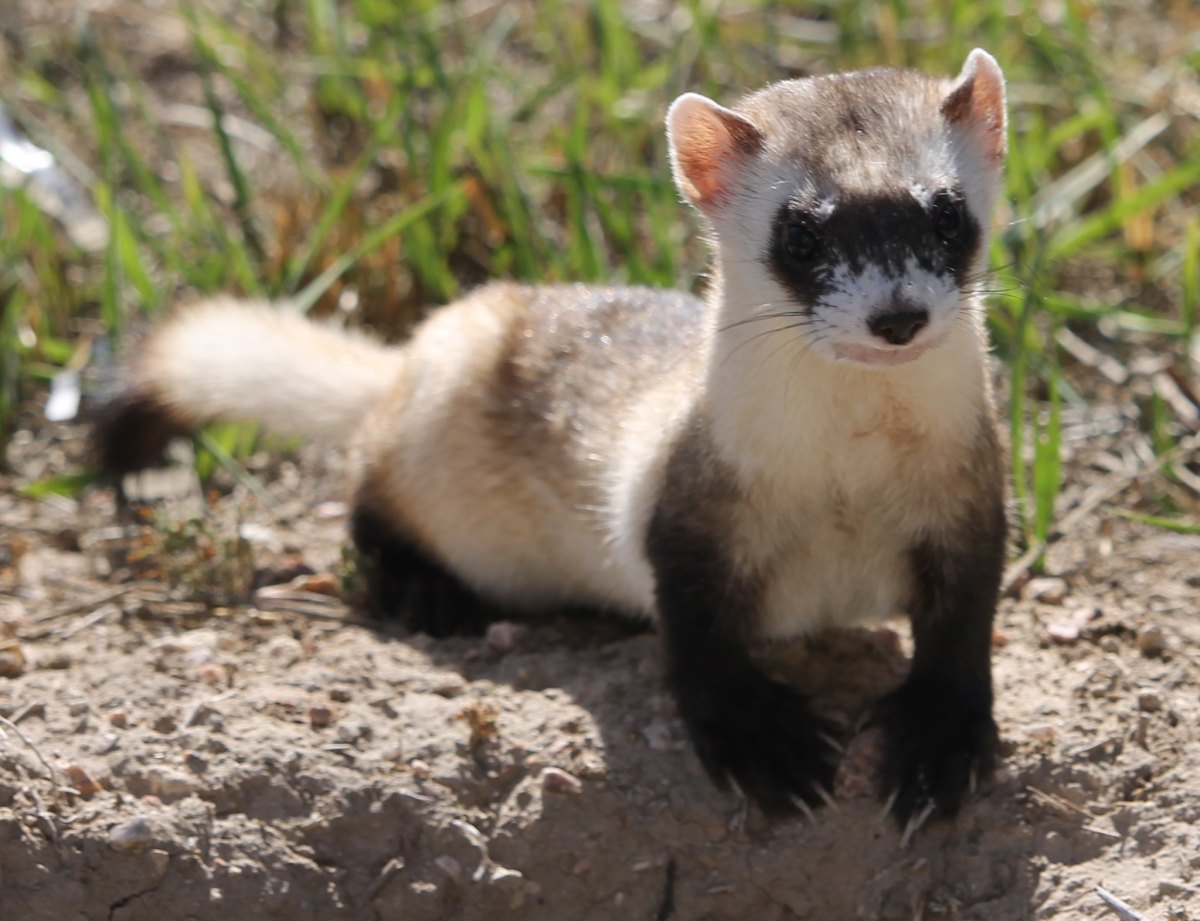
A federal judge has upheld the U.S. Fish and Wildlife Service’s plans for managing black-footed ferrets in Wyoming, the state where the once-presumed-extinct species was rediscovered some four decades ago.
The dispute over how the federal government managed the endangered weasel-like animal traces back nearly a decade to when federal wildlife managers officially designated the Wyoming population as “nonessential, experimental.” That classification allows for more regulatory flexibility than other Endangered Species Act designations, loosening restrictions on potentially harmful activities, like killing prairie dogs that ferrets depend upon.
WildEarth Guardians, Western Watersheds Project and Rocky Mountain Wild challenged the nonessential, experimental rule in 2021, arguing that the agency violated federal environmental laws, ignored the best-available science and improperly relaxed Endangered Species Act protections in order to accommodate private landowners.
But U.S. District Judge Randolph Moss, out of the District of Columbia, sided against the plaintiffs on all arguments last week, concluding that federal wildlife managers had abided by the National Environmental Policy Act and Endangered Species Act.
“Ultimately, although framed as a NEPA challenge, plaintiffs simply disagree with the [Fish and Wildlife Service]’s decision about how best to facilitate the reintroduction of the black-footed ferret in the state of Wyoming,” Moss wrote in a 75-page opinion filed Thursday. “The agency’s preferred approach, however, fell well within its discretion and was both reasoned and adequately explained.”

A “nonessential, experimental” population — the same approach used when wolves were reintroduced to Yellowstone National Park in the mid-1990s — is managed with more flexibility than the Endangered Species Act normally permits. There’s more latitude to incidentally or directly cause ferret deaths and disrupt habitat. Because black-footed ferret diets are upwards of 90% prairie dogs, they’re dependent on occupied prairie dog colonies.
WildEarth Guardians and Western Watersheds Project staffers were unable to be reached Monday morning for an interview. When the plaintiffs announced their 2021 lawsuit, they took issue with leaving Wyoming in charge of recovery efforts in the state.
“Putting the State of Wyoming in charge of black-footed ferret recovery has proven to be the worst possible idea,” WildEarth Guardians staff attorney Jennifer Schwartz said in a statement at the time. “Black-footed ferrets need large, healthy prairie dog colonies to survive, but Wyoming and its agencies won’t give an inch in their efforts to exterminate prairie dogs.”
Prairie dogs are classified as a pest in Wyoming and can be killed indiscriminately. They’re oftentimes poisoned and are the subjects of recreational shooters’ target practice.

Moss did not fault the Fish and Wildlife Service for citing “political and public acceptance issues” in its justification of a nonessential, experimental population in Wyoming.
“Factors such as acceptance by local landowners and co-existence with prairie dogs are key considerations in the viability of black-footed ferret conservation efforts,” the judge wrote, “and the statute does not require the FWS to ignore such realities in its attempts to successfully reintroduce the species.”
Black-footed ferret reintroduction efforts in the Meeteetse area and Shirley Basin have experienced mixed success, largely because of disease outbreaks that have knocked down prairie dog populations and directly killed ferrets. Both sylvatic plague and canine distemper are “important diseases” for ferret populations, according to the Wyoming Game and Fish Department’s State Wildlife Action Plan.

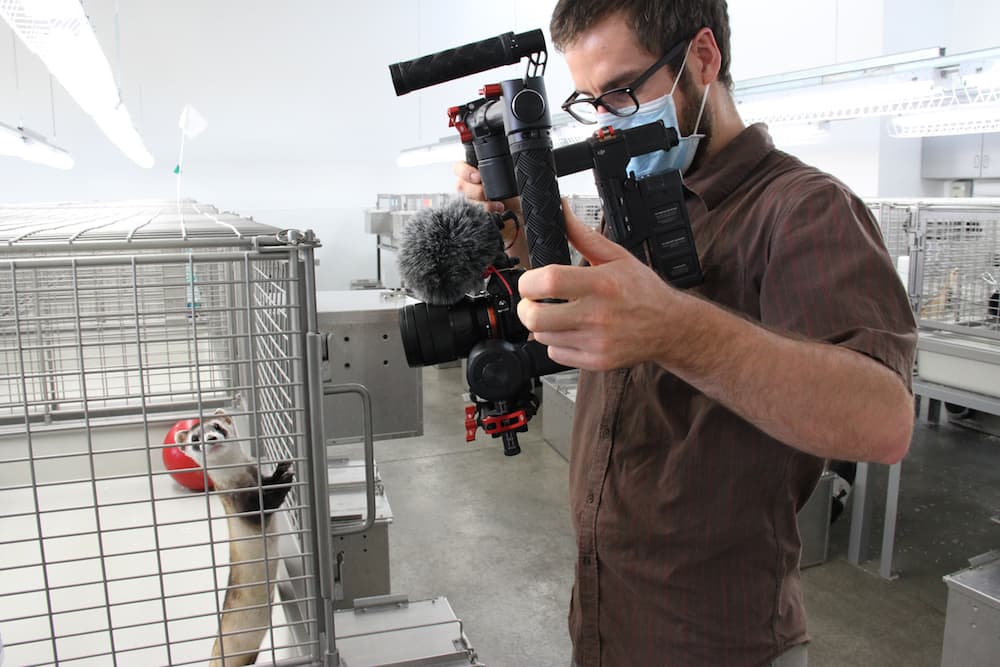
That plan states that Game and Fish will continue to engage with the national Black-footed Ferret Recovery Implementation Team and in-state Wyoming Black-footed Ferret Working Group.
“Through this collaborative process, WGFD will work to locate and evaluate additional reintroduction sites throughout the state,” Wyoming’s plan for black-footed ferrets reads.
U.S. Fish and Wildlife Service officials were unable to be reached for an interview early Monday.
The Wyoming Game and Fish Department was “pleased” to see Moss’ ruling, according to an emailed statement. The litigation was a “waste of staff time and resources that could be better spent,” the emailed statement said.
“It is good to see Judge Moss did not entertain the politically motivated argument that the Wild Earth Guardians proposed,” Game and Fish spokeswoman Breanna Ball wrote. “We will continue to work closely with USFWS and private landowners in our black-footed ferret recovery.”
Moss’ ruling is available below.

Kudos to Judge Randolph Moss and the U.S. Fish and Wildlife Service for protecting one of the most important tools we have for reintroducing black footed ferrets. Thanks also for comments by Hal Corbett and Lee Campbell. During part of my career with the Wyoming Game and Fish Department I worked with hundreds of participants in the black footed ferret program (1986 -2014). These included scientists (some with international recognition), agencies, zoos, private landowners, conservation groups, and organizations and many funding sources for the black footed ferret recovery program. Using the nonessential experimental (10j) designation, we were able to develop management plans for Shirley Basin and Meeteetse with support from several landowners along with state and federal agencies. I can guarantee that it would not have been possible without the 10j designation. In 2008 we were close to developing another reintroduction program with two landowners that would provide a significant contribution to Wyoming’s recovery program. In 2009, the Fish and Wildlife Service received a highly publized petition to reclassify ferrets from nonessential to endangered by WildEarth Guardians, Biodiversity Conservation Alliance and Center for Native Ecosystems. Although the petition was denied, the threat and uncertainly was clear. Our two landowners understandably ended the developing new recovery area. Shirley Basin landowners became concerned about future efforts, and the same concerns rapidly spread throughout the state. The search for a new recovery site was put on hold.
Now we have some of the same people taking the issue all the way to court. Although they were rejected, they have no doubt again given many landowners for future recovery programs pause for concern. The hundreds of aforementioned participants provided a massive amount of effort and funding on issues like removal of ferrets from the wild; developing captive breeding and reintroduction programs; establishing management of recovery sites; and developing protocol as to when captive and reintroduced populations would be divided to support new recovery sites. The only contribution the plaintiffs have made, that I am aware, has been profoundly negative for ferret recovery.
Another asinine lawsuit by WildEarth Guardians and Western Watersheds (Rocky Mountain Wild appears to be new to the game). Ever since September 1981, when the ranch dog Shep brought home a black-footed ferret near Meeteetse, Wyoming has led the way in conserving, captive breeding and then reintroducing the species.
In 1985, when sylvatic plague nearly wiped out the only known population of the species, Pete Petera, Tom Thorne, Art Reese and others in the Wyoming Game and Fish Department made the momentous decision to bring the entire known wild population into captivity. They caught 18 animals. Since then, Wyoming has led the way in developing captive breeding techniques and in reintroducing the species back into the wild. As Lee Campbell notes, the effort has been a huge success and ferrets have now been reintroduced into 24 sites in the United States, Canada and Mexico. The plaintiffs have done absolutely nothing to conserve this iconic species. As usual, all they do is throw bombs.
Additional information: Wyoming Game and Fish has spent serious money on our black footed ferret recovery efforts – in the past 40 years, Game and
Fish has probably spent 20-30 million on ferret recovery ( just an uneducated guess ). The monies would include the cost of writing the black footed ferret recovery plans – similar to an EIS – and the cost of the Sybile Canyon ferret breeding facility where the ferrets where successfully breed in captivity thus saving the species from extinction. Please note that the monies we spent on ferret recovery were generated by sales of hunting and anglers licenses – that’s right – sportsmen paid the cost of saving the ferrets!!! It never fails to amaze me that people who do none of the boots on the ground work on ferret recovery or pay none of the costs associated with recovery sit back and criticize those who have accomplished so much. Ferret recovery in Wyoming ranks right up there with condor recovery, whooping cranes and bald eagles – and we get criticized by the non-doers!!!
For those of you that are uninformed or lacking in practical experience, there is no systematic effort to eradicate prairie dogs in Wyoming – there is moderate control of prairie dog populations when their numbers become excessive. Do a little research and you will find that Wyoming is among the nation’s leaders in total acres of occupied prairie dog colonies. Example, I remember reading that Wyoming has 85% of the nation’s white tailed prairie dogs and their numbers are in no way threatened. There’s a strong argument that we are the nation’s leader in all aspects of prairie dog populations; and, specific identified prairie dog colonies have been administered as ” critical habitat ” for black footed ferret habitat wherein prairie dogs are inoculated against sylvatic plague. Wyoming understands that it is absolutely critical for ferret recovery to succeed with the hopes and expectations that one day the ferrets might be delisted. Prairie dogs may be listed as a pest under the Wyoming Weed and Pest Act; however, Federal Endangered Species requirements for critical habitat designation is a higher authority which precludes prairie dog control within critical habitat. Bottom line is that Wyoming’s prairie dog population is thriving despite being ravaged by sylvatic plague. The last number I heard was that we have over 300,000 acres of occupied black tailed prairie dog colonies – a number which does not include white tailed prairie dogs.
Wyoming as wildlife managers is like letting the Big Bad Wolf manage the three little pigs. You just know it’s not going to end well for wildlife or the little pigs………Watch out Big Bad Wolf the is a snowmobile behind you!!!!!!!
We rejoiced 40 years ago when the black-footed ferret population was discovered. Here was a chance to restore the natural enviornmental balance to the prairie dog population explosion that occurred when that natural balance was upset, Prairie dogs aerate the land, ferrets eat the prairie dogs. Perhaps it would be possible to locate a favorable landowner with a enough land to run a 40 year reintroduction experiment. My non-scientific opinion would be it wouldn’t take 40 years. It could be a similar example to Yellowstone’s natural environment restoration after the reintroduction of wolves.
It sadly appears that the state of Wyoming is on the path of deeming all its wildlife as “pests” or non-essential. Their ethics of conservation and definitions of healthy ecosystems.. by whose standards?
Send some ferrets to Arizona.We had gotten rid of the dogs and then some one reintroduced them. Some people are educated beyond their inteligence.
Wyoming has proved time and time again that they shouldn’t be in charge of any wildlife.
That’s the fox guarding the hen house.
What were they thinking – or not thinking to be more precise – Western Watersheds and WildEarthGuardians that is. Wyoming Game and fish was the agency that made an all out effort to save the black footed ferret and breed them under controlled conditions until they could be released – a resounding success story of the first order!! The release of the ferrets into natural environments – prairie dog colonies – was severely impeded by sylvatic plague outbreaks across Wyoming which led to a temporary moratorium on reintroduction into the wild due to disease. However, science triumphed and a method of inoculating prairie dogs was devised which again allowed reintroduction into the wild. Inoculation however, will be an ongoing effort since sylvatic plague – an introduced, invasive disease – is here to stay permanently. Through all this, Wyoming Game and Fish led the way. There was however, an eleven state effort to protect prairie dogs via the Black Tailed Prairie Dog Plan which is the only plan developed by Game and Fish staff to ever be rejected by the Game and Fish Commission by a 4-3 vote. After the dust settled, the eleven state coordinator finally admitted that sylvatic plague was the principal cause of prairie dog mortality not poisoning or sport shooting. Since then, Game and Fish has managed black footed ferrets with sylvatic plague effects on prairie dogs and ferrets as a primary concern. Despite all of the challenges, black footed ferret reintroduction has progressed – so what were they thinking – the sky is not falling – Game and Fish has the matter under control – USFWS has simply been following Wyoming’s competent leadership and Wyoming will not relent our effort to save the ferrets.
Thank you usfws for helping to keep the NATURAL order of our wilderness. The pray and predator balance MUST be maintained. It’s worked for Millions of years,it gets messed up when humans interfere. We also need to “interfere” when we introduce disease.