


Wyoming’s new anti-abortion law should not be added to an ongoing Natrona County lawsuit challenging other abortion laws, a judge decided Tuesday.
“The factual issues sought to be added to this case are inherently different from those currently before this Court, which are primed for resolution through summary judgment or trial,” Judge Thomas C. Campbell wrote in his decision. “Reopening deadlines and accommodating discovery would delay finality in this case.”
The group of Wyoming abortion rights defenders seeking to challenge the Human Heartbeat Act and state defendants appeared Monday over video at a Natrona County District Court hearing to consider the matter. A court reporter, a law enforcement officer and four audience members, including two reporters, were the only people physically in the courtroom.
The plaintiffs sought to add the new law to an existing Natrona County lawsuit challenging two other anti-abortion measures, as well as a statute concerning off-label medication prescriptions.
John Robinson, the plaintiffs’ attorney, began the hearing by recounting that the Wyoming Legislature has enacted or tried to enact abortion-related laws every session since 2022, the year the U.S. Supreme Court overturned Roe v. Wade. Those measures, he noted, have resulted in six different lawsuits involving the same constitutional provision and plaintiffs.
The newest abortion restriction came in the wake of January’s Wyoming Supreme Court decision that struck down two 2023 abortion bans on the grounds of their unconstitutionality.
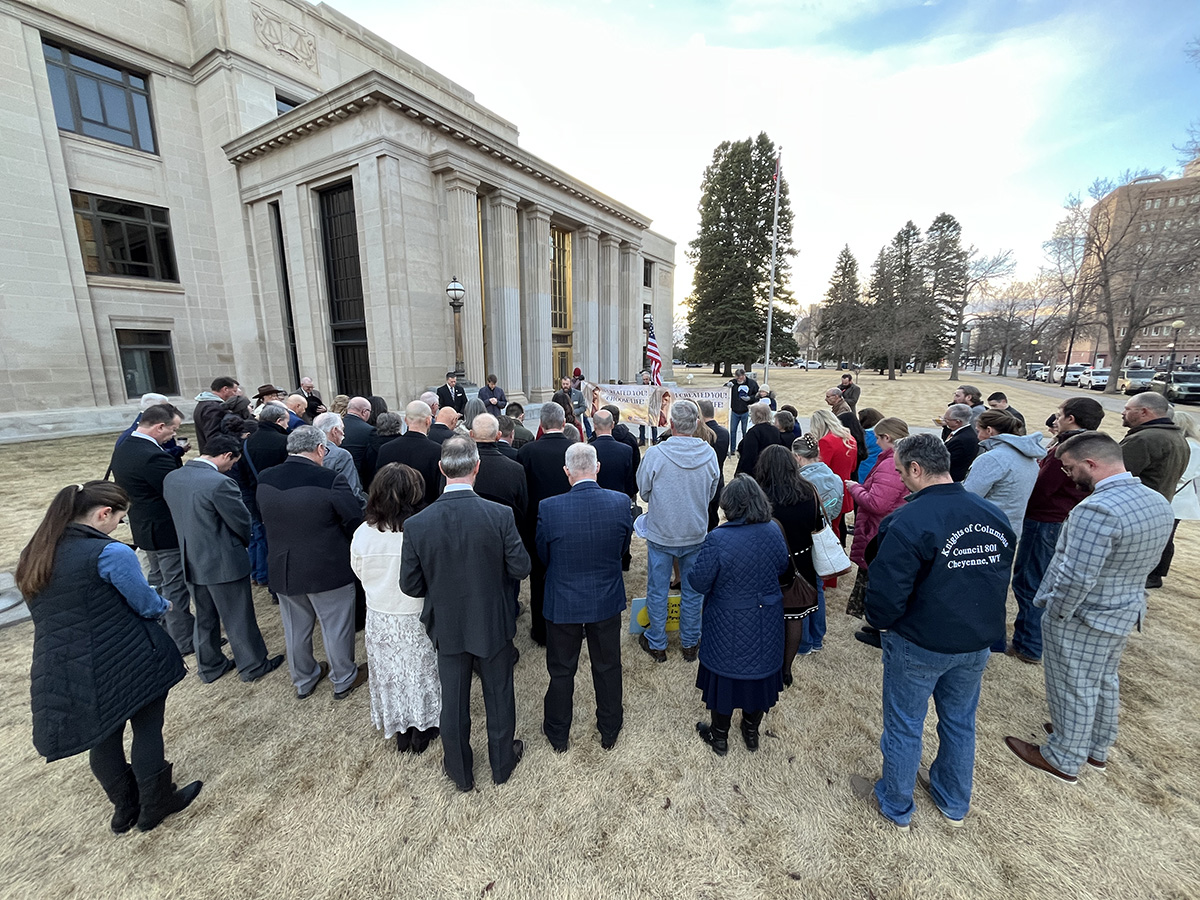
Wyoming Attorney General Keith Kautz argued on Monday that adding the Human Heartbeat Act to the ongoing lawsuit would run the “risk of blending or misleading the issues.” He further asserted that Campbell, the retired judge presiding over the lawsuit, was “assigned to this specific case and no more.” Kautz, who participated last year in a prayer “for life,” accused plaintiffs of seeking to add the Heartbeat Act to the lawsuit out of “bad faith” and “judge shopping.”
Campbell’s decision states that the issues in the current case and the new abortion law “are certainly related,” given that the laws “all involve the availability and restrictions on abortions in Wyoming.” But the “laws’ similarities are strictly superficial,” he argued.
The state’s approach to defending the Human Heartbeat Act “is decidedly different” than its approach to defending the other anti-abortion laws, Campbell continued. “The Defendants allege different compelling State interests, and they are permitted to develop those in litigation, uninhibited by the procedural posture of this case,” his decision states.
The group of Wyoming abortion rights defenders contesting the Human Heartbeat Act, which became law earlier this month, must now file a separate lawsuit to challenge the new measure.

The plaintiffs’ request to add the Human Heartbeat Act to the ongoing Natrona County lawsuit came the day after Gov. Mark Gordon signed the measure into law. In a letter to legislative leadership, he cautioned that the law, which took effect immediately, would land the state in another legal fight.
The law bars abortions, except in the case of a medical emergency, if the fetus has a detectable heartbeat, which can occur as early as six weeks. If abortion providers fail to make a determination of a fetal heartbeat, they could face up to five years in prison or a fine up to $10,000, plus loss of their medical license.
Since the law’s implementation, Wellspring Health Access, the state’s lone procedural abortion clinic and a plaintiff in the Natrona County case, has turned some people away and referred them out of state for abortions.
“It’s cut our patient load in half, if not more,” Wellspring President Julie Burkhart told WyoFile earlier this month.

At some point this legislatures will simply have to define personhood, what is a human being to end this constant struggle.
Or maybe not as Judges seem to be able to ignore science quite often either way in their rulings.
At some point the legislature needs to hold a referendum on this issue and let the people of Wyoming decide.
Good morning!!! The “Equality State” has shown and continues to shines for the hard work and efforts for those to have called this state of Wyoming “The Equality State” through our elected Law makers representing all the homosapiens of this Equality State, THANK YOU!
This Equality State has not forgotten their efforts and proven by our elected LISTENING to their constituency on an individual and collective way, to endure through selflessness, emotional and show Love and compassion for and of our future Americans to and of Wyoming and set an example of this Love and compassion by Constitutional Law for the remainder 49 states of these United States of America, a Republic under God.
THANK YOU WYOFILE, again for your/our/my example of the FIRST AMENDMENT! SEMPER FI!