

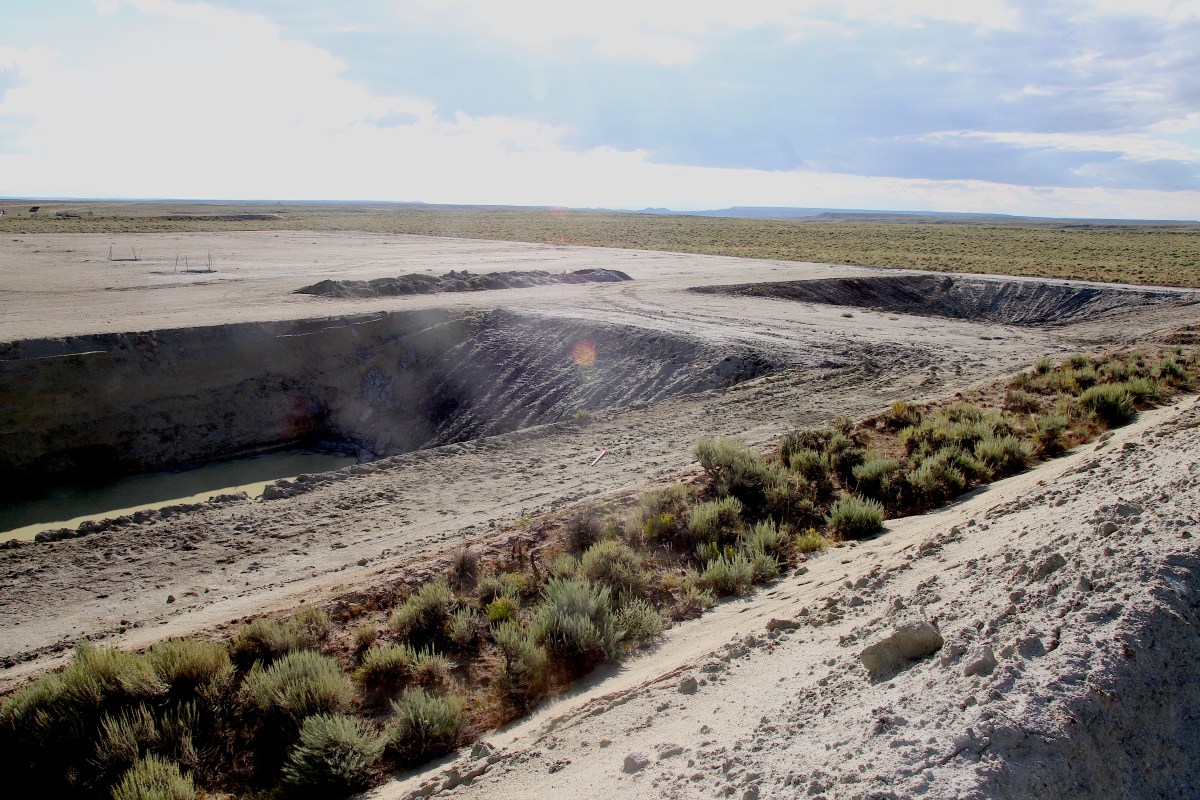
A federal administrative court has revoked authorization to drill one of Wyoming’s largest gas fields in decades, concluding the project violates the Clean Air Act.
The Jonah Energy-led gas project in question, known as the Normally Pressured Lance field, had been litigated over sage grouse and pronghorn migration issues for years until it was given the greenlight by a federal appeals court in 2023.
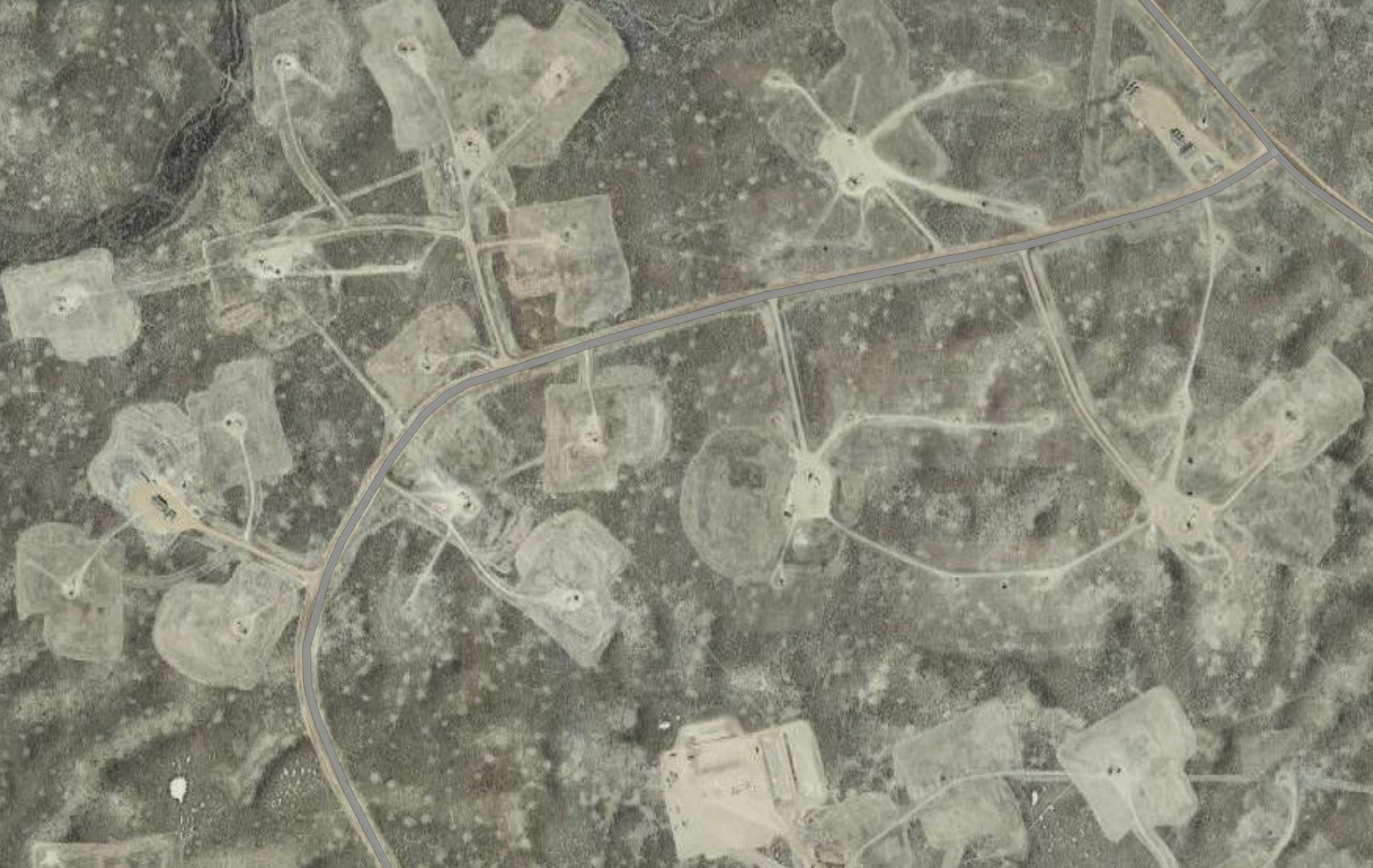
Simultaneously, the environmental advocacy organization WildEarth Guardians sought to block the project administratively through the U.S. Department of the Interior Board of Land Appeals. On Tuesday, the Santa Fe, New Mexico-based group announced that federal administrative judges had ruled in its favor on an 8-year-old appeal, throwing out approval to drill a gas field roughly the size of Zion National Park.
“The Clean Air Act requires federal agencies to prove that their actions won’t worsen air pollution in already polluted areas, and this project didn’t meet that test,” said Rebecca Sobel, WildEarth Guardians’ climate and health director. “Whatever Jonah Energy wants to do to try to meet Clean Air Act requirements, we look forward to reviewing those proposals.”
The two-judge panel of the Interior Board of Land Appeals faulted the Bureau of Land Management for not complying with “unambiguous” regulations governing ground-level ozone, a human health hazard. Specifically, the administrative judges determined that mobile Jonah Energy drill rigs did not qualify for a “stationary source” pollution exemption that was used in an analysis of how much the gas field would affect the Green River Basin’s “nonattainment” ozone area.
“Because we find error in BLM’s conformity determination, BLM approved the Record of Decision in error,” Interior judges Clifford Stevens and David Gunter concluded in their Jan. 15 decision.

They then “vacated” the decision, invalidating the Denver-based oil and gas exploration company’s authorization to drill in the gas field, which is 96% BLM land.
Jonah Energy executive Paul Ulrich told WyoFile he stood behind the NPL’s air quality analysis and was “shocked” and “disappointed” with the judges’ decision. WildEarth Guardians’ appeal was filed in 2018, after a decade of effort to get the NPL field approved.
“We firmly believe it was an excellent decision,” Ulrich said of the 2018 approval. “It accounted for and balanced the need for development with some very restrictive and innovative environmental constraints, in particular on air emissions.”

In a statement, Gov. Mark Gordon criticized the Interior court for halting production of 3,500 gas wells, and he pledged the state would “aggressively pursue all options available” to overturn the decision.
“This action is unwarranted and misguided,” the governor said. “It demonstrates we have more work to do to bring wisdom back to the federal government.”
On the ground, production of the NPL field has been notably limited in an era marked by record-low gas prices. Jonah Energy drilled or spudded a total of 14 wells in the field’s first seven years, just 0.4% of what BLM approved, according to the Interior Board of Land Appeals decision. Ulrich said the slow pace of development in the NPL is related to activity in the adjacent 30,000-acre Jonah field.
“We’ve got maybe a handful of years of drilling inventory [left] in the Jonah,” Ulrich said. “At that point, certainly our expectation is to pivot to NPL.”
During the planning phases, Jonah valued the 141,00-acre field at nearly $18 billion.
The swath of high desert in western Wyoming is also considered ecologically valuable, and it contains some of the most intact expanses of sagebrush-steppe remaining in the world, winter concentration areas used by 2,000 sage grouse and portions of the under-review Sublette Pronghorn Migration Corridor.
Jonah Energy and its agency partners have not yet decided next steps, Ulrich said. Starting an environmental impact statement from scratch in pursuit of a new decision makes “zero sense,” he said.
“We’re talking about one small portion of the record of decision,” Ulrich said. “The conformity determination can be easily rectified, I’m sure.”
WildEarth Guardians also argued that the federal government violated the National Environmental Policy Act, though the Interior administrative justices did not rule on that claim because BLM will need to do additional NEPA analysis.
According to WildEarth Guardians’ Sobel, Interior Secretary Doug Burgum lacks the authority to overturn the appeals board’s decision.
“It’s an independent administrative appellate court,” Sobel said. “IBLA decisions are final unless they’re challenged through further administrative or judicial review.”

Some oil and gas industry watchdogs are skeptical that NPL field’s setback will stick. Linda Baker, longtime director of the Upper Green River Alliance, praised WildEarth Guardians’ successful appeal, but she called the result a “liquid and strange situation” and a “surprising New Year’s gift.”
“My first thought was, ‘This has never happened before,’” Baker said. “Especially to something that’s an ongoing project.”
Pinedale resident Jana Weber, who’s involved with the Sublette County air quality advocacy group CURED, also shared mixed feelings.
“Anything that helps guarantee better air, we’re totally in favor of,” she said. “I think it’s a very good thing.”


But Weber also remarked that the outcome was confusing. The plans navigated environmental regulators’ vetting process and got “fully permitted,” she said.
“Now, all of the sudden, they’re saying, ‘No, it really shouldn’t have been permitted,’’’ Weber said. “The whole thing is so weird.”

Of the two issues forming the objection to the expanded gasfield, Clean Air quality and Pronghorn migration route obstruction , the migration route is of greater concern.
Jonah Energy seems alarmingly unconcerned about that .
your writing is extremely hard to understand because it is so poorly written. For instance “A federal administrative court has revoked authorization to drill one of Wyoming’s largest gas fields in decades, concluding the project violates the Clean Air Act.” The “in decades” is placed poorly and because of this I puzzled for minutes trying to understand and rewrote in my head so I could understand. You need to greatly improve your writing. Do you have an editor. I am guessing not.
Someone here needs to improve their reading. Just sayin’…
My son had his first Wyoming Range deer hunt this year and I hope he can continue to do it when he’s my age, but I’m not optimistic. Mr. Ulrich likes us to believe he’s a conservationist through his role with Wyoming Sportsmanship but this guy has been a central figure in the continued degradation of the upper green river basin for the past 20+ years. Pronghorn and mule deer winter ranges and migration routes as well sage grouse winter concentration areas will all be sacrificed to enrich Texas Pacific Group who is Ulrich’s master and an out of state equity profiteer.
We have enough gas in America, we should not be pillaging the land and our wildlife for exports for corporate profits. Stop this development! I would like to see pronghorn and mule deer in 20 years.
Amen!!