


Wyoming’s juvenile justice system places juvenile offenders in facilities at rates nearly double the national average. Influenced by research showing that juvenile incarceration leads to poor outcomes for kids, lawmakers are taking steps to reduce the practice with a bill to gather more data and budget amendments to restore funding for prevention efforts.
Data gathering
Wyoming currently does not gather statewide juvenile justice data. The resulting information vacuum creates vexing blindspots for policy makers and practitioners and could lead to the state funding programs that aren’t helping kids or improving public safety. To change that, House Bill 37 – Juvenile justice data reporting requires the Department of Family Services to standardize the collection of data.
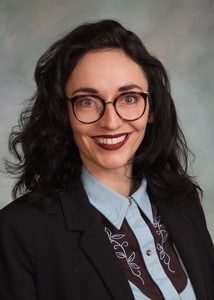
The bill passed the House on Wednesday with several amendments. One provides $251,848 to fund a full-time position to oversee data gathering and $450,000 to cover upgrades to the department’s datasystem. Another allows DFS to track recidivism rates from the juvenile system to the adult system, with the goal of implementing programs that keep kids from re-offending as adults. That amendment from Rep. Karlee Provenza (D-Laramie) also addresses the lawmaker’s concerns about a lack of oversight and requires DFS to report on the implementation of data collection to the Joint Judiciary Committee in October. House Bill 37 was introduced in the Senate on Thursday and is up for consideration in the Senate Judiciary Committee.
Prevention programming
Lawmakers are also working to restore funding for Community Juvenile Services Boards, which are under a DFS program designed to help communities provide programming to keep kids out of the justice system. The CJSB program was eliminated as a part of Gov. Mark Gordon’s $250 million statewide budget cuts in 2020.
A $1.2 million budget amendment in the Senate restores funding to the CJSBs. A House measure, meanwhile, could expand the program. Before the governor’s cuts CJSBs operated in only 14 counties. A budget amendment brought by Reps. Dan Zwonitzer (R-Cheyenne), Cathy Connolly (D-Laramie), and Art Washut (R-Casper), allocates $3 million to expand the program to all 23 counties.
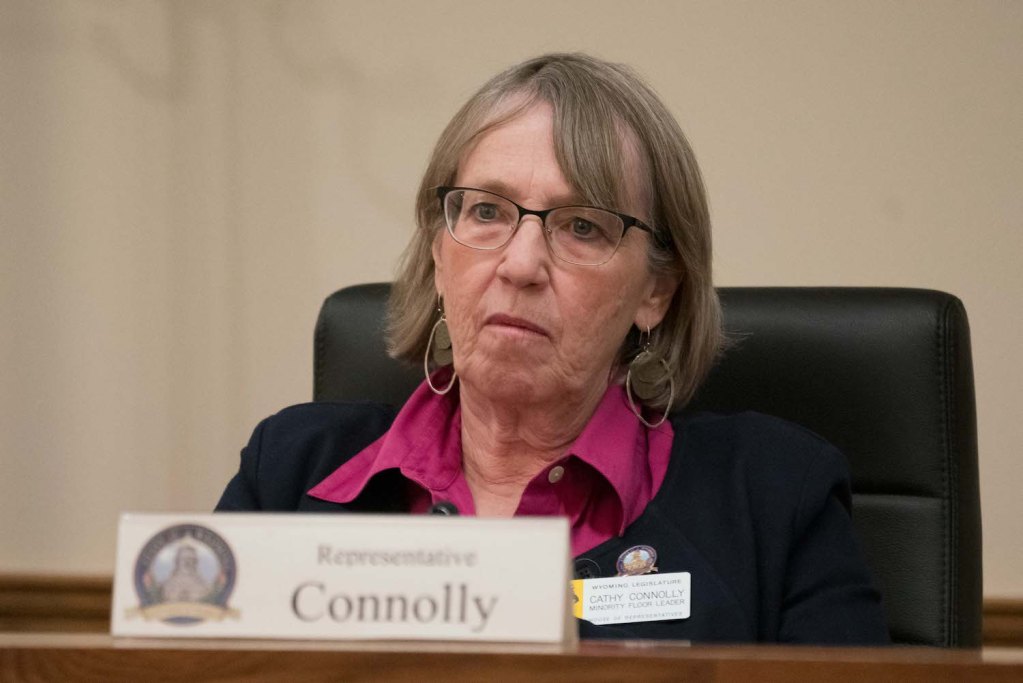
Speaking in favor of the $3 million amendment, Connolly told lawmakers about the positive impact of Albany County’s CJSB. “In the last year that it existed in 2020, there were 129 kids that were involved, and the recidivism rate of those 129 kids was 0%,” said Connolly. “It is a program that works, and I would strongly urge us to vote in favor of this amendment and get these programs back up and running.”
The House amendment also mentions a need to reform how the CJSBs operate. When Zwonitzer spoke in favor of the bill on the House floor he acknowledged there had been “some small squabbles over funding and admin costs” in the past. In an email to WyoFile, Zwonitzer confirmed he’d like to see increased oversight to ensure the state funds distributed to counties by DFS are used to implement effective programming.
DFS is onboard with dialing in the program, according to Lindsey Schilling, senior administrator for social services, the DFS division responsible for juvenile justice. The plan is “to use the funding available immediately to stabilize the existing programs and work with the programs over the next 12-18 months to make improvements both to the agency’s administration of the program, but also to the data collection and service array within each program,” Schilling wrote in an email.
“None of the additional funding would stay with DFS — it would all go to support programs, counties and providers,” Schilling added.
Restoring the CJSBs will help facilitate statewide data collection required by HB 37, Schilling said.
“I believe the additional amount of money in the request was intended to support technical assistance for non-participating counties (with the hopes of getting them to a place where they could create a more formal infrastructure and join the larger program),” Schilling wrote.
There’s a $1.8 million discrepancy between the Senate and House proposals, but Schilling says DFS is discussing both possibilities with juvenile justice stakeholders across the state.
“If funded, I believe we have a good road map to follow,” Schilling said.