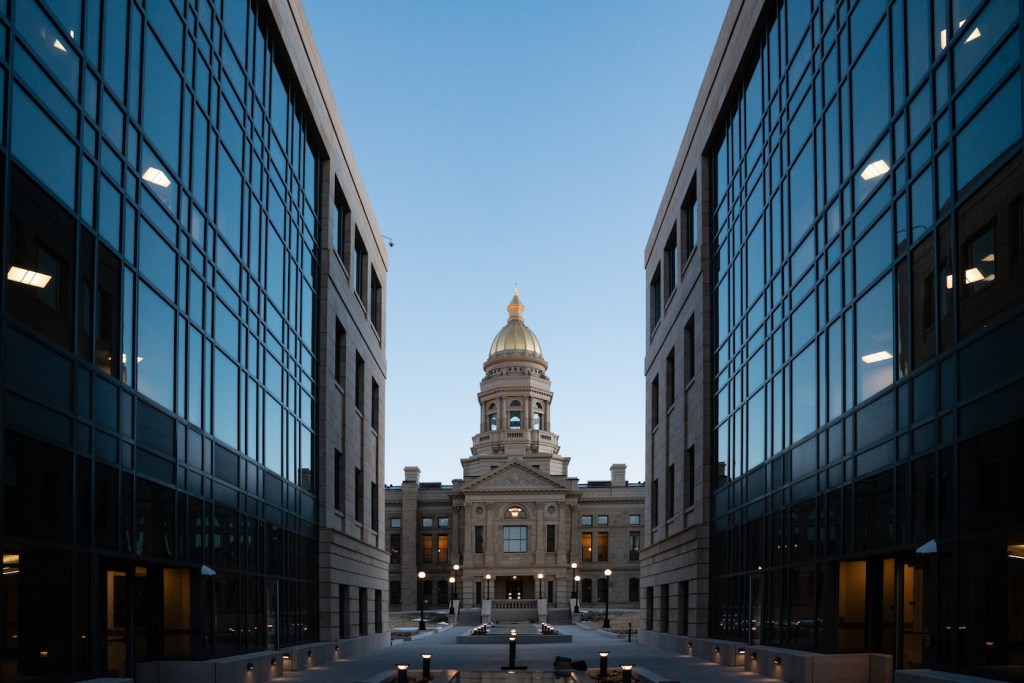


Approving a public school funding model tops the educational to-do list of legislators convening Monday in Cheyenne. The so-called recalibration bill, K-12 public school finance, will impact how teachers are paid, how big class sizes are and how schools pay for things like mental health counselors and school resource officers.
Lawmakers also will consider bills related to statewide literacy instruction, cell phones in schools and student discipline. Draft bills also deal with suicide prevention, homeschooled students and eligibility for Wyoming’s Hathaway college scholarships.
With a breakneck pace expected during the Wyoming Legislature’s 20-day budget session, here are school-related bills to keep an eye on.
School funding
Every five years, the Legislature is tasked with assessing and updating the state’s constitutionally mandated school funding model. The model influences everything from how many students are in a classroom to how much a superintendent is paid to what’s served for lunch in school cafeterias.
The current process of recalibration, as it is known, has been unfolding in a series of meetings, studies and assessments since last summer. It comes with extra gravity following a 2025 court decision that Wyoming has been failing to properly fund its public schools.
Working with consultants, the Legislature’s Select Committee on School Finance Recalibration has drafted and refined a bill dictating how it will pay for public schools. The process has been scrutinized by educators and others who say Wyoming has failed to keep up with teacher salaries, leading to a staff shortage and erosion of Wyoming’s historically stellar public school reputation.

During the most recent meeting in January, educators, parents and others gave hours of testimony to the committee, praising pay raises for teachers but slamming the ways in which it would raise classroom sizes, eliminate hundreds of full-time teacher roles, force districts to join the state insurance pool and fail to address issues like school nutrition and mental health counseling as mandated by the 2025 court order.
The committee made several amendments to the draft bill, modifying it to make smaller increases to class sizes, adjusting the minimum number of teachers in small schools and inserting a placeholder for mental health, nurses, counselors and related support funding. Despite that, superintendents have argued that the draft funding model significantly reduces local control and remains problematic.
“As the Wyoming Legislative Budget Session begins Monday, the Recalibration Bill … deserves close attention from communities across the state,” Sheridan County School District 1 Superintendent Jeff Jones wrote in an opinion piece submitted to WyoFile. “This version of the bill misses the mark in three fundamental ways: It seriously undervalues funding for teacher salaries, significantly reduces local control, and regrettably increases class sizes in our schools.”
Literacy
Literacy instruction is emerging as a nationwide issue with the downturn of reading scores in recent years. While Wyoming continues to rank comparatively high in national testing, literacy challenges still appear here.
In 2024, 36% of the state’s fourth graders and 29% of eighth graders performed at or above the proficient level in reading on national standardized NAEP tests, lower than the previous five years.
Some 32% of Wyoming fourth graders performed below basic levels, which was a slight increase from 29% in 2022. For eighth graders, 30% scored below basic levels in 2024, up one percentage point from 2022.

News reports and studies have shifted how the literacy field views reading instruction — a method of teaching reading that was prevalent for many years was widely debunked by the 2022 podcast “Sold a Story.” At least 26 states have passed laws about how schools teach reading since it began to air.
Wyoming could be next. Senate File 59, “K-12 language and literacy” aims to ensure that every K-12 Wyoming student develops strong language and literacy skills and that struggling readers do not fall through the cracks.
The legislation resulted largely from the work of a literacy subcommittee with input from stakeholders working on a new statewide literacy initiative — including a group of parents and educators focused on better identification and treatment of conditions like dyslexia. The bill would establish a system of instruction, intervention and professional development that is evidence-based to provide teachers, families and students with comprehensive and effective tools for teaching reading and addressing deficiencies.
Cellphones and discipline
Last year, Sen. Wendy Schuler, an Evanston Republican, brought a bill requiring Wyoming school districts to adopt policies prohibiting cellphone use in classrooms. Schuler, a retired teacher, said she was motivated by a common teacher complaint that policing phone use has become a classroom nightmare.

The bill failed to pass, with lawmakers expressing concerns such as government overreach. But Schuler and several other lawmakers have brought a new version for consideration in 2026. Senate File 35, “School district-cell phone and smart watch policies,” requires districts to adopt policies governing students’ possession and use of cell phones and smartwatches in schools.
The bill comes as 30 U.S. states have passed laws or guidelines banning or restricting student cellphone use in schools. Several Wyoming districts also have individual policies. Advocates say keeping devices out of classrooms curbs distractions, improves mental health and helps focus and performance.
Another growing classroom concern is behavioral issues, which have reportedly spiked since the COVID-19 pandemic, and the appropriate discipline to address them. House Bill 65, “K-12 public school discipline,” would require school boards to establish and adopt rules for student discipline. The bill would clarify requirements for parental notice, student confidentiality, enforcement and reporting. It would also repeal immunity for the use of corporal discipline, meaning that educators would no longer have de-facto legal protection for hitting students.
Other bills in play
House Bill 23, “Participation in 6-12 activities,” would allow homeschooled students to participate in extracurricular activities in public schools such as sports. House Bill 40, “Suicide prevention,” would require districts to provide suicide prevention education to students. House Bill 57, “Hathaway private post secondary institution scholarships,” would extend the use of Wyoming’s Hathaway scholarships to private colleges or institutions. The scholarship is currently limited to students attending the University of Wyoming or Wyoming’s community colleges. And House Bill 74, “Public schools to provide feminine hygiene products,” would require school districts to provide feminine hygiene products in restrooms.
For more legislative coverage, click here.
It is a constitutional mandate to recalibrate every 5 years! HOWEVER,it has not been done in 15 years! There lies one problem! Things that go unattended don’t get better, they get worse!
Calling legislation the “so-called recalibration bill” in a news story is editorializing, not reporting. “So-called” is a value judgment, and WyoFile doesn’t attribute it to any source. That makes it the reporter’s opinion, not a fact.
If WyoFile wants to publish snark and opinion, it already has a blogger/columnist who spews commentary. We’re accustomed to news from a liberal viewpoint and Wyofile proves once again that it can deliver!
Straight news should stick to facts: what a bill does, who supports it, who opposes it, and why. This kind of opining under a news byline is exactly why so many people no longer trust the media. Wyoming deserves reporting, not framing.
Ok Karen…..
How often do you ask to speak to a manager?
Reading comprehension isn’t your strong point I see. Got pretty triggered over a couple of words over a whole article.
The bill is not called the recalibration bill, but that is how most people refer to it, hence “so-called recalibration bill.”