

Legislative committees will study the state’s prison woes, its revenue needs, and other issues before lawmakers return to Cheyenne in February 2018.
Many of the topics were broached in the general session that just ended.
Legislative leadership will approve the list of issues this week. The list assigns topics to each legislative committee, which then sets meetings so members can take testimony from experts and the public. Though meetings for most committees have been scheduled on the Legislative Service Office website, the interim topics have yet to be finalized.
The Management Council met during the last week of the session to consider the topics from a draft list submitted by the chairmen of the Legislature’s standing committees. The Management Council is co-chaired by Senate President Eli Bebout (R, SD-26, Riverton) and House Speaker Steve Harshman (R, HD-37, Casper) and made up of House and Senate leadership from both parties.
In the interim, committees will review several matters that were the subject of bills that failed to pass in the most recent session.
The Joint Judiciary Committee will review the state’s probation and parole programs. The goal will be to assess the programs’ current effectiveness.
The topic originated from a failed criminal justice reform bill this year, Sen. Leland Christensen (R, SD-17, Alta), chairman of the Senate Judiciary Committee, said. The bill passed the House but was never introduced in the Senate.
Resistance to the bill came in part from county prosecutors, Christensen said, who worried that probation and parole programs were having trouble managing their existing caseloads. Had the criminal justice reform bill passed, more lawbreakers would have been directed to those programs.
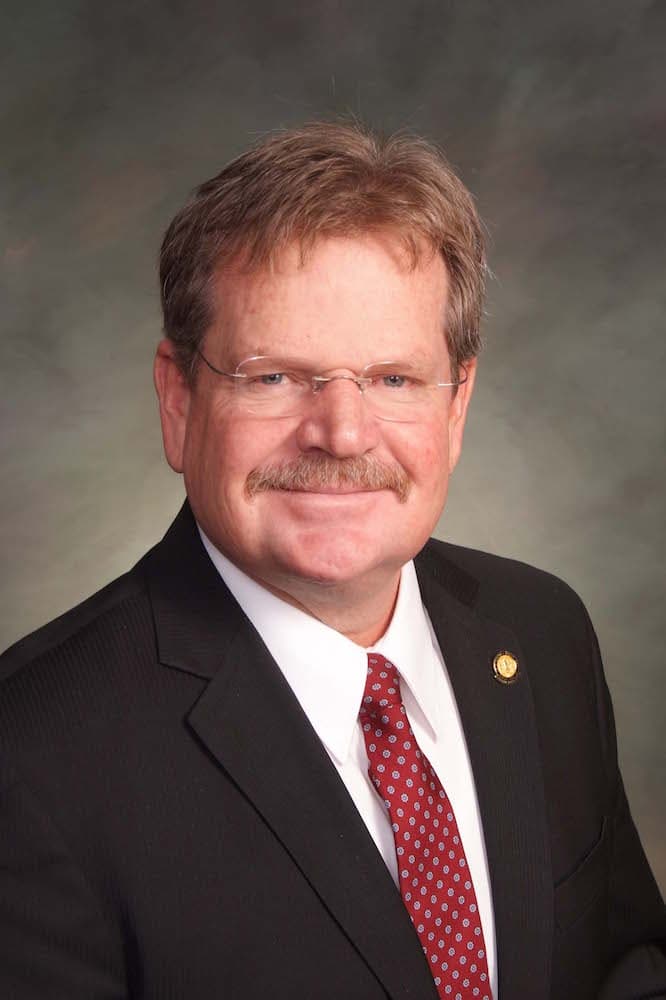
“What would it take to build confidence among prosecutors around the state, that we could look at deferring more first-time felons from prison and keeping them in the communities,” is the question the committee will study in the interim, Christensen said.
Meanwhile, the continuing structural problems at the state penitentiary in Rawlins will be a topic for the Joint Appropriations Committee. The problem is a priority, said Speaker Harshman. The JAC will consider legislation for repair, maintenance or replacement of the prison, according to the draft list.
Examining staffing needs for Wyoming’s correctional system also is on the JAC’s list, after DOC director Bob Lampert repeatedly testified during the session about a large number of vacancies in his department. The supplemental budget bill passed during the session included a $1.3 million reduction in general funds for the agency. The cut was vetoed by Gov. Matt Mead in an attempt to protect the agency, but the Legislature voted to override him.
The committee also will review benefits for state employees, including health insurance, retirement benefits, vacation time and life insurance. According to the draft list, “this topic is primarily educational for new committee members, though it could result in appropriation adjustments or statutory changes.”
Joint Appropriations also will review funding for water development and the administration of the state’s permanent land funds. The draft list specified, however, that the committee will look only at “non-project” expenditures from the state’s large water development accounts. During the Management Council meetings, several legislators made it clear the JAC will not evaluate spending on dams and other projects financed from the state’s water development accounts.
“I’m not sure we want the JAC to look at water,” Bebout said at the time, though the JAC takes detailed looks at the expenditures of nearly every government agency.
Read the WyoFile report ‘Four dams to cost $88 million’
Two attempts at creating a special committee to review the state’s revenue structure failed during the session. A bill brought by Bebout, and one brought by Senate Minority Leader Chris Rothfuss (D, SD-9, Albany) were both voted down.
However, the Joint Revenue Committee will have two topics that could advance the discussion even with the failure to create a special committee. The committee’s list includes reviewing the state’s ability to tax new industries entering the economy. Diversifying Wyoming’s economy has been discussed by the Legislature for some time. Both House and Senate Revenue Committee chairmen Rep. Mike Madden (R, HD-40, Buffalo) and Sen. Ray Peterson (R, SD-19, Cowley) have expressed concern that even if new industries come to the state, under the current tax structure the state wouldn’t benefit.
A second topic will “include a review of the current tax structure in Wyoming and will include a review of the Tax Reform 2000 report to consider possible future revenue sources,” according to the draft list. The Tax Reform 2000 Committee was formed by the 1997 Legislature, during the state’s last energy bust. That group was made up of senators, representatives and officials appointed by the governor.
The committee’s recommendations included creating a personal or corporate income tax, and raising property and sales taxes. The report was set aside, however, when the mineral industry picked up again.
The Management Council voted to give the Joint Revenue Committee extra resources to study the tax structure this interim. The committee will have four extra days, and one extra member from each chamber to research the topic.
One thing this year’s Joint Interim Revenue Committee won’t review is an exemption for mineral companies that some have used to try and escape paying taxes to Wyoming counties. Bebout blocked a bill to fix the problem this session. A suggested interim topic on the subject was voted off the list. Senate Vice-President Perkins made the motion to strike the topic, and the Management Council voted to do so, Madden said. He disagreed with the vote.
LSO spokesperson Anthony Sara said the Legislative Management Council should approve the list this week, and it could be posted online as soon as Friday.
The list was posted on April 3, and is uploaded below.
