


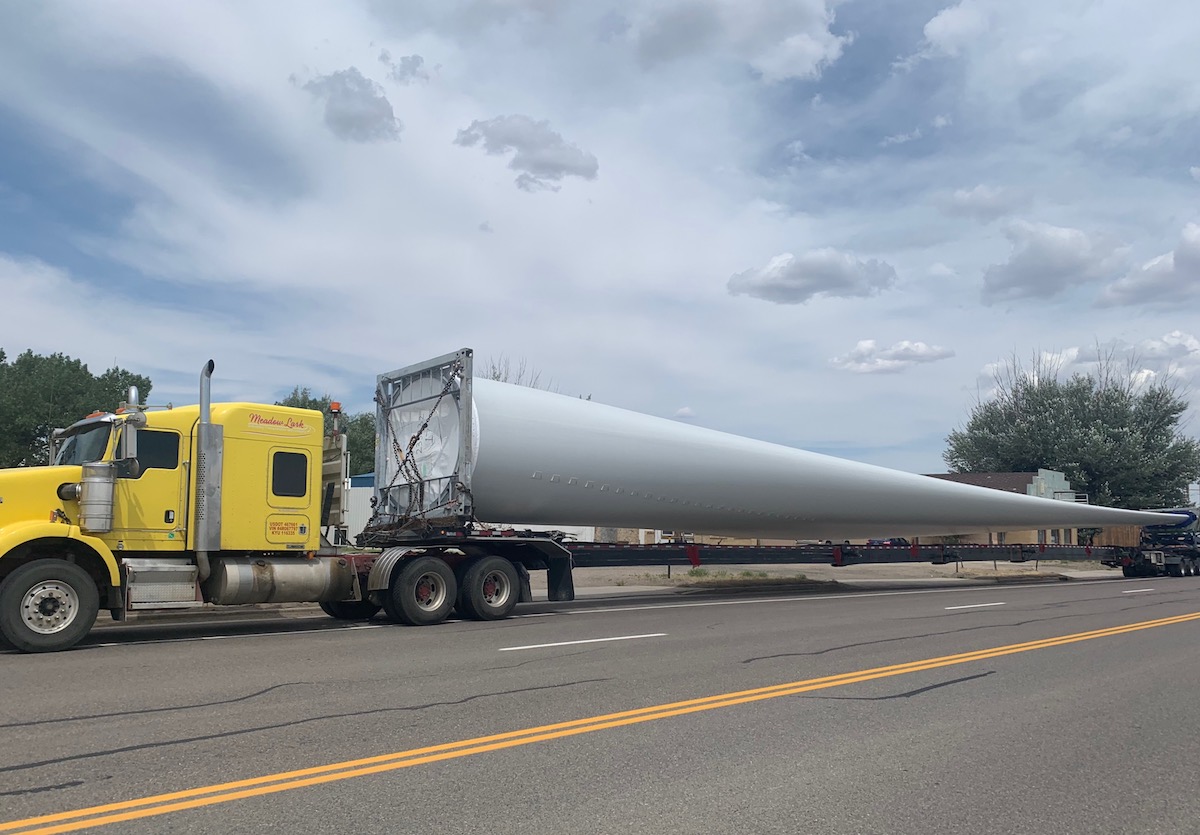
Opponents of the controversial Rail Tie wind farm in southern Albany County have sued federal regulators, hoping to halt the 149-turbine renewable energy project that would span 26,000 acres.
The suit, filed Dec. 23 in the U.S. District Court of Wyoming and assigned to Chief Judge Scott W. Skavdahl, alleges the federal Western Area Power Administration — a division of the U.S. Department of Energy — failed to adequately weigh impacts on wildlife, wetlands, cultural resources and the Ames Monument. The agency also ignored public comment and relied on a “stunning dearth of dispositive information” in its impact analysis and engaged “in what amounts to guesswork adorned with rhetorical misdirection,” plaintiffs claim.
“They [Western Area Power Administration] said ‘We can’t do anything to mitigate the environmental impacts,’ which just does not really track,” said plaintiffs’ attorney Bill Eubanks of Washington D.C.-based Eubanks & Associates. “If they really have no ability to reduce the impacts then why would you spend a bunch of time and taxpayer dollars doing these environmental reviews?”
The southeast region of the state is already inundated with wind development, plaintiffs say, which has impaired rural housing areas, industrialized ranchlands and other undeveloped areas while threatening to decimate golden eagle populations.

“It’s just awful, and it’s just going to continue to get worse and worse and worse,” plaintiff Mike Lockhart told WyoFile regarding ongoing impacts to golden eagles.
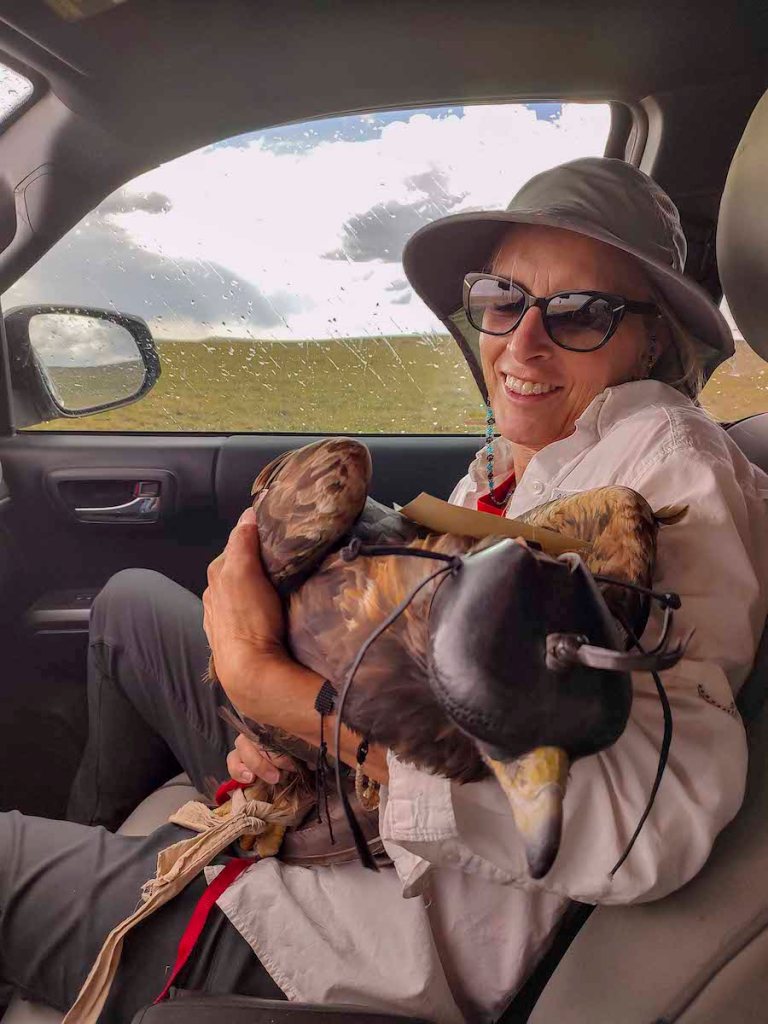
Lockhart is a Laramie-based wildlife biologist who has tagged and tracked more than 150 golden eagles in the Wyoming-Colorado region since 2014. At least 10 of those tagged raptors were killed by turbine-blade strikes or power lines, according to Lockhart, whose analysis shows that nesting golden eagles have not demonstrated avoidance behavior after wind farms are constructed.
Worse, he said, project-by-project analysis has so far failed to account for cumulative impacts on the species. Mandatory mitigation efforts to avoid bird mortality meanwhile remain woefully inadequate, he said. There are many more wind energy projects in queue in Wyoming, and permitting agencies need to more carefully scrutinize avoidance areas and act on data that justify more stringent impact avoidance measures, according to Lockhart.
“It’s pretty damn obvious what’s happening,” he said. “There’s nothing that’s being done that’s protective of golden eagles.”
Other plaintiffs include Albany County residents Michelle White and Natalia Johnson, as well as the Albany County Conservancy and Wyoming Association of Professional Archaeologists.

They allege the Rail Tie project — backed by Repsol Renewables, a division of Spanish-based Repsol — represents a preference among many wind energy developers to site development on private property to avoid stringent federal reviews. By avoiding U.S. Bureau of Land Management lands, the developer got what it was hoping for, they said: The Western Area Power Administration didn’t adequately adhere to the National Environmental Policy Act nor the National Historic Preservation Act.
They suggest that — among other environmental review failings — deficiencies in complying with the National Historic Preservation Act, as it applies to the Ames Monument National Historic Landmark near Interstate 80 east of Laramie, should convince the court to order a redo of federal analysis.
Project and litigation
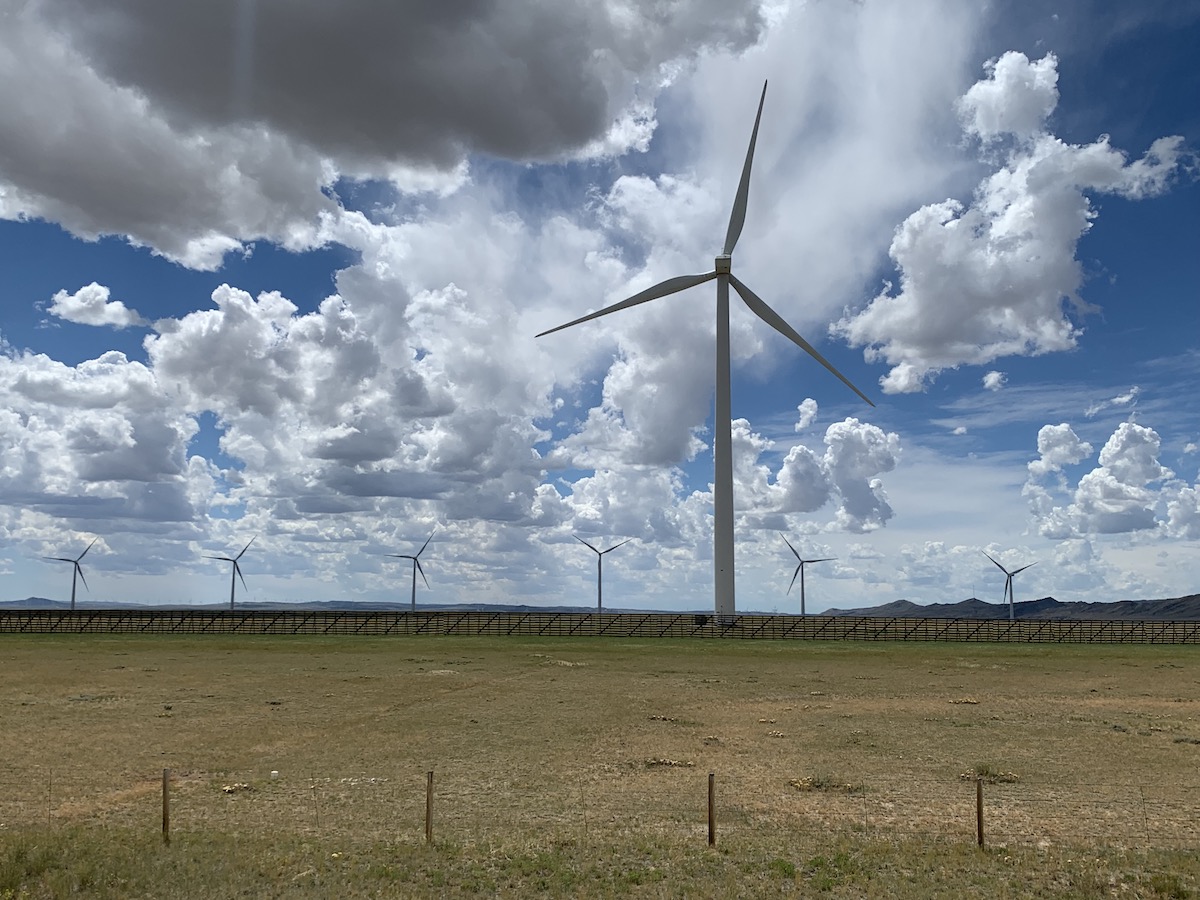
The $500 million Rail Tie project would straddle Highway 287 south of Laramie with up to 149 wind turbines. Shell’s Renewables U.S. originally proposed wind development in the valley more than 10 years ago. ConnectGen picked up the project and then sold it to Repsol Renewables. Now the wind farm is projected to be in operation by the end of 2026, according to the company.
Developers struck deals with private landowners in the area, but triggered a federal review with a proposal to connect the wind-generated electricity to the Western Area Power Administration’s Ault-Craig interstate transmission line to either sell the power to the agency or one of its clients. The Western Area Power Administration was created to manage power from hydroelectric plants in the West.
Plaintiffs allege the agency failed to adequately consider and disclose impacts when it issued the environmental go-ahead in 2022, but waited until the agency conducted a follow-up analysis under the National Historic Preservation Act, which was completed in the fall of 2024.
Eubanks explained that opponents believed they’d have a better outcome in court if they waited to file suit after both reviews were completed.
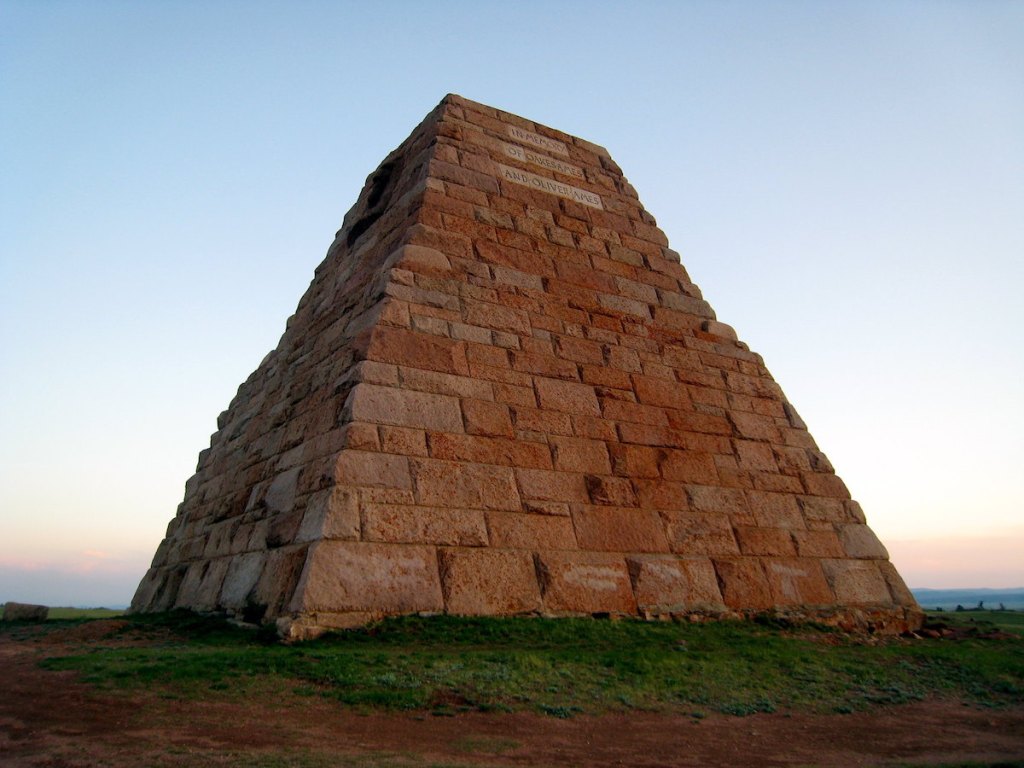
The latest review, among other things, required an analysis of potential degradation to viewsheds and aesthetics — as well as prudent mitigation measures — regarding national historic landmarks. The agency settled on a 2-mile minimum buffer zone between wind turbines and Ames Monument. However, the BLM, when considering mitigating measures regarding industrial development and national landmarks elsewhere, has imposed setbacks up to nine miles, according to Eubanks.
It’s unclear how visible Rail Tie turbines might be from Ames Monument. Repsol did not respond to a WyoFile inquiry.
“The way that you experience [Ames Monument] can be very different now that you have this modern, intrusive infrastructure that’s essentially right there in your view,” Eubanks said.
Area residents who oppose the project note that more and more people are building homes in the valley, making it a high-conflict area for industrial development.
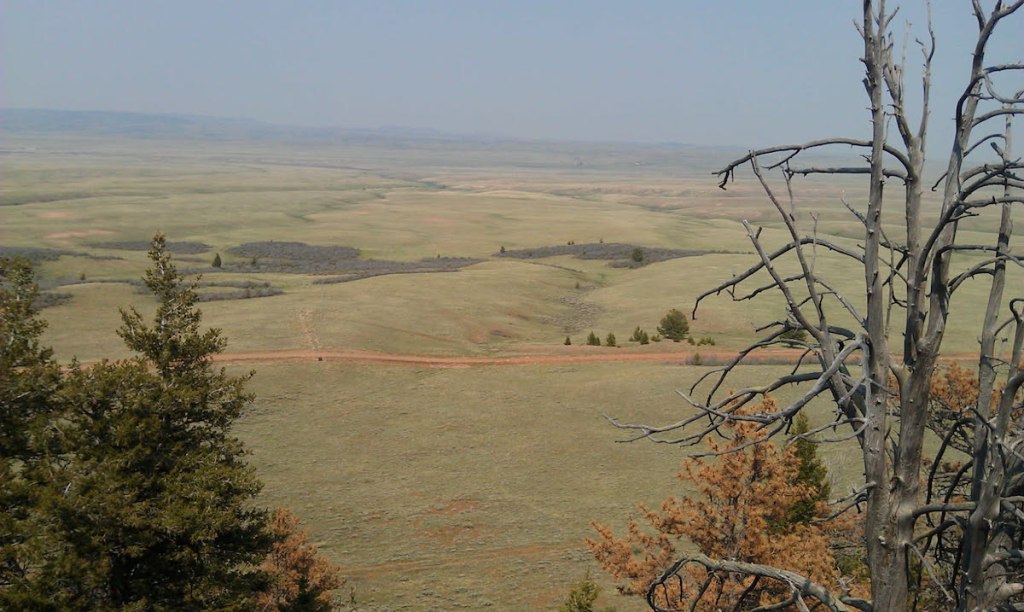
“Basically, these turbines are going to completely bathe this whole valley,” Michelle White said. “I think that they’re kind of scavenger companies. Their MO is to come into depressed areas, or agricultural-based areas, and kind of ramrod over the locals and pick up projects that didn’t progress for whatever reason.”
Best of poor options
For its part, the Albany County Commission voted unanimously to approve the aspects of the project that it had authority over while imposing some limitations and cooperative measures such as county road maintenance. However, the three-member commission did so understanding there were downsides for residents, commission chairman Pete Gosar told WyoFile.
“There are impacts for us not moving to a clean-energy future,” Gosar said. “As a decisionmaker, you try to weigh everything you can and you try to come down on what makes the most sense for your community. I thought this made the most sense for our community.”
Though he doesn’t like to see landscapes industrialized, and sympathizes with residents who will bear the brunt of it, the Rail Tie project represents the best — not the perfect — choice among a shrinking number of good options to address the climate crises, Gosar said. Residents also had “plenty” of opportunity to air their concerns early in the process, he added. Many opponents of the Rail Tie project also didn’t show up when wind projects were proposed in the northern part of the county, he said.
“Those [impacts] only became concerning once it was closer to them,” Gosar said. “When wind farms came to northern Albany County, very few said a word about it.
“I feel like the duty — as a person in an elected, official position — you do the best you can,” he added. “You tell people what you think and why you think it, and then they get to weigh in on whether you should be there again or not come next election.”
There have been about 14 different wind energy projects proposed in Wyoming since 2012, according to the state. Wyoming has nearly doubled its installed wind energy generation capacity since 2020 for a total of 3,236 megawatts, according to the U.S. Energy Information Administration. That’s more than 30% of the state’s total electrical generation capacity from all sources — coal, natural gas, wind, solar and hydroelectric. Wyoming ranks 17th in the nation for installed wind energy capacity.
One megawatt hour can power the average American home for about 1.2 months.
TransWest Express LLC — a division of the Anschutz Corporation — began construction last year on the $3 billion TransWest Express transmission line after 15 years of planning and federal reviews. It will deliver electricity from Power Company of Wyoming’s $5 billion Chokecherry Sierra Madre wind energy project in Carbon County, also currently under construction. The wind farm will have a generation capacity of 3,500 megawatts, according to the company.

The 15-years-long review process afforded the developers the ability to continually refine the projects to mitigate environmental impacts, including for raptors and other wildlife, they say.
Meantime, Lockhart charges that wildlife agencies with the authority to impose protective measures continue to gloss over and underestimate the cumulative impacts of wind turbines and powerlines on golden eagles, despite ongoing data collection and evidence.
“I never expected it to be this bad,” Lockhart said, adding that he fears golden eagle populations in the region may not recover. “I never really expected that golden eagles would be as heavily impacted as they are.”
CORRECTION: This story has been updated to reflect that Ames Monument is a National Historic Landmark, and that TransWest Express LLC is developing the TransWest Express transmission line. — Ed

Enough already! Wyoming already has plenty of wind farms besmirching the landscape and negatively impacting wildlife. It’s time to prohibit more of these monsters and impose a very high tax on the existing wind giants. After all, they use natural Wyoming resources, damage the environment, and should compensate the state and its citizens.
Albany County residents have been proactive in the discussion of northern Albany County. Our southeast Wyoming non profit focused on preserving, protecting, and promoting habitat, history, and wildlife filed a lawsuit against the Bureau of Land Management for failing to notify the Wyoming public regarding a project on public land. The BLM not only failed to notify they then took an illegal action and signed a Right of Way. According to State Statute one of the commissioners responsibilities is wildlife. Our members are greatly concerned there is confusion regarding this matter. politicopro.com/article/eenews/2023/10/27/blm-withdraws-approval-for-wyo-power-line-in-lawsuits-wake-00123991
It is all about money. Valid concerns be damned.
Hello, Anne! The link at the end of your comment doesn’t work. Thank you for all you’re doing!
Copy and paste the link in your browser. In the comment box provided I did not know how to make the link live.
No way to to get rid of windmill when it gets to the end of its life, can’t put blades in a landfill, don’t decay, California leaving them to rot out in desert!
If the wind project promised to chop up grizzlies and wolves it would sail right through!
Clean green energy isn’t so clean and green……….
Wind power is a shame. Cut the government subsidies and it falls flat on its face. Good luck fighting for your rights, govt agencies here in MN turned a blind eye and now we are stuck looking at them. Turned rural MN into an industrial wasteland. Damm blinking red lights at night. I keep praying that one of these days someone sees the light and we stop building these darn things.
The most important voice missing from this article is that of the landowners beneath the turbines. They testified to the critical value of the lease payments for these turbines in allowing them to financially sustain their multi-generation ranching operations. The neighbors have been enjoying nestling their homes into an agricultural landscape maintained by others. The appeal to “private property rights” to oppose those who own the property making a living is bizarre.
In regulating land use for wildlife benefits, the undisputed impact of wind turbines on golden eagle populations must be evaluated relative to the alternative of dedicating these lands to ever more rural subdivisions, with their own significant wildlife impacts (including the massive predation on song birds by domestic and feral cats).
The alleged impact to Ames Monument is totally ironic. That very structure is a monument to the industrialization of the West, and if the Ames brothers were alive today, they would be the first folks jumping on the development bandwagon.
Finally, counter to the voices decrying the spoiling of their historical views have been the voices of those young people testifying to the inspiration of seeing Wyoming step up to the plate to address energy alternatives for the future.
While additional mitigation measures could have been required, the Albany County Commissioners recognized the impact of this project on the precious landscapes we have grown up with, but correctly identified the need to balance multiple priorities in serving the broad public interest.
Perhaps not as many people showed up to bring concerns to commissioners about the northern Albany County towers because they didn’t directly impact hundreds of homeowners with noise, flicker, property valuation concerns, blasting, potential water well disturbance, traffic, ice throw, fire, blinking red lights, and on and on – not to mention threats to wildlife. Very few people actually live up north unlike the fairly developed 287 corridor, an area paradoxically identified in county planning documents as one to be protected from industrialization.
However, plenty of concern about the proliferation of wind towers in the northern end of Albany County HAS been brought multiple times to the attention of Commissioners as project after project has been approved, without consideration being given to the cumulative effect of mortality on eagles and bats. The Shirley Basin is one of THE primary destinations in the western hemisphere for golden eagles which are seriously threatened due to the cumulative impact of wind project after wind project after wind project. They are not as adaptable to disturbance as bald eagles, and their numbers are already declining. What will happen when goldens are put on the endangered species list as a result of wind tower mortality? We don’t know what we’ve got til it’s gone…..
Excellent article. Wind developers and permitted routinely use bogus arguments to support very costly and harmful projects. Climate fear mongering is prevalent. There is no climate emergency. Zero CO 2 is abated from industrial wind. Mitigating is a ridiculous concept. Death and loss of habitat is rather permanent. No, birds and wildlife does NOT immediately relocate. We will.never know the true mortality numbers. Between 13 and 31 million birds and Bats in the USA annually. Stop the carnage.
What research been done to reduce the hazard such as blade strippping lights or sound? Success has had with migrating waterfowl.
Making depressed economic spaces more depressed, killing the native wildlife, creating huge amounts of waste and littering the once wide open spaces. They don’t seem to be helping Wyoming at all.
I moved to Wyoming 34 years ago because I fell in love with the pristine panoramic views. Slowly but surely the panoramic views are disappearing. It brings to mind the Wyoming welcome sign from long ago that said “Welcome to Wyoming … where the road ends and the West begins.” Now with all the wind turbines going up in plain sight that phrase is more like “… where the road ends and the wind turbines begin.” For me the wind turbine is the 21st century equivalent of the 20th century smokestack.
Good article. The problem is that all of these sacrificed lands and habitat are not going to solve our climate crisis by powering existing homes– rather they are going to energy hungry data centers, AI warehouses, and crypto dens in order to prop up the shareholder gold rush. We have no rational energy strategy, which means these sacrifices will be in vain.
As to golden eagles — it doesn’t matter much if the turbines are 2 miles or 6 miles from a nest — it matters where they are en route to a hunting site. Often they are sited right smack in the middle, and are death traps to immature birds.
They should admit it: they picked a bad spot. 287 from Laramie to Fort Collins is an award winning scenic highway, and many folks have spent their life’s savings building homes in the area. Why ruin it? There’s plenty of land with equally good or better wind north of Laramie, with better access to the WAPA power station and hence to the grid. I’m all for renewable, nonpolluting energy, but there’s no need to kill wildlife or wreck people’s lives to get it.
— As a fan of the Architect, H. H. Richardson, I have visited the Ames Monument several times. I love it.
— The Ames brothers got rich through a complex financial scheme, “Credit Mobilier,” to inflate the cost of building the Union Pacific Railroad.
— The Monument was located at the high-elevation point of the line, next to the tracks. But the rails have been relocated since, to a flatter gradient and lower summit. The Monument sits, like Ozymandias’ statue, alone on a barren plain. No railroad in sight; it’s over at the Hermosa Tunnel.
— If the wind turbines are installed, the Ames Brothers might welcome the companionship. I hope the local sharpshooters do not show off their marksmanship on the turbines, as they have done defacing the Ames Monument.
Ames Monument is a National Historic Landmark, not a National Monument.
Ames Monument was called just that Ames Monument until the 2016 National Historic Register application was officially filed. The Mummy Range is also an older term describing the front range from Loveland to the Never Summer Mountain Range. Stumbling over words is immaterial. Ames is Ames there is no other to confuse it with. What is important is the preservation and protection of all National Historic Landmarks. Wyoming has 21 National Historic Landmarks or NHL’s for short. If we do not follow Section 106 and 110 f law then none of them are safe from industrial impact or blight. That is what is truly important.