


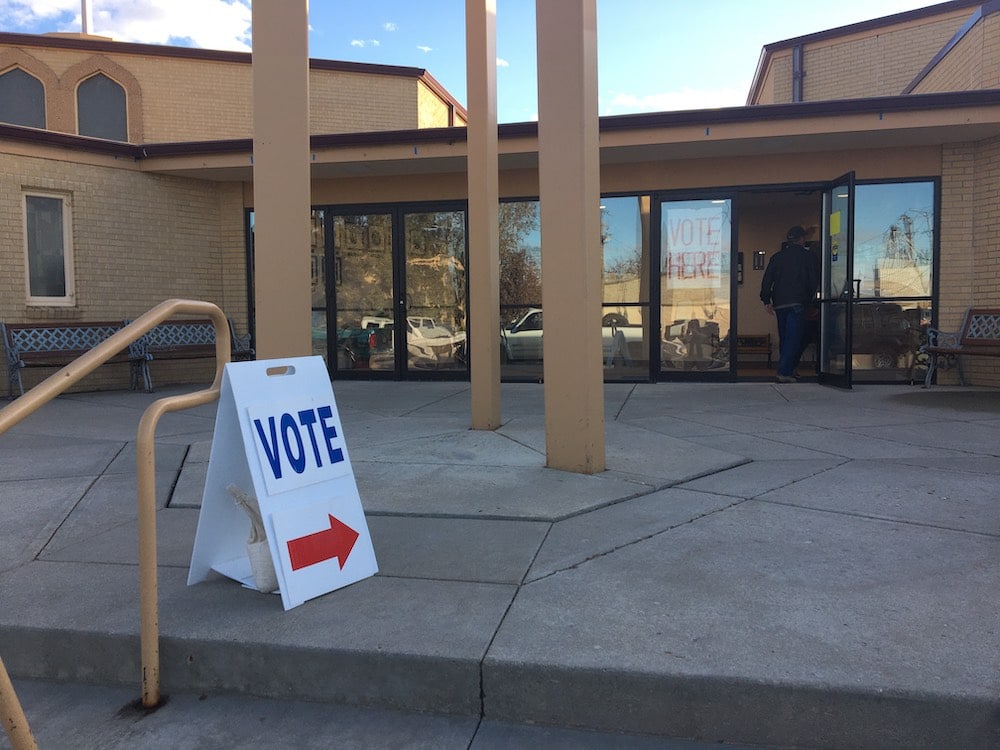
On April 4, Democrats in Wyoming will caucus to choose which presidential candidates will get all or some of the 14 pledged delegates at the Democratic National Convention. My children and grandchildren will hear my speeches about what a precious and important duty it is to vote. They, like me, will participate as citizens in this sacred task. Many Wyomingites have already voted with their mail-in ballots (those must be postmarked before March 20). And for those who cannot attend their county caucus on April 4, they can also vote early in person on March 28.
What is unique about this year’s primary ballot is that we will get to rank our choices in what is known as ranked-choice voting. This is a simple, elegant and effective way of choosing a consensus candidate when there are many in the field, and it is something I hope we can extend to more elections in Wyoming and across the country. Wyoming is among five states conducting ranked-choice voting in the presidential primary. Nevada, Kansas, Alaska, and Hawaii are also leading the way.
The process is simple and easy to understand: Instead of voting for a single candidate, voters may rank the candidates in order of preference. If they are only comfortable with one candidate, they only need to select their top choice. If there are a number of candidates that enjoy a range of a given voter’s support, the voter can rank accordingly as many candidates as they choose.
In calculating the outcome, there are a series of “tallies.” In the first round, all of the first choices are counted, and the candidate with the fewest first-place votes is eliminated. Each ballot that ranked that last place candidate as its first choice now has its vote recorded for the voter’s second choice. This process continues until the only remaining candidates have at least 15% of the vote — that being the minimum threshold to win delegates in Wyoming’s Democratic primary. In ranked-choice-voting elections intended to elect a single winner — not just determine who will receive a share of delegates — the process is repeated until one candidate has received a majority.
Because the race has narrowed to two leading candidates, the options are now more limited in our primary. But consider what occurred only a few weeks ago before Super Tuesday. Many voters cast their ballots early, and many (more than 1 million on Super Tuesday alone) had their votes tossed out due to candidates dropping out after they had voted for those candidates.
Had those Super Tuesday states used ranked-choice voting, those ballots would have been counted for their second or third or fourth choices. Their votes would have been counted. In fact, in Nevada, more than 70,000 voters were able to indicate a favorite, and back-up choices, on their ranked ballot.
Support civil discourse with a tax-deductible donation.
As another example, consider the election four years ago for the Republican nomination. A significant majority of Republican voters split their support among Ohio Gov. John Kasich and Sens. Ted Cruz of Texas and Marco Rubio of Florida. Had ranked-choice voting been utilized, according to several voting simulations, there may well have been a different nominee.
Ranked-choice voting is the caucus of the 21st century, but it’s done using a ballot, making it more efficient and allowing more voters to participate. It has been adopted around the country — from mayoral and city council elections in Colorado, New Mexico, Minnesota, Utah, Maryland, Massachusetts and even New York City. It is used in Maine for all state and federal primary elections and all congressional general elections. It is especially useful in local races where there are many candidates.
Another benefit of ranked-choice voting is the moderating influence it has on candidates, because they must gain widespread support. We have all seen races where candidates benefit from mudslinging and attacking their opponents instead of sharing their positive vision with voters. In ranked-choice voting, candidates are also competing for second choice votes, and they have an incentive to say “I hope you will pick me as your No. 1, but please use your rankings, and I hope I’m high on your list.” Thus the approach disincentivizes candidates from the us-vs-them, all-or-nothing divisive campaigning that is so prevalent today and avoids the resulting polarization.
Ranked-choice voting also minimizes “strategic voting” where voters may feel that they need to vote for “the lesser of two evils,” because their candidate is less likely to win. With ranked-choice voting, voters can honestly rank candidates in order of choice, knowing that if their first choice doesn’t win, their vote automatically counts for their next choice instead.
I believe this is an improvement in our process for selecting those who will represent us. And I hope my fellow Wyomingites will spend some time thinking about who they will mark on their ballot or support at the caucus.
But more than that, I hope they will participate and take part in the most important act of citizenship. And I hope they will marvel at what we have in our beloved country — that we have a say in what kind of a government we have. After all, our country is going to be what we make it.

I wish I had known that before I voted and mailed my ballot in. I certainly would have added more names. I didn’t see anyplace that explained why it was giving us a first, second, third, etc. choice. Thank you for letting me know, for future references!
I live in Washington State where most voting is by mail. Our primary was March 20th. I usually vote as soon as I get my ballot, but this year I waited to vote until after Super Tuesday because I thought there was going to be a narrowing of the field, which is what happened. I can’t tell you how many people have told me that they voted early for a candidate who dropped out before election day so their vote didn’t count. If we had ranked elections like Wyoming is doing now, their votes would have probably counted. And in a close race this is very important.