


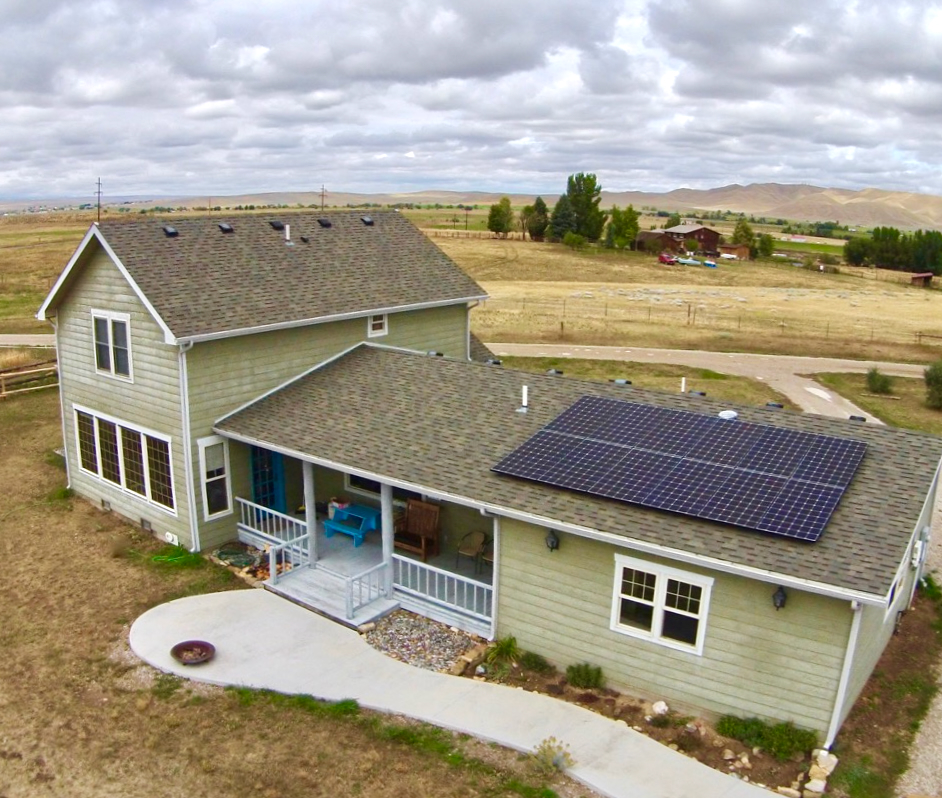
When your electric utility raises its rates, what recourse do you have? Sure, you can write letters, attend public hearings and hope the Wyoming Public Service Commission has your back. You can redouble your efforts to conserve and upgrade to more efficient appliances.
Opinion
There’s another way to express your concerns, though. If the power sold to you is too expensive, you can make your own. If your utility’s emissions haunt you, you can displace their power with carbon-free electricity from your roof or backyard.
Although small-scale distributed solar is a great way to counter rising utility costs, people in Wyoming have been slow to adopt it. As the owner of a solar contracting business for over 20 years, it has sometimes felt like selling sno-cones along Interstate 80 in January. After all, power here is cheap, and Wyoming does not have objectives or incentives for transitioning from fossil fuels to renewables like other states. Twenty-four years since Wyoming enacted statewide net metering, just one home in every 132 has its own solar or wind power, and among businesses, only a hundred or so do.
But opinions are changing. Our electricity — especially residential — is not cheap anymore, and climate concerns seem increasingly dire and close to home. For many people, and for a variety of motivations, it has become attractive to defect from an unresponsive utility system.
Which brings us to a hot debate in the 2025 General Session of the Wyoming Legislature. Two camps are seeking to influence Wyomingites’ prospects for home-brewing their power. The future of distributed generation (the ability of ratepayers to offset their electricity use by generating solar and wind power on their property) is on the line.
One bill, Senate File 111, “Net metering revisions,” intended to replace the retail rate credit now offered for month-to-month excess with a yet-to-be-known rate and to allow rural electric cooperatives to limit or opt out of net metering entirely. The bill failed to proceed, as had similar efforts in past years, but its proponents may still seek to limit the spread of customer generation.
The other, House Bill 183, “Net metering amendments,” offers to expand the reach of distributed generation, allowing non-residential ratepayers like businesses, ranches and schools to build larger systems consistent with their larger electric use. The measure cleared the House and has moved on to the Senate.
This debate is a crossroads moment for the future of rooftop solar in Wyoming. The effort to reign in net metering is being championed by utilities and utility advocates, while HB 183 is promoted by a grassroots coalition of ranchers, communities, small businesses and residents looking for solutions to rising energy costs and accountability in their utilities.
No business relishes competition. You need to trim prices, improve services and smile more. Rooftop solar is akin to competition to our regulated monopoly utilities — and many do not welcome it. In their 100 years of service to us, customers had no choice but to buy power from a single provider. Net metering changes this.
Electric utilities enable our quality of life. The U.S. electric grid is a marvel of engineering. We should be thankful for what this system has brought us and, at the same time, be willing to push our utilities to be the best versions of themselves. Rooftop solar is one of the few tools Wyomingites have at their disposal to do this.
If you’d like to see more of our rooftops generate electricity in Wyoming, I hope you’ll join me in supporting HB 183 and opposing efforts to restrain distributed generation.
I looked into a rooftop solar array in 2015. At the time it looked promising but the cost was high. In 2019, I got quotes from three companies, and chose the middle priced one. Not because of price, because of the answers from the owner..installer. My array was installed by mid June of 2020, because it was put on hold due to covid. The system went on line mid August 2020. Originally, I decided to have solar put on my rooftop to ensure a better future for our kids, both environmental scientists. I did not care if I ever saw a return of my investment. The amazing thing is, the savings were higher than I had thought they would be and the entire purchase price in hydro savings alone, will have a payback of 9 years! Mid 2029, I will be totally repaid. I have a steel shake roof also with another 28 years warranty, so I will never need to replace shingles.
We had a solar PV system installed in 2004. The house had baseboard heat and the solar boost with net metering worked wonders on our electric bill. For about half of each year, we not only generated all the power we used, but banked the surplus, while paying the monthly facilities charge for the connection. That house is now a rental and I upgraded the solar system in 2022 with new panels with microinverters, so the power supply to the house is AC.
We bought a house nearby and installed a larger grid-tied PV system in 2011, with the same good results. We generate enough to cover our needs for most of each year, with an EV in the bargain. Our surplus power goes to the grid, to supply our neighbors. The only complaint is that under the present net-metering law, if there’s banked power at te end of each year, the local co-op cancels it out for about 2 cents per kWh and then charges us 12 cents per kWh for January. Such a deal!