

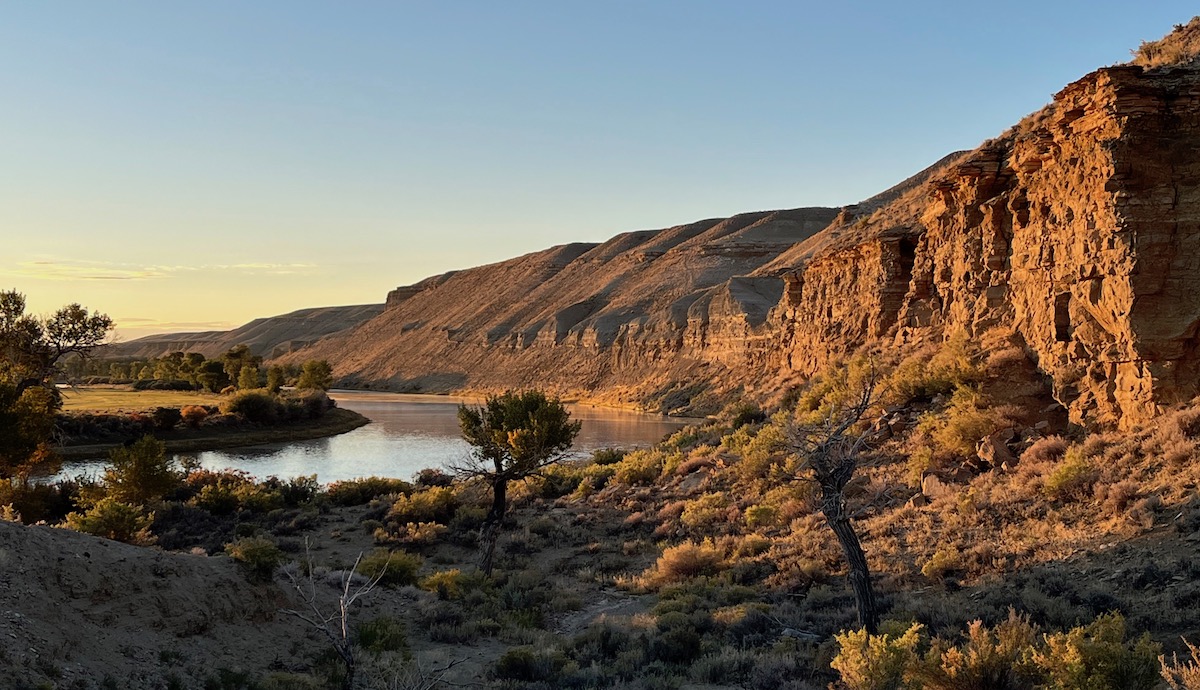

Gov. Mark Gordon joined fellow governors from other Colorado River headwater states Thursday to announce that a significant extra water release from Flaming Gorge is imminent. Dire water conditions in the region will likely require reducing water use, he warned.
“Because of such diminished runoff, existing state laws in the Upper Division States [Wyoming, Utah, Colorado and New Mexico] require water users to face cuts to water rights dating back to the 1800s — these cuts are mandatory, uncompensated, and will have significant impacts on water users, including Upper Basin tribes, and local economies,” Gordon said Thursday afternoon in a joint press release with Govs. Spencer Cox of Utah, Michelle Lujan Grisham of New Mexico and Jared Polis of Colorado.
The Colorado River Basin has experienced the warmest winter on record, combined with historic low snowpack which feeds the Colorado River. Some 40 million people in seven western states and Mexico rely on the waterway.

Reached for comment, Wyoming State Engineer Brandon Gebhart told WyoFile, “There won’t be enough water to satisfy existing water rights, and so we regulate junior users to satisfy senior users.
“That regulation is the result of calls from senior Wyoming water rights, not a downstream demand on the Colorado River,” Gebhart added. “Due to the historically bad hydrology, we expect that many Wyoming streams will have only enough water to satisfy the most senior rights, many of those dating back to the 1880s.”
Water-use restrictions are imposed on a pecking order of senior-versus-junior water rights. Those who acquired their water rights most recently are the first to be ordered to close their spigots. In southwestern Wyoming, those junior water rights include municipalities and industrial facilities, such as some trona mines and soda ash operations.
For months, Gebhart has been warning that the historically bad outlook for the Colorado River will require extra releases from Flaming Gorge Reservoir — one of a handful of “upper basin” storage reservoirs to help maintain operational levels at Lake Powell and to ensure legally obliged flows to downstream states Arizona, California and Nevada.
How much and when those releases will occur is still to be determined, according to Gebhart. More details are expected by the end of April.
“The volume of the release is still uncertain, but we expect it will begin on May 1 or perhaps sooner,” Gebhart told WyoFile via email, adding that the federal Bureau of Reclamation is contemplating an extra release volume of 660,000 acre-feet of water or — potentially — up to 1 million acre feet. For comparison, Flaming Gorge Reservoir has a total storage capacity of about 3.8 million acre-feet.
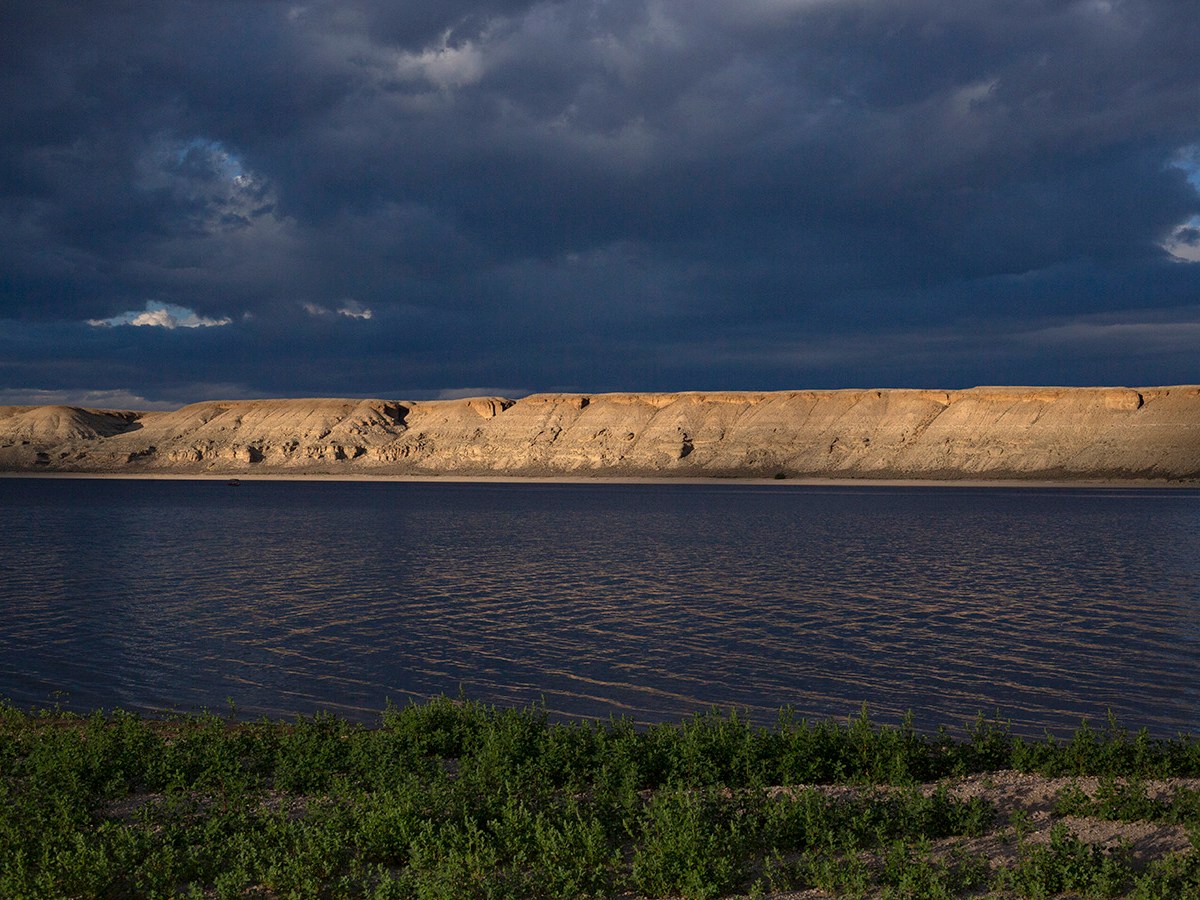
Colorado River authorities released an extra volume of about 465,000 acre-feet of water from Flaming Gorge in 2023.
The supplemental releases from Flaming Gorge are intended to help fill Lake Powell in Utah and Arizona, which — according to water forecasters — could decline this year to the point it can no longer generate hydroelectric power.
Wyoming’s Colorado River Advisory Committee is scheduled to meet at 10 a.m. Friday. Gebhart is expected to provide more details about Wyoming and Colorado River matters. You can access a livestream of the meeting here.
