The recent tiff between Gov. Mark Gordon and Secretary of State Chuck Gray — sparking the “shut up” heard ‘round Wyoming — felt familiar to a front-row seat I occupied last spring.
Opinion
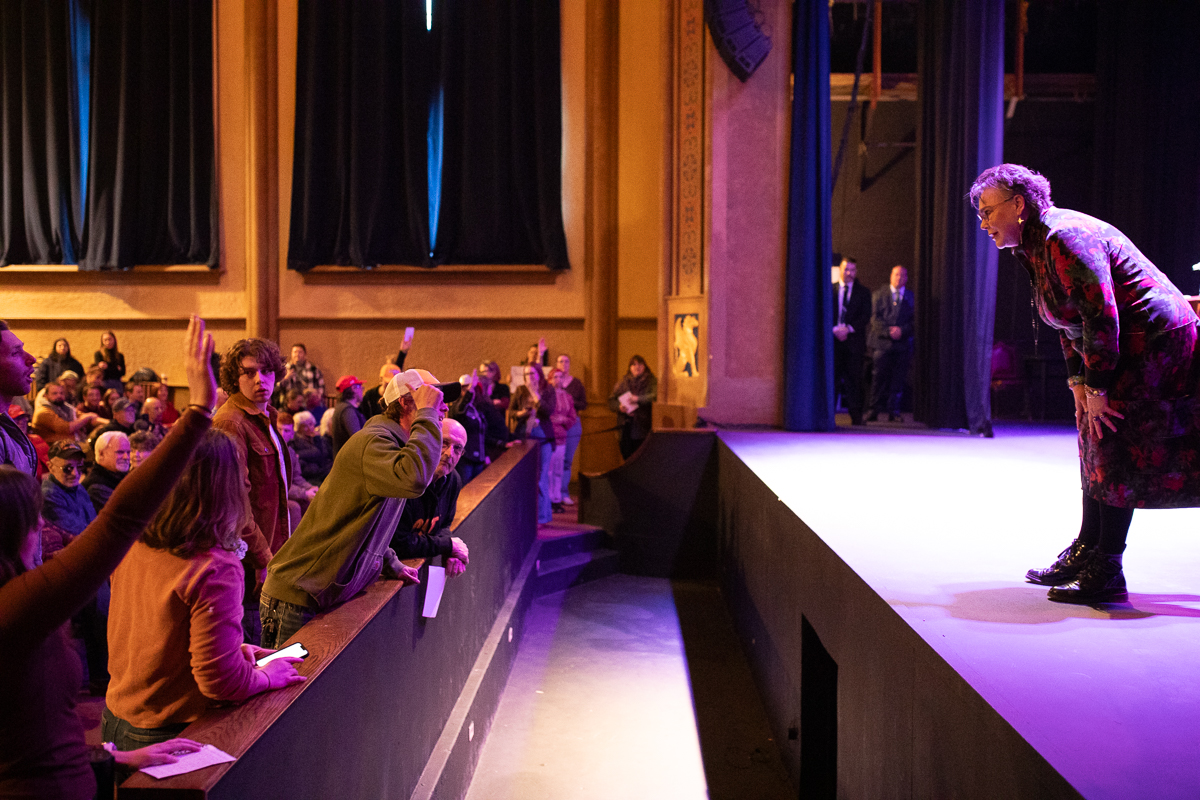
When U.S. Congresswoman Harriet Hageman took the stage at Laramie’s Gryphon Theatre, the room was packed with hundreds of constituents. In less than an hour, the town hall sparked a viral snapshot of an unforgettable afternoon — and my workplace — across the globe.
More recently, tensions rose between Gordon and Gray at a State Board of Land Commissioners’ meeting regarding attainable housing. It was yet another scene that felt more like a junior high hallway than a room of state leaders.
The events share a distinct quality: provocation from an elected leader, followed by a performed shock at the heightened emotion of their target. Hageman and Gray relentlessly poked the proverbial bear, then cried “victim” the moment the animal showed its teeth. Some may call this brave and bold; others, theatrical. From where I sit, I see it as a pattern of behavior used to avoid accountability to the community that elected them.
Behavioral science researcher Jennifer Freyd uses the acronym “DARVO” to describe behavior used to dodge accountability. It stands for “Deny, Attack, Reverse Victim and Offender.” Those with the upper hand provoke, then recast themselves as the harmed party. We see it when power-holders attack during a public forum, only to later call out the “aggressive” behavior of those who dare to respond. It’s a masterful technique to avoid the real issue, and it runs rampant in today’s politics. Its effects are far more harmful than they are agitating.
This behavior trickles down into city councils, committees and volunteer-led organizations, shaping what could be a generative, connective conversation into progress-halting bottlenecks. The proven issues within our towns are ignored in favor of combative discourse that solves nothing and leaves us all looking like fools.
Off the playground, Wyoming is bleeding talent. Our builders — critical professionals and levelheaded citizens invested in the state — are quietly packing their bags amid the juvenile noise. The hard work of talented individuals building safe, reliable communities is left wasted while the power plays drown out public service.
My adult life has been punctuated by saying tearful goodbyes to friends — talented researchers, caregivers, artists, contractors and community builders — leaving in pursuit of health care, housing and career growth.
At the same time, I’ve watched conversations about housing repeatedly stall out in my own community, even as the consequences increase each year. We say we value Wyoming’s people — our teachers, workers and neighbors — until it requires us to make space for them.
We resist what’s different from what we’ve done and question the loyalty of those trying to solve the problem. We want homes for our children, so long as it doesn’t block our view. We say, in the name of our neighborhoods, that there’s no more room.
I sometimes wonder where, exactly, the frontiersman’s principle of “not in my backyard” entered the Cowboy Code.
Furthermore, the success of my work is stifled by the decreasing pool of trained talent, contractors and innovators committed to putting down roots in Wyoming. One day, there will be no one who can service a historic building like Laramie’s Gryphon Theatre because no one with that skill can afford — or wants — to be here. Then, I’ll write checks to contractors in Colorado and Utah for tens of thousands of dollars each year.
When I seek help from my state and federal level representatives to solve these problems, I’m met with cheap showmanship and a case study in ineffective leadership. They aren’t getting closer to fixing anything. Unless, to them, the “problem” is my being here. Increasingly, it feels like our leaders aren’t interested in helping us to stay.
I watch my community take its cues from the bullies on the stage. Our leaders teach us that we win by being cruel, and as a result, progress is halted before it can take hold. Neighbors attack one another in Facebook groups and public meetings. Keyboard warriors climb their way to power by bullying — and the builders leave.
I don’t blame anyone for looking when the spotlight is turned away from progress and toward the wreckage. But if we want builders to stay in Wyoming, we must stop rewarding the bullies for demolishing our home.
When we elect abusers, we shouldn’t be surprised when our communities end up bruised.