


Opinion
I had a conversation recently with a friend. Somewhere in the palaver, I used a phrase that I thought everyone knew. Turns out they don’t — or at least, he didn’t. This happens to me every so often. Terms like “bull hauler” or “blue roan” or “shotgun chaps” are well-known in the Wyoming lexicon, but maybe not so much outside our beloved rectangle. In this case, the term was “the home place.” It was just an honest misunderstanding, but it started me thinking. Perhaps I should explain.
It seems to me that one of the most defining characteristics of human beings is a sense of place. We long to belong somewhere. Some people are born there and never leave. Some spend their whole lives in search of it. But in all cases we humans yearn for someplace that has meaning, that connects us to the earth and to our people. In the absence of this connection, we feel adrift. We need a home place.
For my family and me, that’s in southwestern Wyoming. One particular spot in that great wide open has particular significance for us. It has been our retreat for five generations. It has provided not only a sense of place, but a place of sense — somewhere we could stop for a day or a weekend or a week to look at ourselves as individuals and as a family. It has offered us peace and quiet and some distance from our neighbors. But more important, it has offered us both the freedom of the wilderness and the comforting blanket of family traditions. It has been the site of a few honeymoons, the best birthday parties, a lot of back-breaking labor, countless fishing trips and elk hunts, and some of the most memorable moments of our lives. It’s our home place.
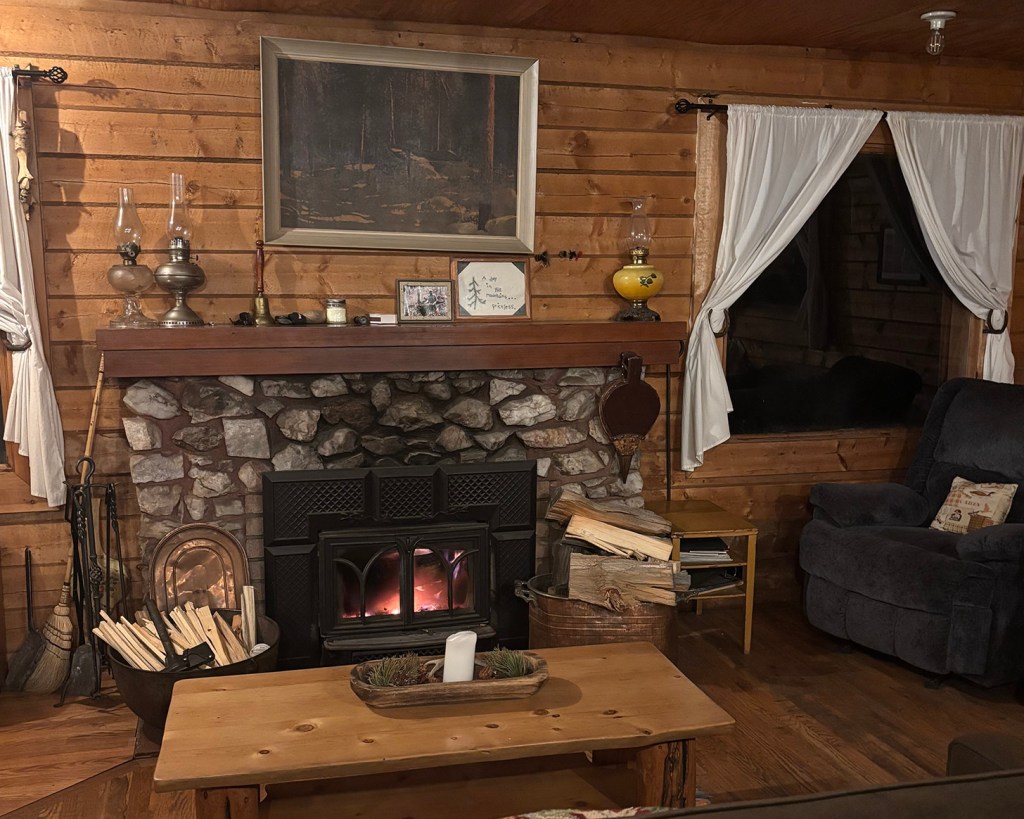
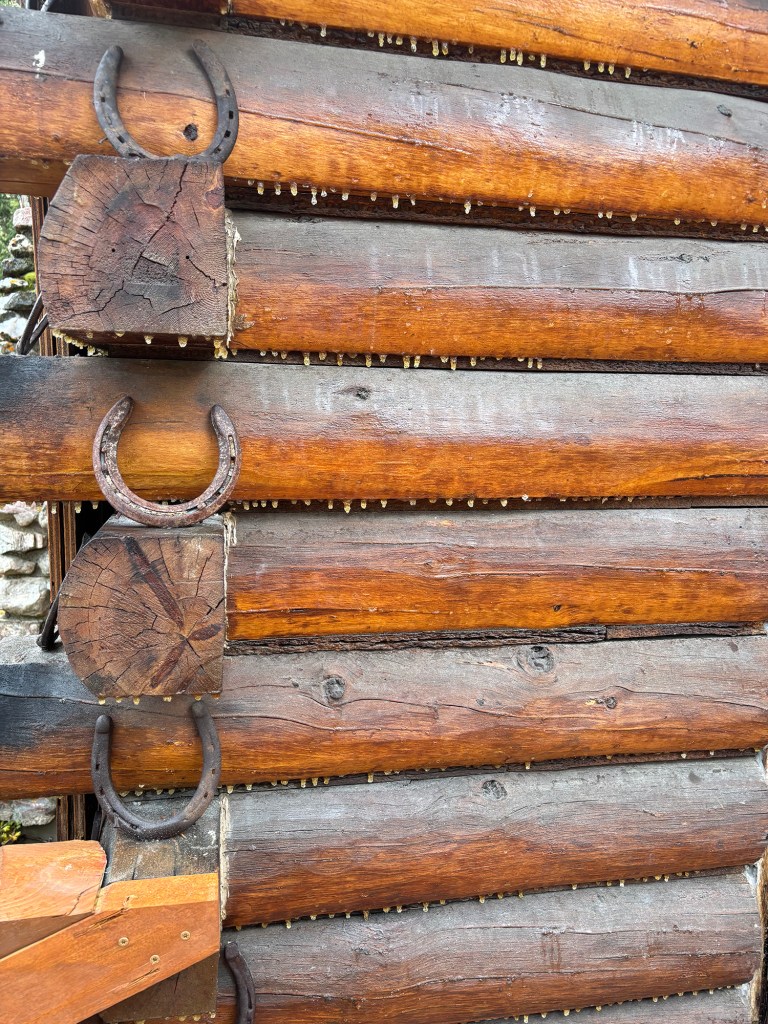
And we built it, or at least we helped. The technical knowledge came from those artists in logs, the Williams brothers. They ran the last of the little scab sawmills in our end of the country, located a ridge or two over from us, and they cut the logs for the cabin there. They milled them and cut them onsite, turning lodgepole pine into a cabin in one summer. With rose quartz from South Pass for the fireplace and granite river rock from Big Sandy Creek for the chimney, we had a small cabin built from the land on which it stood. And so it stands today, in large part unchanged. Between that first year and now have come the memories, volumes of memories.
Many of my own home place memories are somehow tied to wildlife, the products of a lifetime of fascination with wild critters and the places they live. I remember the way my dad looked when he fished, standing on one of the granite boulders that rimmed Big Sandy Lake. He wore a light wool plaid shirt against the morning cool and his old, battered felt hat. He seldom spoke when he was fishing, and the only sounds I recall were the whisper of the wind and the light “plop” of a Colorado spinner hitting the surface of the water. We fished a lot in our 12 years together. I suppose that we were like fishermen everywhere — sometimes we caught a lot and sometimes we got skunked. I cannot remember how many fish we caught on any given day, but I remember how it felt to be fishing with my dad, and I would give a great deal to be able to do that just one more time.
After his death, my mom and I continued to go to the home place. My mom was always a part of it. Even in her 80s, she returned every summer to renew her relationship with it. She told me once that it was hard to be there for a while after Gus died. It is a tribute to the strength of my mother that her love for it endured. But it is no great surprise. If you look through the accumulated memories of this family and its special spot, you will see that my mother is a part of many of them. She was there, hauling rock for the fireplace. She was there, fishing with my dad. And she was there to be a single parent to an angry young man who would rather go hunting and fishing than go to school.
The home place remained in the background as I met Kim, went to college, and left our hometown for Laramie, Pavillion, Gillette, Cheyenne and finally Laramie. But we have always come back. Indeed, it became the scene of some of the best parts of our life together. We spent the first night of our honeymoon, out of gas in a borrowed Bronco watching the moon rise and set over the high desert on the way to the cabin. We would spend a week there together every September, hunting antelope and sage grouse on frosty mornings when the aspens were kissed with gold. After 53 years of marriage, we still spend the best part of September at the home place.
Kim’s touch there has always been unmistakable. From the defensible space that took us two decades to complete that now protects us from the inevitable wildfire to the second hardwood floor, the rustic decks both front and back, and the handmade quilts and curtains, she has shaped the home place into a warm and welcoming haven that reflects who we are and where we are. She has sculpted it, not so much in her own image but in the image of our family and our connection to the land.
It was only natural that our children should be a part of the home place, and that it should be a part of them as well. First Jenny, followed by Beth and then Sarah. These girls were rocked to sleep in the big chair by the window. Each bathed in the waters of South Temple Creek and slept under the stars as the coyotes yipped in the midsummer night. They caught their first fish there, and we recorded each one in photographs. Each of the girls shows a bit of who they are in these pictures. Jenny is quiet and holds a small brook trout delicately with a shy smile. Beth at the same age has a similar small trout, but she has a grin from ear to ear and a death grip on her fish. Sarah is 8, covered in fish blood and slime, wrestling a whopper of a cutthroat.
Our son Clark represents a special case. Born to two high schoolers in the early 1970s, he was adopted shortly after his entry into this world. It was a closed adoption, long on secrecy and judgment but short on compassion. It was also the hardest and most painful decision of our lives. We never saw him, never held him, never even knew what happened to him. He was simply gone, and the pain of losing him was indescribable. But through a series of events that can only be described as miraculous, he came back to us at age 46. And he came with his family to the home place.
With us and with their own families, they all return. Like fish returning upstream to their home waters, they return to the home place. And they bring with them a love for the land and an ethic for the use of that land. They grew up knowing the value of a sense of place and valuing a place that makes some sense. Like the old axe that’s been in the family for 50 years — only replaced the handle three times and the head twice — the home place remains a priceless part of our lives. Each generation has used it, maintaining some things, adding or subtracting others to meet their needs. But the love of the family and the love of the land have remained constant. We seem to have passed that constant on to our own children, and they have in turn passed it onto their children. It may be the most precious gift we can give them — a legacy of love.

I had a chance to visit with Walt and Kim at their home place the other day. Always good to share stories with someone who can put words together like Walt does. Wonderful piece.
Precious!