

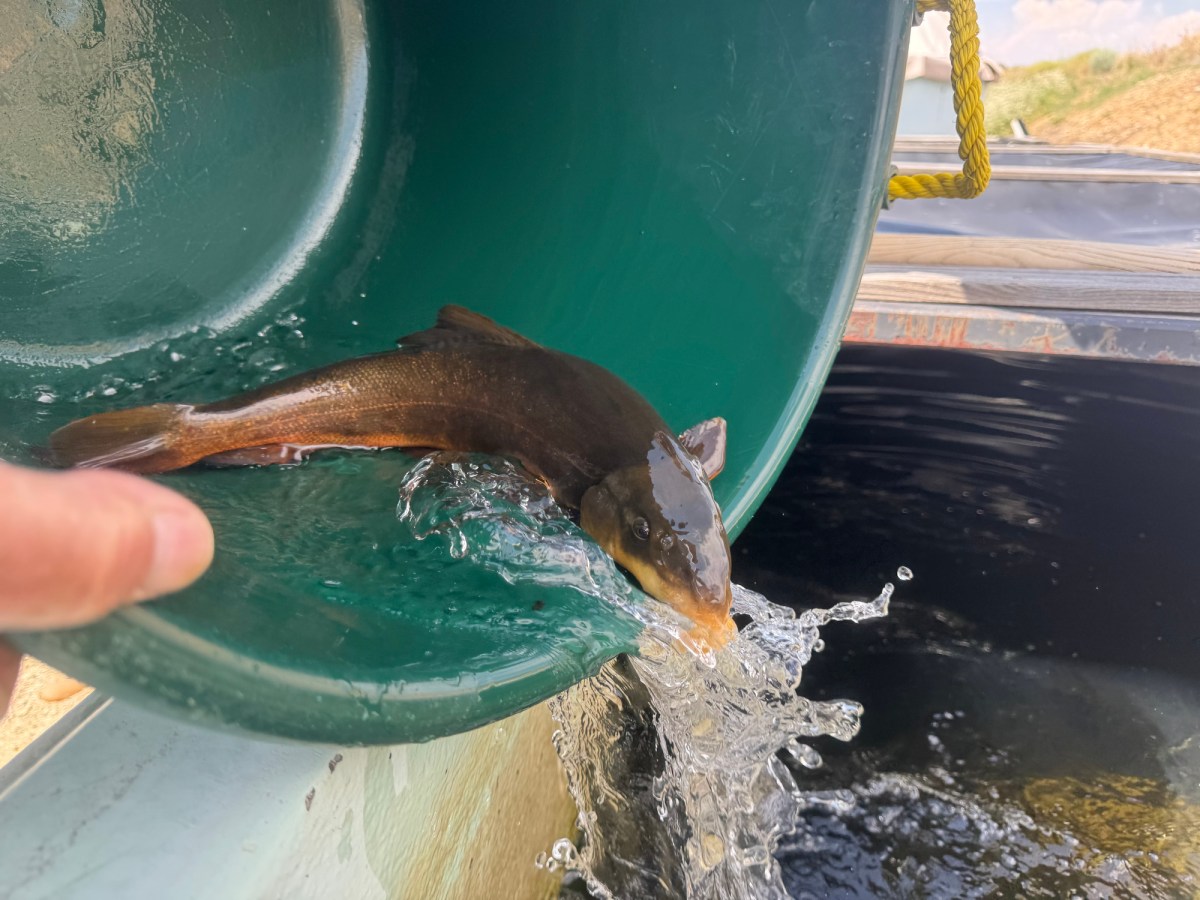
They don’t like the sun: not in the wild, and definitely not in holding tanks. The foot-or-so-long flannelmouth and bluehead suckers grouped together and then fled the moment Joe Gillis heaved the covers off their watery pens at the East Fork Hatchery southeast of Pinedale. In a prairie creek or river, the creatures might seek solace from the glare of the sun under the curve of an overhanging bank or the shade of a willow. Here they raced to a corner where a bit of shade still remained.
Gillis spoke about the two sucker species with a mixture of irritation and admiration. He’s spent decades raising cold-water fish like rainbow and brown trout. He can help trout artificially reproduce by the literal millions before sending the offspring out across the state, region and even the country. But suckers, well, they proved not just challenging but downright difficult.
“They don’t like change,” he said. “It was a big transition to go from the wild to captivity, and they didn’t relax for several years.”
About a decade ago, he accepted the challenge with little knowledge of how to raise a sucker and even less funding. But he knew that biologists worried about the suckers’ future. Climate change, long understood as a problem for cold-water trout, was and is becoming an increasingly large issue for native suckers. At the same time, the native suckers faced predation from introduced species like burbot and hybridization with longnose and white suckers, which can eventually wipe out a native species.
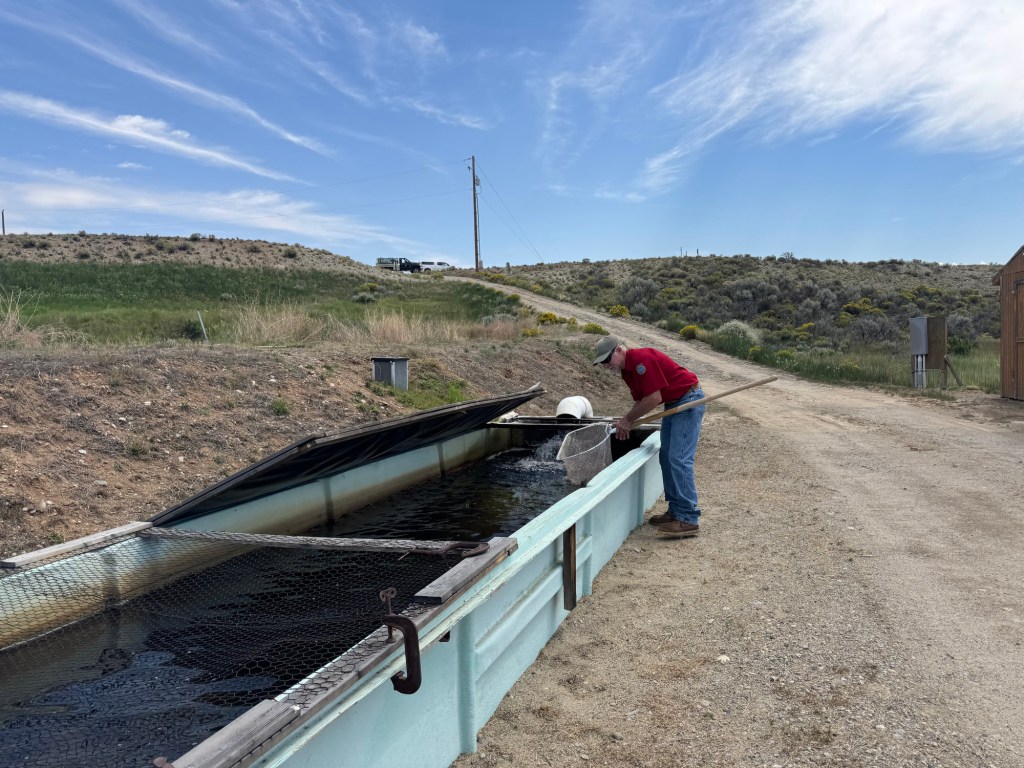
And so while fish hatcheries are generally known as the source of game fish and nurturer of species so endangered they risk blinking out, the Boulder Rearing Station created a space, called the East Fork Hatchery, dedicated to saving a species before it teetered on the edge of extinction.
“If they are endangered it could even impact us putting out sportfish on the landscape,” said John Walrath, Wyoming Game and Fish’s Green River region fisheries supervisor. “So by working with them now we’re helping maintain their population and sportfish opportunity as well.”
And after years of trial and error, their efforts appear to be paying off.
More than a trash fish
The Boulder Rearing Station sits in a picturesque spot at the base of the western side of the Wind River Range, where water feeds long lines of open-air tanks full of rainbow and brown trout. Gillis oversees the rearing station and nearby East Fork Hatchery, calculating food quantities, helping squeeze spawning fish to release eggs and sperm, and answering questions from tourists who wander through. Most visitors want to see the rainbow trout spawners, the brood stock as they’re called, which swim lazily through one of the long breeding tanks.
“The ones at the end of the facility provide the backbone of the catchable rainbow trout for the whole state,” he said on a hot July day pointing to one side of the facility.
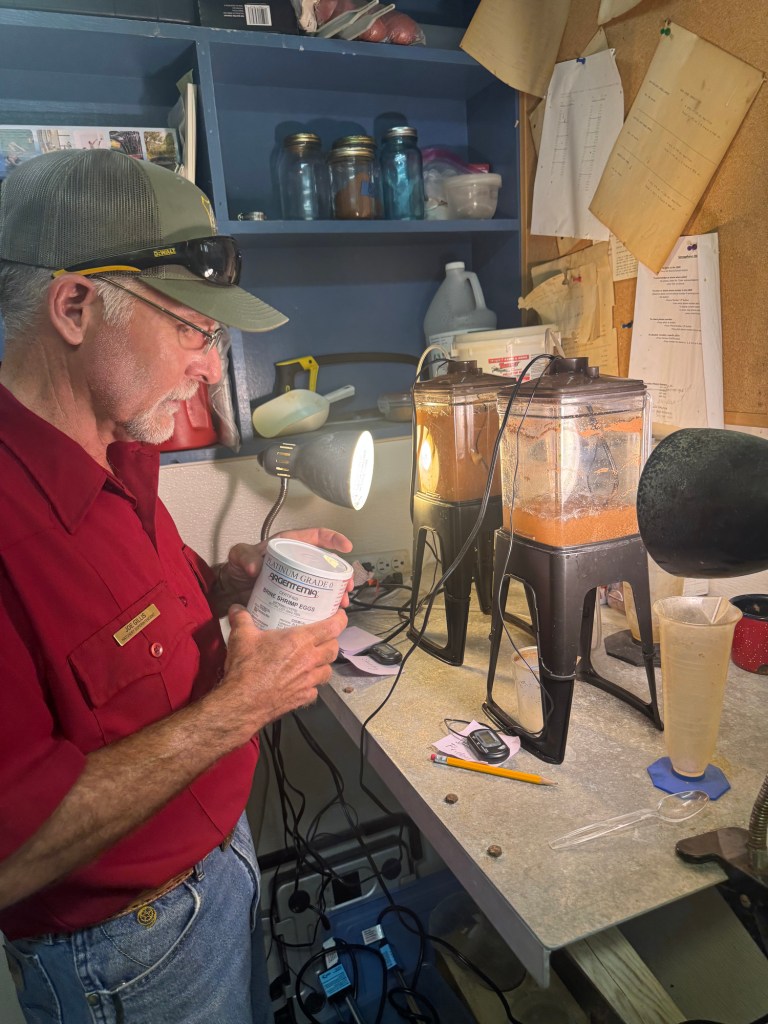
But drive up the hill a little, away from those prized breeders, and there sits the sucker tanks.
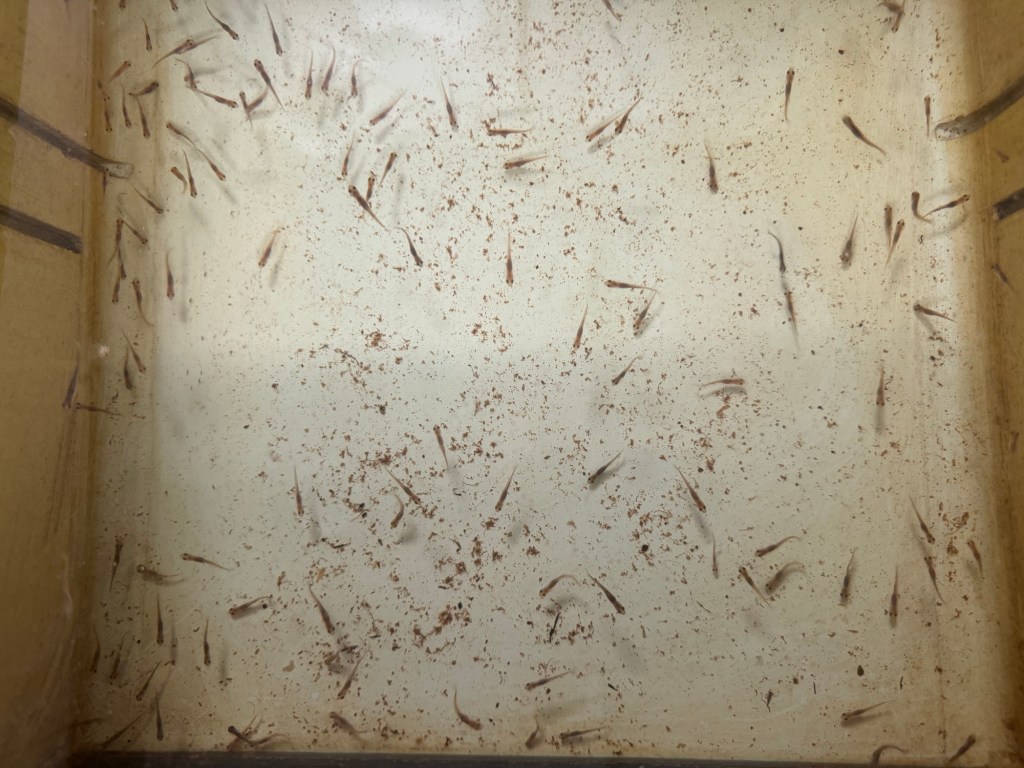
For years he and his team tried everything they could think to coax the fish into reproducing. They changed water temperatures and flows, swapped foods, and encouraged spawning matches. When the fish finally decided to reproduce, he encountered eggs not the size of peas like trout, but the size of the tip of a pencil. Even hatched fry — the name for very young fish — were so small they slipped through the smallest mesh he could buy that covered in and outtake flows.
Gillis consulted with experts at federal fish hatcheries and read anything he could find on the subject. Then slowly, painstakingly, he raised those tiny fish fry to 1-inch-long, then 2-inch-long suckers ready to reintroduce into the wild.
Staving off a listing
Few people will likely ever encounter a bluehead or flannelmouth sucker. Both have long, dark bodies that function like camouflage on stream bottoms and in deep holes and long, sloped heads characteristic of so many sucker species. While flannelmouth suckers have fleshy downturned mouths used for suctioning insects, plant material or other choice bits from the river bottom, bluehead suckers have hard bottom lips. Those mouths are perfect for scraping algae off of rocks and other structures, but it also means they rarely, if ever, land on an angler’s hook.
But just like all of Wyoming’s suckers — often referred to as “trash fish” by some in the fishing community — the native species fill an important ecological niche. That’s why, more than a decade ago, Game and Fish biologists set out to give those suckers a hand, said Kevin Gelwick, one of Game and Fish’s assistant fish management coordinators. Biologists collected thousands of flannelmouth and bluehead suckers from the Muddy Creek and Big Sandy drainages over a series of years. They then filled portions of the creeks with Rotenone, a poison that targets animals with gills, to kill the longnose and white suckers hybridizing with bluehead and flannelmouth suckers.
Most of those fish went back into the rivers after the chemical cleared. Others stayed at the East Fork Hatchery. Since then, tens of thousands of both types of suckers have been stocked into Muddy Creek to augment the native populations, the first successful bluehead and flannelmouth captive breeding in the state.
“I don’t want to lose any of the species that are native to Wyoming, whether they’re listed or not,” Gelwick said. “This is our natural heritage, and it’s Game and Fish’s job to keep these species on the landscape.”
