


This story was originally published by High Country News.
This May, STaX Capital Partners applied for a permit to install turbines fueled by methane from oil wells on Alaska’s North Slope. The temporary facilities would serve as a proof of concept for a much larger gas-fired power plant — with an output equal to that of the state’s largest coal-fired plant — all of whose electricity would go to a planned bitcoin-mining data center located nearby.
Analysis
The Alaska-based company told Northern Journal it hopes to “create the playbook for sustainable, at-scale Bitcoin mining in Alaska.”
But “sustainable” bitcoin mining is an oxymoron, given the enormous amounts of power and water data centers consume. The massive server banks that run nearly every aspect of our digital world churn away in warehouse-like buildings in Phoenix, Las Vegas, rural Washington and Wyoming, each gobbling as much electricity as a small city to process AI queries, cryptocurrency extraction and other aspects of our increasingly cloud-based society. The harder they work, the hotter they get, and the more power and water they need to cool off.
The International Energy Agency predicts that data centers’ electricity and water consumption will both double by 2030, driven largely by AI-related demand. That in turn threatens to max out existing electricity generation, strain power grids, and — if fossil fuels are used — increase carbon emissions. Even when data centers employ dedicated solar, wind or geothermal, they’re taking resources from other users, upending utilities’ planning and prompting them to build yet more natural gas plants while keeping nuclear and coal plants running — and polluting — well past their scheduled retirements.
Some states, including Oregon, want to make data centers pay their fair share of electricity and infrastructure costs rather than pass them on to other customers. At the same time, several Western states and local governments offer taxpayer-funded incentives to attract more data centers, even to water- and grid-constrained areas, while utilities welcome the additional profits increased demand will bring. Both the Biden and Trump administrations eagerly offered up federal land and resources for new data centers and the power-generating facilities they need.
The Big Digital Buildup is underway and shows no signs of stopping. The question is how — if possible — to mitigate its inevitable impacts.
Data center hot spots
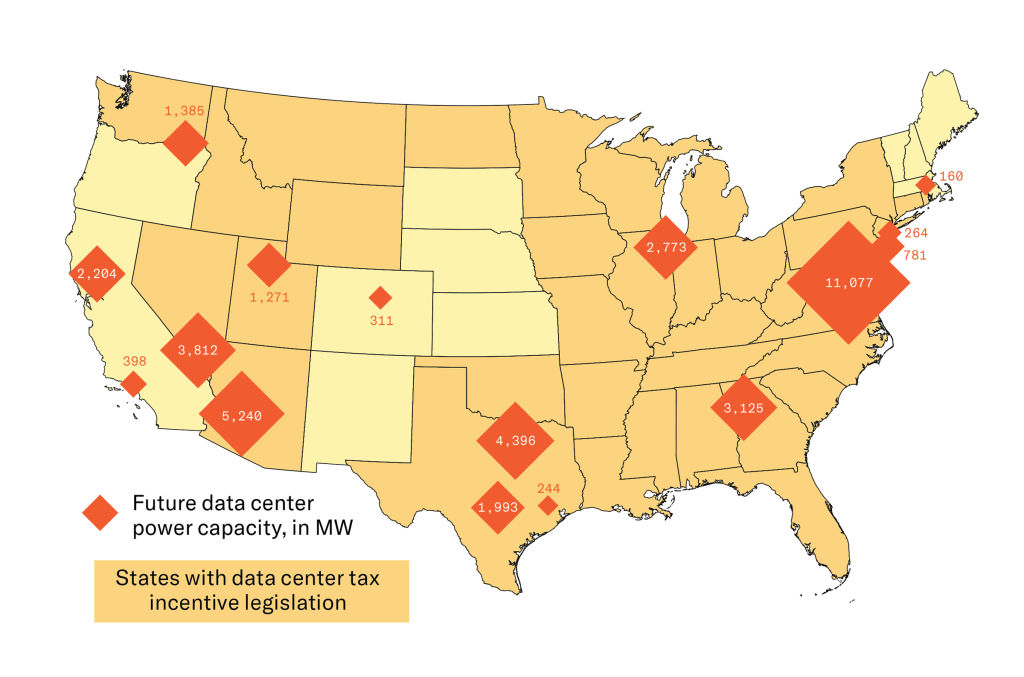
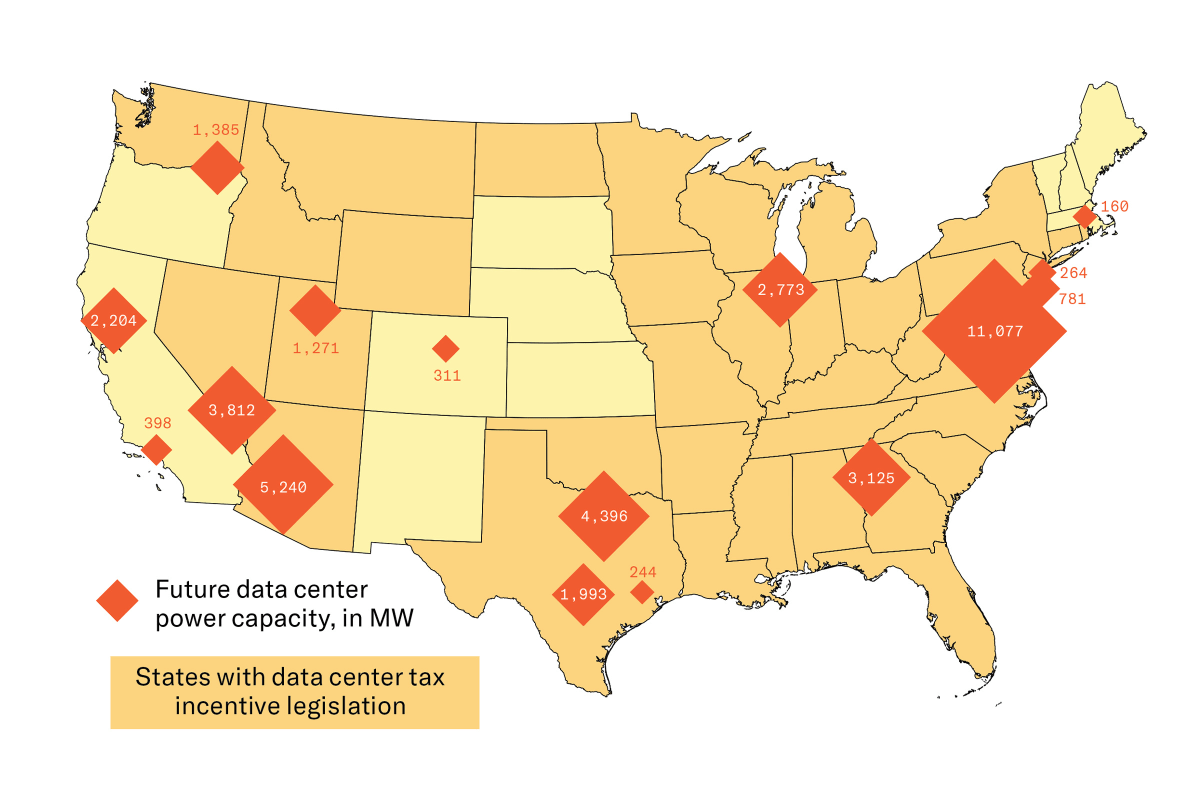
Tax credits and other incentives in seven Western states, along with their lower electricity rates, have lured data center developers to Nevada, Utah, Wyoming and Arizona.
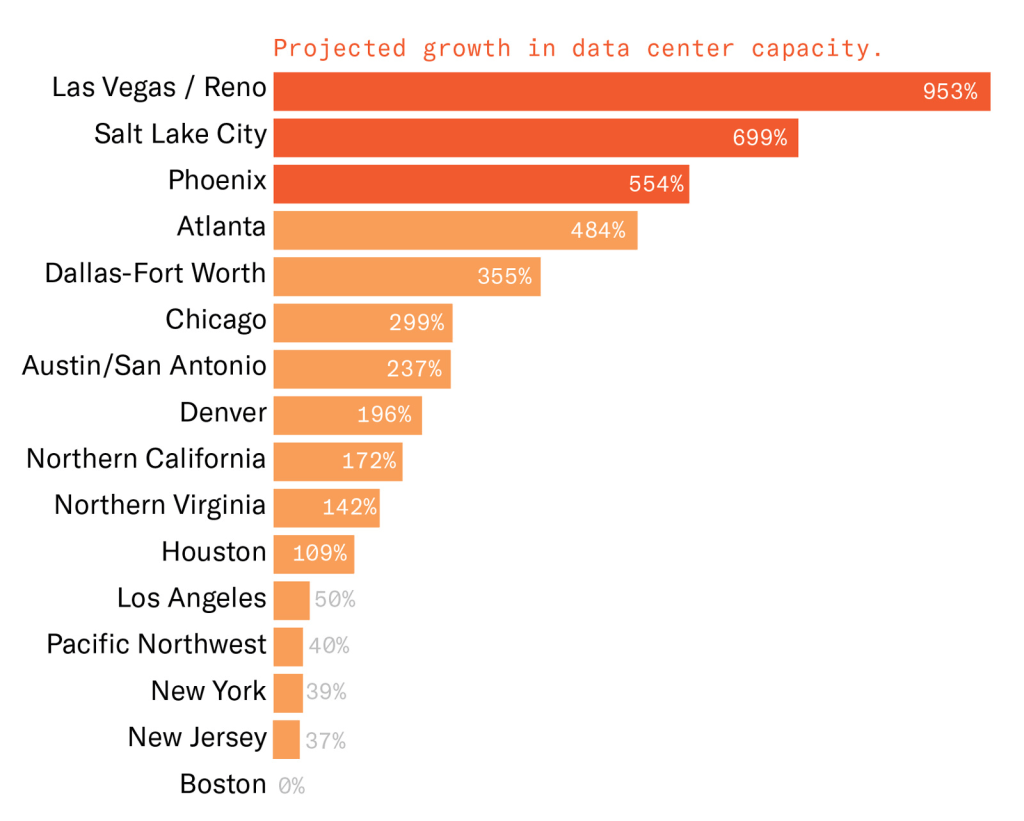
The growth of data center capacity is highest in the West.
Some of the nation’s fastest-growing server-farm hubs are in the region. Google is investing $400 million to expand its Nevada data centers, driving exponential growth in Las Vegas and Reno. The facility’s total power demand is expected to exceed 3,800 megawatts — enough to power more than 3 million homes.
Data and drought

Thirsty data centers are sprouting like weeds in parts of the West that are already arid and now gripped by severe drought. In the greater Phoenix area, proposed housing developments have died due to a lack of available groundwater. Yet data centers, each of which can consume an entire sprawling subdivision’s worth, face no such requirements or water restrictions.
Data centers use energy to run their servers, and energy and water to cool the processors. Evaporative chillers that work in low humidity use less energy but more water, while refrigerated cooling uses less water but requires more energy on-site. And power generation generally guzzles water, too, thereby increasing data centers’ indirect water use.

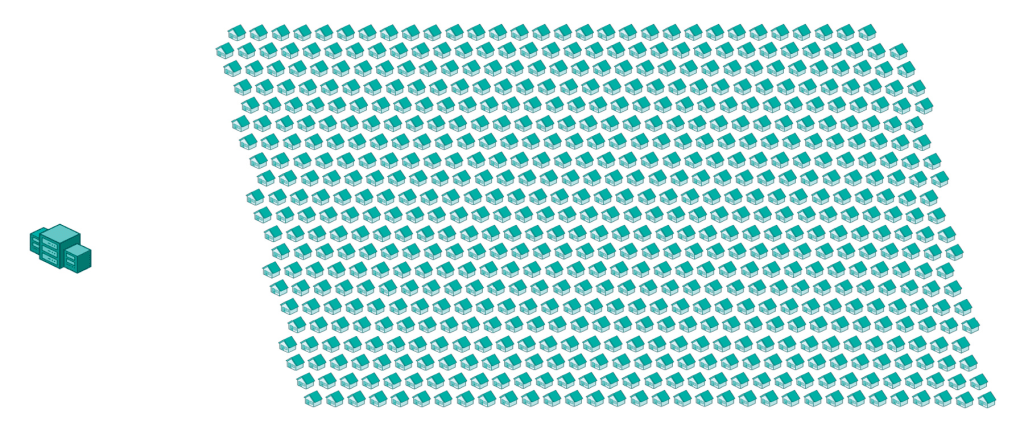
A Microsoft data center in Goodyear, Arizona, directly uses about 56 million gallons of municipal potable water annually — about the same as 670 homes. Still, it’s substantially less than what the nearby alfalfa fields drink.
The cloud and climate
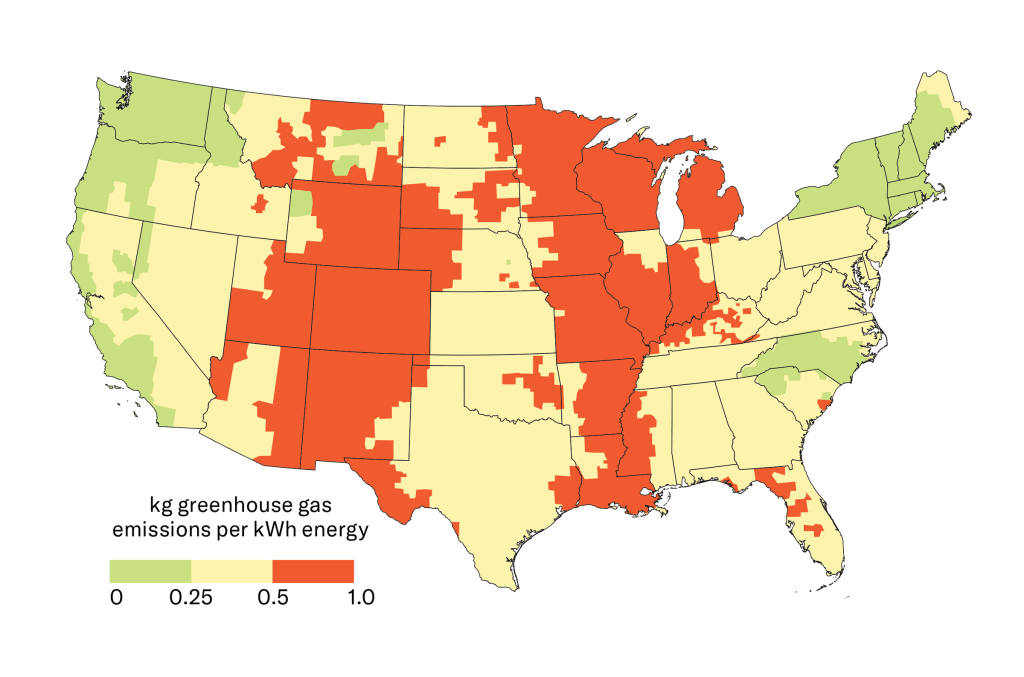
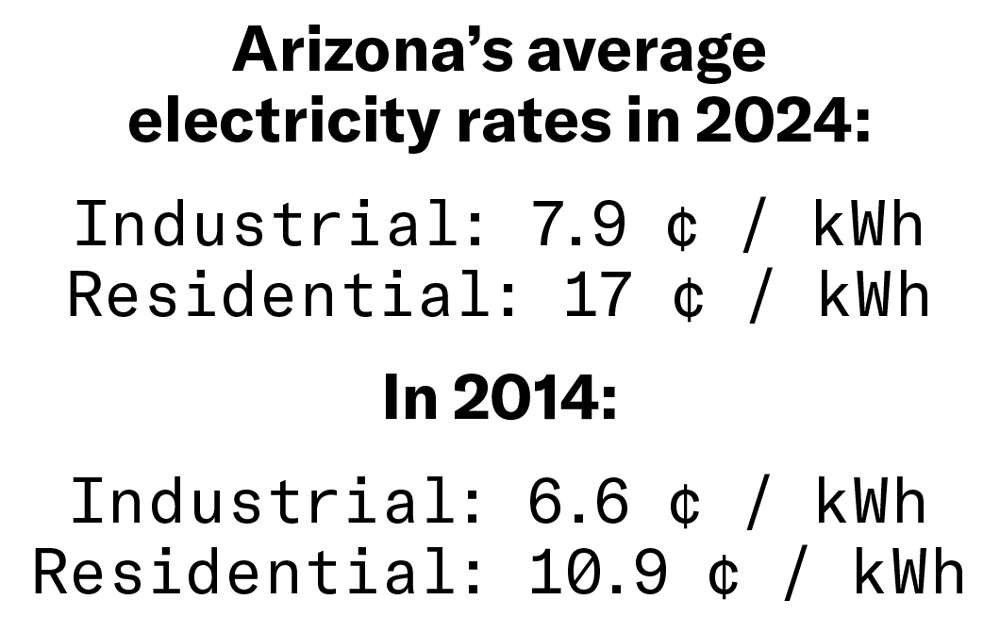
Some data centers have built dedicated solar installations, others plan to purchase wind and geothermal power, while still others want to install their own modular nuclear reactors to run the “hyperscale” centers needed to process AI. Meanwhile, most server farms get at least some of their power from the local grid, typically paying industrial rates far lower than what residential customers pay.
The carbon intensity of a specific center hinges on the energy mix of its grid. Coal and natural gas generation still dominate the Interior West’s grid, meaning its data centers are responsible for larger greenhouse gas emissions and water use for power generation. In the Pacific Northwest, myriad server farms are powered mostly by hydroelectricity, which is low-carbon but hurts rivers and fish. California’s grid runs increasingly on solar power.
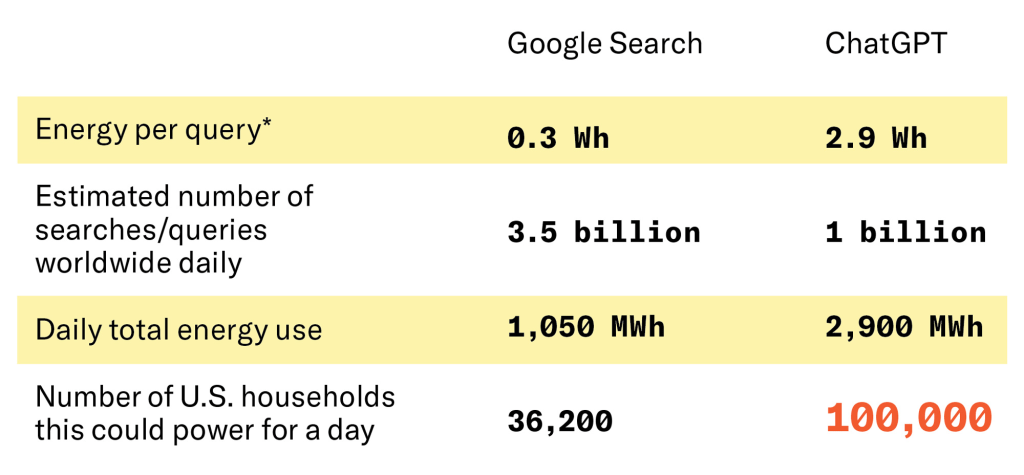
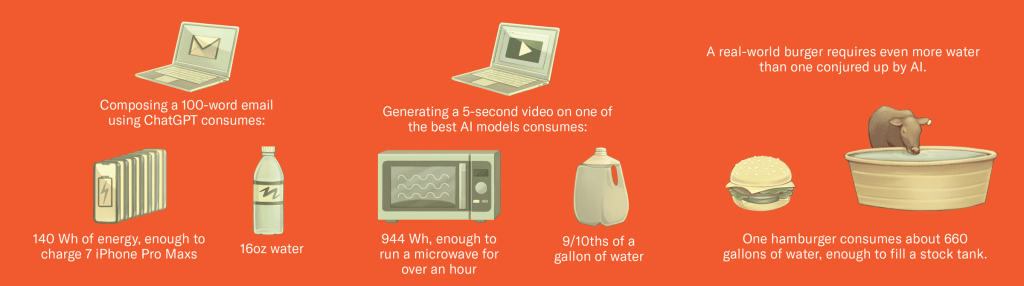
Comparing data’s hunger for energy and water
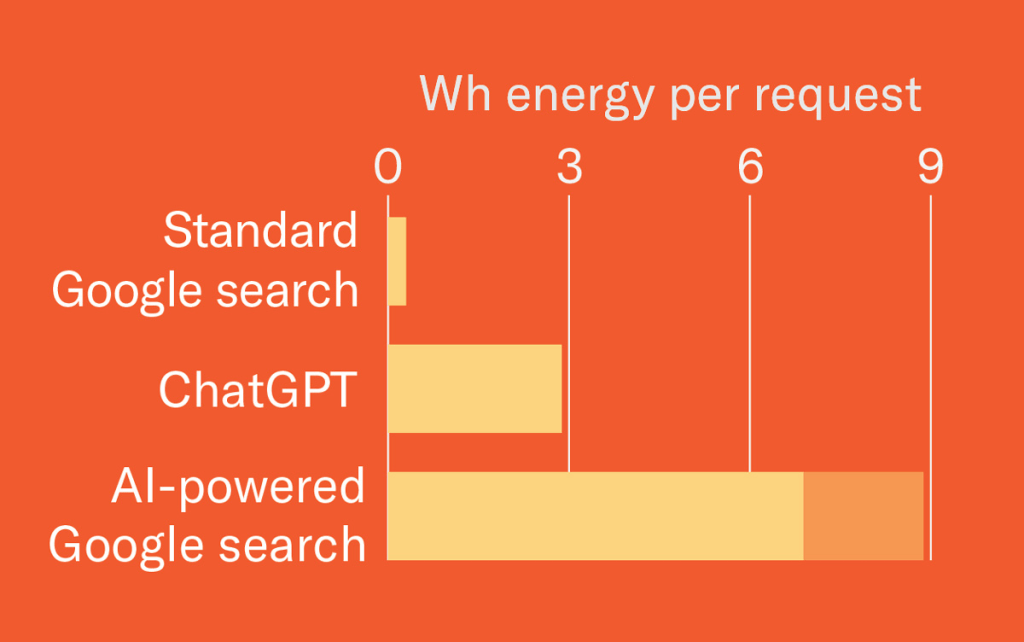
AI-powered search models use 10 times more energy than a standard Google search.
Data centers need water for cooling, and because AI-processing facilities work harder, they need more cooling and even more water.
TIP: Include “-ai” after your Google search terms to exclude Al-powered results.
SOURCES: APM Research Lab, Google, Meta, Upwind, Cushman & Wakefield, International Energy Agency, Northern Journal, Nevada Independent, NAIOP, JLL, Lawrence Berkeley National Laboratory, MIT, The Times, Los Angeles Times, Flaticon.
Illustrations by Hannah Agosta/High Country News
the only thing that threatens the water supply,west of the continental divide
are the illegal aliens in the sanctuary states.
clown show
Another just nope!
Bitcoin is a hoax. We don’t need it, and we shouldn’t want it. Our Wyoming politicians better protect the consumer, and make these grifting corporations pay their own way.
Tracking every human being on the planet is what these data centers are about, not bitcoin
That’s always been in the mix.
You should read rod miller’s column on conspiracy theories chad/jack
Chuck, it has been 12 years since Edward Snowden leaked that our Govt. retains ALL of our digital data at a “data” center in Utah. Now corporations/etc. are doing the same thing thanks to AI.
Do not equate refusing to stick your head in the sand regarding documented facts with believing “conspiracy theories”.
I read that opinion piece. Throwing out red herring flat earth/elvis ridiculous nonsense is not the same as legitimate questioning and skepticism of government and powerful institutions/corporations/people