

Gov. Mark Gordon praised the Trump administration’s decision unveiled Tuesday to move the U.S. Forest Service headquarters from Washington, D.C. to Salt Lake City to place agency leaders closer to the federal public lands they oversee and neighboring communities.
“I am optimistic about the opportunities this new organizational approach will bring Wyoming and the cooperative management of our state’s natural resources,” Gordon said in a Tuesday statement. “Vital areas such as timber, energy development, wildlife and habitat, recreation, and livestock grazing all stand to benefit from management closer to the forests they serve.”
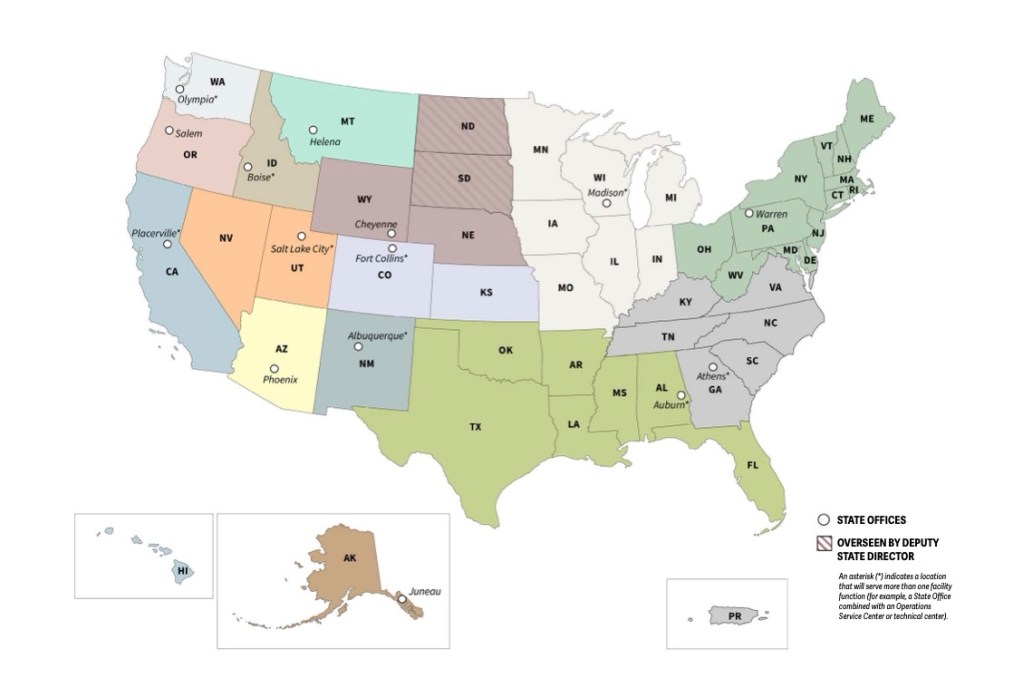
In addition to moving the national headquarters west, the agency will replace nine regional offices with 15 new state-based offices. A combined Northern Plains State Office, overseeing North Dakota, South Dakota, Nebraska and Wyoming, would be located in Cheyenne. The decision also consolidates multiple research stations into a single, unified national research and development organization, headquartered in Fort Collins, Colorado, that will be led by one research director.
The announcement does not include changes for forest or district offices or their staff, according to the USDA. When WyoFile reached out to the Bridger-Teton National Forest for details on what this could mean for national forests in Wyoming, the USDA responded with a prepared statement.
“The Bridger-Teton is committed to ensuring that all operations, including wildfire readiness and response, continue without interruption,” the statement read. “The Forest Service’s fire readiness in response remain unchanged, and our operational firefighters and aviation resources continue to support wildfire response.”
The statement directed any further press inquiries to the agency’s national press desk, which touted the restructuring as a recognition that the forests, agency partners and operational challenges are concentrated in the West.
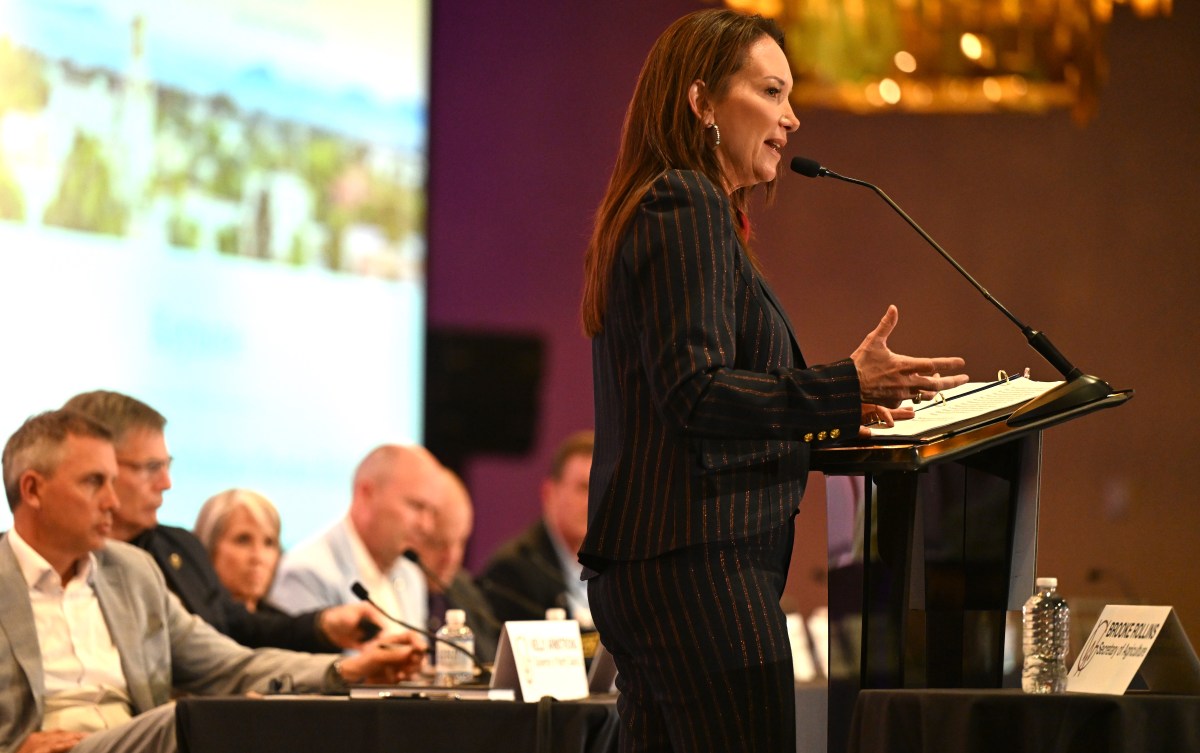
“President Trump has made it a priority to return common sense to the way our government works,” Secretary Brooke Rollins said in a press release. “Moving the Forest Service closer to the forests we manage is an essential action that will improve our core mission of managing our forests while saving taxpayer dollars and boosting employee recruitment.”
Gordon, meanwhile, said the move could “provide more localized support, better and quicker management opportunities, and a deeper federal understanding of Western States’ specific needs.”
Already, Gordon noted that Wyoming and the Forest Service signed a “Shared Stewardship Agreement” in January to formalize cooperation across eight national forests and one national grassland in Wyoming. In 2025, Gordon signed an executive order, “Increase of Active Forest Management in Wyoming,” emphasizing cooperation between the federal government and the Wyoming State Forestry Division, which oversees timber harvests and forest watershed restoration work.
During his first term, Trump moved the Bureau of Land Management headquarters to Grand Junction, Colorado, a decision that didn’t stick.

Just a couple of counterpoints this lame proposal:
1. I have long contended that both the BLM and the US Forest Service should be in the same Cabinet department. There is simply too much disagreement or policy conflict when dealing with land use issues in the Interior department and the Agriculture department. The solution is to reshuffle and create a Cabinet department to manage all Natural Resources in one administrative operation.
2. Sending up a red flag. Utah is the hotbed where most of the movement to sell off Public Lands originates and is strongest. Look at the history of all that. The epicenter is Utah with lodes in Nevada and Idaho. Putting the Forest Service upper tier management in Utah is most unwise.
Besides, nobody can prove to my satisfaction that simply being closer to a situation provides more understanding of it. Sometimes the exact opposite results. Consider a spider crawling on the surface of daVinci’s Mona Lisa painting. All it perceives is little peaks and troughs of pigment. No sense of the artwork . Au contraire the butterfly flitting thru the exhibit halls of the Louvre sees the masterworks of paintings. The matter of the viewpoint. Both are necessary.
They’re making POLITICAL APPOINTEES the heads of these new state-based offices. So enjoy your public lands while you’ve got ’em, folks, because they’re going to be billionaires’ fenced-off back yards.
A quick p.s.: I’m basing my earlier comment in part on a “More Than Just Parks” Substack article from yesterday (3/31/26) entitled: “Trump Administration Orders Dismantling of the U.S. Forest Service.”
Find it at:
“https://open.substack.com/pub/morethanjustparks/p/breaking-trump-administration-orders?utm_source=share&utm_medium=android&r=40ekta”
This measure, which will eventually discharge Forest Service veterans who care about the environment, seems to me more of an end run to fast-track as much land as possible into the hands of loggers, oil and gas and mining companies. I’m not against logging, particularly if the forest is well-managed. But all bets are off under Burgum and Trump. The vanity and short-sightedness of this administration knows no bounds.
Trump removed from the equation, it is long past due that logging and the timber industry start managing a renewable resource again with guardrails.
The fires of the past couple decades so much worse than what they should have been because of completely negligent forest management over 40 years.
Simply not true. Wyoming is an awful place for profitable logging. It’s more akin to timber mining as lodgepole pine (the majority of timber in Wyoming) is slow to mature. 110-140 years to reach commercial harvest quality! Most of the fire danger is due to beetle kill which is essentially worthless and would cost an astronomical amount of money to remove. If you’re ok with a government funded social program to keep a handful of dying mills alive it’s great though. Time will tell if subsidized mills are more economical for the state than tourism I suppose. We already have subsidized ranchers decimating our public lands. Why not a subsidized timber industry decimating our national forests.
Profoundly stupid–not a lick of common sense to this decision.
1. Organizing Forest management by states gives states greater de facto authority to emphasize commercial development, not conservation in the public interest, of public Forest lands. We already see this with the BLM, which is already organized by states.
2. Organizing Forest management by states devalues, interferes with, and damages ecosystem management and conservation. First casualty, migration of animals across state lines.
3. Placing research under one director makes it easier to censor or limit research into climate change and other controversial topics.
That’s what immediately comes to mind about this news. I’m sure I’m sure I’ll be able to come up with other objections soon.