



Federal officials indefinitely postponed a Wyoming coal lease sale scheduled for Wednesday, apparently in response to what many observers consider a lowball bid on another federal coal lease on Monday in Montana.
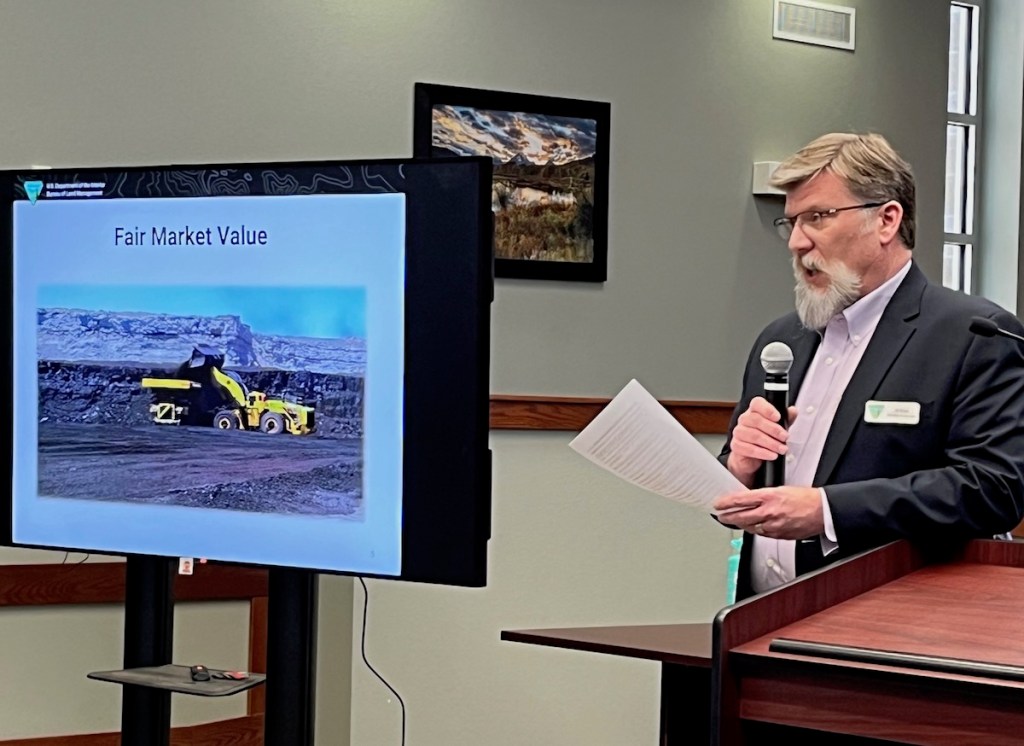
Navajo Transitional Energy Company, the only bidder, stunned coal market watchers with an offer of $186,000 for 167 million tons of federal coal associated with its Spring Creek mine in southeast Montana — a fraction of a penny per ton and woefully low compared to past federal coal lease sales in the region. The last such major sale in the region, in 2012, netted $793 million for 721 million tons, or about $1.10 per ton, according to federal data.
Navajo Transitional was also in the queue to bid on the 441 million-ton West Antelope III federal coal lease associated with its Antelope coal mine spanning Campbell and Converse counties in Wyoming.
Bureau of Land Management and Interior Department officials are still reviewing the Spring Creek bid, and those close to the process expect that another date will be set for the West Antelope III coal lease sale.
“While we would have liked to see stronger participation, this sale reflects the lingering impact from Obama and Biden’s decades long war on coal which aggressively sought to end all domestic coal production and erode confidence in the U.S. coal industry,” the Interior wrote in an email responding to a WyoFile inquiry. “Fortunately, President [Donald] Trump and his administration are rebuilding trust between industry and government as part of our broader effort to restore American Energy Dominance.”
But others say market forces — including cheap natural gas and increasingly efficient wind and solar energy — are bigger factors.
Others note that the coal industry itself sees the writing on the wall. If a fraction-of-a-penny bid is any indication, some critics say, the thermal coal industry — which relies on U.S. coal-burning power plants — isn’t yet confident that Trump’s policies will turn around years of market decline.
“It tells you that there’s no competition for that coal in the ground, and it’s not worth very much money,” Institute for Energy Economics and Financial Analysis Energy Data Analyst Seth Feaster told WyoFile on Wednesday. “It points to the fundamental, structural decline the coal industry is facing — for thermal coal — and that story hasn’t been reversed, despite all the things that they’re talking about.”
The postponement in Wyoming and lackluster offer in Montana come just days after the Trump administration touted sweeping regulatory rollbacks and $625 million in federal spending to revitalize “clean, beautiful coal.”
Navajo Transitional tried to set expectations regarding Powder River Basin coal’s market value back in September, urging the U.S. Bureau of Land Management to set its minimum bid requirement for the West Antelope III coal lease much lower than comparable leases in the past. Neighboring Powder River Basin coal operator, CORE Natural Resources, echoed that sentiment and told BLM officials, “the fair-market value of coal in the Powder River Basin will remain soft for the next number of years.”
Gov. Mark Gordon has said recently that Trump’s efforts to revive the coal industry will take some time to bear fruit. He has also underscored the administration’s notion that expanding the coal industry is necessary to meet increasing electricity demand, mostly driven by artificial intelligence and other computational facilities.
The Wyoming Mining Association declined to comment on Navajo Transitional’s Spring Creek coal lease bid, but acknowledged the industry still must reckon with 15 years of drastic market and policy shifts.
“It tells you that there’s no competition for that coal in the ground, and it’s not worth very much money.”
Seth Feaster, energy industry analyst
“As we’ve not seen a lease sale in over a decade, there may be a bit of a learning curve between the agency and industry to determine value given the current market conditions, projected demand and the shift in public policy,” Mining Association Executive Director Travis Deti said.
Regardless of what coal bidders and federal officials ultimately decide is the “fair market value” for Powder River Basin coal, Deti said, it’s vital to resume leasing new tracts of coal.
“If you don’t have the coal leased, you can’t mine it and you don’t have the jobs,” Deti said.
Conservation groups have noted that existing coal leases allow mining in the region to continue at pace through 2041.
There’s a danger in the Trump administration’s narrative around coal making a comeback, particularly for coal-reliant communities, according to Mijin Cha, who grew up in Laramie and studies energy transition and social justice strategies.
“It creates false hope and increased distrust between community members and government officials — you know, the folks that actually could help them,” said Cha, an assistant professor of environmental studies at the University of California, Santa Cruz. “It delays help for energy communities, and I think that what they’re doing [selling more federal coal] is so much more detrimental.”
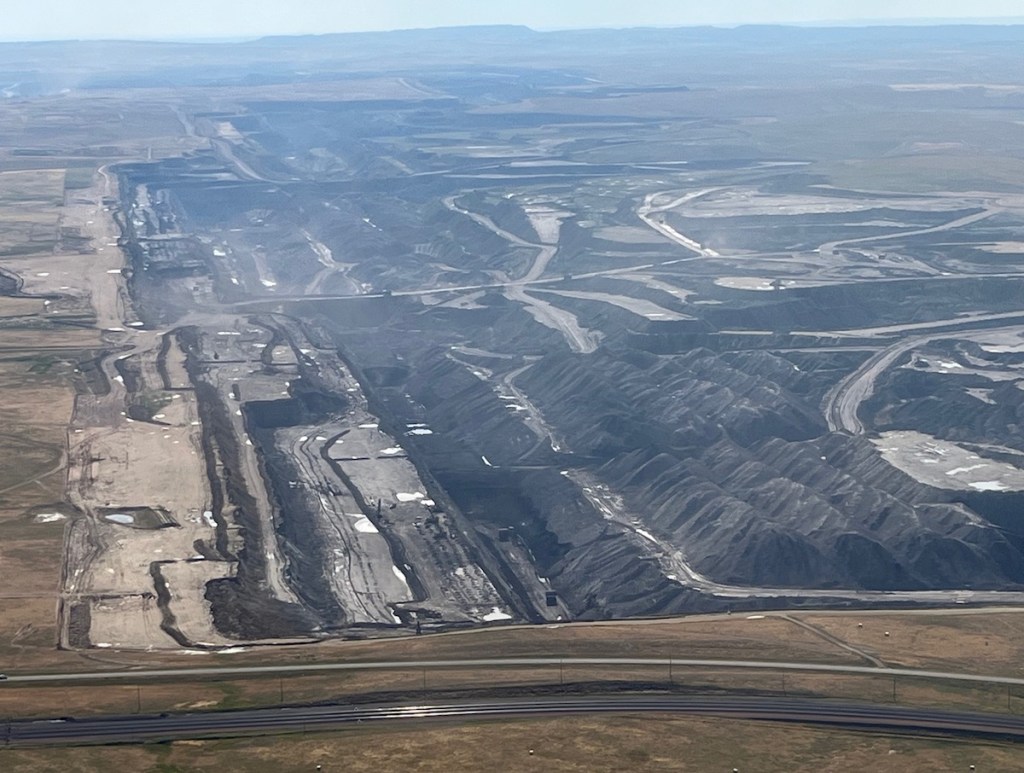
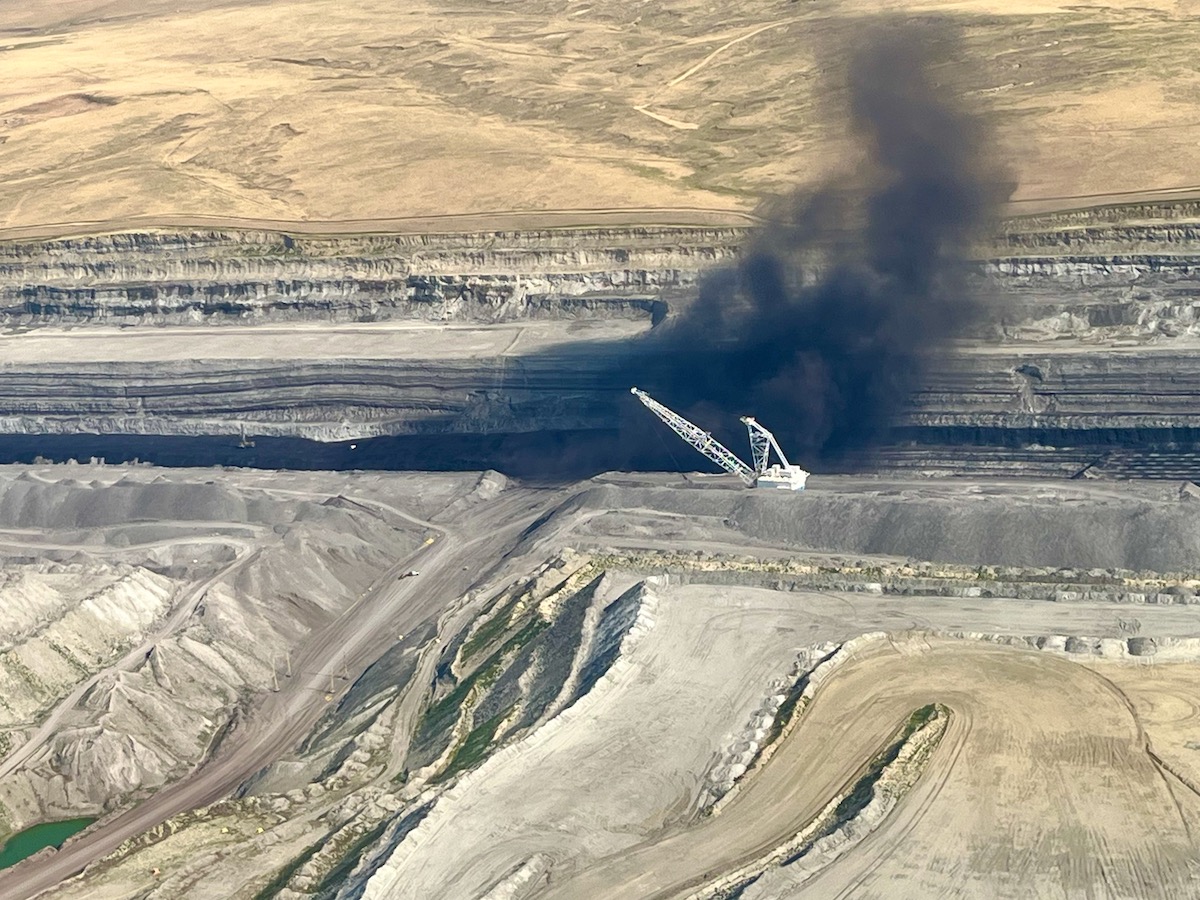
Though the industry has seen slight upticks in demand recently, Wyoming coal production — primarily in the Powder River Basin — has shrunk by more than half since its heyday in the mid-2000s. The state scooped about 191 million tons of coal last year, according to federal data.
As reported in Wyofile a month ago on Sept 8th, the coal leases were anticipated to draw low bids. But a value of 1/10 of a penny per ton for the lease in MT? Whether people like it or not the market has spoken and thermal coal is a business on a downward trend. The locations to sell thermal coal to for electrical generation have shrunk and will continue on that path. Most coal burning power plants in this country were build almost 50 years ago or more, and are at the end of their expected life. When the power plant owners run the numbers consistently it is cheaper for them to close the plant and move to a different electrical generation method than to continue to use coal. Regulations have not put coal on this downward trend, capitalism has.
Two days ago it was reported that for the 1st time world wide that renewables passed coal as the biggest source of electricity generation. Do our we look to the future or keep looking in the past?
Thank you. There’s capitalists love the system when it works the way they’d like it to.
Proof positive that Trump, the entire Wyoming delegation, and most of the members of the Wyoming legislature are delusional. It’s economics, not government regulation, that has killed coal and any money spent to try to revive it might has well be flushed down the toilet.
I wasn’t planning to say ” I told you so ” about the grim future for the Wyoming coal futures market , because I’ve been saying that for years. Since the 2008-09 financial crash , but hoping for the inevitable decline in fossil fuel demand for a couple decades before that inflection point.
Still, there are two takeaways from this article. First, note how the Dept. of Interior spokesman ( unnamed) framed the noninterest in new coal leases, blaming it on “the lingering impact from Obama and Biden’s decades long war on coal “. There it is: the imaginary demon named ‘War on Coal’ that the fossil fuel robber barons and their government cronies use as a rhetorical meat hook to hang their imaginary villains on. To paraphrase Bill Clinton’s advisor James Carville way back in 1992, ” It’s the market economy , stupid…”. Wyoming coal production is and always has been market driven, so there. Obvious, to a fault.
Which leads to Point 2 : if we disregard Donald Trump’s delusion about bringing back ‘ Big Beautiful Clean Coal ‘ to fire the boilers of his new American Gilded Age— and we should , since it is also imaginary – what about our Wyoming state elected officials, leadership , and the mining industry hereabouts that are all in severe denial about coal ? Will Barrasso Lummis and Hageman ; Guv Gordo ; the Freedom Cowkiss ; the rest of the legislature ; most of all the Wyoming Mining Association carbon cartel – will they see the LACK of handwriting on the wall ? They collectively expected to see the green lights on the expressway with bright overhead signs from the Trump admin’s Department of Interior and Wall Street’s tycoons that Wyoming is reopened for business . Coal will boom yet again. Come and get it.
Except they won’t. The world no longer needs or wants Wyoming sub-B damp Powder River Basin coal. At any price. The state and federal government could get rid of all royalties and severance taxes on public coal , and get rid of the pesky regulations, and those millions of tons of future leased coal reserves would stay in the ground.
Why? The future demand is now miniscule. Which means the money won’t be there, either. The tax base is crumbling. The era of King Coal filling the Wyoming treasury and providing paychecks for the stoop labor of moving hundreds of millions of tons of rocks annually is now history. The world outside Wyoming has placed a whole new set of values and conditions on dirty fossil fuels that were all the rage in the 19th and 20th centuries. Coal is now out of vogue. The heyday of Wyoming crude oil began a century ago and began declining in the 1970’s. There were 80 oil refineries in Wyoming before WWII. Today there are five. Natural gas production and exports are generally declining due to Wyoming being far from bulk markets and a global gut in gas filling demands more locally. Again , it’s the market on all that , stupid. Coal is aging out , on life support. It’s all about wind, solar, and small modular nuclear reactors now.
Bottom Line: we cannot force the planet to buy Wyoming fossil fuel. That’s fossil thinking.
It is cruel and cynical for politicians to give people in coal communities hope that we can ever go back to the glory days of coal production. It is not realistic. Renewables are cheaper, and energy storage systems are coming online. The world is moving on. Pointing fingers for political points does not change reality. It only divides us. Politicians who serve themselves by stoking hatred, serve their donors by supporting corporate welfare, and refuse to HONESTLY discuss issues that affect their constituents should be voted out.
It is the twenty first century, Wyoming. No need to invest in the most expensive, dirty and dangerous energy sources, coal and nuclear anymore. There are better options.
Nobody saw this coming?
Just because Dumpy says its so doesn’t make it so. Hilarious .
Wyoming coal mining is half of what it was 15 years ago. There are enough coal leases to keep current production another 15 years. By then coal mining will have further diminished. In 2041 the newest US coal plant will be nearly 30 years old, with most near 60 and past retirement age. Coal is in structural decline and new coal power plants will not be built based on the words of a politician.
The cattle pasture on 221 going to Gainesville, Fl. is now a new expanding solar farm. I hear another good sized solar farm is nearby. Duke Energy and other companies in the South are expanding, giving upon Nuclear. Talk about nuclear has in the past brought in the FBI in South Carolina. Smaller plants avoid a lot of regs, but ours, as well as proposed LNG plants were too close and to low by the Gulf of Mexico.
The people who decide where future electrical power generation will come from are the boards of directors of utility companies. They are beholden to stockholders and if they decide to provide power from a less profitable source they won’t be long for this earth. Coal power generation is the more expensive part of the mix.
Back in 1976, Gary Glass the Wyoming State Gewologist addressed a bunch of us grad students at You-Dub stating that was a 50 year supply of coal in Campbell County. His date was spot on turns out though it was demand not supply that killed the market. The new nuc plant in Kemmerer is the future and for once Wyoming is ahead of the curve despite themselves.
Unfounded patronising political promises come to roost. This is sad for those that were lied to in order to get votes. It would be very useful to demand facts and good logic to voters in the future. It is on the voters.