


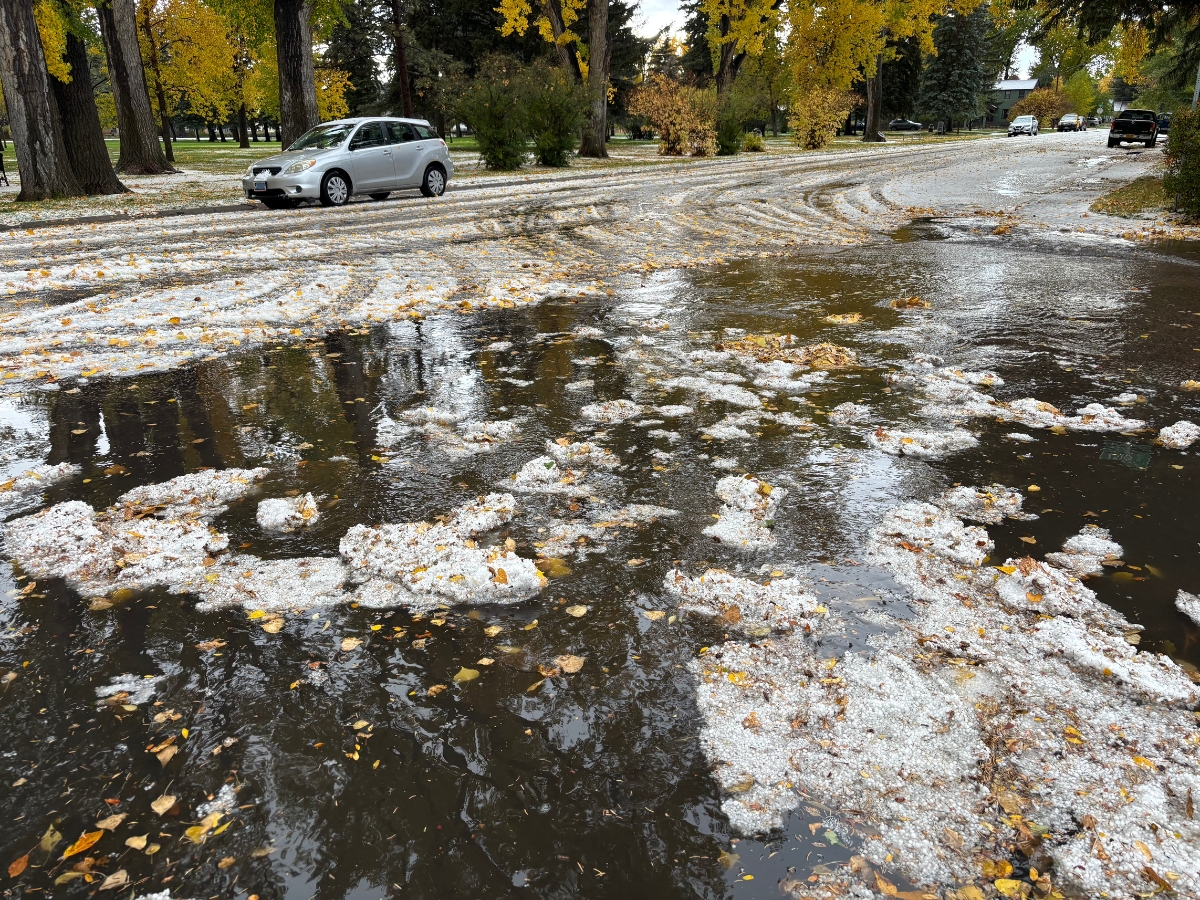
The University of Wyoming’s lawsuit against the city of Laramie over its new stormwater fee is about far more than one city ordinance. At stake is whether Wyoming communities can fund essential infrastructure fairly, or whether local authority will be stripped away. Water, sewer, stormwater management and flood control are not abstract concepts; they keep basements dry, roads passable and streams clean. Without reliable, dedicated funding, these systems fall behind — residents pay in property damage and higher long-term costs.
Opinion
The Wyoming Constitution under Title 15 gives municipalities clear authority to establish utilities and charge fees for services. These fees are not general taxes — they are proportional, dedicated and restricted to the service provided. As water bills fund water and sewer bills fund wastewater, stormwater fees fund only drainage. In Laramie, fees are based on impervious areas — roofs, parking lots and pavement — that generate runoff. UW alone has about 10.2 million square feet, nearly a third of the city’s total, making its bill proportional to the burden its property creates. This is simply a fair way to pay for what one uses.
If such fees are struck down and reclassified as “taxes” requiring elections, the costs won’t disappear — they will shift. Instead of UW paying its share, every homeowner and small business would subsidize UW’s stormwater through property or sales taxes, while UW, as a tax-exempt state institution, may not contribute at all. That is neither fair nor sustainable. Even more troubling, UW’s lawsuit goes beyond challenging Laramie — it appears to question the Legislature’s authority in adopting the 2020 law that allowed stormwater utilities in the first place. That puts not just one city, but the work of Wyoming’s elected lawmakers, on trial.

The need is real. Laramie faces more than $130 million in stormwater improvements, with $30 million urgently needed. Those costs can’t be absorbed into general revenues without shortchanging other services. A dedicated fee ensures that those who create more runoff cover the burden they impose.
This lawsuit also could have been avoided. The city invited UW into discussions, offered credits for on-campus systems and proposed a regional detention pond. UW’s bill could have been reduced by nearly half if those talks had continued. Instead, the university went to court. As the proverb warns, “Do not be quick to go to court.” Dialogue and compromise should be the first choice — and thankfully, they remain possible.
Having two leading institutions fight in court is a no-win situation for all of us. The Wyoming Association of Municipalities urges the UW Board of Trustees to meet with Laramie leaders before pressing further. Concrete solutions exist that would save UW money and strengthen the city’s infrastructure.
This case is not just about Laramie. It is about whether municipalities can govern effectively. Local officials are accountable to their citizens, operate in the open, and budget transparently. Dedicated fees ensure that each user pays proportionately and revenues are used only for their purpose.
Undermining this authority risks compromising infrastructure and self-government. For Wyoming communities, the principle is simple: Local control matters. Title 15 affirms it, our history demands it and our future depends on it.

Those of us who live in Laramie and watched as this debacle developed have a very different opinion than that expressed above. Firstly, this IS a tax. It is assessed against your property and charged to you JUST BECAUSE YOU OWN IT, not because you are getting any direct service in return. (You may not even be getting any INdirect service in return.) Secondly, Title 16 of the Wyoming Statutes expressly requires the voters to approve the funding of storm water drainage in an election. No ifs, ands, or buts; it’s required. That same title requires that the tax be collected by the “taxing authority” – the county treasurer – NOT the city utility billing department. This makes sense, because property owners who use no city utilities do not have billing accounts with the city but do get property tax bills. It also is advantageous to homeowners, because they can have the tax paid out of a mortgage escrow account and applied as an income tax deduction. The City is flouting both of these requirements. It is so far and so egregiously outside the law that unless it changes its behavior it SHOULD be sued – by private companies as well as by UW. And no member of Council who supports proceeding in this illegal manner should be re-elected this coming November.
UW needs to pony up the cash to help pay for this issue. This university probably accounts for a third of storm water runoff, so I find it absurd that they are now trying to sue the city over this. We all have to pay taxes to have a functioning society, this includes storm water runoff mitigation. UW is obligated to pay its fair share to the community for this issue and it shouldn’t be passed on to the rest of the citizens of Laramie. I hope they lose this one.
Sadly, I fear that the mentality of “My way or the Highway,” is starting to take root. Sometimes everyone needs to compromise and work together, “For the Benefit of All.”
I have to agree with the University, and I encourage them to continue fighting in court. Cheyenne passed a similar fee that will have serious consequences on businesses and their customers by increased prices. Customers will be taxed twice– once for their own property, and again when they buy good and services locally. Furthermore, the introduction of these fees eliminates accountability and transparency, whereas a tax measure voted upon by tax payers would require municipalities to fence those funds for very specific projects. Is this a trust situation? Absolutely! With the huge rainy day accounts in many of our larger cities, taxpayers have every reason to not trust the leadership in many of Wyoming’s municipalities.
I agree that all should equally fund for our utilities in question, its a fairness issue, assessing fees for waste water management should be based on property size…the more you got the more you pay for water management, if UW consists of a third of the city of Laramie then they are responsible for those costs, every lot owner, land owner, business within city limits pay based on property size. It shouldnt come down to have to litigate who pays and how much in court. Its simple like counting…. its a square footage thing !!
This article presents one view no one is stating that the need for storm drainage is not necessary
The approach and lack of upfront communication and the way and amount of costs is what is alarming. Thing have changed with communications with the public almost no one reads the newspaper anymore the system of communication is broken and needs to be changed gust because the city has failed to address this concern for decades doesn’t mean that this generation of citizens should foot the bill. The city requires the hard surfaces and than want to charge the citizens for what they require even if we have retainers on the property that was designed to collect storm water.
I appreciate the article however it is one sided
The proposed surface water drainage fee/tax arrives in fiscal context which can hardly be described as thrifty, and the new few assessment is arbitrary and unscientific.
The City of Laramie has the some of the highest water rates in the region and has the second highest administrative salaries in the State. Our City Manager makes $216K/year plus significant perks, more than the governor. The university has recently built new dorms for 950 students and a parking garage in addition to significant construction campus-wide in a time of declining enrollment and a projected 20% reducion in Wyoming HS graduates. Fiscal restraint has been rare.
The proposed surface water fee/tax does not take into account soil permeability or slope. Paved areas are anywhere vehicles have been parked, whether impermeable pavements or open graded aggregate. In my case an accessibility ramp constructed in redwood like a deck, flagstone in a beds of sand and a sand parking area have been considered impermeable. This is hardly scientific. I don’t think any alternative method or an engineer’s determination is allowed.
I can understand UW disputing this new fee/tax given the drainage mitigation they have done the last few decades and the fiscal restraints they will be facing. I can understand commercial rate payers’ shock when suddenly billed for their parking lot drainage. I can understand residential rate payers concern as they tighten their belts paying more for everything from groceries to insurance to used cars to health care. Note that there are many state retirees in Laramie who have not had a COLA in 18 years.
While there has been a consultant which has made these fee/tax recommendations, consultants are chosen for desired results and strive to please whoever is authorizing their progress payments.
I hope the City of Laramie administration and elected officials can recognize these issues and work to provide solutions which are reasonable, fair and effective for the people they serve.