

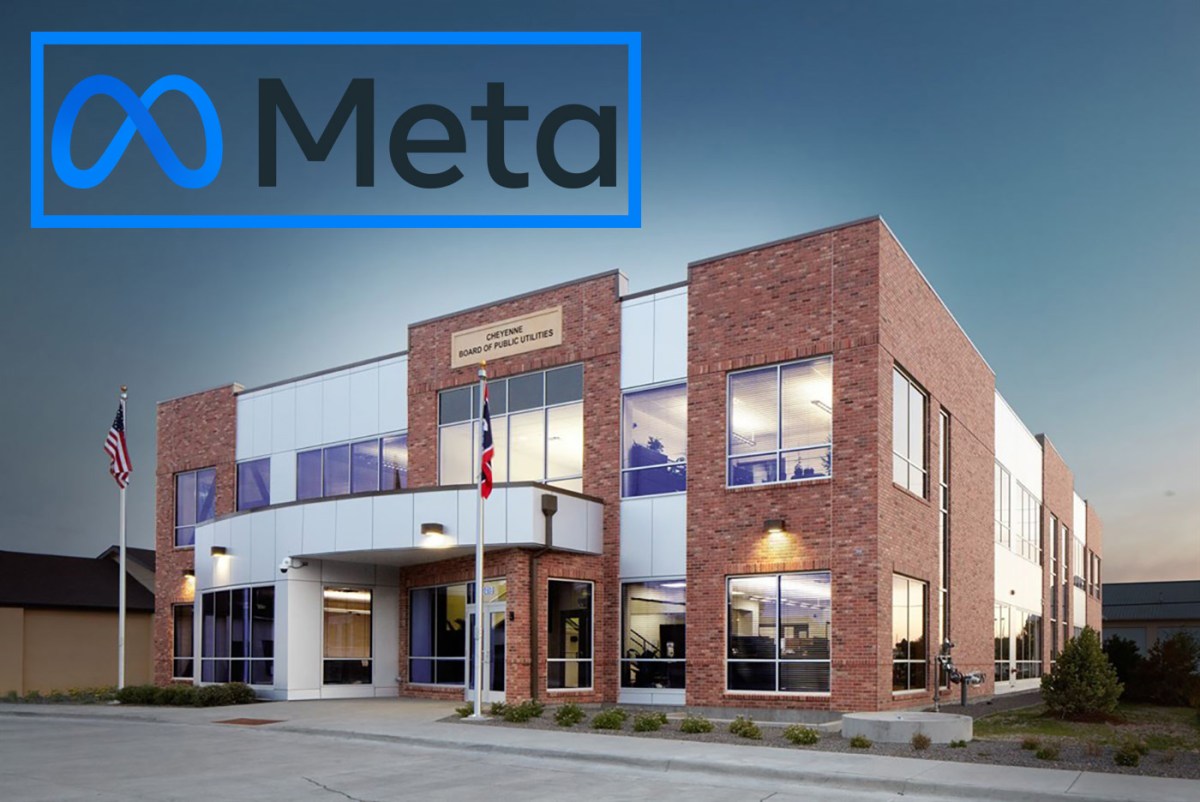
Mysterious, unusual white colonies of bacteria growing in a lab’s petri dish alerted workers at Cheyenne’s water works that something was amiss.
The Jan. 15 discovery kicked off months of investigations, lab tests, disinfections, retests and sampling that led the city to cite operators at the Meta Cheyenne Data Center for “serious noncompliance” with wastewater discharge standards, a $10,000 fine and potentially cleanup costs.
The Cheyenne Board of Public Utilities on Monday released a timeline and list of FAQs related to the Meta citation and fine, plus 612 pages of documents released as a result of records requests.
Meta has appealed the citation and asked for its $10,000 back. It seeks a contested-case hearing and told Cheyenne that Meta should not be on the hook for cleanup costs.
Because of that appeal, utility officials won’t answer any more questions or hold a press conference about the pollution, a utility spokesperson said in a statement.
“The BOPU believes the timeline, FAQ, and accompanying public records provide a thorough account of the events and addresses many of the questions raised by the community,” the statement reads.
Discovery of the bacteria in the wastewater recycling system — not drinking water — and the citation to Meta and its subsidiary have worried some residents upset at the ongoing rezoning of thousands of acres in rural areas for a new industrial use. Cheyenne terminated Meta’s wastewater discharge permit, raising public questions about industry promises, environmental protections and water conservation statewide.
The timeline
The utility’s 13-page timeline recounts how the white colonies of bacteria seen on Jan. 15 first alarmed water workers conducting routine tests on the city’s wastewater treatment system.
It wasn’t until Feb. 12, almost a month later, that the utility sent samples on to the Wyoming Public Health Laboratory. Eleven days later, on Feb. 23, results came back “identifying the white colony bacteria as Cupriavidus gilardii,” an unusual bacterium that’s found in soils and is known to be deadly.
What followed was months of sampling, testing, resampling and retesting, cleansing of water systems and the use of potable water in the reclaimed-water irrigation network.
Four months later, on June 26, the utility issued its first press release about the contamination. The agency explained the timing of its public notice in its FAQs.
“[The board of Public Utilities] determined there was a low risk to public health, which did not justify a public notification that could result in public panic,” the document reads. “As a public agency, BOPU must weigh public safety, impacted area, and level of risk when determining the appropriate nature and extent of public notifications.”
In the course of its hunt for the source of the pollution, utility investigators went quickly to the Meta site. That’s “because they were the newest industrial user discharging to the BOPU wastewater system,” the utility said.
Investigators sampled water from a “predischarge storage tank” at the data center March 18 and it spawned white colony bacteria in a lab petri dish.
Six days later, results came back from Wyoming Public Health Laboratory “indicating that Meta Cheyenne Datacenter CHY1-2 discharge contained Cupriavidus gilardii,” the timeline reads.
“[T]here was a low risk to public health, which did not justify a public notification that could result in public panic.”
Cheyenne Board of Public Utilities
Cheyenne, which has limited rights to local water sources, obtains half its water from 115 miles away across the Continental Divide. It reclaims its sewage to irrigate parks and golf courses.
Because of the pollution, Cheyenne disinfected its wastewater recycling system — one pond in the system holds 3 million gallons or about 9 acre-feet of water — by flushing, using chlorine and a solution of sodium hypochlorite. The work was extensive and expensive.
“Based on the significant labor hours and expense required to flush the wastewater collection mains, collect and analyze samples, alteration of operation at the WWTPs, disinfection of the reuse system, utilization of potable water for irrigation in lieu of the contaminated reuse water, and the passthrough of the bacteria to Crow Creek and Dry Creek, BOPU Industrial pretreatment program staff determined that an enforcement action was warranted,” the utility’s timeline states.
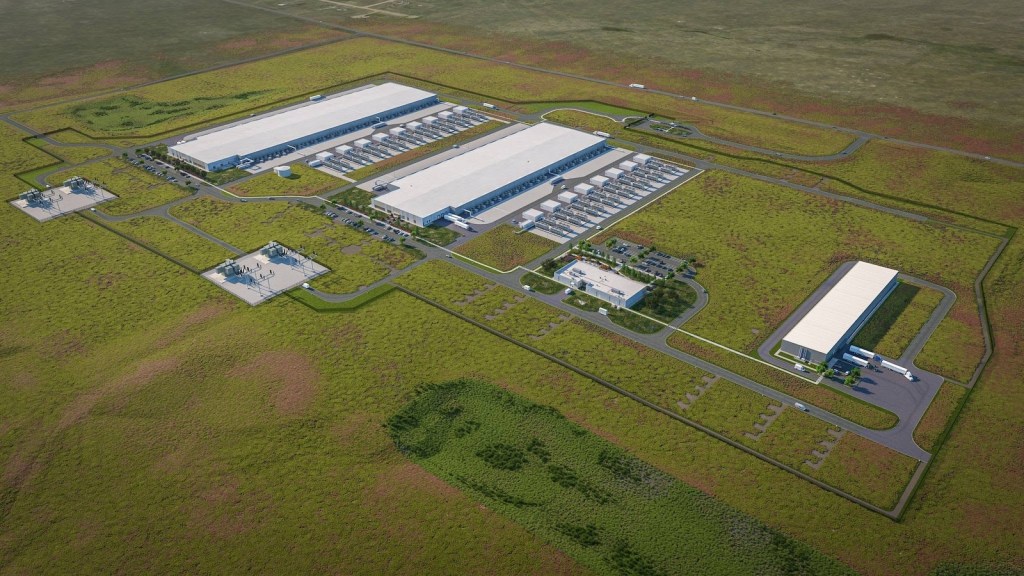
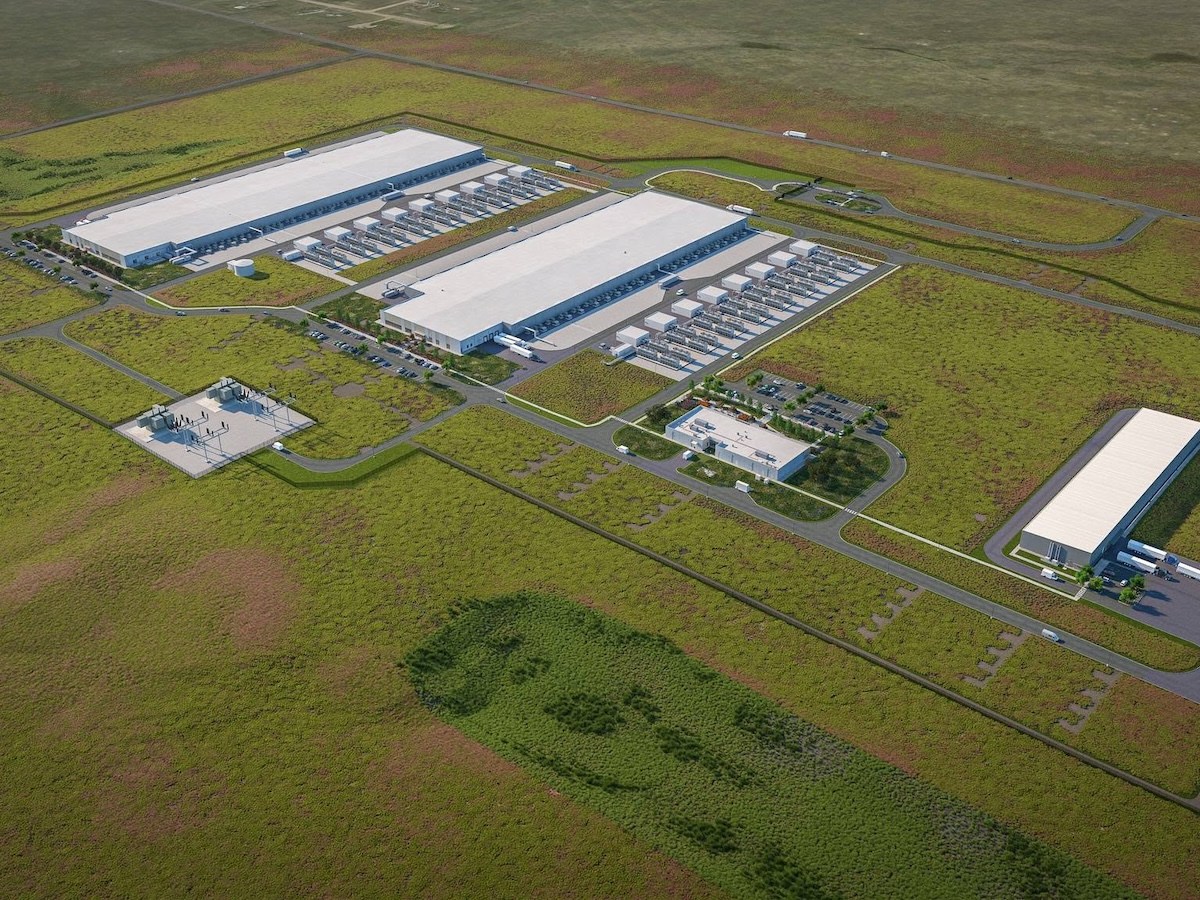
Meta calls its Cheyenne center a 715,000-square-foot campus. Most of the space in such complexes is taken up by warehouses of computers that can be used to power artificial intelligence or serve cell phones and computers that need complex software for writing, filming, recording, streaming and number crunching.
The industrial parks are being constructed on thousands of acres that have been used for years as ranch lands, including near Evanston and Wheatland.
Documents indicate that the Cheyenne investigation and citation centered on the filling and flushing of a closed-loop cooling system, a method of cooling computer banks while conserving water.
Meta said it acted as soon as it found out there was a problem. Meta’s construction contractor Fortis “immediately stopped discharging industrial wastewater and began hauling it offsite,” Meta said.
The company began testing through an independent contractor and “found no trace of the substance,” a spokesperson said in a statement.
“Meta is committed to being a good neighbor in Cheyenne,” the statement reads, “including through the protection of local water resources, and will continue encouraging collaboration between Fortis and the board until this situation is resolved.”

Is anyone surprised?
And what is this? “Meta’s construction contractor Fortis “immediately stopped discharging industrial wastewater and began hauling it offsite,” Meta said.” Hauling the industrial wastewater where, exactly? Hmm?
They should be fined a lot more for taking advantage of our youth. It is an evil empire.
I am very happy to see the BOPU’s Industrial Pretreatment Program doing what it is charged with: Protecting the public’s investment in wastewater treatment plants and the receiving waters (Crow Creek and Dry Creek) that the treatment plants discharge to. It is sad to see this business appeal a fine that is probably too low. This is a business that appears to feel entitled to pollute. They should be focused on full compliance. I was the EPA Region 8 Pretreatment Program Coordinator (retired) and a consultant for municipalities for Pretreatment Programs implementation and enforcement (now retired). Thankfully, businesses such as these are in the minority of industrial users in the U.S. Good job BOPU Pretreatment Program.
Unfortunate pollution, but this incident does inform the public about how our water is attempting to be protected by unappreciated members of the Cheyenne community. Based on the actions taken by Cheyenne, 10k is not enough to fine this polluter, but that will not stop Zuckerberg’s Meta from fighting that paltry sum. Polluters have had outsized influence over our government for a long time. I fully expect META to adopt the coal model and have this pollution exempted from regulation, just like coal ash is legally not a hazardous waste even though it tests like one.
META will probably push for passing the property tax relief so Cheyenne will have to cut services then target the agency that provides oversight of this operation. Do not worry because Wyoming elects the best and the brightest, just ask any Freedom Caucus member and they will be quick to tell you that is so. I am certain they will advocate for replacing oversight with prayer that will certainly remove this pollutant from our lives. Can I get an Amen!
A textbook example of who knew what, when did they know it, and what did they do? The Cheyenne Board of Public Utilities knew early on and traded “public panic” for public skepticism while also (apparently) failing to inform elected leadership for almost 2 months. Meanwhile, META is clearly prepping to fight this out in court (not exactly a neighborly thing to do). The company’s pockets are deep, much deeper than Cheyenne’s. By deciding to annex the property – no doubt at the urging of META – and thus avoid state regulatory oversight, the city assumed a level of expertise and responsibility that is beyond its capabilities.
Because human need artificial intelligence, and unlimited data collection to track every human being on the planet.
“Industrial Society and it’s Future” was as prophetic as Orwell’s 1984 and Huxley’s Brave New World.
Technology is not a friend of mankind.