

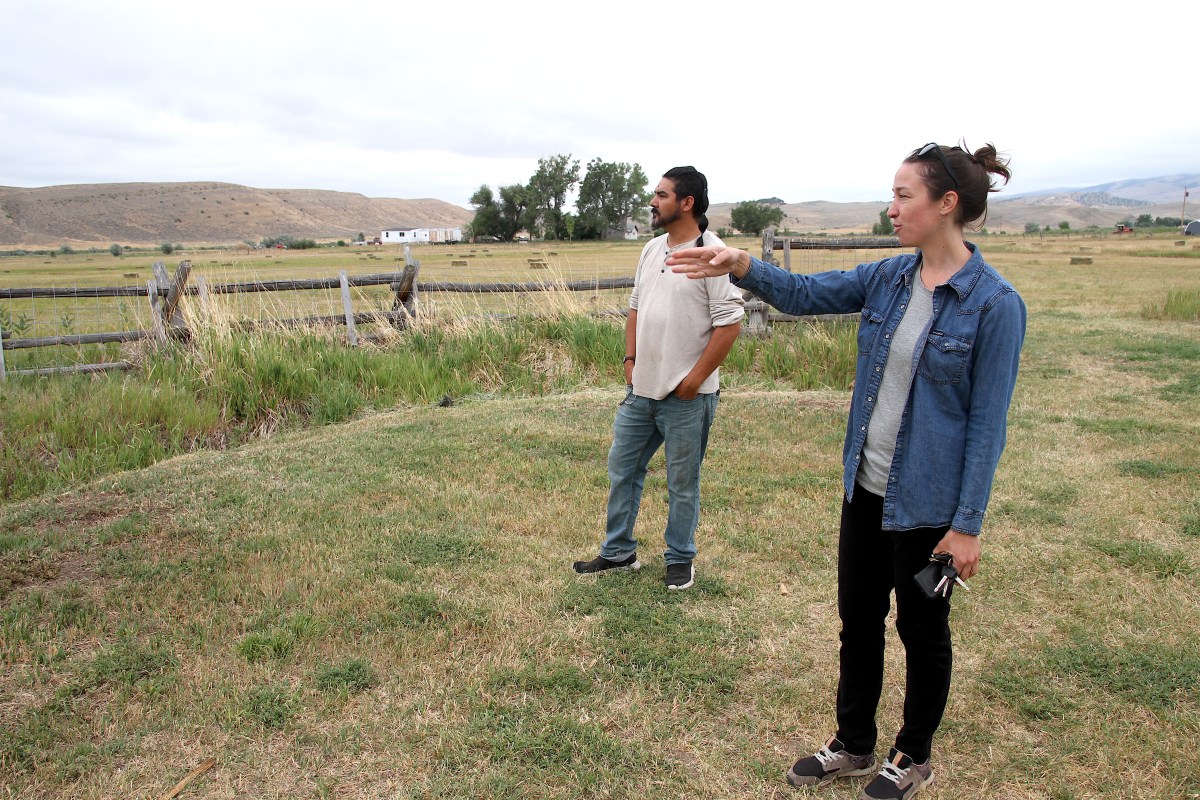
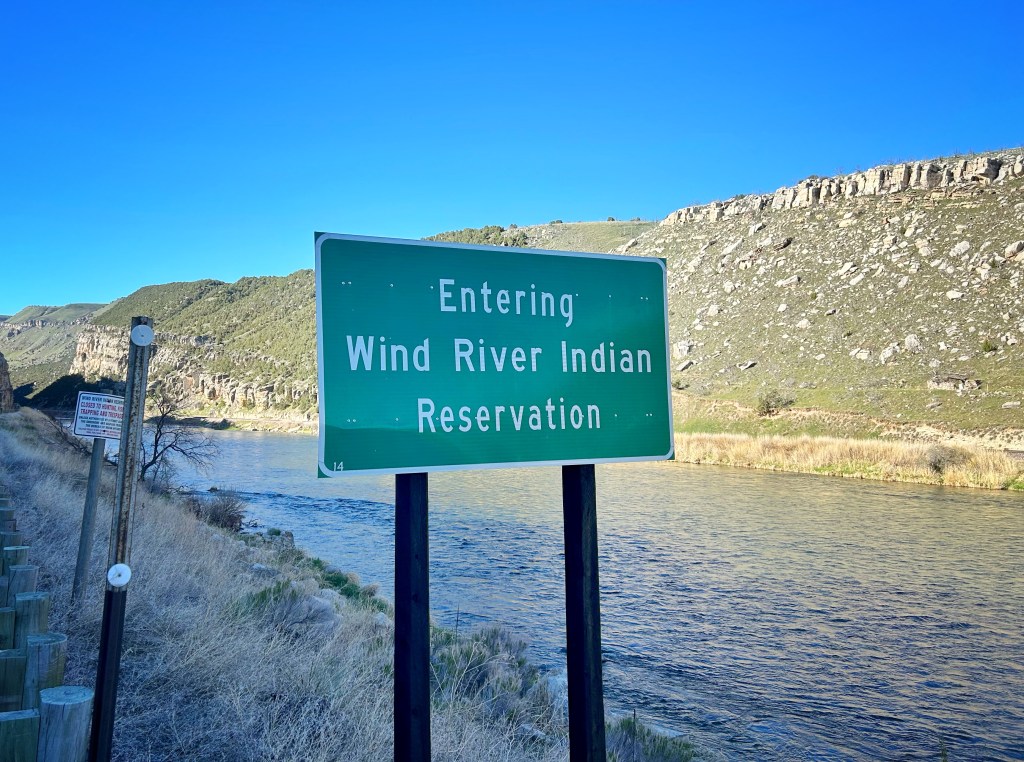
It’s no secret the rural 2.2-million-acre Wind River Indian Reservation has received few major economic investments since its establishment a century and a half ago.
Consequences for the communities contained within the tribal land have reverberated for generations: The reservation’s three main small towns — Fort Washakie, Arapahoe and Ethete — are dropping in population, possess few local businesses and lack adequate infrastructure and housing. Poverty rates on the reservation are much higher than in nearby areas, according to U.S. Census Bureau data. Home values on the reservation are less than half of broader Fremont County. Around a third of tribal residents lack any health care.
There are few upsides to the somber socioeconomic realities that have long saddled the Eastern Shoshone and Northern Arapaho tribes, who despite federal and state theft of their lands, have continued to survive in the region.
Last year, however, the Wind River Development Fund identified one silver lining: The lack of economic vitality made the region eligible for the federal “Recompete” pilot grant program, which targets areas where prime-age (25-54) employment significantly trails the national average.
“In Wyoming, this was the only area even eligible to apply,” said Paul Huberty, who heads the Wind River Development Fund.
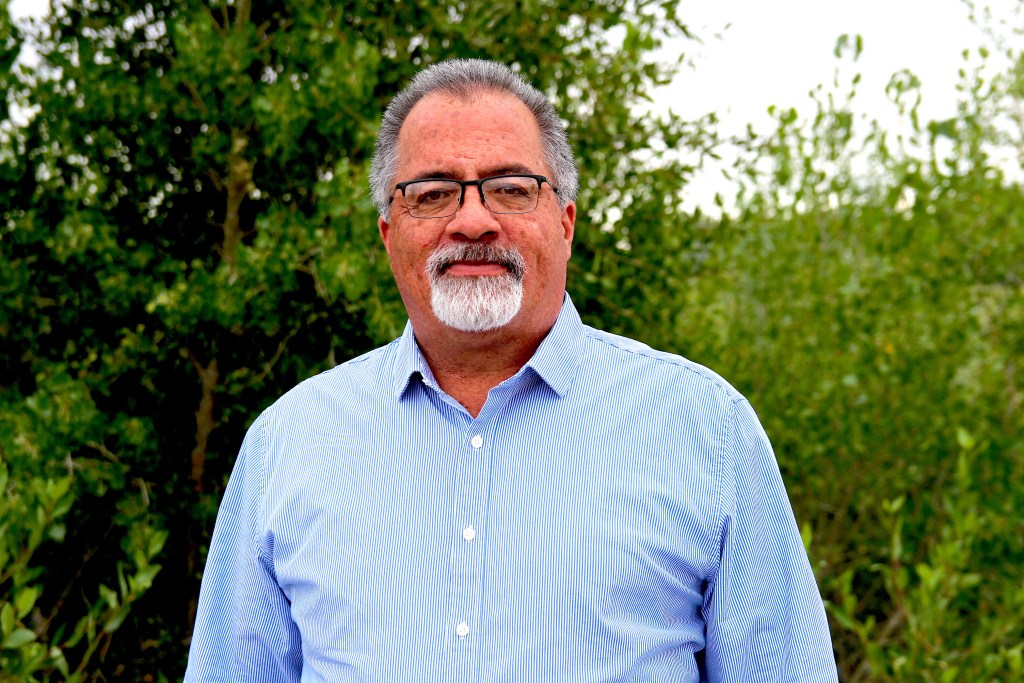
Huberty, who’s a member of the White Earth Band of Ojibwe, started down the road of applying when he was less than a year into the job. Quickly, he learned there were long odds: the U.S. Department of Commerce’s Economic Development Administration received 565 applications. Those applicants sought $6 billion, when just over $200 million was available.
Nevertheless, Huberty and the Wind River Coalition’s application was selected as one of the 22 finalists around Christmas. They were awarded a $400,000 planning grant, part of which went toward a much more detailed application.
The grant applicants sought to get nine projects funded to the tune of $47 million.
Two weeks ago, Huberty and fellow Wind River Development Fund staffers Lisa Wagner and Erika Yarber were summoned for a phone call with the Economic Development Administration.
“We thought they just wanted to ask a couple more questions,” Huberty said, “because they kept coming back and asking for additional information.”
Nope.
The call was to inform them they were one of six awardees, and were receiving $36 million for eight job-creating projects.
“We were shocked,” Huberty said.
Two weeks later, the Wind River Development Fund’s executive director was using the word “surreal” to describe the entire experience.
Yarber, meanwhile, was sanguine. She spoke enthusiastically about the prospects that the infusion of capital will help Wyoming’s most impoverished area turn a corner.
“All these projects are for the entire reservation,” she said. “Both tribes, the whole community. They’re going to help Riverton, Fremont County and hopefully our state as a whole.”
The freshly funded “Wind River Indigenous-based Economy Recompete Plan” is designed to provide jobs and improve lives via infrastructure and business investments that touch on everything from bison restoration to ecotourism to health care to the Wind River Food Sovereignty Project. Here’s a list of the funded projects:
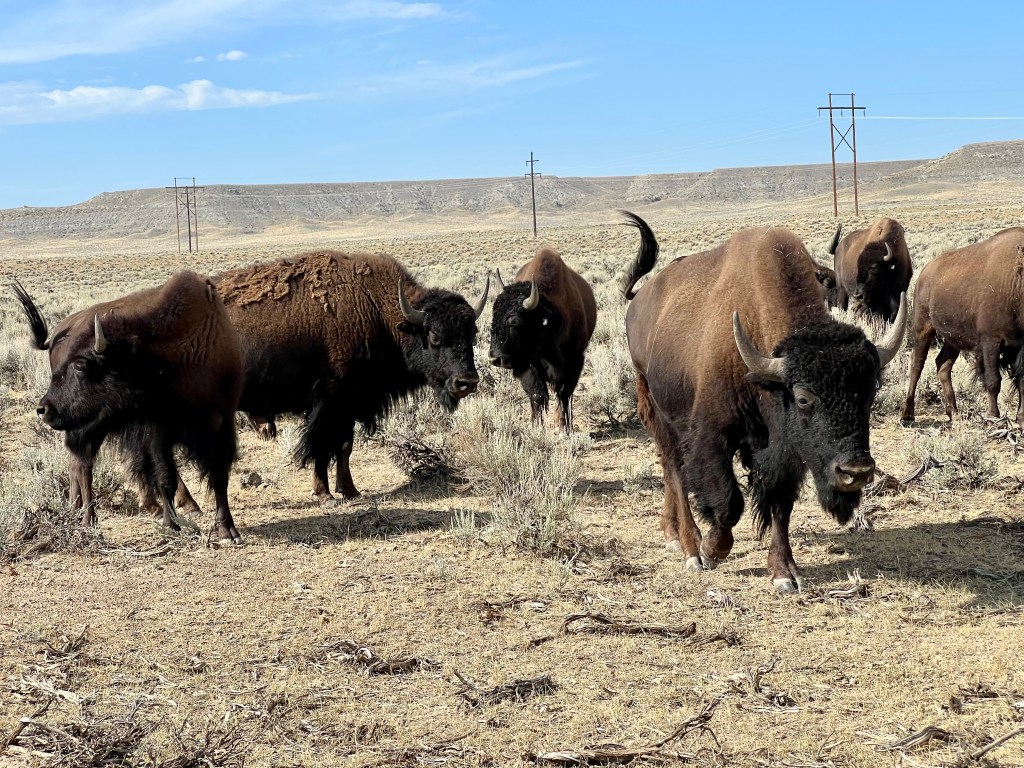
- “Tribal Buffalo Center” for Wind River Tribal Buffalo Initiative: $9.75 million
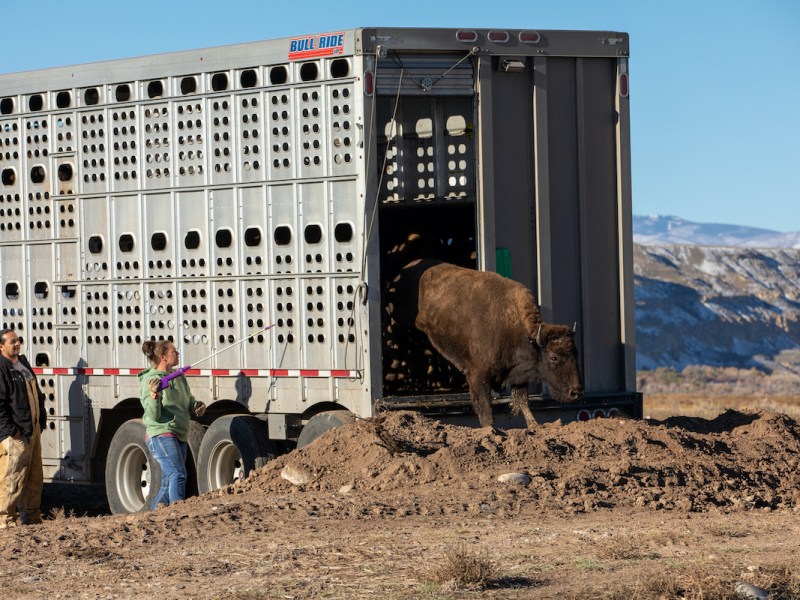
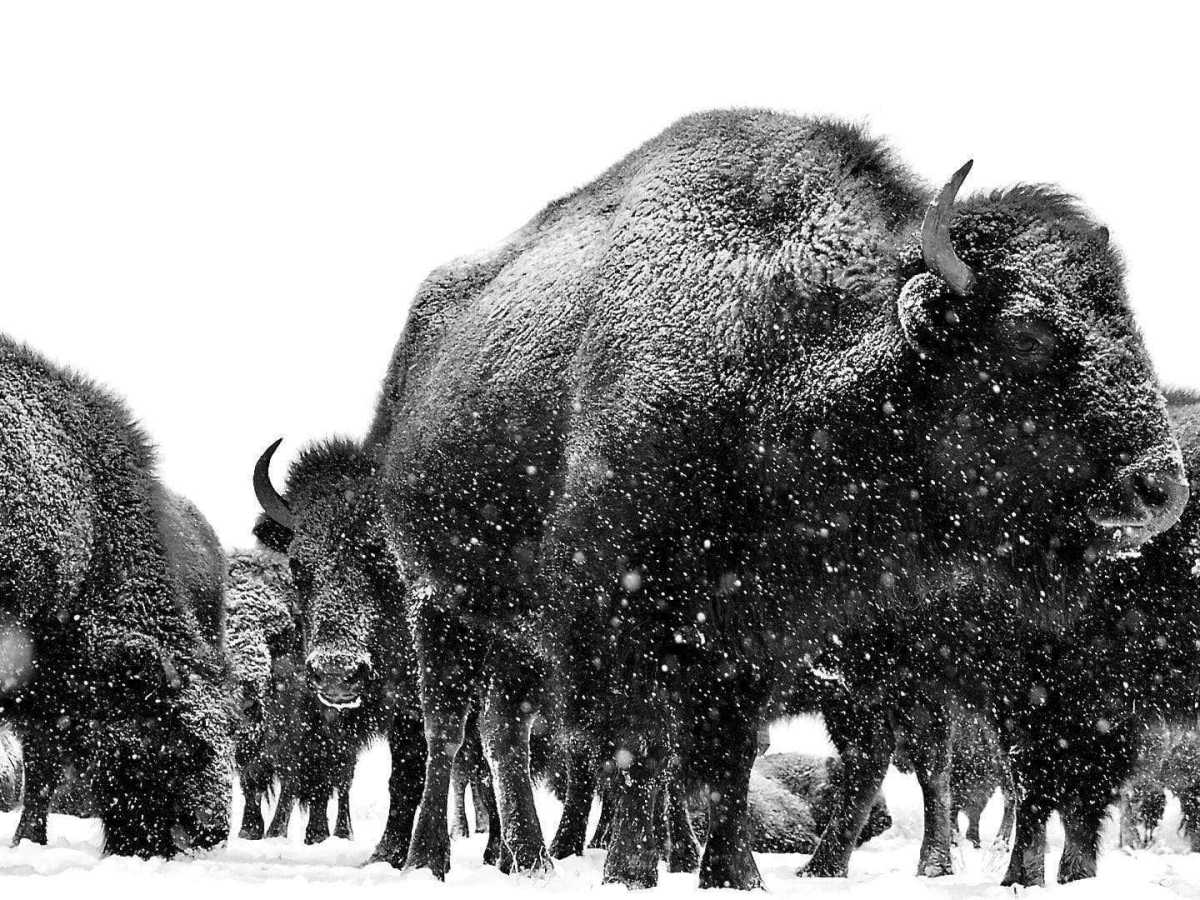
Bison restoration on the Wind River Indian Reservation has the goal of bringing back the species — an effort that’s underway — and also having bison be declared as a wildlife species under the tribal game code. Jason Baldes, who heads the effort, now has funding to build a 14,000-square-foot buffalo museum that will directly support 15 full-time and 6 part-time jobs.
- “Cultural Center incubation” for Wind River Development Fund: $2.21 million
This project will create an “incubation program” for the Eastern Shoshone Cultural Center and the Tribal Buffalo Center, creating seven new full-time jobs in the process.
- “Bringing ecotourism to Wind River” for Eastern Shoshone Tribe: $6.5 million
This project will overhaul the Eastern Shoshone and Northern Arapaho’s Tribal Fish and Game’s headquarters in Fort Washakie. A new 3.5-acre site will host an “ecotourism complex” that includes a nearly 6,000-square-foot museum and office and a 7,200-square-foot storage facility. It’s expected to produce 16 full-time jobs.

- “Creating a path to land sovereignty” for Wind River Development Fund: $1.2 million
This project will create an “innovative model” to help Indigenous residents understand the complexities of reservation-based land. The final product will be something like a master plan for the Wind River Indian Reservation, according to Huberty. “We’ll do a comprehensive assessment of where the community wants to see future economic development,” he said.
- “Growing resilient food systems” for Wind River Food Sovereignty Project: $4.2 million
On a 30-acre lot west of Fort Washakie, Wind River Food Sovereignty Project co-directors Kelly Pingree and Livy Lewis are leading the effort to train and build market infrastructure for small-scale agricultural producers on the reservation. The investment, which could produce 10 full-time jobs, will help pay for a commercial kitchen, hoop houses, plant nursery, youth and elder gardens, orchard, a “food forest” of native plants and more.
- “Building a healthier workforce” for Eastern Shoshone Tribe: $3 million
Six new full-time jobs are expected to be produced by an initiative that will target health care services for people who suffer from diabetes and struggle with substance abuse. Some 500 patients could benefit via increased employment and income.

- “Investing in human capital” for Central Wyoming College: $5 million
Funding is supporting educational programs that will target underserved areas by creating pathways to jobs for 25-54 years-olds. The goal is for the funding to result in the graduation of 772 students who will enter the workforce.
- “Wind River Coalition Governance” for Wind River Development Fund: $5.4 million
This funding will pay for a program that will manage the Recompete Plan activities and ensure performance measures are on track for success. It’s expected to create 11 full-time jobs.
In total, getting the projects off the ground will create 71 full-time and 14 part-time jobs that will pay well for the reservation, according to the application.
Yarber, the fund’s director of business development, said the overall structure of the economic revitalization plan is “holistic.”
“Everything is intertwined — every single project,” she said. “That’s what makes this so awesome.”
The intention is for the investments to pay dividends long into the future by laying the foundation for economic growth. By capturing a “modest” amount of tourism, the plan’s long-term goal is for $147-$189 million of economic activity and 1,570-2,005 new jobs.
Art Lawson, the Shoshone and Arapaho Fish and Game director, is benefiting directly from the just-secured grant money: It’ll build him a new office and an ecotourism center for anglers and hikers. But he foresees benefits extending well outside of his profession.
“Good things are happening,” Lawson told WyoFile. “We’ve needed this for a long time. Hopefully it’ll create more entrepreneurship and more businesses on the reservation, and generate some funding to help tribal members out.”


My niece, who has been with the Native Health Care Service on the Wind River Reservation for years, will be unhappy to hear this presented to her by folks that, it appears, do not know what they are talking about. “Around a third of tribal residents lack any health care”.
What wonderful good news. And as it should be.
Agreed. I should not be surprised as this is the right thing to do, but I am happily amazed as to how this turned out.
Looks like 36 million dollars down the drain.
So happy for this great and overdue hand up for the reservation. It is focused and inspirational.
Great, this makes the future brighter for everybody.
This is so e!xciting! It will open up a whole new world for our future generations. My family has lived here for 13 generations. born and raised in Lander. Congratulations! Looking forward to the future❤️🙏👍
That building was the original chuch in Wyoming. It was used as a church and a school.
You folks need to use the new building at sacajawea cemetery as a venue to promote your history. From July 5th untill it got cold there were over 3 thousand folks that visited that place. It’s an untapped resource to spred your message.
Congratulations, long over due shot in the arm for the Wind River Rez. Please list and Manage, Buffalo as wildlife. They are the center structure of this “shot in the arm”.