

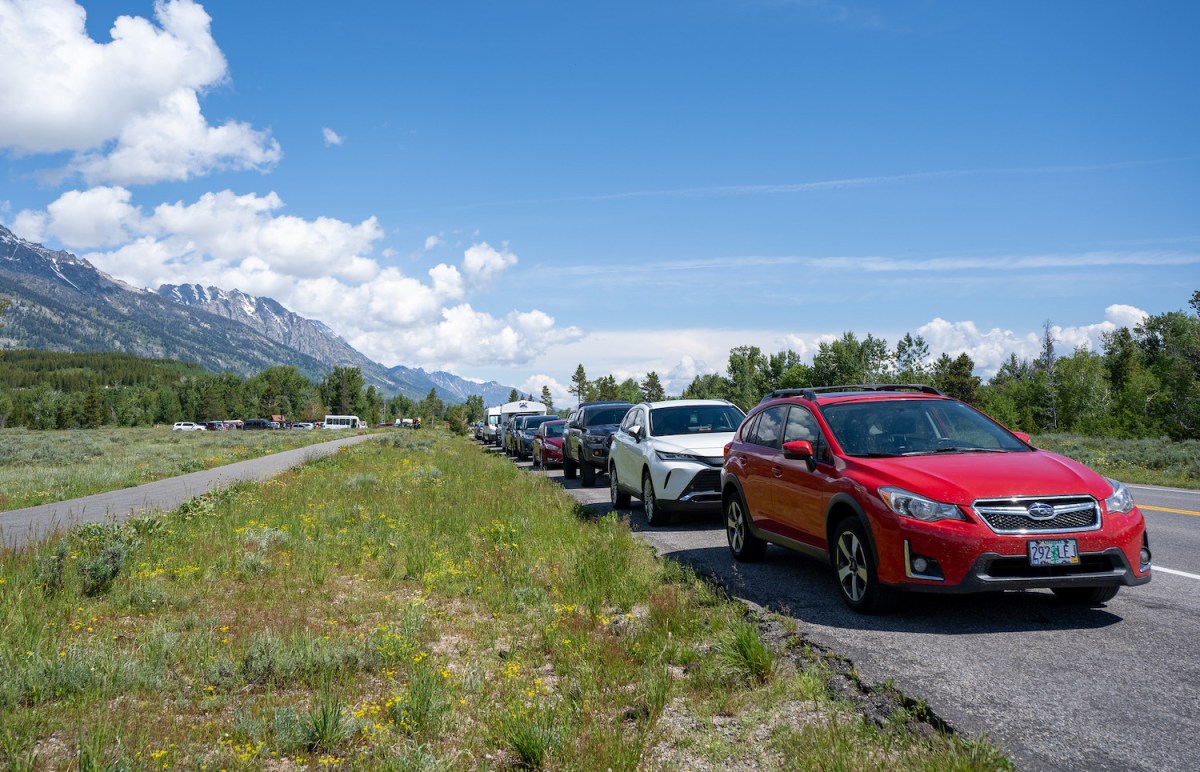
With access to beginner-friendly hikes with epic views as well as technical, multi-day and backcountry objectives for experts, the Taggart Lake trailhead in Grand Teton National Park is the busiest year-round trailhead in the park.
So busy, according to park officials, that on peak days more than 1,000 people flock to the site, and annual visitations tally more than 160,000.
“Use at Taggart Lake has increased more than 100% in the last 10 years,” Superintendent Chip Jenkins said. That compares to a 20% growth in overall park visitation, showing just how appealing it is.
Facilities are no longer adequate to serve the 700 or so average daily visitors, and park officials have sketched out a plan to expand the parking lot, reconfigure trails, install new toilets and improve other aspects of the trailhead area to accommodate mushrooming use.
Grand Teton National Park is seeking comment on an environmental assessment of the project. The 35-day comment period closes on Sept. 23.
During a Wednesday presentation on the environmental assessment, Jenkins said the so-called preferred alternative would create a more accessible and capacious site that would help protect the resources. Park data documented numerous instances of fecal matter and toilet paper near Taggart Lake in 2022, according to the assessment.
“We think that this preferred alternative will help us make for a better Taggart experience and for a better Grand Teton experience,” Jenkins said.

The project is estimated to cost $14.6 million to construct, with the Grand Teton National Park Foundation providing more than $10 million of that. Much of the remaining expense will be funded through appropriated federal dollars, primarily through the National Park Service Centennial Challenge, Jenkins said. Construction is anticipated to begin in 2026.
The project underscores how Grand Teton and neighboring Yellowstone are wrestling with growing visitors who are filling parking lots, crowding trails and putting a strain on park services like bathrooms and search and rescue.
A park hotspot
As a launching-off point for popular hikes near the park’s southern entrance, the trailhead is one of the most common places for people to start their visit to Grand Teton, Jenkins said. It’s also a well-used parking spot for skiers setting out on winter adventures.
Site maintenance has not kept pace with usage growth. Park officials have been gathering public comment on the Taggart Lake experience for the last year to guide improvements to the site. Proposals are mapped out in the environmental assessment. Under the preferred alternative, the project would:
- Expand the parking lot.
- Install new permanent toilets and a water station.
- Redesign the trailhead area and create more accessible pathways.
- Make improvements to the Taggart Lake shoreline to better define access points.
- Improve facilities at the nearby Cottonwood Creek Picnic area.
Objectives of the plan include better safety for bicyclists and better protection for nearby wildlife, according to the assessment.
The environmental assessment also contains a “no action” alternative, under which Grand Teton would continue to maintain the project area as is.
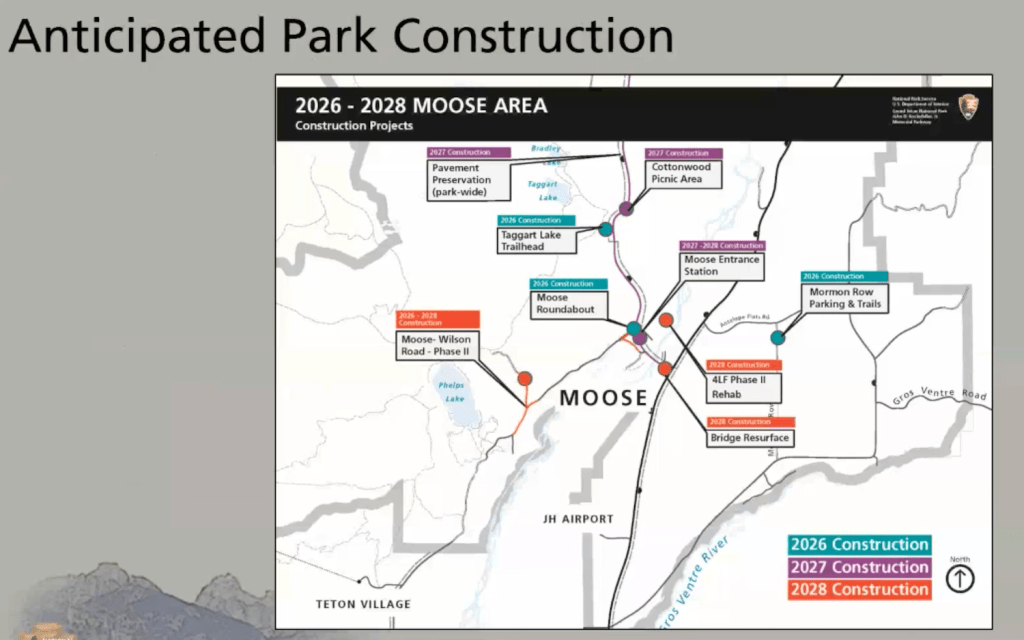
If the preferred action option takes place, the Taggart Lake trailhead upgrades would be among several construction projects scheduled for the park through 2028.
Zooming out
The busy Taggart Lake trailhead underscores the broader challenges growing visitation presents to national park managers.
Grand Teton and Yellowstone both reported record visitation in 2021. Visitations dipped since then, but the overall trend is still climbing.
Right now, Grand Teton is on track to tally its second-highest year for visitation, Jenkins said. Yellowstone, meanwhile, has tallied 3.5 million recreation visits through August, up slightly from 2024 but still behind pace to top 2021.
“Our infrastructure is not always adequate for current visitation numbers, let alone for increasing future levels,” Jenkins said during a congressional field hearing held in the park last week.
Though both parks have implemented measures like camping reservations, vehicle limits at crowded lots and a pilot shuttle system, they have yet to adopt more drastic tools like timed-entry systems that Arches and Rocky Mountain National Parks have adopted to manage huge crowds.
Public lands advocates are keeping a close eye on national parks this year in the wake of President Donald Trump and Elon Musk’s Department of Government Efficiency efforts. Since the Trump administration took office, the National Park Service has lost 24% of its permanent staff, according to the National Parks Conservation Association.
It appears Wyoming’s parks avoided the brunt of those cuts. Yellowstone National Park’s 2025 staffing is higher than last year, a park spokeswoman told WyoFile.

The NPS approach to allowing unlimited access to Taggart Lake is destroying the resource. The question is- what is the carrying capacity of the lake area? As one who has hiked the trails for the last 50 years, I am saddened at the impacts I see by the number of people hiking this trail. Limit the people.
We need to limit visitors to these areas not destroy them with bigger parking lots..this is the opposite solution..social media iswhats destroying these areas