

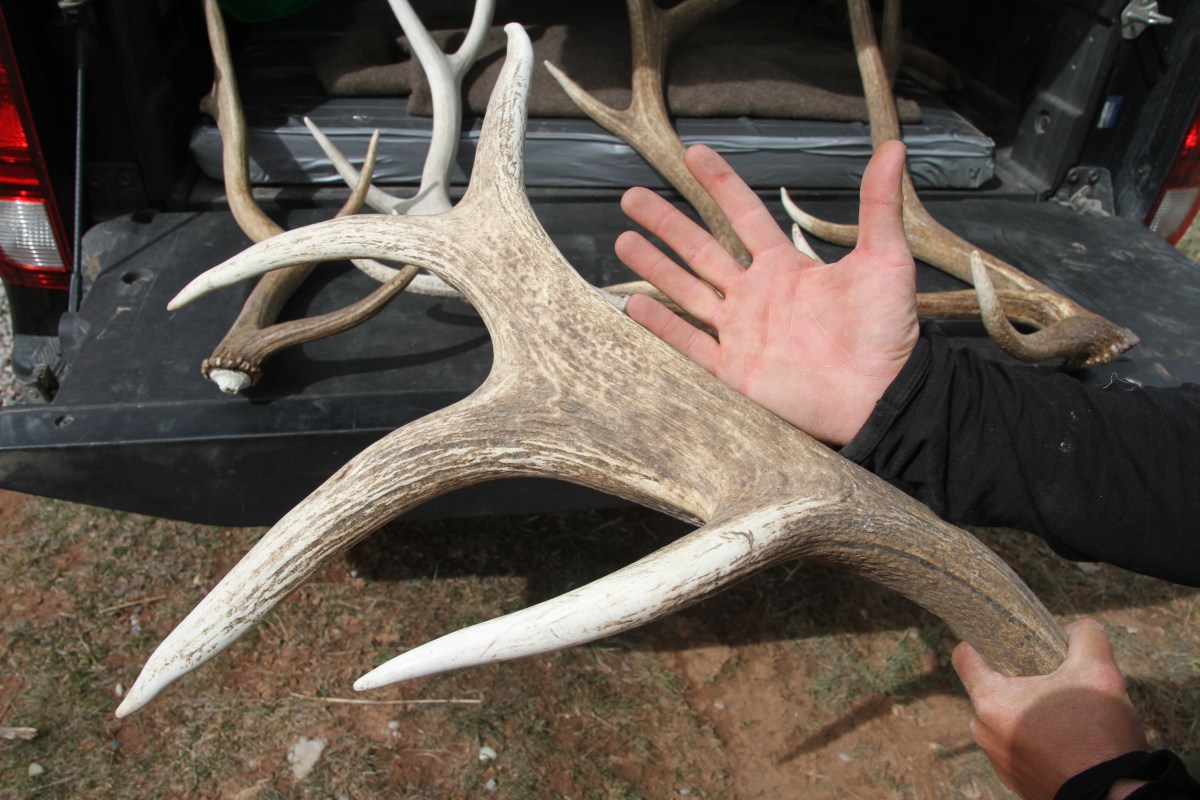
The state of Wyoming likely lacks the authority to create a license system restricting nonresidents from gathering deer, elk and moose antlers in the spring, according to an attorney general opinion.
A push to impose limits on out-of-staters has emanated from Sublette County and other reaches of western Wyoming, where horn hunters arrive in droves each May 1, the day a seasonal prohibition intended to protect winter-stressed animals expires.
“Can we delay [the nonresident season] a couple, three days to give the advantage to in-state people?” Rep. Albert Sommers (R-Pinedale) asked fellow members of the Wyoming Wildlife Taskforce this week.
The answer — at least under current law — appears to be no, Wyoming Game and Fish Department Director Brian Nesvik told WyoFile. Regulations that prevent ungulates from being displaced from their seasonal range is one thing, he said, but it’s another to regulate antler collecting to improve the quality of the antler hunting experience.
“The department’s position and my position has always been that, once that thing falls off we really don’t care about it anymore,” Nesvik said of antlers that “shed” or fall off. “What we care about is the wildlife, and the activity of collecting shed antlers when it has a negative impact on wildlife.”
A discussion of regulating shed hunting to improve the shed hunting experience has unfolded before the Wyoming Wildlife Taskforce. That 18-member body appointed by leaders of the Legislature, governor’s office and Game and Fish is making recommendations about top-priority wildlife policy issues including hunting opportunity and sportsperson access.
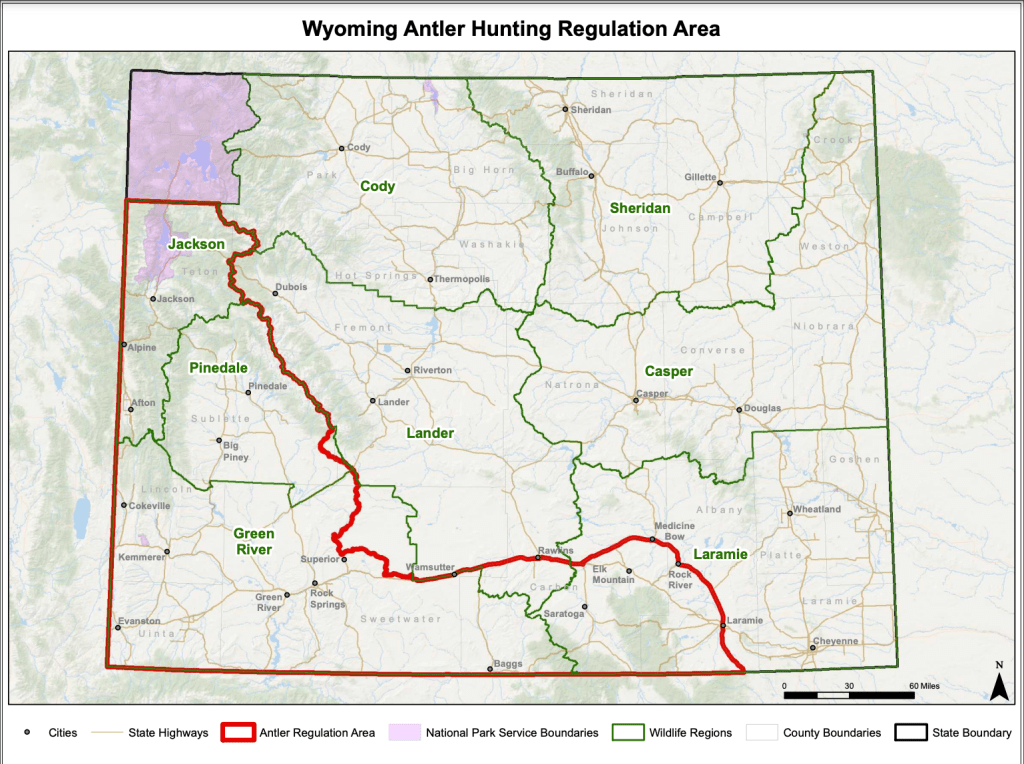
Even though it’s not his department’s desire, Nesvik sought a legal opinion about whether shed antler hunting could be a licensed activity, with preference given to Wyoming residents. The agency’s Wyoming Attorney General representative, Jenny Staeben, informed Game and Fish that a law change was likely needed to take such a step.
Whose antler is it?
Staeben “certainly believes — and I concur — that the [Game and Fish] commission, the department, did not have statutory authority to create a license to collect antlers,” Nesvik told the taskforce on Wednesday. “They believe that it’s unconstitutionally discriminatory to have separate seasons for residents and nonresidents.”
Part of the issue, Nesvik explained, is that an antler is not necessarily the property of the state of Wyoming once it has fallen off an animal.
“We can discriminate against nonresidents for obtaining [hunting] licenses, but those are for wildlife that the state owns,” he said. “If the state no longer owns the antler because it fell off wildlife’s head and it’s no longer wildlife, the thinking here is that it would be discriminatory to have separate discriminatory seasons against nonresidents.”
When it comes to hunting wildlife — not shed antlers — states routinely give residents preferential treatment. Nonresidents are often charged more money for licenses, have access to only a fraction of available licenses and even can have different seasons that puts them at a disadvantage. Idaho, for example, lets its residents pursue pheasants five days earlier than nonresidents.
Poll Wyoming residents who partake in shed antler hunting, and there are good odds they’d favor discriminatory season dates that disadvantage nonresidents. Largely because of their commercial value, there’s been a pronounced boom in the pursuit of Wyoming sheds, attracting thousands of people from neighboring states and beyond at the onset of every May. Antler poaching ahead of the established season has become a major problem, and some antler-dealers have gone to great lengths to pilfer as many sheds off the landscape ahead of the legal season as possible.
“Our wardens are describing the pre-antler opener season — the month before — as being as busy as hunting season because of all the people trying to go out and collect them early,” Nesvik told the taskforce.
“Are we going to task our wardens with following every boulderer In Tensleep Canyon that picks up an elk shed on accident, or every fisherman that stumbles across a moose paddle on a riverbank?”
Wyoming Wildlife Taskforce member Adam Teten
Taskforce member Adam Teten suggested it would be burdensome on wardens to layer on even more regulations.
“Are we going to task our wardens with following every boulderer In Tensleep Canyon that picks up an elk shed on accident,” he asked, “or every fisherman that stumbles across a moose paddle on a riverbank?”
No progress
A law change may be needed if the state decides to pursue a shed-hunting license. Staeben’s opinion, Nesvik said, is that it’s “more likely than not” illegal, and that it’s “unsettled law.”
The Game and Fish director told the taskforce, of which he’s a member, that there are two paths forward. The panel could recommend the Wyoming Legislature write a statute that changes the definition of wildlife to include all parts, though he conceded “there may be some landmines I’m not thinking of.” Or, he said, they could use existing authority to regulate the activity, and have a random draw for permits that would allow people to hunt shed antlers.
“It would have to be a totally random draw for anybody who applied, regardless of residency,” Nesvik said. “I think one of the most challenging things here is we’re talking about federal land.”
But at least for now, the Wyoming Wildlife Taskforce does not seem likely to pursue either option. The group, which meets next July 7, has a long list of issues it’s trying to sort through.
Nesvik’s sense is that the effort to license shed hunters to improve the experience for residents is likely to fall off.
“It didn’t seem like there’s any desire from the taskforce as a whole to pursue anything further,” he said. “That’s just from reading the room.”

So we can make voter id laws legal, policing women’s bodies legal, posting mugshots legal and drawing blood without your consent legal, but licensing animal sheds is a bridge too far?? Give me a break. Nesvik is acting cowardly.
stopping antler hunters and pickers of wild or domestic asparagus on private property is also impossible. Yet if one picked “their ” roses or took an antler from their pile it certainly will have a different ending.