




The same group of abortion rights advocates who successfully defeated Wyoming’s abortion bans has opened a new legal battle, this time against a law signed Monday that bans the practice as soon as there’s a “detectable fetal heartbeat,” which can be as early as six weeks.
The new challenge, filed late Tuesday afternoon, was added to one that’s already pending in Natrona County against two anti-abortion laws passed last year. The motion asserts that the Human Heartbeat Act “involves the same fundamental problem as the prior laws before the Court,” in that it “transgresses the constitutional guarantee” of individuals’ ability “to make health care decisions without interference from the government.” The plaintiffs asked for the new law to be blocked while the legal challenge proceeds.

The challenge comes after Gov. Mark Gordon signed the bill on Monday while predicting that the new law, which went into effect immediately, would land the state in court. “Regrettably, this Act represents another well-intentioned but likely fragile legal effort with significant risk of ending in the courts rather than in lasting, durable policy,” he wrote in his veto message.
Julie Burkhart, president of Wellspring Health Access, the lone Wyoming clinic that provides abortions and a plaintiff in the existing lawsuit, said shortly after the governor’s announcement that she planned to bring a legal challenge against the law. Wellspring has served more than 899 abortion patients, according to the new legal filing.
The law, the new legal filing states, “strips Wyoming women and their families of their fundamental rights.”
As a result of the new law, the plaintiffs argue, Wellspring’s physicians and staff, as well as other doctors who provide abortion and other reproductive health care, “have no choice but to stop providing abortion care and other reproductive health services after six weeks gestation that could qualify as a ‘termination of pregnancy’ that does not fall under the vague and ambiguous ‘medical emergency’ exception.”
The law will also impact Chelsea’s Fund, a plaintiff and group that helps pay for abortion services, and its clients, “by increasing medical and travel costs” and “potentially implicating criminal liability” on the organization, “therefore exhausting the fund’s ability and resources to assist Wyoming women in obtaining legal abortion-related services.”
The new law requires health care providers to determine if a fetus has a detectable heartbeat before terminating a pregnancy, except for medical emergencies. It bars abortion if the fetus has a detectable heartbeat or if the person performing the abortion has failed to determine whether there’s a fetal heartbeat.
While cardiac activity can be detected around six weeks, the term “fetal heartbeat” is a misnomer at this stage, according to physicians who note embryos don’t fully develop cardiac valves this early.
Referring to this ambiguity, the new legal filing argues that the law doesn’t provide a “workable definition” of “detectable fetal heartbeat,” asserting that it’s “unclear” whether the new ban is referring to this early cardiac activity or another stage of embryonic development. Health care providers won’t be willing to end a pregnancy “at any point of a pregnancy, but especially after six weeks of gestation” as a result of this ambiguity, plaintiffs argue, essentially making the new law an abortion ban after six weeks gestation except for medical emergencies.
“The statute similarly fails to provide a workable definition of ‘medical emergency,’ leaving patients at risk of serious injury or death from any delay or denial of medication or procedural abortion care,” the new legal challenge states.
Medical professionals found in violation of the law would face a felony offense punishable by up to five years in prison or a fine up to $10,000. They would also lose their professional license.
The new abortion restriction comes in the wake of January’s Wyoming Supreme Court decision that struck down two 2023 anti-abortion bans on the grounds of their unconstitutionality. The plaintiffs in that case are the same as those in this newest court challenge. Central to arguments challenging those laws is a 2012 amendment to the Wyoming Constitution that protects people’s rights to make their own health care decisions.
At the beginning of the session, Gordon called on lawmakers to deliver a constitutional amendment to his desk so that Wyoming voters could settle the abortion matter. But a constitutional amendment bill related to abortion failed an introductory vote in the Senate. Instead, Speaker of the House Chip Neiman, R-Hulett, pushed forward the Human Heartbeat Act, which he pitched as a way to “provide protection for life” while acting within the constraints resulting from the court’s decision.
Critics, however, argue that the measure is essentially another abortion ban, given that many women don’t learn they are pregnant before six weeks, around when cardiac activity can first be detected.
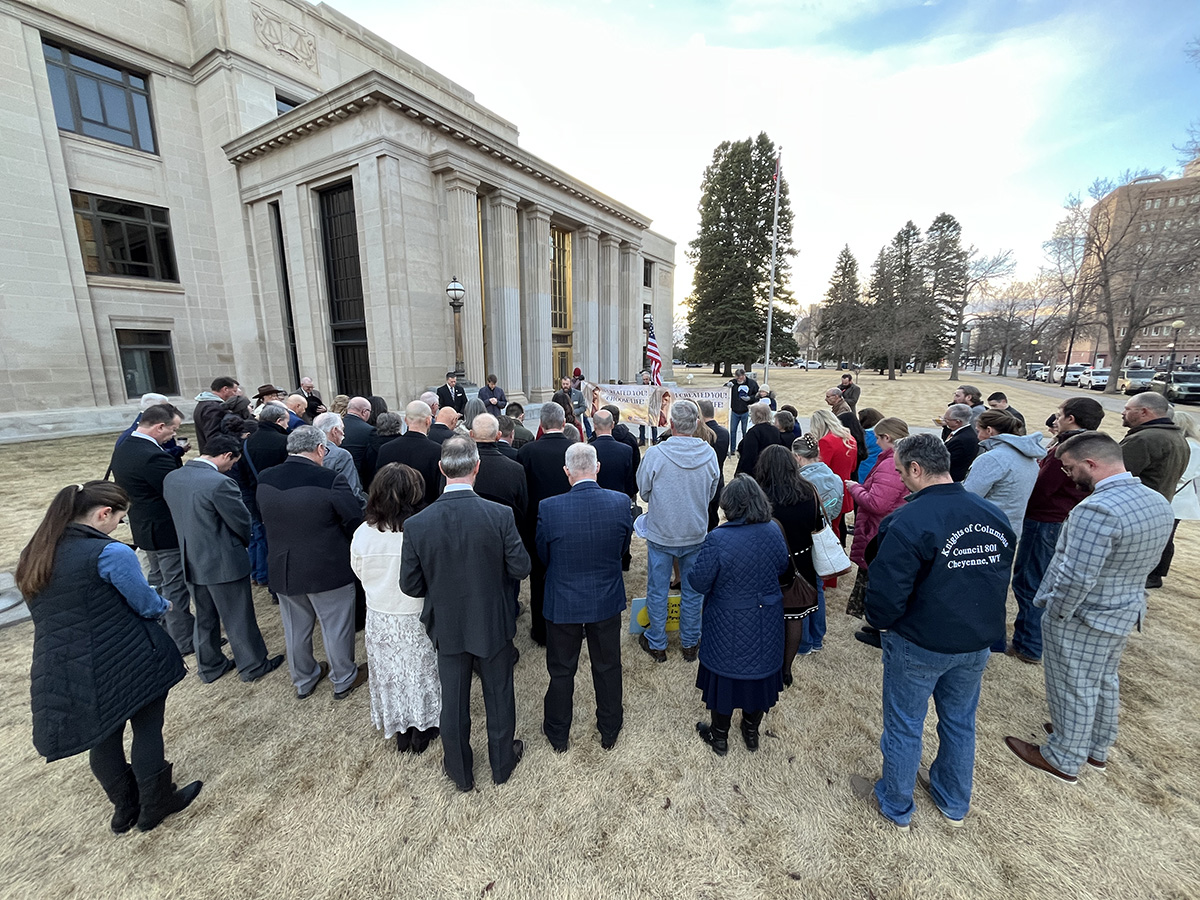

If a judge approves, the challenge to the Human Heartbeat Act will be tacked onto litigation against two other anti-abortion laws that are on hold while the court mulls the case.
One requires a transvaginal ultrasound and then a 48-hour wait before someone can receive abortion pills in the state. Gordon vetoed that bill, objecting to its invasive nature, but the Legislature voted to override his rejection and it became law.
The other requires facilities that provide abortions to be licensed as ambulatory surgical centers, which are health care facilities that perform surgeries but are not hospitals. The classification comes with Department of Health inspections, rules and regulations that abortion rights advocates say are designed to be so onerous that any clinics would be forced to close.
For more legislative coverage, click here.