


Six years after the COVID-19 pandemic upended education and led to nationwide learning loss, Wyoming’s standardized testing scores have rebounded.
Student scores increased across science, math and language arts in both the 2025-26 Wyoming Test of Proficiency and Progress, commonly known as WY-TOPP, and Wyoming Alternate Assessment, Wyoming Superintendent of Public Education Megan Degenfelder announced in a Friday press conference.
It’s the first time that scores have reached or exceeded prepandemic levels across all three areas of testing. Degenfelder recalled participating in a similar press conference in the past, where she delivered less thrilling results.
“Three years ago, at this very press conference, I stated that we must do better,” Degenfelder said, “and Wyoming, together we have delivered.”
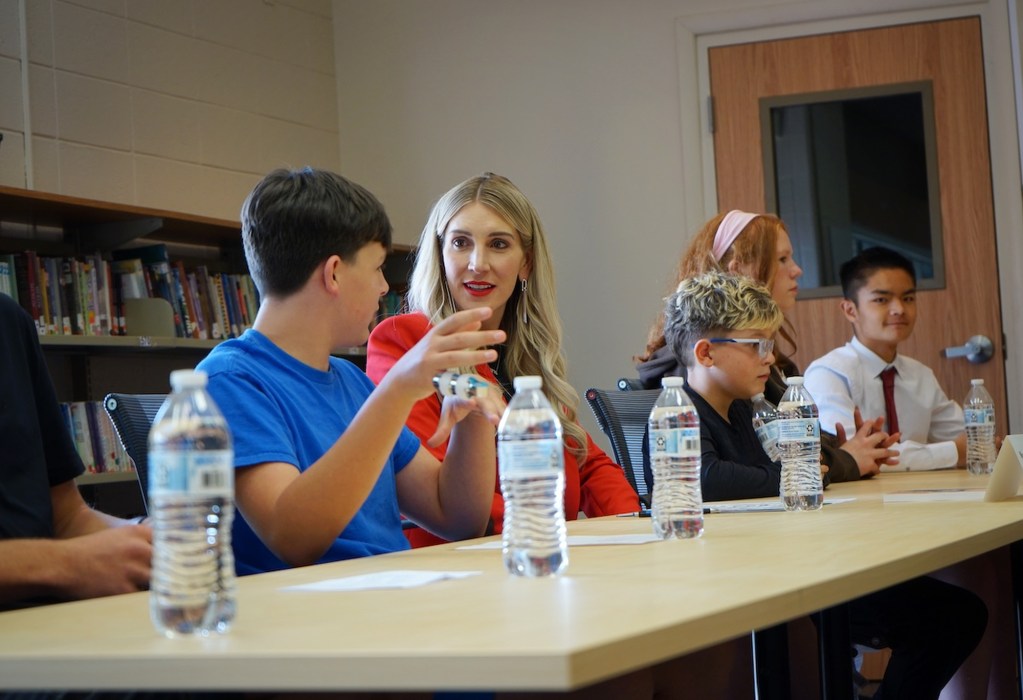
She credited a “laser-focused” effort that has involved policymakers, school administrators, classroom teachers and others. “These results show us that our statewide priority around literacy reform and efforts to raise the bar are working,” she said.
Degenfelder also trumpeted gains made in school performance rankings, which rely on indicators such as student achievement and graduation rates. For the 2025-26 school year, 75% of schools serving students in grades 3-8 met or exceeded the achievement standards, a 5% gain.
Results breakdown
Launched in 2017-18, WY-TOPP measures student mastery of Wyoming’s content and performance standards. Students take the computer-based assessment every year from third through 10th grade; it covers math, English language arts and science.
The assessment has been tweaked during its lifetime, with officials altering the science portion and removing writing from the third grade assessment, for example.
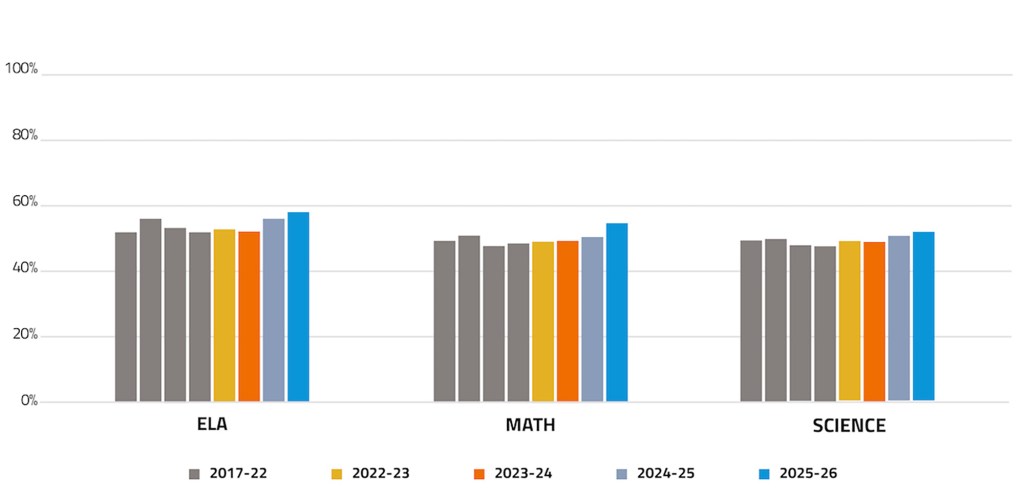
In the 2025-26 results, student proficiency increased 1.6% in English language arts, 4.1% in math and 1.3% in science over the previous year, according to the education department. Overall scores in all content areas have inched up since 2020, but this marked the first time they uniformly reached or exceeded prepandemic levels.
The 2021-22 school year represented a nadir in proficiency results for Wyoming, with overall student proficiency dipping to 53.1% in English language arts, 48.3% in math and 47.3% in science. The newest results grew to 57.3%, 54.9% and 52.5%, respectively.
A statewide standout is Washakie School District 2, home to Ten Sleep School, which had proficiency rates of 70% or better in all three content areas. Other high-performers include Sheridan School Districts 1 and 2.
So what fueled the improvements? Degenfelder credited a matrix of efforts, including strategic literacy instruction, teacher support and strong parental involvement.
“Marking solid math gains and building steady progress in reading doesn’t happen by accident — it is the direct result of dedicated teachers, strong instruction in the classroom, statewide priorities and unwavering family and community support,” she said.
School performance
In tandem with test scores, the department also released 2025-26 school performance results. That measures how well individual schools are meeting state and national standards. When schools don’t meet standards, it triggers state intervention to help map out, support and implement improvement plans.
The 75% of schools that met or exceeded the achievement standards in 2025-26 reflects both an increase in the percentage of schools that met expectations and a decrease in the percentage of schools that only partially or did not meet them.
Degenfelder lauded an effort stretching back to the late 2000s, when a legislative committee spent six years creating a statewide accountability system that factors in not just standardized test performance, but also growth, postsecondary readiness and graduation rates.
Sen. Chris Rothfuss, D-Laramie, sat on that committee.

“I think this is one of the most important pieces of legislation that I’ve worked on in my career in the Legislature, and probably one of the most important pieces of legislation that we’ve passed in the past 20 years,” he said during the press conference. “Now it’s been 10 years since the system was fully implemented in its current form, and we’re seeing the results.”
In this area, Degenfelder also highlighted schools with major gains, such as Carey Middle School in Cheyenne, which jumped two categories when it met expectations after six years of falling short. The state’s largest middle school embarked on what Principal Matt Schlagel called a “redesign” to meet the academic and social needs of students.
“We’re not done,” he added. “We want to be back up here next year as an exceeding-expectation school. Now that we’ve felt how good it is to meet expectations.”