


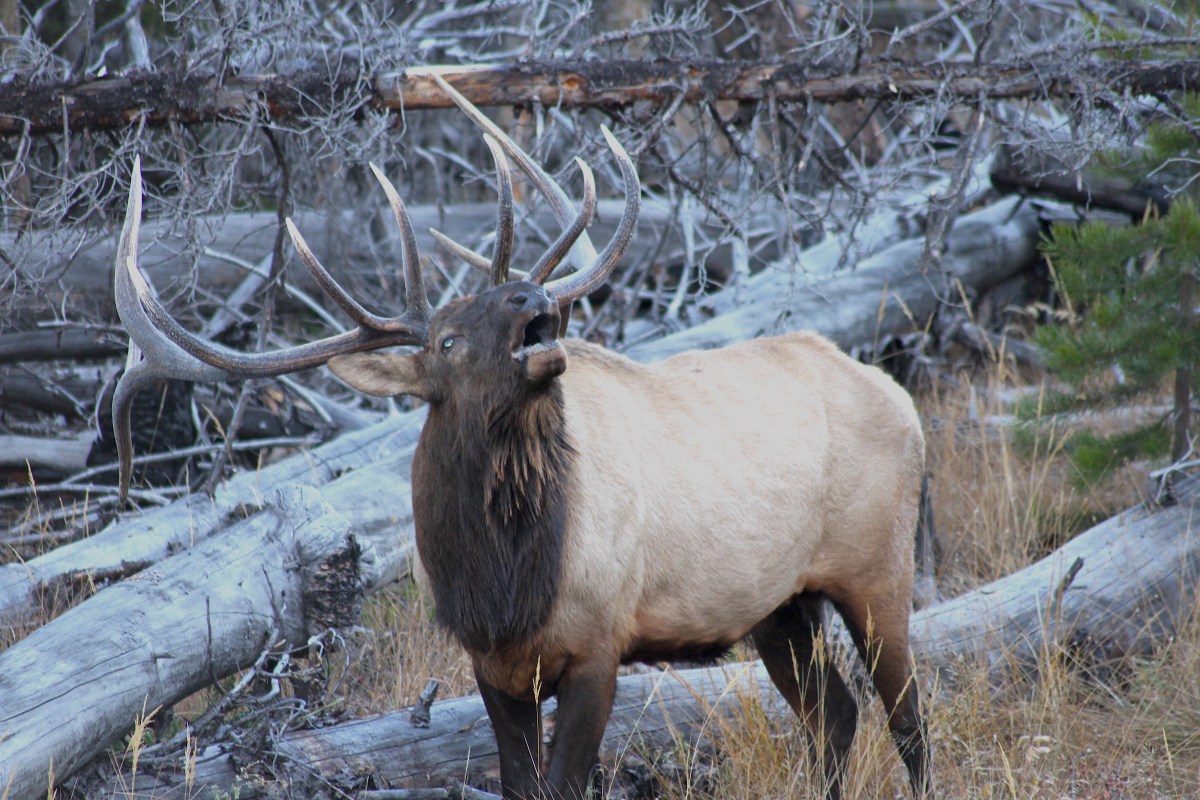
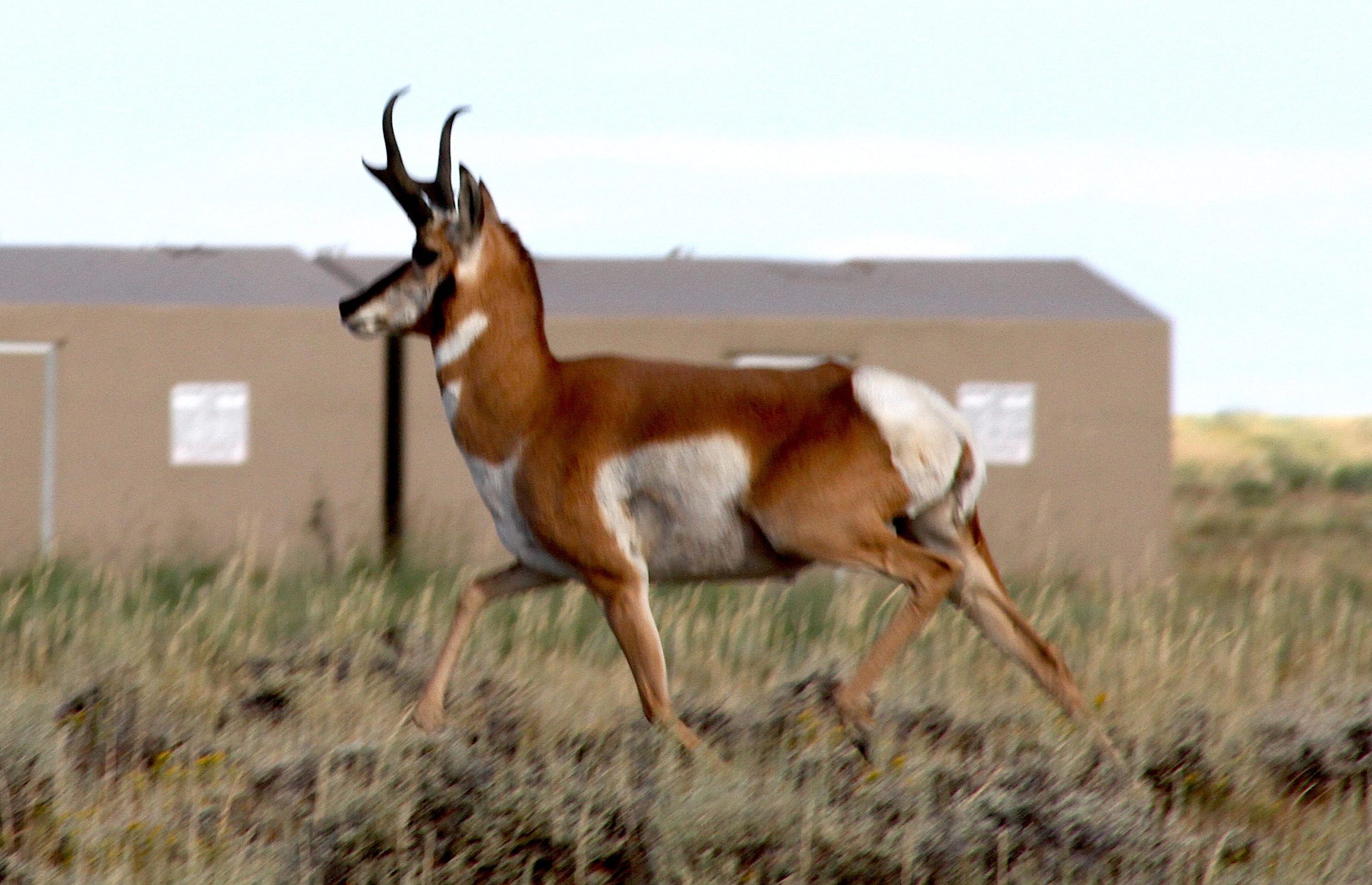
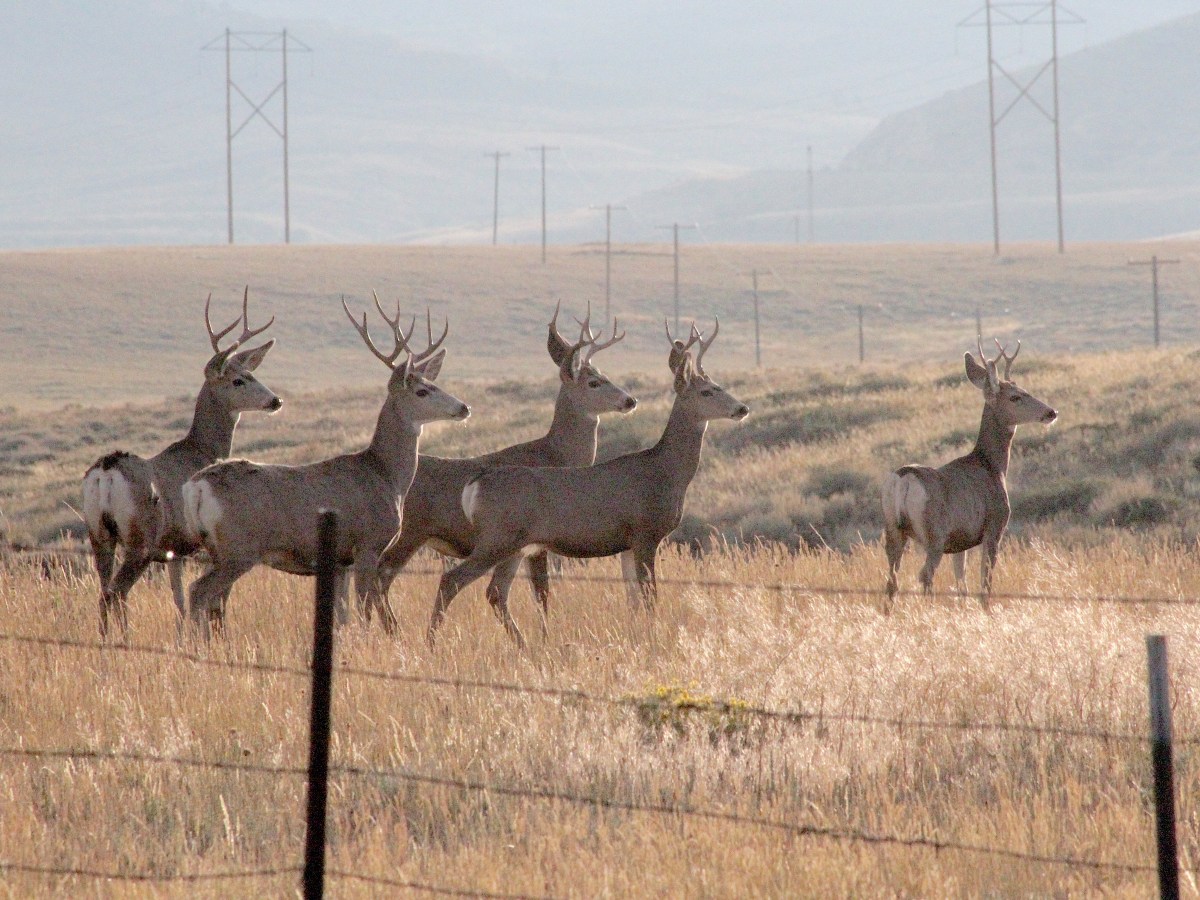
A controversial proposal that could help Wyoming landowners make money from elk, deer and pronghorn that use their property has passed muster with a legislative committee and will be up for debate when lawmakers convene February in Cheyenne.
At issue are reforms that would make Wyoming’s landowner licenses “transferable,” or able to be sold. Landowner licenses, which date to 1949 in Wyoming, are special hunting tags awarded for elk, deer and pronghorn if property owners possess at least 160 acres and can demonstrate certain thresholds of animal use.
Some other western states have already made landowner licenses transferable to varying degrees. The change has led to non-residents paying top dollar for the hunt of their choice, at the expense of diminished opportunities for locals. The website Huntin’ Fool, for example, is currently marketing a $30,000 Nevada elk hunt alongside a $12,000 Colorado mule deer hunt.
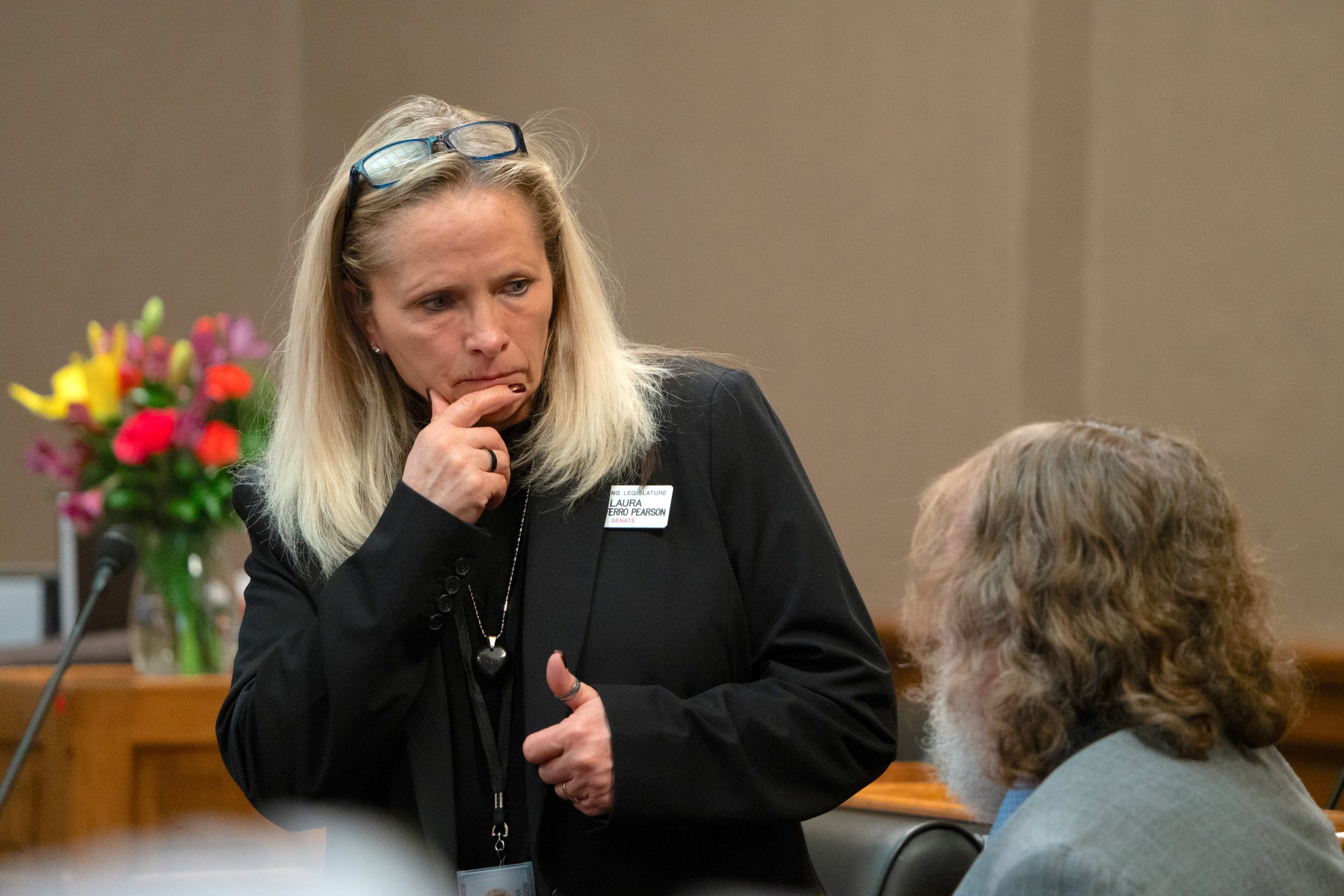
There have been previous efforts to follow suit in Wyoming, including during the last legislative session. Sen. Laura Pearson, a Kemmerer Republican, brought but then withdrew a bill that she hoped would create a new revenue stream for ranchers. Last week, she helped talk the balance of the Joint Agriculture, State and Public Lands & Water Resources Committee into sponsoring a similar proposal, arguing the bill would allow landowners to generate “a small but meaningful income stream to help offset the costs of supporting wildlife.”
The proposition of making Wyoming landowner licenses sellable has been met with stiff resistance from public hunters each time it’s come up.
In 2022, the Wyoming Wildlife Taskforce took on the issue, aiming to address what one member described as “outright abuses,” including landowners subdividing property to acquire more tags. No changes were agreed to then. Related reforms considered by the Wyoming Game and Fish Commission were also unpopular with landowners and pulled back. Attempts at making some landowner licenses transferable, meanwhile, have met overwhelming public opposition since at least 1998.
“Those were some of the most contentious meetings that we had in the last 25 years, when we started talking about landowner licenses,” Wyoming Game and Fish Department Chief Warden Dan Smith told members of the Agriculture Committee. “When they presented that idea, they got over 2,100 comments from the public that were adamantly opposed to having transferable licenses.”
Judging by some recent public comments, sentiments haven’t changed much.
Sabrina King, a lobbyist for the Wyoming chapter of Backcountry Hunters and Anglers, asked members of the committee what public hunters stood to gain from the proposal. In Wyoming’s complicated hunting license lottery system, landowner tags are distributed first, leaving rank-and-file sportspeople vying for a diminished pool of opportunities.
“There is nothing about creating this kind of a program, the way this bill is written, that generates good feelings between hunters and private landowners,” King told the committee. “This is not a solution. This is going to create a pay-for-play system that is going to hurt the public hunter.”
Game and Fish Director Angi Bruce also expressed concern that creating a private market for Wyoming licenses could diminish opportunities and hurt hunter recruitment. Currently, many landowners don’t hunt, she said, and therefore don’t apply for a landowners license — about 3,600 are issued annually.
“We anticipate that number going up,” Bruce said. “If they are able to transfer or sell a hunting license, we think that there will be more interest.”
Lawmakers also heard testimony from landowners eager to sell licenses.
Jason Thornock, who farms in the Cokeville area, complained about elk and deer numbers on his land, which he claimed eat $60,000 in alfalfa each year. He called landowner coupons that yield him cash for hunter-killed animals on his land “an insult” and the state’s damage program “a joke.”
“If you allow us to transfer these tags and get some compensation for them, yeah, use is going to go up,” Thornock said. “But so what? Let me get something out of that $60,000 that I’m putting into the wildlife.”
Members of the Agriculture committee voted seven to five to sponsor the bill.
Ayes included Pearson, Cowley Republican Rep. Dalton Banks, Cheyenne Republican Rep. Steve Johnson, Riverton Republican Rep. Pepper Ottman, Douglas Republican Rep. Tomi Strock, Thermopolis Republican Rep. John Winter and Casper Republican Sen. Bob Ide.
Opposing were Buffalo Republican Sen. Barry Crago, Cheyenne Republican Sen. Taft Love, La Barge Republican Rep. Mike Schmid, Baggs Republican Rep. Bob Davis and Laramie Democrat Rep. Karlee Provenza.

The Legislature’s 2026 budget session convenes on Feb. 9.
Lawmakers will also consider two other competing bills — one from the Agriculture Committee, another from the Travel, Recreation, Wildlife and Cultural Resources Committee — that concern caps on landowner licenses. Currently, Game and Fish doesn’t have the statutory authority to impose a cap.
Giving landowner tags to sell doesn’t mean they will allow hunting on thier ranch, yes it compensates the rancher but dimishes the public Hunter both resident and non-resident from
Opportunity. Many more landowners will apply because it is free money with no commitment to allow hunting on the ranch.
Let’s see…12 cow elk trespass fees of $500 would equal $60K. One wonders if anyone has ever thought of that possibility? Trespass fees have been around forever. Quit trying to get free money off the public’s back. Most cow elk hunts on private land across the west are much more expensive than $500. Come on, man. LAME.
Clifford, check your math……12 @ $500 each is $6K.
In reality it’s the wildlife that is for sale, NOT the license! Money corrupts hunting and fishing! Soon we will be completely back to the European ways that our forefathers fled from. Only the rich and noble could hunt!
I sometimes wander, do all of these ranchers that complain about loosing so much revenue from elk and deer, let hunters come on their land to hunt. I really am against letting ranchers transfer their land owner permits to others for proffit. If the G&F bow down to this request, then everyone who buys a permit should be able to do the same. This will start a private hunting club.
So, you buy a spread out in deer and elk country and then complain about the deer and elk eating your vegetation?
A rancher doing what ranchers do: try to screw the general public, collect money on what is not theirs, etc……
Our best bet is to join Backcountry Hunters and Anglers, and then vote the grifters out of office.
I know there is system that will produce a win for the public, a win for landowner and a win for the fish and game. The issue is that no one’wants listen to other opinions. I think everything that has been drafted is a one sided win. There is way that the public could get access to private lands. Landowners get the opportunity to sale landowner tags. Fish and Game now gets a willing landowner to help manage wildlife. This system will make wildlife an asset instead a liability.
Waiting on Welfare Stockgrowers Jester Jim Maganga to chime in with more of his ridiculous rhetoric
What a neat system the political power of ranchers has established in Wyoming. Grazing leases on public land at a cost far below leasing private land. Fencing and cross fencing of public land that impedes public travel. Years of strategic back-door purchases of land that lock the public out of vast tracks of public land holdings for their exclusive use. Depredation payments for public wildlife eating forage on private land, with the ability to charge exorbitant trespass fees and lease hunting rights to exclusive outfitters with deep-pocket clients for those same animals they so despise. Not enough, they cry, we need to sell hunting tags from the public allotment to the highest bidder with little restriction to further supplement our income and pay for losses we already get paid for. Quite the scam at the expense of the peasants. Public land hunters pay attention to who pushes and votes for this, and join the hunting group of your choice that fights for public land rights and proper management of our public resources in the interest of the public, not those private individuals who think they are the King.
Yep, neat to drive down a bucolic country road, passing by both public and private parcels of grazing land. Always neat to see that the BLM/USFS/State lands are nubbed down to dirt and piles of stagnant cow shit and no wildlife to be found while the private grasslands are lush with knee high grass and deer/antelope/elk galore.
Quite a vicious circle these welfare ranchers have created and I wouldn’t trust the Game and Fish to side with the public, they just love big landowners and often times act as their private security
Let’s consider this: if a rancher exclusively feeds his cattle or other livestock on his private ground ONLY, therefore he or she benefits from NO cheap government (our public lands) leased grazing, consider a revenue stream like transferable tags only if those tags are usable on his private land only.
He or she would have to prove his private property forage damage from wildlife to the Wyoming Game and Fish.
However, if a rancher grazes one blade of grass on public lands, at the absurdly cheap current rate (thereby taking that blade of grass from our State-owned wildlife), he automatically loses his access to a transferable landowner tag.
We have seen recently many Wyoming ranches for sale where the public land leased acres far exceed private deeded acres. Massive value is assigned to those non-owned public lands. Agriculture interests graze for almost nothing, can sell those public land grazing leases as part of their ranch, and now want to benefit from selling a license to the highest bidder? When is enough, enough in this one sided landslide for the rancher?
In our area of Sublette County, it is not hard to find overgrazed public land from livestock. Wildlife loses that forage time and again. Livestock is left on BLM and Forest land well into our hunting seasons. At the same time, private land is not grazed and draws in our public wildlife, behind hundreds of “no trespassing “ signs.
Enough is enough.
It is time for this one sided agriculture bonanza to end.
Oh the poor Ag industry in Wyoming. Pockets huge subsidies, literally free grazing of public lands and never held accountable for horrid overgrazed range conditions, cashes checks for wildlife damage to crops, won’t allow private land access to hunt unless offered big $$$, makes big $$$ off of the people’s wildlife with exclusive outfitting, etc. Never saw bigger crybabies in any industry, anywhere. C’mon you big tough, rugged individualist “Cowboys”, don’t just act like John Wayne while cashing those subsidy checks, pull up your boot and earn $$$ the honorable way – DAYLIGHT’s BURNING!!!
To allow big money to own and control right to hunt and access is fraught with hazard. The temptation to do wrong is too much. It’s already established that selfishness by the privileged will be an issue. Look at how much public ground has been wrongfully controlled by big money.regardless of the claim that the wild animals live on and off of private land, They do not belong to the landowner. I am vehemently opposed
I find this attempt nothing more than game ranching and greed. The truth is how much is deeded on ranching or farming grounds. Next what is leased to outfitters providing income to these individuals claiming our wildlife is destroying their grasses and fields?
Remember Wyoming wildlife belongs to the State not the $60,000 field. Furthermore our wildlife has changed drastically due to greed with extension in seasons now reaching 7 months in length. Ranching is even blaming it for over grazing. When in reality they’re overall herds are growing to take advantages of public lands compasses
within their deeded grounds. Raise those fees to even damaged caused by there neglecting roles of mlss management.
Landowner tags need to be valid for the land they are issued to and only that land. No public land should be accessible for landowner tags. Violations of this should be losing privileges permanently. The other issue is landowner tags should not come out of limited quota drawings. They should be completely separate and based on depredation issues within that specific hunt area. Those are the two biggest problems I feel are from the hunting community, landowners get to hunt the entire area and not being restricted to their land, and that they reduce the quota numbers for the draw.
Your thoughts about landowner tags used on their land only is a misconception held by many. It won’t work……there are areas that are populated by wildlife during season’s before or after legal hunting seasons and not during. That private land still supports wildlife populations and should not be penalized as you suggest. I understand your arguments, but trust me when I tell you, that if you take away from private land owners the ability to lawfully earn landowners tags…….you will never get access to hunt private land without fees. I don’t believe in “pay for play”, but not every landowner is the low life, money grubbing individual that comments here on WyoFile portray. One more point, it is not Wyoming’s wildlife. The state is the trustee of all wildlife within it’s boundary, managed for the benefit of all people.
In my opinion too many landowners have surrounded public lands, then complain if hunters try to access those public lands. Those owners can sell tags for thousands, they benefit but local hunters are targeted. I don’t hunt,but try to follow what is happening in Wyoming.
So let me see if I’m getting all this right. Our self-sufficient stand on your own two feed Ag folks want the state to give them money for crop damages, provide them with landowner tags so they can get money for everyone who takes game on their land, allow them to collect trespass fees from hunters they allow on their property, subdivide their land without restriction, and then allow them to auction off their landowner tags to the highest bidder. Are these the same folks who rant and rave about double dipping and too much state welfare? What’s next set aside takes for outfitters (you know they’ll be there with their hands out next)? Anybody remember John Dorrance and his game farm proposals? It was a bad idea then and it still is.
I have no problem with landowners being able to transfer landowner tags as long as no money exchanges hands. The other alternative is to make landowner tags only usable on their own private lands and not usable on public lands. The other option is to make them only transferable to Wyoming residents. Other wise my answer is a big NO!
The North American wildlife model is dead. North American wildlife management returned to merry old England – the land of the lords of the land, the land lords, the barons, the Tories. Private access to wildlife killed the North American wildlife model. Private access is a pseudo means privatizing wildlife. Now “selling tags” for public wildlife further commercializes and destroys the North American wildlife model. Valerius Geist is rolling in his grave.
https://wildlife.org/wp-content/uploads/2014/05/North-American-model-of-Wildlife-Conservation.pdf
If more hunters are allowed on private land that may benefit all hunters. Elk are smart enough to head for private land when hunting starts. If hunters are allowed on the private land then these elk may go back into public land where all hunters could access them. This would be even better if the state were to recieve a significant portion of the fees for hunting on private land. This money could be used for wildlife management.
You’ll have a hard time convincing me that any rancher needs to have “a small but meaningful income stream to help offset the costs of supporting wildlife”
Pay for play is a well turned phrase….I had read of some Wyoming ranching families that subdivided the land in order to get more landowner tags, but it never occurred to me that ranchers were also selling a small ownership interest in their LLC or Corporate ranches to allow hunters to get a landowner tag. I’d love to see the paperwork on that!
Bottom line, IMHO wildlife should never be for sale to the highest bidder, period.
The antelope deer and elk are not the ranchers. They are property of the citizens of Wyoming. $60,000 worth of alfalfa eaten by elk a year really. The Game and Fish should not allow an individual to sell tags for the citizens wildlife. I think it’s probably illegal. The answer is as always allow the public to hunt that ranch problem solved.
I’m 73 years old and a lifelong resident Wyoming hunter. Not so much now as there are limits to both my physical and monetary health, but there was a time when it was a recreational activity primarily aimed at the capable resident and non-resident public. I grew up eating wild game meat and passed that tradition along to my boys, which used to be based on Wyoming’s pioneering spirit as a way for a poor man to feed his family. My Dad had a guide and outfitter service he started in the late 50’s and ran through the 70’s. He died in 1979. When I was old enough to help, I guided under his outfitter’s license. At that time the non-resident hunters could not hunt in the National Forest without a guide. He charged $25.00 per day per person for deer and $50.00 per day for elk. We usually split the hunting parties and seldom took more than 3 or 4 hunters each daily. They were mostly working class people from places like Michigan or Pennsylvania; auto and factory workers, farmers, firemen and policemen, even active military. Very few were above “middle class” economic status of the time. None were what we considered “elites” as it appears now. In those days, almost all our local landowners left their gates unlocked and their land wide open, especially if it bordered public lands. These old timers from homesteader families, saw ungulate herbivore wildlife as competing with their livestock for grass and allowed hunting access to keep numbers in control. When they became available, most would leave a Prince Albert tobacco can nailed to a gatepost to collect landowner coupons as well. Some had signs that read: “Hunting by permission only” and all you had to do was ask ahead of time. Hardly any had “No hunting or trespassing” signs except maybe immediately around the home place. I’m sure I don’t have to go into the details of how that has all changed today. On another note* My grandfather received a resident Pioneer hunting license when he was 65. All my life I looked forward to receiving one myself at 65, but they changed the age to 70 and then 75 not long before I became eligible. Just another geriatric blow to a lifelong resident who still remembers when his deer license was $10.00 and elk license was $25.00.
Folks, once and for all vote these people out of office.
What? Almost free public land grazing isn’t enough for the welfare rancher? The same ranchers who cry about wildlife caused damage yet let no one hunt their property, unless they are willing to pay some exorbitant price.