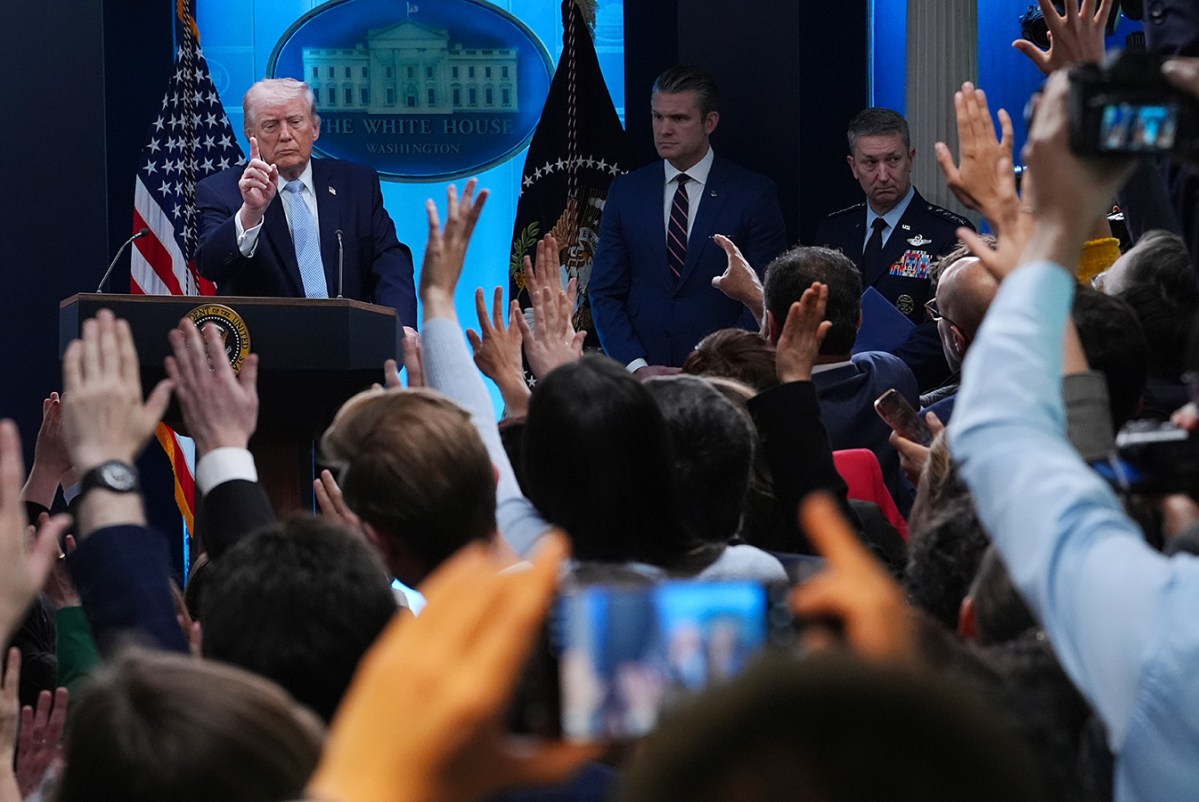
Wyoming’s federal delegation kept silent Tuesday on President Donald Trump’s threat that a “whole civilization will die tonight” if Iran fails to meet his latest deadline to strike a deal that includes reopening the Strait of Hormuz.
Republican Sens. John Barrasso and Cynthia Lummis did not respond to WyoFile’s request for comment by publishing time. Nor did Rep. Harriet Hageman. Additionally, social media accounts for the three lawmakers have not posted any remarks on Trump’s threat that an entire country could be wiped off the map.
A review of the Facebook pages of all three members of Wyoming’s delegation shows they haven’t posted on the war this month, as Trump’s threats have escalated.
Wyoming’s congressional delegation has expressed past support for Trump’s decision to attack Iran. Both Barrasso and Lummis voted against an attempt to curb Trump’s war powers. Critics of the war have said the president needed to receive congressional approval before launching operations against Iran.
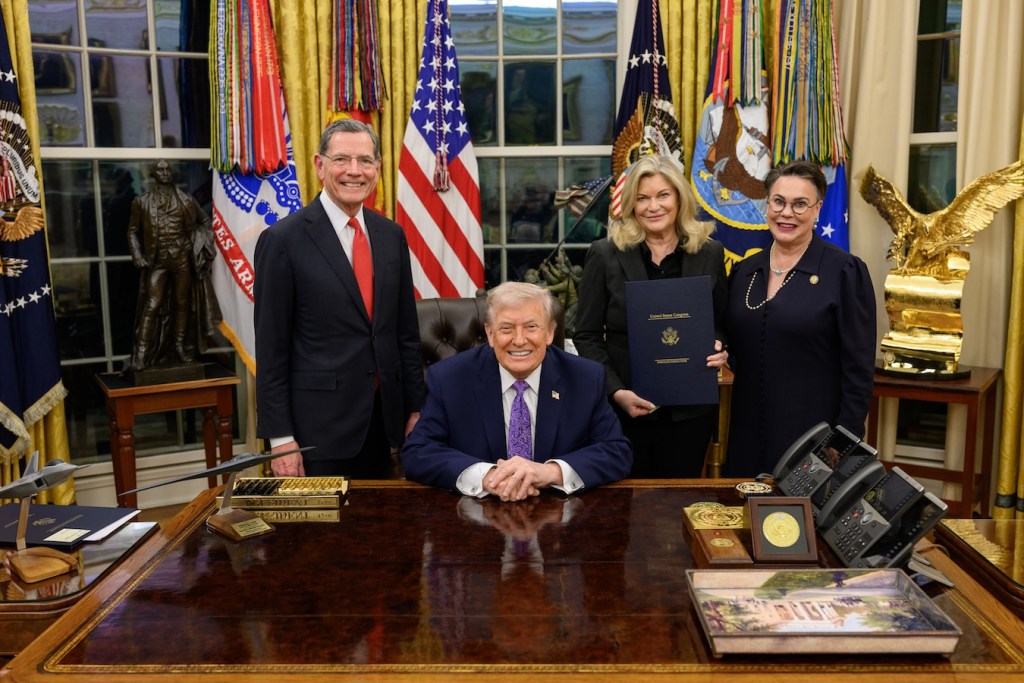
After the war began, Barrasso lauded the president for “one of the boldest military operations in history.”
“President Trump has the courage to do what is right and what needs to be done,” Barrasso said March 3 on the Senate floor. “Something previous administrations refused to do.”
Hageman also opposed an effort in the House to rein in Trump’s war powers.
“Tehran’s jihadist government is finally faced with the reckoning for hundreds of American casualties killed at the hands of Iran’s savage leadership,” Hageman said in a March 2 statement. “Iran’s history of killing American troops, supporting terrorist networks, and refusal to cooperate in good-faith diplomacy made their nuclear-arms campaign a crusade that must be stopped.”
Iran effectively blocked shipping through the Strait of Hormuz after Israel and the U.S. attacked in February. That, and Iran’s attacks on energy infrastructure of its Gulf Arab neighbors, have sent oil prices skyrocketing, raising the price of gasoline, food and other basics far beyond the Middle East.
Since then, Trump has repeatedly imposed deadlines linked to threats, only to extend them. But the president insisted this one is final and will expire at 8 p.m. in Washington without a major diplomatic breakthrough.
He has also offered contradictory statements about what might actually happen.
Trump has made reopening the strait — through which a fifth of the world’s oil transits in peacetime — part of avoiding wider attacks and suggested that the waterway is not as vital to U.S. oil interests as it is to other countries. He has also said he would be willing to deploy ground troops to seize Iranian oil, while maintaining that major combat operations in that country could soon conclude.
That means the next moves by the U.S. are largely a mystery, even as rhetoric on both sides has reached a fever pitch.
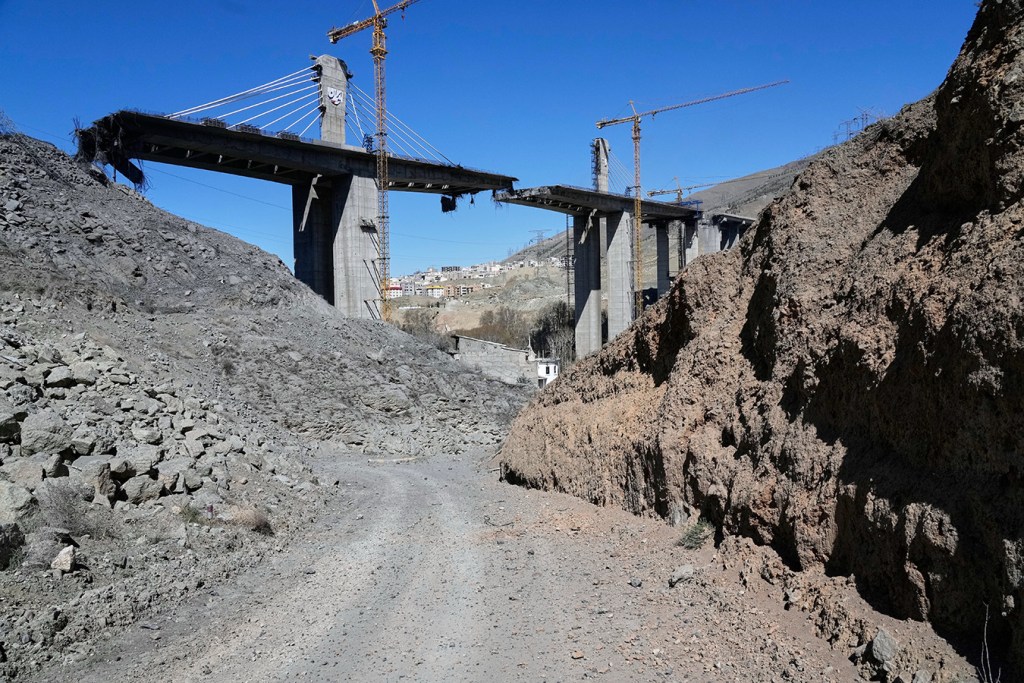
Ahead of Tuesday’s deadline, airstrikes hit two bridges and a train station, and the U.S. hit military infrastructure on Kharg Island. It was the second time American forces struck the island, a key hub for Iranian oil production. It was not clear if the latest airstrikes were linked to Trump’s threats to widen the civilian target list. At least two of the targets were connected to Iran’s rail network, and Israeli Prime Minister Benjamin Netanyahu said Israeli warplanes struck bridges and railways in Iran.
Iran’s president said 14 million people, including himself, have volunteered to fight. That’s despite Trump threatening that U.S. forces could wipe out all bridges in Iran in a matter of hours and reduce all power plants to smoking rubble in roughly the same time frame. He also suggested the entire country could be wiped off the map.
Trump has shrugged off concerns about war crime accusations.
“A whole civilization will die tonight, never to be brought back again,” if a deal isn’t reached, Trump said in an online post Tuesday morning. But he also seemed to keep open the possibility of an off-ramp, saying that “maybe something revolutionarily wonderful can happen.”
Earlier, Iranian official Alireza Rahimi issued a video message calling on “all young people, athletes, artists, students and university students and their professors” to form human chains around power plants.
Iranians have formed human chains in the past around nuclear sites at times of heightened tensions with the West. Some images of people surrounding power plants were posted Tuesday by local Iranian media, though how widespread the practice was is unknown.
In Tehran, the mood was bleak. A young teacher said that many opponents of Iran’s Islamic system had hoped Trump’s attacks would quickly topple it.
As the war drags on, she fears U.S. and Israeli strikes will spread chaos.
“If we don’t have the internet, and if we don’t have electricity, water, and gas, we’re really going back to the Stone Age, as Trump said,” she told The Associated Press, speaking on the condition of anonymity for her safety.
More than 1,900 people have been killed in Iran since the war began, but the government has not updated the toll for days.
In Lebanon, where Israel is fighting Iran-backed Hezbollah militants, more than 1,500 people have been killed. and more than 1 million people have been displaced. Eleven Israeli soldiers have died there.
In Gulf Arab states and the occupied West Bank, more than two dozen people have died, while 23 have been reported dead in Israel, and 13 U.S. service members have been killed.
Reporting contributed by The Associated Press. Jon Gambrell reported from Dubai, United Arab Emirates. Mike Corder reported from The Hague, Netherlands, and Sam Magdy reported from Cairo. Associated Press writers David Rising in Bangkok; John Leicester in Paris; Rod McGuirk in Melbourne, Australia; Natalie Melzer in Jerusalem; and Seung Min Kim, Michelle Price and Will Weissert in Washington contributed to this report.