
Yellowstone National Park’s extensive assets of buildings, roads and trails are worth an estimated $8.5 billion, which brings massive maintenance responsibilities. 

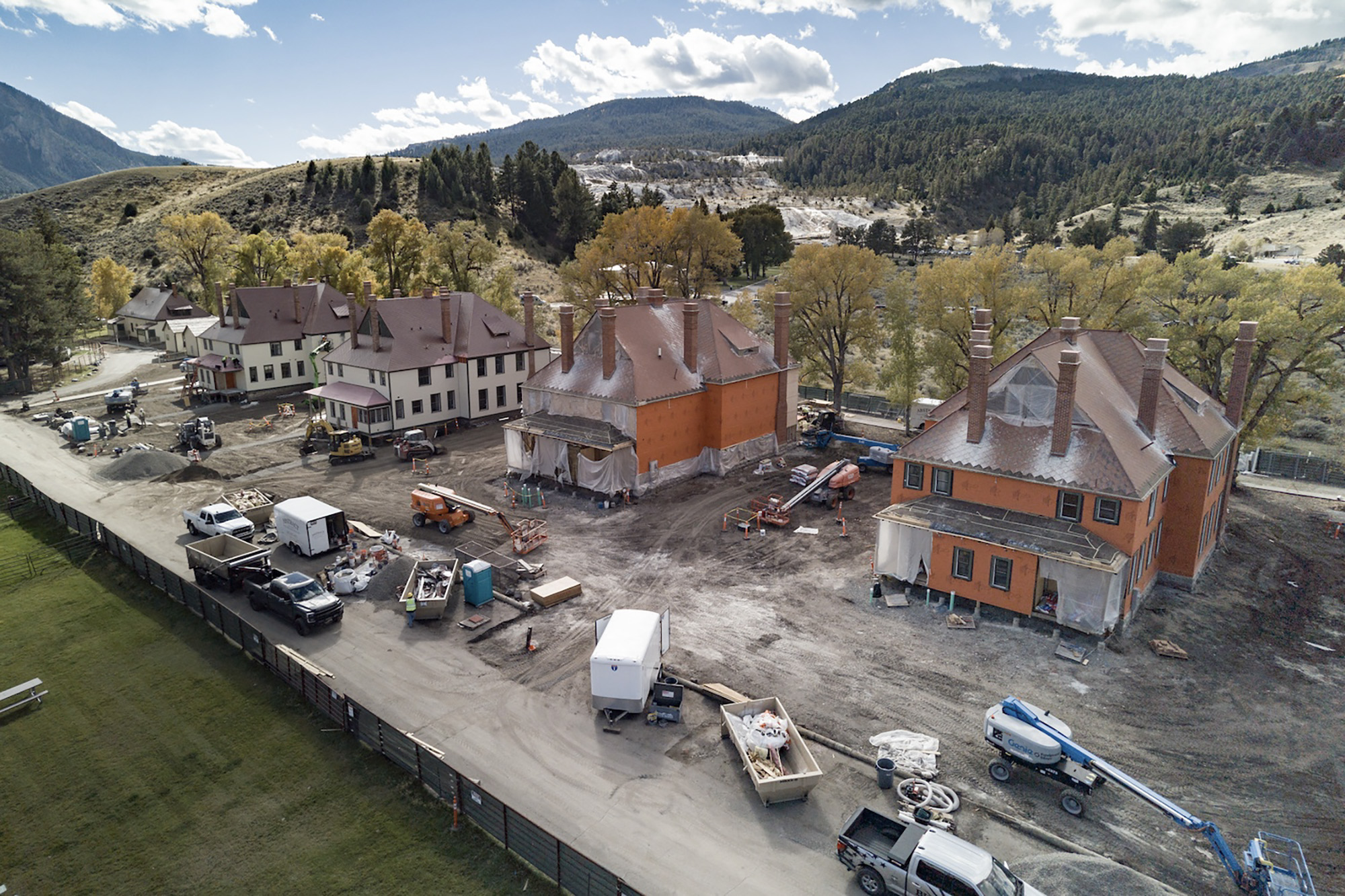
Currently, park crews are working to rehabilitate the park’s oldest functioning structures. A two-year, $25 million project is underway to stabilize and restore the exteriors of several historic Fort Yellowstone buildings in Mammoth Hot Springs. All are currently used for employee housing. 

The buildings sit in a national historic landmark district that encompasses 35 structures dating to the 1890s and early 1900s. In the early years of the country’s first national park, Yellowstone’s resources were under siege by souvenir hunters, poachers and entrepreneurs setting up tourist businesses, according to the park service. When civilian park superintendents proved insufficient at protecting the hot springs and wildlife, the secretary of the interior tapped the military, and in 1886 Army troops moved in. 

Many structures in the subsequently built permanent post have endured, though the buildings pushing well over 100 years old have been due for some attention. The current project entails structural repairs, roof and exterior rehabilitation, window and door restoration, painting and hazardous materials mitigation, according to the park service. 

The project, paid for through the Great American Outdoors Act’s Legacy Restoration Fund comes amid mounting criticism of federal parks infrastructure funding. Earlier this year, the National Park Service shifted roughly 1,500 park projects, many already approved, to a new “low priority” list, the Associated Press reported in August. 

The projects span more than 200 sites and carry a combined cost estimate of more than $400 million, according to the Center for Western Priorities. They included 45 projects in Yellowstone, according to the Center, which range from contract fees for bison processing to dock repairs and a vault toilet.

Katie Klingsporn reports on outdoor recreation, public lands, education and general news for WyoFile. She’s been a journalist and editor covering the American West for 20 years. Her freelance work has...

Leave a comment

WyoFile's goal is to provide readers with information and ideas that foster constructive conversations about the issues and opportunities our communities face. One small piece of how we do that is by offering a space below each story for readers to share perspectives, experiences and insights. For this to work, we need your help.

What we're looking for: 

  • Your real name — first and last. 
  • Direct responses to the article. Tell us how your experience relates to the story.
  • The truth. Share factual information that adds context to the reporting.
  • Thoughtful answers to questions raised by the reporting or other commenters.
  • Tips that could advance our reporting on the topic.
  • No more than three comments per story, including replies. 

What we block from our comments section, when we see it:

  • Pseudonyms. WyoFile stands behind everything we publish, and we expect commenters to do the same by using their real name.
  • Comments that are not directly relevant to the article. 
  • Demonstrably false claims, what-about-isms, references to debunked lines of rhetoric, professional political talking points or links to sites trafficking in misinformation.
  • Personal attacks, profanity, discriminatory language or threats.
  • Arguments with other commenters.

Other important things to know: 

  • Appearing in WyoFile’s comments section is a privilege, not a right or entitlement. 
  • We’re a small team and our first priority is reporting. Depending on what’s going on, comments may be moderated 24 to 48 hours from when they’re submitted — or even later. If you comment in the evening or on the weekend, please be patient. We’ll get to it when we’re back in the office.
  • We’re not interested in managing squeaky wheels, and even if we wanted to, we don't have time to address every single commenter’s grievance. 
  • Try as we might, we will make mistakes. We’ll fail to catch aliases, mistakenly allow folks to exceed the comment limit and occasionally miss false statements. If that’s going to upset you, it’s probably best to just stick with our journalism and avoid the comments section.
  • We don’t mediate disputes between commenters. If you have concerns about another commenter, please don’t bring them to us.

The bottom line:

If you repeatedly push the boundaries, make unreasonable demands, get caught lying or generally cause trouble, we will stop approving your comments — maybe forever. Such moderation decisions are not negotiable or subject to explanation. If civil and constructive conversation is not your goal, then our comments section is not for you. 

Your email address will not be published. Required fields are marked *