


Flocking crowds strain budgets and resources in the Yellowstone ecosystem, three land managers said last week as they predicted the crush will continue next summer.
Yellowstone and Grand Teton national parks both saw record seasons in 2015 — 4.6 million total visits to Grand Teton and 4 million to Yellowstone. Superintendents told of crowded parking lots and facilities, and warned of next summer when circumstances could draw even larger crowds.
In 2016 the National Park Service celebrates and promotes its centennial, gasoline could remain dirt cheap, and National Geographic this March devotes an entire issue to the ecosystem.
“It’s not unreasonable Grand Teton National Park could see 5 million visitors,” Superintendent David Vela said at a forum sponsored by the Charture Institute in Jackson Hole. “It is impacting the visitor experience,” he said of the crowds.
In Yellowstone, “It’s a problem,” superintendent Dan Wenk said of traffic and crowding. His job is to ensure Yellowstone is preserved so it can be enjoyed by future generations, Wenk said, not to grow orbital economies.
“I care about them, but I’m not responsible for them,” he said about local economies in five surrounding counties.
Grand Teton generates $535 million in tourism annually and 8,500 jobs, Vela said, “but at what expense?”
He pointed to popular Jenny Lake where the Grand Teton National Park Foundation launched a public-private effort to raise $17 million to rehabilitate popular trails. “It was being loved to death,” Vela said. Now park managers are wondering about limits.
In one instance last fall preservation overruled commerce when Grand Teton officials closed the Moose-Wilson Road as grizzly bears were feeding on roadside berries. “The bears have priority,” Vela said.
Would putting limits on Yellowstone visitors help solve the problems? “I’m going to test that theory,” he said.
Yet in the face of a record number of visitors Vela’s budget is down 9 percent since 2009, adjusting for inflation, and his staff is 18 percent smaller than it was in 2010, he said. The biggest visitor growth has been in September, October and May, when seasonal workers are not in place and their housing is not open.
“Consider that in marketing,” Vela told the Jackson Hole group assembled by Charture to contemplate the future. Tourism advertising funded by the Teton County lodging tax has focused on off-season months, including winter.
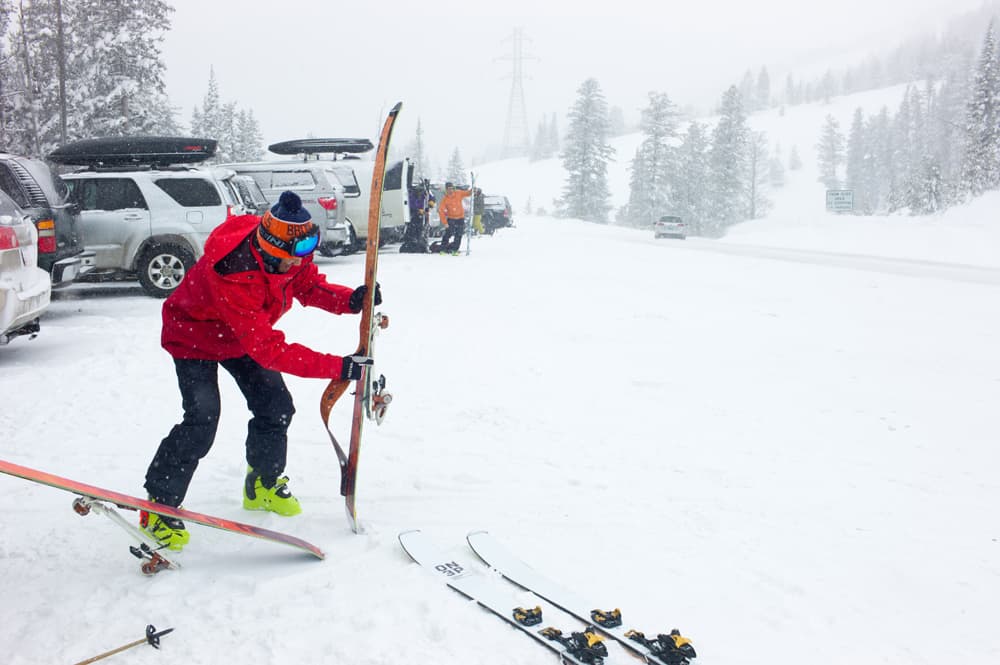
Visitors also swarm over the Bridger-Teton National Forest. Supervisor Tricia O’Connor reported 6,700 backcountry skiers and snowboarders hiking up Mount Glory — a ski peak above Highway 22 over Teton Pass — in a two-week period. That’s an average of 478 people a day hiking 1,655 vertical feet just to ski or snowboard back down.
There are “increasing demands for all the things the forest provides,” O’Connor said. Like others, she’s challenged by a slim budget. “We struggle with the resources to do the mission and job,” she said.
The upcoming 2016 summer season will see a surge in the rolling implosion of Yellowstone and Grand Teton we’ve been experiencing is recent years. I feel Yellowstone went beyond its carrying capacity this past year. There is a small silver lining. If you find yourself stuck in one of the frequent 2-mile long wildlife jams for an hour or two , it’s a great opportunity to brush up on your Conversationa Mandarin language skills. Because when you do finally reach the next roadside attraction or your next Yellowstone waypoint, you will hear more Chinese spoken than English…
The dark cloud is that late summer 2016 will be a cakewalk compared to what’s coming in August of 2017. There will be a dramatic Total Eclipse of the Sun on August 21 , 2017 in late morning whose centerline of greatest visibility passes directly over Teton Village.
Total Eclipses are psychically and socially magnetic. The entire human race that can afford to be mobile will want to be in Grand Teton Park for the eclipse, coming as it does during the peak of the travel season. On a Monday.
Grand Teton and Yellowstone and surrounds will absolutely IMPLODE the week of August 21 , 2017 under the crush of humanity. We have never seen anything like it in our lifetimes.
You are forewarned.