

This story is part of our Sunshine Week coverage — shining light on the importance of public records and open government — March 15-21. Wyoming Public Records Ombudsman Darlena Potter invites the public to share public records solutions and problems with her at pr.ombudsman@wyo.gov or 307-777-5119.
Fulfilling public records requests from citizens and journalists can cost local governments money. There’s the paper and ink for the copies, and even in the digital age, it still requires staff time to track down and compile the records.
But there can also be a cost to not providing records, said Sarah Squires, managing editor of the Lander Journal, Riverton Ranger and Wind River News.
Before joining the Wyoming press corps, Squires worked as a journalist in Minnesota, where she covered a county’s decision to build a new office addition. It wasn’t clear where the millions of dollars to pay for the project had come from until Squires made a series of complicated public records requests to piece together an answer.
The county had been collecting millions in excess taxpayer dollars for years, long before elected leaders voted to approve the new office space, Squires found. “Rather than using [the money] for property tax relief, they’d put it into this account.”
Squires doesn’t think the same investigation could succeed in Wyoming, where it’s up to local governments to decide how much they want to charge for public records.
“If they had been able to charge me, I never would have figured it out,” Squires said. “It never would have been exposed. They probably would have continued for longer. Better oversight of government will save money.”
Squires is among journalists, lawmakers, local government representatives, state officials and citizens who spent the past year mulling how to revitalize Wyoming’s Public Records Act. The effort produced Senate File 49, “Public records act revisions.”
Although the bill failed introduction on a 15-16 vote during the 2026 legislative session, optimism remains that a similar bill, with some massaging, could succeed when the Legislature convenes next year.
Taking a closer look at public records and open meetings laws is the No. 2 priority for the Joint Corporations Committee during the legislative offseason. Management Council, the legislature’s administrative arm, will review and approve interim topics on April 1.

Wyoming Public Records Ombudsman Darlena Potter sees room for improving the bill and notes that 2027 will be a general session, which allows more time to refine bills than this year’s more compressed budget session. Appointed by Gov. Mark Gordon, who’s in his last year of office, Potter doesn’t know if she’ll still have a job next January. But in the meantime, she’s dedicated to compiling public input on possible solutions and problems to accessing public records.
Potter is seeing an increasing push among the general public to access government records. When Potter first started as ombudsman, she handled more requests from the media, she said. Now she sees other Wyomingites getting more engaged and seeking public records to get information that helps them navigate a flood of competing claims.
While heartened to see the drive among citizens to inform themselves, she is also sympathetic to small government offices whose small staffs struggle to manage requests. Potter said the timelines for responding to requests in SF 49 were too stringent for small offices, where if someone is out sick, there might be no one around to respond within three days. She’s also seen onerous requests that are vague and seek records dating back decades or requests that require more involved legal research.
“I feel for those local governmental entities that are trying to essentially do it all,” she said, “to get the public what they need, and absolutely deserve, in a reasonable time frame.”
To referee more challenging requests, SF 49 would have given the ombudsman the power to adjust fees and timelines, including allowing local governments to take more time and charge higher fees. But Potter questioned whether her office might require more staff to play a larger role.
The draft bill also would have added more teeth to compel agencies to release records by increasing the penalty to $2,000, up from $750, for “knowingly or intentionally” violating the public records law.
Potter agrees with increasing the penalty to encourage compliance, but worries that defining “knowingly or intentionally” could be a challenge. The bill also called for allowing the ombudsman to refer cases to “the attorney general or district attorney, who may apply to the Wyoming district court to enforce compliance.” But even that could be problematic, Potter said, because there could be conflicts of interest. For example, the attorney general or district attorney could be representing the government agency that’s not releasing the records.
Still, Potter remains motivated to find a legislative fix and agrees with Squires that the bill’s efforts to rein in fees are important.
Squires points to a 2016 court ruling allowing local governments to charge for compiling electronic records as opening the door for abuse. She’s compared fees charged for public records state by state and among local governments within Wyoming.
“It’s absolutely been open season, and they can charge whatever they want,” Squires said. “It’s just really had a chilling effect, I think, to be government watchdogs and keep an eye on things.”
The Wyoming Press Association, which represents Wyoming newspapers, also expects public records to be taken up as a topic during the interim ahead of the next legislative session.
“We believe the bill put forward this session provides a strong foundation for us to build better law that improves transparency and accountability for the people of Wyoming,” WPA Executive Director Steve Kiggins said in an email. “Public records are vital to our right to know, a safeguard against secrecy and a bedrock for trust. The more we know, and the sooner, the better.”
Kiggins said he looks forward to continuing to work with WPA members, local governments and other partners and stakeholders on access to public records and open meetings.
Representing local governments, Jerimiah Rieman, executive director of the Wyoming County Commissioners Association, said his organization is “unified around ensuring accountability and transparency.” There’s agreement in principle on the big issues, he said, and he expects work on reforming the law to continue this summer.
“We welcomed the uniform fee structure proposed in SF49 and appreciate that the legislation offers flexibility when situations differ,” he said in an email.
In general, he said, it’s a balancing act.
“Timely access matters, but local governments also have the responsibility to review records carefully and, where required by law, redact or withhold certain information,” Rieman said.
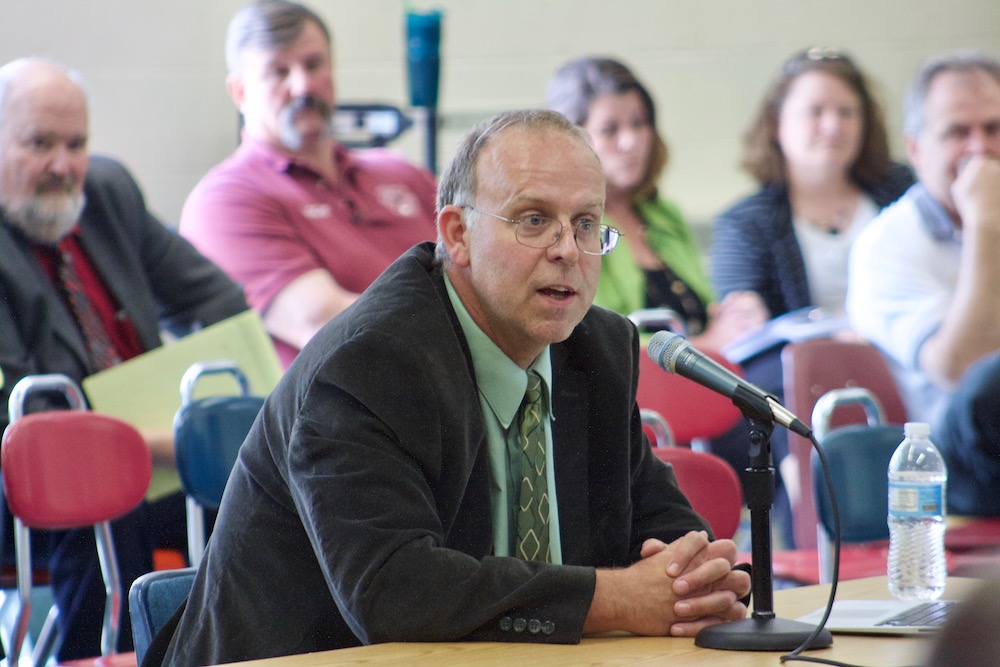
Longtime publisher of the Newcastle News Letter Journal, Bob Bonnar, said he thought SF 49 was a “great bill.”
After decades lobbying for access to public records, Bonnar wants to see legislation that reverses the flow of power so citizens, and newspapers, can get clear answers to how their government operates.
He points to the 2024 general election as an example of why reform is needed. Bonnar and others noticed a miscount in Weston County, where results showed Rep. Chip Neiman, R-Hulett, received only 166 votes in an uncontested race for House District 1, while 1,289 ballots were left blank, also known as an undervote.
As investigations ensued, Weston County Clerk Becky Hadlock faced accusations she mishandled election ballots by purchasing and then using multiple versions, among other errors. The Weston County Clerk’s Office did not respond to an emailed request for comment by publishing time.
The mistakes prompted Bonnar to request public records to see if similar errors could have occurred in prior elections. After a protracted battle with the clerk’s office to access records, which included a fee of several hundred dollars that the ombudsman ultimately waived, Bonnar said, he has given up the fight. He wasn’t an election conspiracy theorist before this dispute, he said, but this latest encounter over records has left him with doubts.
“The system 100% protects government at the expense of the people,” Bonnar said. “Do we have the wrong person in office in Weston County? I don’t know.”
He doesn’t have the time and resources to keep digging.
For more legislative coverage, click here.

Wyoming Gubbamint: The Coefficient of Transparency is equal to the opacity of drilling mud , cow manure, coal dust, and crude oil.
I use Federal FOIA on a daily basis in my anti-corruption work. I almost never use state FOIA because the fees they charge are so high.
We the tax-payer paid for the creation of the documents in the first place. We shouldnt have to pay for them twice
Election integrity questioned buy those who take money from right wing conservatives handed out on the house floor. 🤔