

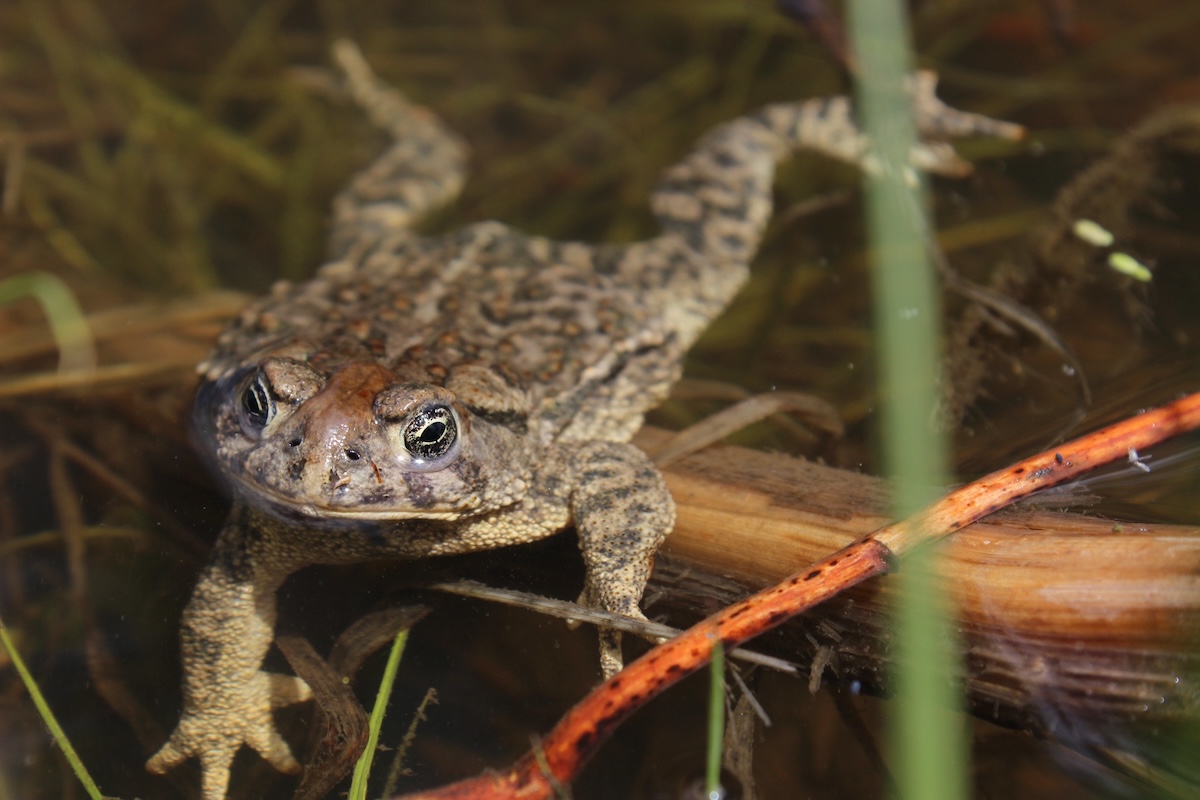
Wyoming toads — one of the most endangered amphibians in North America — are slowly making a comeback thanks to the work of conservation groups.

Those efforts leaped forward when the Hutton Lake National Wildlife Refuge Wyoming Toad Conservation Area opened June 18 near Laramie, providing a protected natural habitat for captive-bred toads released into the wild.
“Though it may appear to be just a small, lumpy amphibian, the species plays a vital role in a healthy ecosystem, as insect control and as part of the food web,” Jan Fore, public affairs specialist for the Mountain-Prairie Region of the U.S. Fish and Wildlife Service, said.

“Even more significant is the feel-good story we can share about the importance of locally-led collaboration with diverse partners, to achieve hope for the recovery of this species in the wild.”
Since the population declined in the mid-1970s — due to a combination of habitat alterations, pesticide use, predation and chytridiomycosis (a fungal disease) — various groups have collaborated to protect the species.
“We went from having thousands of them in the late ’70s,” Tyler Abbott, Wyoming field supervisor for the U.S. Fish and Wildlife Service in Cheyenne, told WyoFile in a past interview. Then “they all but disappeared.”
In 1984, the Wyoming toad was listed as endangered under the Endangered Species Act. While recovery efforts were initially unsuccessful due to a lack of suitable reintroduction sites and a small population size, captive breeding programs around the U.S. have helped the species recover. From places as close as the Saratoga Fish Hatchery and as far away as the Detroit Zoo, various partners have successfully bred the toads in captivity.
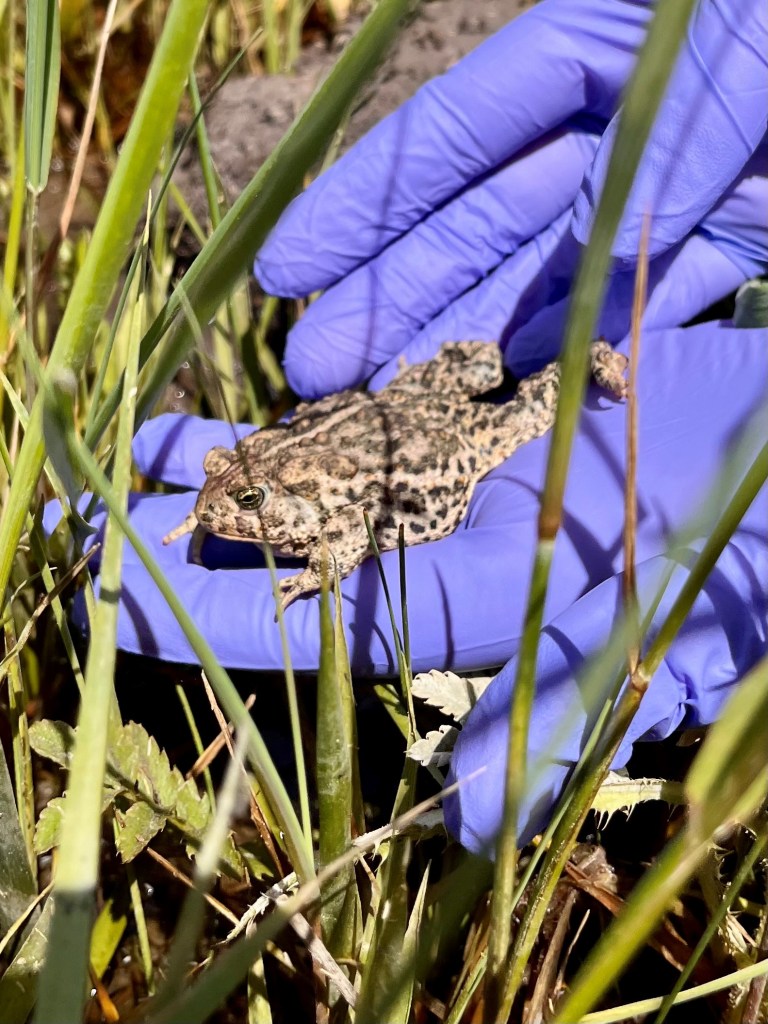
In 2020, over 18,000 toads from all life stages were released.
“Population numbers in the wild that year were promising and there was breeding in the wild for the sixth year in a row,” Fore said.
Though there is some breeding in the wild, captive breeding is still essential to the species’ recovery, since many toads won’t make it to adulthood in the wild, for various reasons.
In an attempt to further limit the impacts of human activities on the species, 1,078 acres of land was acquired last fall, establishing the recently opened Wyoming Toad Conservation Area. As emphasized by Fore, all of these conservation actions are the result of collaboration between numerous stakeholders and community partners.

My wife and I have some property outside Guernsey. We’ve planted some pines and I water them on the weekends when I’m there. I have at least two toads who have taken up residence in the basins we’ve dug out for the trees and put some needles and pine cones in them to help retain the moisture. The toads like the cover apparently, but not the water because they emerge when the holes file up with water.
I grew up just north of Cheyenne and I remember thousands of these little fellers in rain ponds. Then Poof! They were just gone. I am glad to see they are making a comeback!
I have several of these guys around my house 17 miles northwest of Casper, WY. I’ve seen a few babies and one very large adult is always hanging around our garage. I had no idea they were endangered!
Very, very good news. And major progress in land acquisition necessary to permanently protect critical habitat – all because many partners worked together with USFWS and Game and Fish to make it happen – team work.
Very informative and well written. Thank you