


A panel of lawmakers punted Monday on an effort to address the rising cost of electricity in the wake of utility sparked wildfires, which industry officials describe as an existential threat. The multipronged legislation, which sought to incentivize power companies to make wildfire mitigation upgrades in exchange for limits on damage claims, was too mired in complex amendments to secure the votes needed to move forward.
The Minerals, Business and Economic Development interim committee tabled the draft Public utilities-wildfire protection plans and liability measure, which means it will not be introduced as a committee-sponsored bill in the upcoming legislative session that begins in January. A group of stakeholders that crafted the bill, however, will likely seek individual sponsors, according to one member.
Climate-driven wildfire and utilities
Wildfires, driven by human-caused climate change, have become much more frequent and intense, particularly in the West. The region’s vast network of electric power lines and other energized facilities is aging and it simply wasn’t built to safely operate in an ever warmer and drier climate, according to industry experts.
Utilities have sparked devastating fires in California, Hawaii and Texas in recent years, prompting hundreds of lawsuits seeking enormous payouts. PacifiCorp, which operates as Rocky Mountain Power in Wyoming, faces tens of billions of dollars in claims for its role in wildfires that raged in Oregon in 2020.
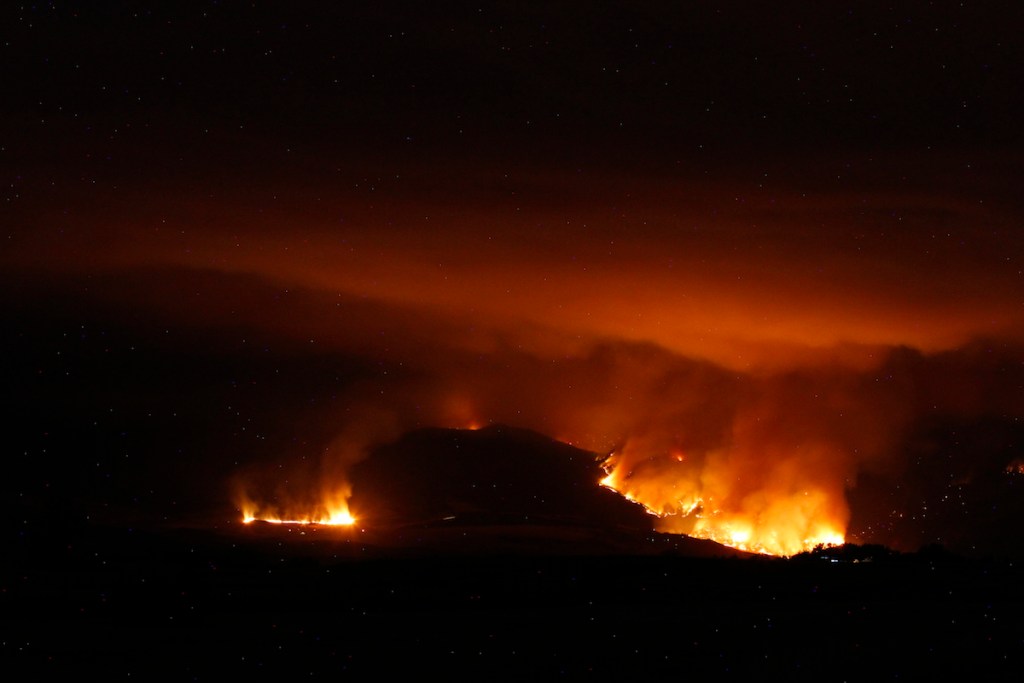
Some industry leaders in Wyoming say it’s only a matter of time before a similar situation plays out here. “We’re just one wildfire away from bankruptcy if we don’t have liability relief,” Wyoming Rural Electric Association Executive Director Shawn Taylor told WyoFile earlier this year.
Meantime, utilities face another potentially crushing financial strain in the form of soaring insurance costs. Wyoming’s largest electric utility, Rocky Mountain Power, cites skyrocketing wildfire liability in its current bid to increase rates by 14.7%, claiming insurance premiums for its Wyoming operations have risen 1,888% over the past five years.
“What has happened over the last few years is that wildfire has become a real existential threat, not just for the investor-owned utility, but all utilities,” Rocky Mountain Power Vice President of Government Affairs Thom Carter told the committee.
Legislative remedies
The basic legislative concept being considered in Wyoming, which is borrowed from similar measures in other western states, would restrict what wildfire victims can claim damages for when an electric utility sparks a blaze. To qualify for the protection, a utility would be required to invest in and maintain more stringent wildfire mitigation strategies. While the cost of those upgrades would be passed on to customers, they’re intended to stem rising insurance rates, according to proponents.
“This is not intended to be a dollar-for-dollar cost reduction,” Wyoming Office of Consumer Advocate Administrator Anthony Ornelas said in support of the bill. “To us, the real benefit here that we’re trying to do is to put some legal protections around … liability exposure.”

Though many committee members agreed the Legislature should provide some protection for utilities from what could be costly damage claims, the bill draft was marked up with too many complicated amendments to move forward, some lawmakers said. Others worried the ultimate goal of the bill — to protect utilities from expensive litigation and to stem rising insurance costs — remains speculative.
“The economics are not aligning in my mind,” Sen. Chris Rothfuss (D-Laramie) said. “I see where it’s really good for the utilities. I’m struggling to see how it’s really good or even marginally good for our ratepayers.”
Though Utah passed a similar bill in 2020, it’s difficult to calculate the net benefit of avoided damage claims and insurance costs versus ongoing investments in wildfire prevention, Carter of Rocky Mountain Power told the committee.
The Wyoming Trial Lawyers Association also warned that the bill may go too far in removing legal remedies for wildfire victims.

For example, a person or entity would not be able to sue a utility that is determined by the Wyoming Public Service Commission to have “reasonably” implemented and maintained a wildfire mitigation plan. But that determination is more suited to be determined by a court or jury, not the public service commission, according to Sarah Kellogg, who serves as the association’s board of directors president.
“This legislation is essentially taking the question of reasonableness away from a jury, after the fact, and giving it to a governmental administrative body to decide reasonableness through a process that has not been laid out at all,” Kellogg told the committee.
“Wyoming juries are conservative people, they’re reasonable people,” Kellogg continued. “So taking this question away from Wyoming people and Wyoming juries — and in an adversarial setting — is not going to be good for Wyomingites.”
In addition to limiting utilities’ liability, several western states have acknowledged rising insurance costs and the need for major spending to prevent utility sparked wildfires. California authorized three utilities there to tap ratepayers for some $27 billion and has created an industrywide fund for such costs.


Decades ago we decided climate change was too expensive to address, and it was much easier to just deny it. It was a classic “you can pay me now or you can pay me later”. Later is here.
Monkeys, especially robber-baron monkeys, are overrated. Humans are accelerating their race to extinction. The world will be a better place without us and our greed, not to mention our tendency to overpopulate and plunder the planet. Good riddance to Homo sapiens!
You first
If the Legislature proceeds with this concept there should be a quid pro quo. If the liability of the utility is capped or limited, their ability to raise rates based on mitigation costs should also be limited. If not, you are asking consumers to pay for the mitigation and then pay again by having damage claims limited.