

After the Wyoming GOP voted to defy a state law prohibiting the party from backing one Republican over another before the primary election, statewide candidates are split on whether they would accept such an endorsement.
Some told WyoFile they agree with the party’s decision and will seek out an endorsement, while others said they oppose a political party breaking election law. A few said they were taking a wait-and-see approach.
“Jury’s still out on this one for me,” Wyoming State Auditor Kristi Racines said Wednesday.
For years, the Wyoming Republican Party has argued that because it is a private organization, state laws that govern its organizational structure and prohibit it from endorsing or financially backing candidates in opposed primary election races are unconstitutional.
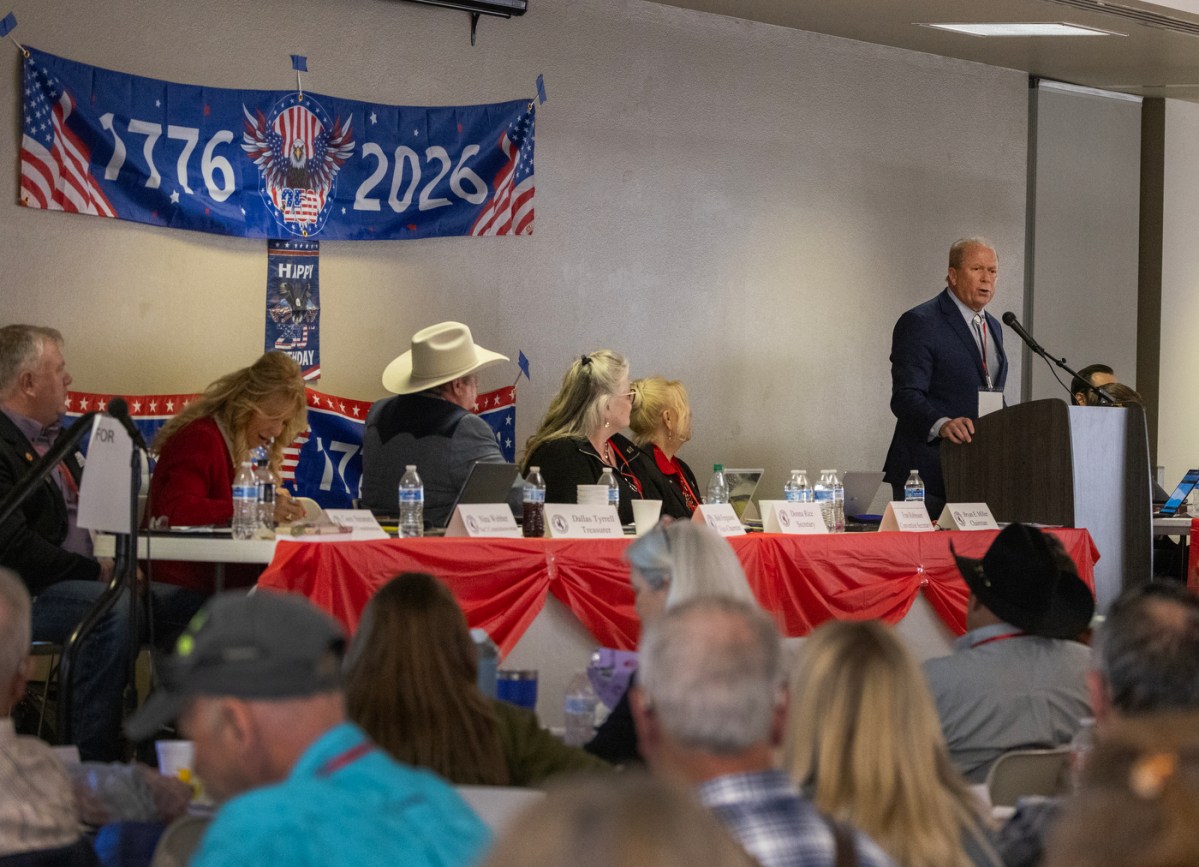
At its convention in Douglas last weekend, the party took things into its own hands, voting to adopt bylaws establishing a process for vetting, endorsing and spending money to support candidates ahead of the primary.
Supporters of the new bylaws point to a U.S. Supreme Court ruling from 1989, which struck down California’s ban on political party endorsements, ruling that the law violated the First Amendment’s guarantees of free speech and association. Opponents, meanwhile, raised concerns at the convention about the bylaws breaking the law, litigation costs and unintended consequences.
The new bylaws are widely expected to spark lawsuits, while the Wyoming Republican Party has said it plans to file its own legal challenge against the state.
In the meantime, the new bylaws lay out a process for evaluating candidates based on “commitment to the Wyoming Republican Party Platform, demonstrated loyalty to the Party’s principles, legal eligibility to hold office, and for incumbents, their voting record.”
The state party will consider candidates running for Wyoming’s state-elected officials — including governor, secretary of state, superintendent of public instruction, treasurer and auditor — as well as congressional candidates. Otherwise, county parties “may vet all other races on their respective County Ballots,” according to the new bylaws.
The state party, as well as each county party, “shall each create and oversee a Candidate Vetting Committee empowered to review and recommend approval or disapproval of candidates based on established criteria,” the bylaw states. “The Committee shall provide candidates an opportunity to respond to concerns prior to issuing a recommendation.”
Candidates
Brent Bien, who is running for governor, told WyoFile the bylaw changes are “a long time coming,” pointing back to the 1989 ruling.
“I think we just got to make sure we get those folks that truly believe on the Republican side of the equation, who truly believe in the platform and what Wyoming stands for,” Bien said. “And I just don’t think there’s been any enforcement mechanism to do that.”
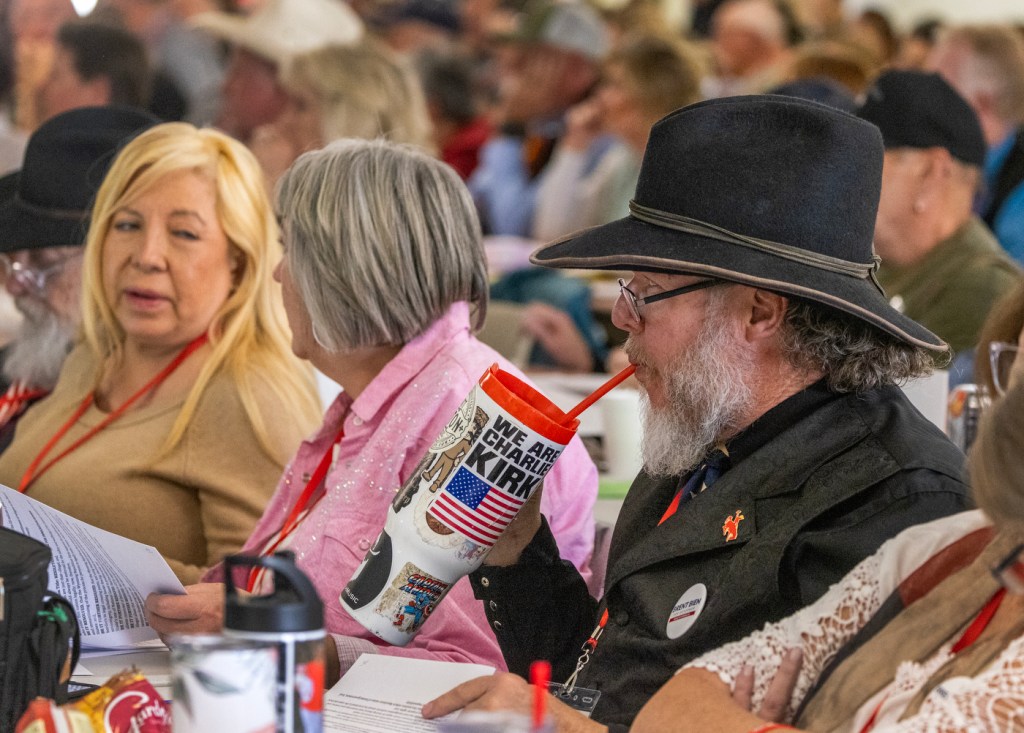
At the convention, Bien was a clear favorite among many attendees who wore his campaign buttons and t-shirts. Still, Bien said he wouldn’t be surprised if he didn’t get the party’s endorsement.
“I didn’t get Trump’s endorsement,” Bien said. “And some of these legislators around the state, you know, they haven’t endorsed me.”
Bien’s take isn’t shared by all the gubernatorial candidates.
“Contested primaries should be decided by voters,” Gillette Sen. Eric Barlow wrote in a statement. “The role of the state party is to unite Republicans around shared values and help grow the party, not decide elections before voters have had their say.”
“Under current law, the state party should not choose sides in Republican primaries, and I will not ask them to start now,” he wrote. “My job,” running for governor, “is to earn the trust of Wyoming voters directly.”
At the convention, supporters of the bylaws said the party had tried to get the Legislature to change state statute. Barlow directly pushed back on that argument.
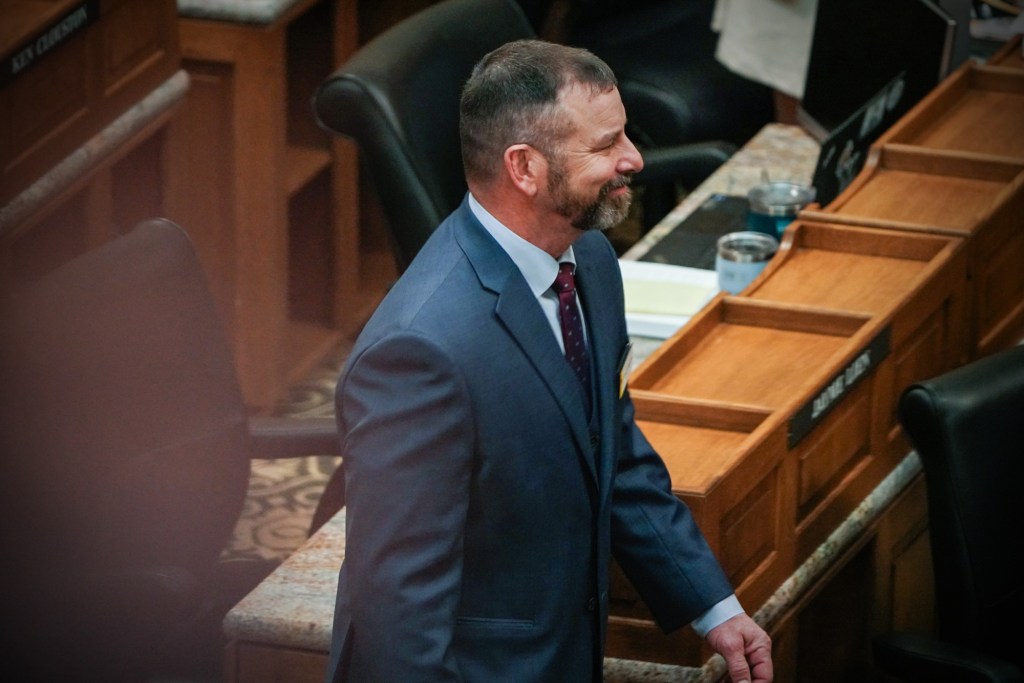
“As a legislator for the past 14 years, this issue has never come before us,” Barlow said. “If it had, it would have ensured all Wyomingites could weigh in and decisions would have been made openly and transparently — not in the courts and not a few months before an election.”
Secretary of State Chuck Gray, who is running for U.S. House, told WyoFile he supports the new bylaws.
“I will participate in the Party’s vetting process and will seek their support because I’m the only candidate in this race with a proven record of standing up for conservative principles — even when it wasn’t popular with the media and the insiders,” he wrote in a statement.
As secretary of state, Gray is Wyoming’s chief election officer and oversees statewide election administration. Asked if he wanted to comment in his official capacity on the Wyoming Republican Party’s decision to defy state law, Gray did not respond by publishing time.
U.S. House candidate David Giralt took a more cautious approach when asked for his opinion on the new bylaws.
“I trust Wyoming Republicans to make good decisions for our party, and I’ll let the process play out,” Giralt said. “I’m focused on getting in front of as many Wyoming voters as possible and making the case for why I’m the right person to represent this state in Congress.”
Kevin Christensen, another U.S. House candidate, said he wanted to see how fair, transparent and consistent the process played out before weighing in.
“The Wyoming people are the ones that make the determination in the primary, not the party,” he said. “That being said, if this is about supporting candidates and determining who is really a Republican and who’s just putting an ‘R’ next to their name, that seems like that would be consistent with being the Republican Party.”
Jillian Balow, yet another candidate for U.S. House and former superintendent of public instruction, said she “would be honored to accept an endorsement and money from the state party only if it is in accordance with Wyoming and federal law.”
“The contingency of our party at the convention knew the changes they made defied state law and they curtailed delegate discussion to pass new by-laws anyway,” Balow wrote in a statement. “Some delegates were appalled, some were gleeful, and many were silent, because they were silenced. This is not the way Wyoming does business.”
U.S. House candidate Reid Rasner also pushed back on the new bylaws.
“As a pro-Trump conservative, I always expected the political establishment to try and stop our campaign,” he wrote in a statement. “But, after making over 200 stops across our communities, one thing is clear: people are tired of the political games.”
Jimmy Skovgard, who is running for U.S. Senate, said he has “serious concerns any time a party organization claims its bylaws can supersede Wyoming law, especially in a taxpayer-funded primary election.”
Skovard said he would not accept a pre-primary endorsement or financial backing from the state party under the new process. And if an opponent of his accepts that kind of backing before voters speak, Skovgard said, “that opponent should explain why party insiders deserve special power over a public election.”

Sheridan Republican Rep. Tom Kelly, who is running for superintendent, said while he opposes “the idea of parties having the power to disallow anyone from running under their banner,” he thinks “parties should be able to express publicly which people they would like to represent them.”
Though he’s not actively seeking endorsements, Kelly said he would accept support from the state party.
“Financial backing? Absolutely,” Kelly said. “Contrary to a popular false narrative, I have no wealthy D.C. donors bankrolling me.”
And if the party endorsed one of his opponents, Kelly said he would tell them, “Congrats. I should have done a better job presenting myself.”
WyoFile reached out to other statewide Republican candidates, including those running for governor, secretary of state, superintendent, U.S. House and U.S. Senate. They did not respond by publishing time.
Update: This story has been updated to include comments from Reid Rasner and Jimmy Skovgard

For years, the Wyoming Republican Party has argued it is a private organization according to the Wyoming Constitution, Article 16: Sec. 6. Loan of credit; donations prohibited; works of internal improvement.
(a) Neither the state nor any county, city, township, town, school
district, or any other political subdivision, shall:
(i) Loan or give its credit or make donations to or in aid
of any individual, association or corporation, except for necessary
support of the poor;
It would seem then that any state or county aid in support of the primary of the private organization would be a violation of the Wyoming Constitution. Someone needs to contact the Attorney General and initiate an investigation. Thank you for your attention to this matter.
Jim, I was reassured to read your comments. Thank you for running.
This wouldn’t be bad, IF the Republican Party would refrain from endorsing the candidate backing the most regressive and moronic MAGA and Freedom Caucus policies and instead endorse the candidate that would help Wyoming proactively move forward into the future.
I think the proposal is a terrible injustice and insult to the voters of Wyoming. I really like the comments of Jim Skovgard (candidate for US Senate) shown in this string of comments. He nails the topic in my opinion.
You Republicans should be jumping ship like rats on a sinking boat. I get a kick out of people bragging about how they worship the orange menace, and how they’re the ones that will carry the dumpy torch. You (and Trump) should be ashamed of yourselves. Your groveling is embarrassing to mankind.
Maggie,
Thank you for reaching out.
I have been a registered Republican for over 40 years in Wyoming. Pre-selection is not a Wyoming value or unless I miss my guess even a Wyoming idea. This stinks of out of state big money influence and attempted control of local Wyoming politics.
I have serious concerns any time a party organization claims its bylaws can supersede Wyoming law, especially in a taxpayer-funded primary election.
I respect the right of political parties to debate ideas, adopt platforms, and speak clearly to voters. But when Wyoming taxpayers fund the primary, and Wyoming voters are asked to choose the nominee, that choice belongs to the voters. It should not be narrowed ahead of time by a pre-selection process controlled by party insiders.
I cannot support any process that infringes on the voice of the people.
The state party should make its case to voters like everyone else. It should not put its thumb on the scale in a contested primary before voters have had their say. That risks turning a public primary into a ratification exercise.
I would not accept a pre-primary endorsement or financial backing from the state party under this bylaw process. I am asking Wyoming voters to judge me directly, based on my conduct, my platform, and my willingness to serve. If an opponent accepts that kind of backing before voters speak, that opponent should explain why party insiders deserve special power over a public election.
This campaign is about restoring trust, integrity, and accountability. That starts by respecting the voter.
Jimmy Skovgard
Skovgard for Senate 2026
Show quoted text
Thank you, Jimmy, for responding so quickly! I really appreciate it.
Show quoted text
Show quoted text
Thanks Jim for telling the voters where you stand on this issue and not trying to duck and weave like most of the others that are running as republicans. It appears like you and Mr. Barlow are a rare breed in this years election cycle where so many of the candidates are either going full MAGA or are too timid to state their opinions in a public forum. Thanks again for your honesty.
So… a private entity (in this case the state GOP) is going to further put its thumb on the scale via some ridiculous purity vetting vs. letting the voters decide who we want to represent us? I think it’s time to get rid of the party system and have open primaries. That way we can all vote on each candidate before the general election. This has gone WAY too far and feels like a total monopoly controlled by private interests.
The Wyoming Republican Party seems to be instituting a social credit system. Sort of like that of… the Chinese Communist Party.
This is an appalling breach Republican voters’ trust. They had every chance to change the law the past 2 years and let the idea rise or fail in the legislature with committee hearings and public comment. Instead they shoved it through a state convention floor vote while suppressing comment from the delegates themselves. As for the lawsuit, Bryan Miller(as then Sheridan County chair) filed a lawsuit against his own county commissioners, continued it after the matter had been resolved, lost badly in court, and still refuses to reveal who financed the legal fees. Who’s going to pay the legal fees for the party’s lawsuit to change the law and who’s going to pay the legal fees when the attorney-general
charges the party for breaking the currently existing law. Think about that next time you get a donation request from the Wyoming Republican party.
Glad to see perennial Park County candidate lil’ Timmy graduated up from a $10 walmart straw hat to a bargain box dusty ole’ mini sombrero with fake trail dust. This ‘cowboy’ is all hat and no cattle
Ever since rolling into Cody in a mini van, he’s tried his darndest to fit in. Hasn’t worked