

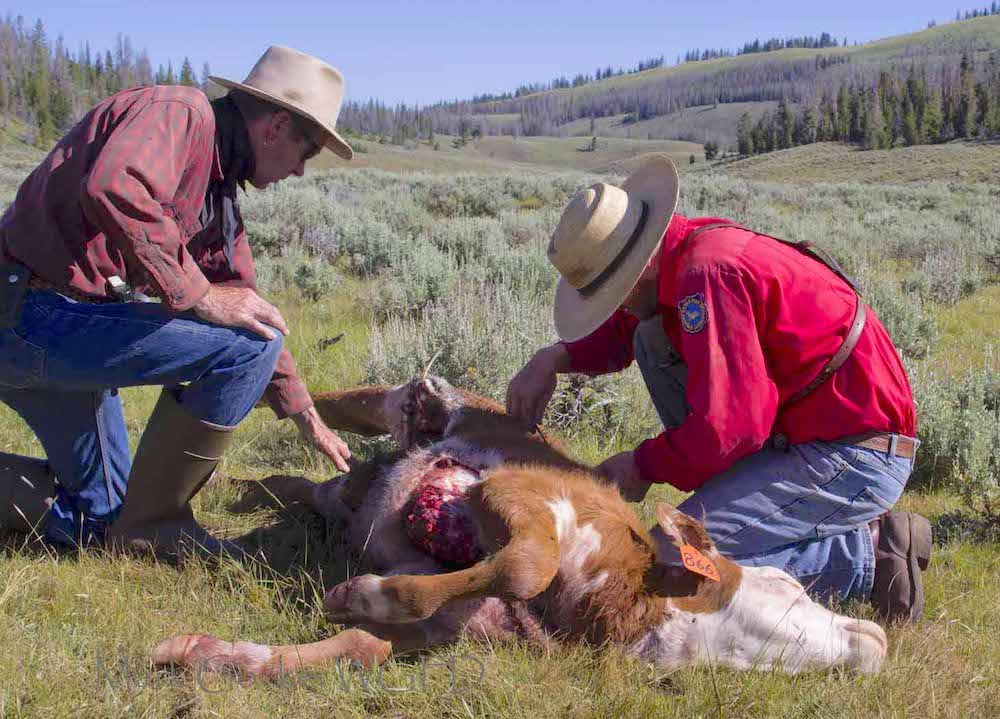
Every year is a conflict-prone year for the scores of cattle and grizzly bears that mix annually on Union Pass, but Coke Landers was especially glad to put 2024 behind him.
The run-ins started shortly after the historic Green River Drift delivered many thousands of cattle to the national forest to fatten up over the summer. By the time ranchers herded the domestic bovids off the vast 267-square-mile Upper Green River grazing allotment on the Bridger-Teton National Forest in the fall, some 94 head of cattle were confirmed to have been killed by large carnivores, he said.
“Ninety-one of them were bears and three were wolves,” said Landers, who took the reins of the Upper Green River Cattlemen’s Association from former president Albert Sommers a few years ago.
“That was the highest ever,” Landers said. “It was a record.”
That’s especially notable considering that the Upper Green has been the Greater Yellowstone Ecosystem’s epicenter of grizzly-cattle conflict over the last couple of decades. It’s also been the site of a not-yet completely resolved legal battle about that conflict, stemming from a federal assessment that OK’d killing up to 72 Endangered Species Act-protected grizzlies due to cattle grazing on public land.
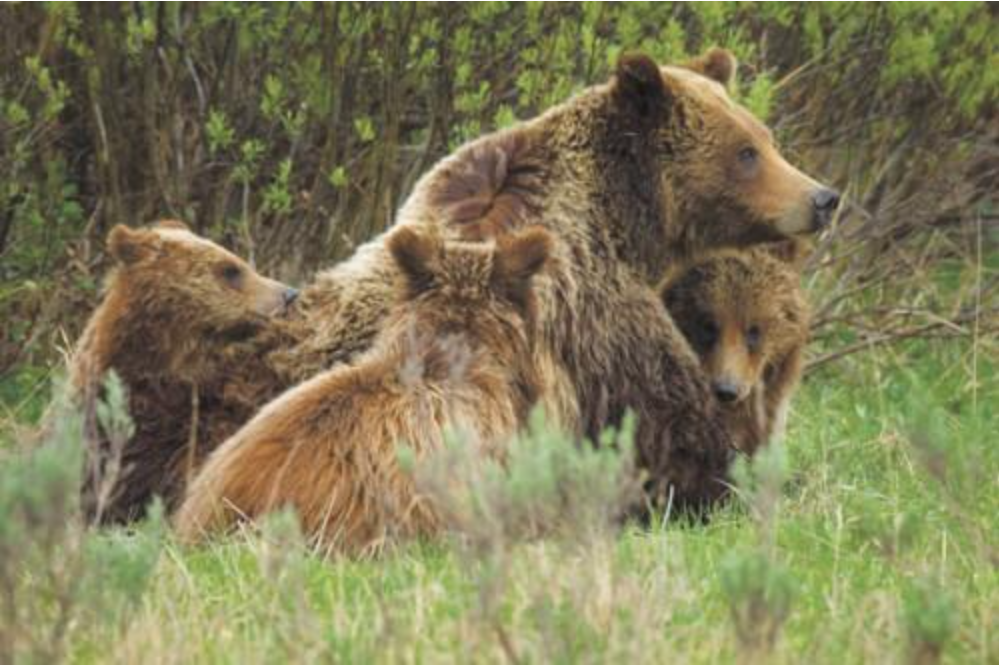
Across grizzly range in the Equality State, it was a tough year for not only bruins killing cattle but for conflict generally. Grizzlies, in turn, were killed at record rates.
The phenomenon was partially explained by the dry year, which 2024 certainly was: More than 800,000 acres in Wyoming burned. The result is desiccated vegetation and sparse berry crops that send the adaptable omnivores looking for alternative food sources. Oftentimes, they end up finding trouble instead.
Wyoming Game and Fish Department officials ran through the numbers and nature of the conflicts during their commission meeting last week in Cody.
“They’re occurring on private lands, the majority of these conflicts,” said Brian Debolt, the large carnivore conflict coordinator for Game and Fish.
Grizzly bears have stopped expanding their range in the Greater Yellowstone Ecosystem, federal biologists say. Nevertheless, much of where they occur today is outside of what Wyoming officials believe to be “suitable habitat.”
“The amount of private land occupied by grizzly bears in the Yellowstone ecosystem — outside of suitable habitat — is bigger than the area of New Jersey,” Debolt said. “Frankly, I get frustrated.”
A graph Debolt presented showed that upwards of 60% of all verified grizzly conflicts in 2024 occurred on private property.
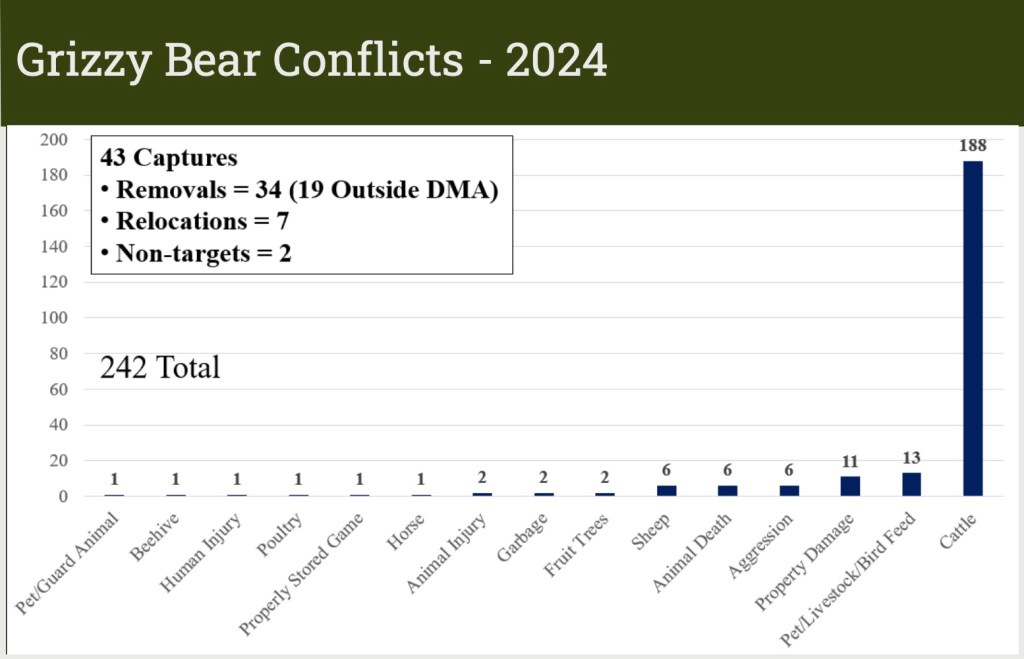
Another graph broke down the cause of the conflict. Cattle dominated with 188 of 242 — a whopping 78% — of all confirmed Wyoming grizzly bear conflicts attributed to domestic bovids in 2024. In order, the next largest conflict sources were pet food, livestock feed and birdseed (13 conflicts) and property damage (11 conflicts).
Grizzlies also killed a record number of Wyoming cattle, Game and Fish Large Carnivore Supervisor Dan Thompson told WyoFile.
“It’s definitely our highest level of conflict,” Thompson said. “There’s this notion that nobody’s doing anything about it. That’s not true. Those producers are doing as much as they can to reduce that conflict potential — as are we.”
About half of Wyoming’s grizzly depredations in 2024 occurred in the Upper Green. Four grizzlies there were captured and killed in response, Thompson said.

There’s been mixed results from efforts to stem the grizzly bear-cattle bloodshed on the massive Bridger-Teton National Forest allotment. Nearly a decade ago, range riders attempted an experimental herding technique to keep cattle bunched up and less vulnerable.
“The herding actually made the kills worse,” Landers said.
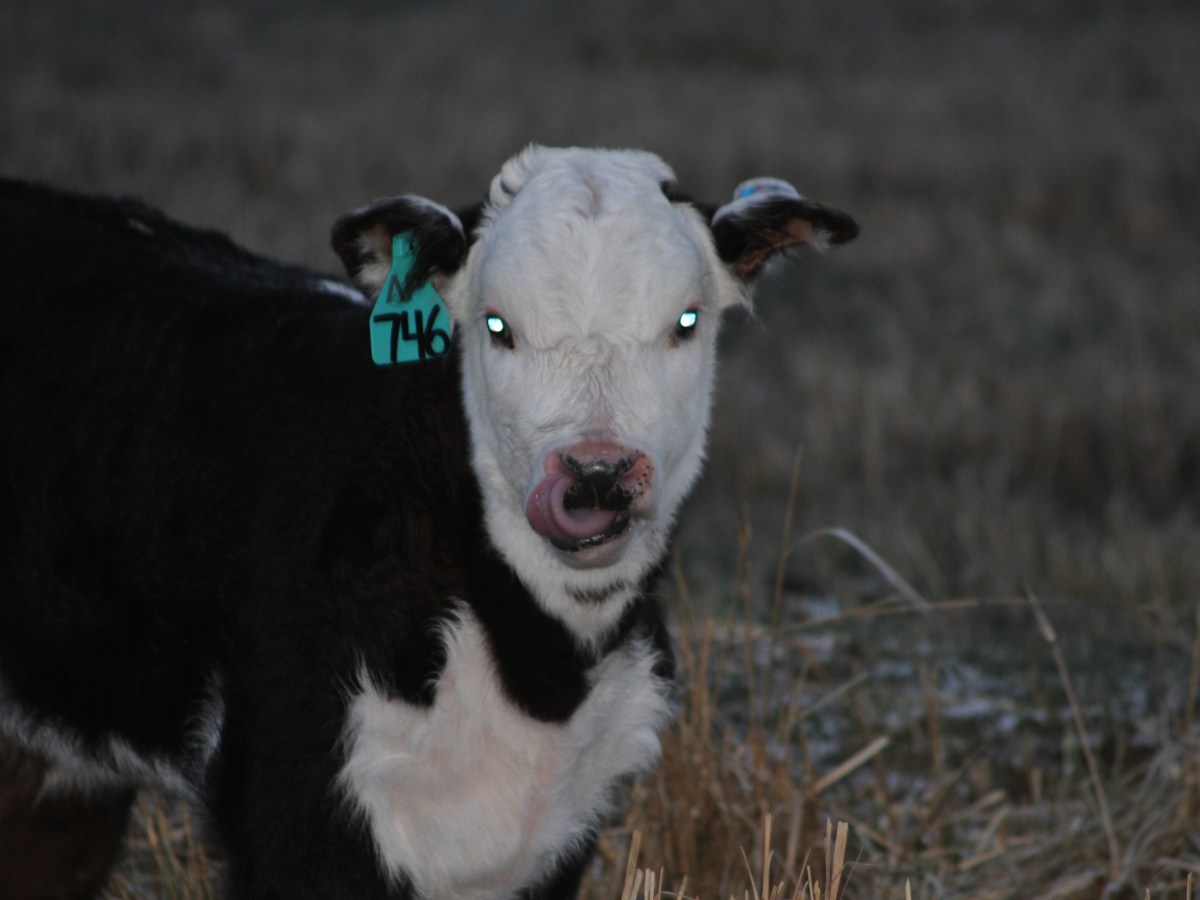
More recently, the Upper Green River Cattlemen’s Association tested out motion-triggered LED lights known as “flasher tags” that were fastened to calves’ ears.
“I put 250 in, and I didn’t have any calves killed with a flasher tag that year,” Landers said. “But when I pulled the flasher tags in the fall, of the 250, there were only 10 of them that were still working.”
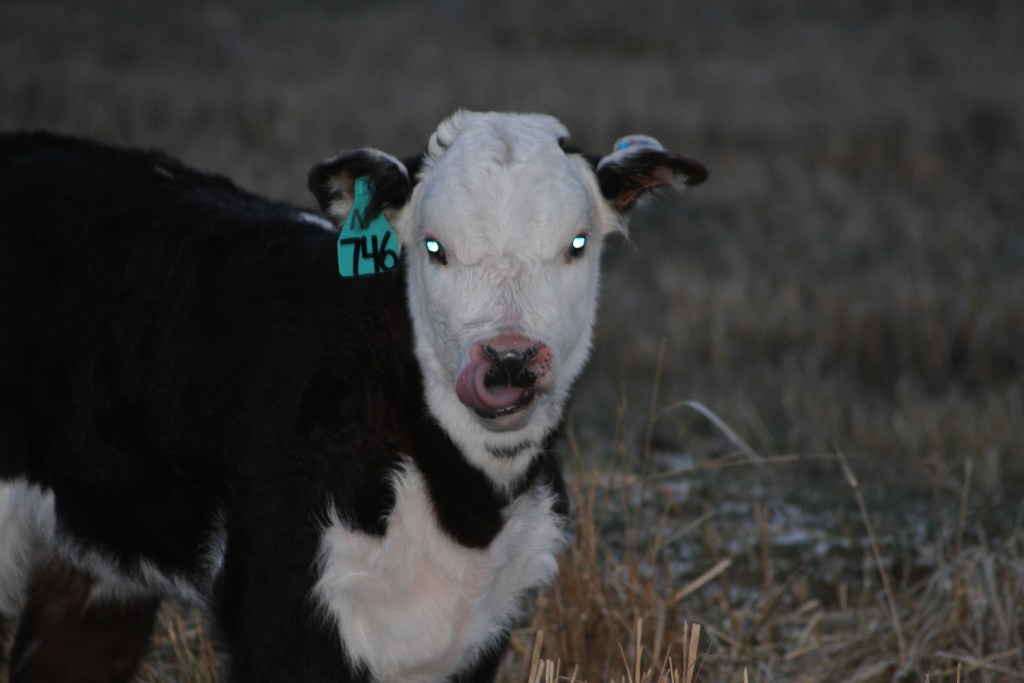
Wyoming secured, but then lost, a federal grant that was going to allow Upper Green cattlemen to scale up the effort with more durable flasher tags, according to Thompson. He didn’t specify exactly what happened to the grant, which went away during a period of extreme turmoil for the federal workforce and grants provided by the federal government under the Trump administration.
“There’s a lot of unknowns right now, let’s put it that way,” Thompson said. “But we still figured out a way to do a pilot component to look at some of these things. We’re still moving forward.”
A new prototype of the tags, Landers said, went out on 14 calves during the 2024 grazing season.
“One of my calves with a flasher tag got killed,” Landers said, “but all of those flasher tags were working when they came home.”
In 2025, they’re going to try another design again, just not in big numbers, he said.

A few months out from the Bridger-Teton grazing season, Landers is encouraged by the relatively big snow year in the region. Snowpack readings in the Upper Green River drainage were sitting at 110% of the long-term median as of Tuesday, but a SNOTEL site up in the allotment was at 127%.
“We should have plenty of moisture and hopefully not as dry of a summer,” Landers said. “A better berry crop does make a difference.”
If an easy conflict year doesn’t come to fruition, the status quo will have to do. Although there’s plenty of carnage, the system is one that the Upper Green River Cattlemen’s Association president says is working.
“The way our cattle association has been living with the bears and the wolves — and with our state’s compensation program — is a pretty good success story,” Landers said. “Honestly, we’re living together. We’re not always getting along, but we’re living together and we’re getting it done.”
Grizzlies in Wyoming and throughout the Lower 48 continue to be managed as “threatened” under the Endangered Species Act. A Biden-era proposal to extend that classification, which precludes grizzly bear hunting, is open to public comments through May 16.

Keeping Things in Perspective. In response to a recent article by Mike Koshmrl concerning grizzly bears killing cattle on the Upper Green River Cattle Allotment located on National Forest lands, I offer the following:
On the approximate 171,000 acres of national forest land there are about 15,000 cattle owned by approximately 25 ranchers permitted to graze this area. Four grizzlies were captured and killed for confirmed kills of ninety-one cattle, probably all calves. This number equates to about one half of one percent of the total number of livestock. Wolves accounted for an additional three head. Even with these losses, allotted grazing on Federal lands is a good deal for ranchers as all confirmed cattle mortality related to predation are directly compensated by the Wyoming Game & Fish. In addition to that the grazing fees are $1.35 per animal unit month (cow & calf) and includes a deduction for predation, poisonous plants and other losses. This grazing fee has remained the same for the last 60 years that I know of. It’s a huge bargain compared to similar grazing fees charged on state and private lands. The summary of the article is correct, this situation is still a pretty good deal.
Kent van
Retired Range Manager
US Forest Service
The situation with Grizzlies and Cattle is a difficult fence to climb. Public land has to be shared by all. Grizzlies are hungry like cattle. Who has the right to survive on public land? Do the grizzlies kill to survive or play a game like a wolf?
If they are coming onto private property and destroying herds then it should be up to the landowner to take necessary action anytime they deem necessary.
It’s very unfortunate but when the land is public it is a risk you have to be willing to take.
Reply to Cameron: There is a legal reason Wyoming Game and Fish must pay animal damage for livestock lost to wolves and grizzly bears. In the 1960s there was a district court ruling in Washakie County concerning 3 ranchers from Tensleep who sued Wyoming Game and Fish for sheep losses due to mountain lion depredation. The court ruled that the state’s ownership of wild animals was similar to my ownership of dog, and, if my dog gets into your chickens I am liable for damages and must reimburse you for damages. The publicly owned wildlife in Wyoming can even cause private property owners economic loss/harm by consuming too much forage – especially alfalfa on bottom land – and, Game and Fish may be required to pay compensation for lost forage. its the same for privately owned livestock, if they trespass on the neighbors property and cause damage to forage, the owner of the livestock must pay compensation. The harmed private property owner can even file a feeding lien against the trespassing livestock. Bottom line is that the owner of the public wildlife – the State of Wyoming – is liable for the damages the publicly owned wildlife do to private property to include loss of livestock due to depredation. However, Wyoming Game and Fish does not manage coyotes – they have been declared a pest by the legislature and assigned to the Wyoming Department of Agriculture. Coyotes are then managed by the county Weed and Pest Districts and the local Predator Control Board. That is, Game and Fish does not pay animal damage claims for sheep losses caused by coyotes. For this reason, coyotes can be hunted 365 days a year without a hunting license – the implications is that coyote control is primarily a local issue aided by USDA APHIS programs. Game and Fish is not directly involved in coyote management. To understand the fundamental principals behind animal damage payments one must review the precedence setting court cases which address compensation for harm caused by the publicly owned wildlife. The courts have ordered Game and Fish to compensate for losses caused by depredation.
Wyoming’ over-worshiped ranchers produce about a percent and a half of the national beef supply, but we’re supposed to treat them as our saviors. Leave the grizzlies and other predators alone. They’re worth more to the state domestic product than are the welfare queens.
what the welfare stock grower doesn’t want you, the public, to know is that wildlife depredation is a “cash cow” income generator. These ranchers are paid THREE TIMES what the livestock is actually worth if it’s killed by a predator. To hide their game, the stock growers plays out the obligatory whoa is me yet cashes in some pretty hefty government checks. If the Wyoming Game and Fish is actually concerned about serving the people of the State and being fiscally responsible, they’d cease this ridiculous policy.
I hope the feds listen to the folks closest to the problem. Good job Coke articulating the scope of the problem and the extra effort cattlemen are putting into being able to run stock on the forest.
Stop running non-native bovine and ovine species on land meant for native species – predators (wolves, mountain lions, grizzlies, etc.) and non-predators alike (elk, deer, pronghorn, bison, etc.) and the problem is solved. No livestock, no grazing, no problem.
“No livestock, no grazing”….No food.
Did I say the entire US? No. Only the public lands in the west. Eurasian livestock coevolved with the wet, humid environs. The environment east of the Mississippi are where you should graze non-native bovine and ovine in this country, if you are going to graze them at all. Or, at the very least only graze them in the west on PRIVATE land, not PUBLIC land. And guess what? Removing cattle from all public lands in the west only amounts to <3% of all beef cattle produced in this country, and some of that goes overseas. So, spare me “we’re all going to STARVE” BS! It’s old, tired, and just plain wrong, just like grazing cattle in the west.
Why don’t ranchers ride heard on their cows night and day anymore ?
Mike’s article mentioned 94 confirmed kills in the upper Green, and I assume that number is increased by a factor of 3 in order to account for carcasses that were not located. That is, animal damage may have to pay for 282 head of cattle using the 3x formula. With cattle at record high prices, thats a lot of money. 5 weight calves are bringing between $1500 and 2000 per head!!! Cattle that are under threat by wolves and grizzly bears typically have a much higher percent of open cows ( cows that were not successfully impregnated ) so there are additional losses to the ranchers. Add in the considerable out of pocket expenses and the time spent trying to protect the cattle and the overall losses become very significant.
The percent of documented kills on private land is very concerning. The original grizzly bear conservation/recovery plan did not allow for grizzly bears occupying private land and BLM lands. Clearly, the grizzlies must be thinned out in private habitat but not in their core YES habitat which includes the wilderness areas.
As usual, the animal damage payments will come from funds generated by the sale of hunting and fishing licenses in Wyoming. This is a major flaw in the ESA which needs to be corrected by congress such that the American people in their entirety foot the bill for grizzly bear management.
Please note that the state of Wyoming via Game and Fish is doing the boots on the ground work managing grizzly bears not the USFWS which is active but just doesn’t have the budget or personnel to do the everyday work. And the, the USFWS may be facing budget cuts and offices like Lander may be cut back or eliminated.
Sounds way worse than it really is… a ” sky is falling” scenario. In any normal year, about 3 percent of Wyoming’s total cattle count of ~ 1,350,000 head will die from all causes. That is in the range of 40,000 mortalities from weather, disease, digestion issues, all species of predators , yada yada. Of note is the 18 percent of cattle deaths attributed to calving failures – roughly 7.500 per annum , which is 75 times the loss attributed to Grizzlies and Wolves alone. ( Source: APHIS ). All cause aggregated can be construed as Cost Of Doing Business. Of course the Stockgrowers run the losses from Grizzlies and Wolves through their amplifiers and demand highest dollar compensation.
It’s important to provide a sense of scale. Recall that the abnormally awful 2023-24 winter that decimated wildlife like Deer and Pronghorn also claimed more than 15,000 cattle across Wyoming. Ecological perspective matters.
TOO MANY GRIZZLIES!!!
The time is far past for managed hunts in the GYE!
TOO MANY HUMANS AND THEIR DOMESTICATED NON-NATIVE LIVESTOCK!!! There, I fixed it for you.
The North Jackson elk herd, disagrees with you Eric. Wolves and Grizzlies have nearly ended hunting much of the GYE south of Yellowstone. Calf/cow ratios of 10 to 100 will not sustain a population.
North Jackson – 2025 Proposed Hunting Seasons
https://www.youtube.com/watch?v=XGSeC5BYfkw&t=903s
Maybe stop forcing elk to be confined to winter feeding grounds and let them roam freely to graze and you might see a rebound in population. But that would prevent the non-native bovine locust from getting that winter forage in the lowlands that should be going to the native ungulate population. The problem with your elk numbers is not predators, it’s human management for cattle ranching and the diseases that brings – CWD and hoof rot. Truly do your research and look in the mirror for once and I think you’ll be horrified by what you see.
I supported the grizzly endangered listing but they are thriving, time to hunt them just like black bears.
They are not thriving, nowhere near. Time to decrease habitat destruction from the encroachment of humans into their areas and to remove the non-native bovine and ovine from public lands. That would allow for wildlife corridors and connectivity that would improve their genetic diversity and ensure their survival and “thriving” for generations. Grizzlies are native, cattle and sheep are not. No livestock, no grazing, no problem.
I need a “no livestock, no grazing, no problem” bumper sticker.
More bears, less freedom caucus. Make WY wonderful again.
Stop bailing out the banks. Stop bailing out the airlines. Stop bailing out the ranchers. We keep hearing about the National debt, great place to stop spending is corporate welfare. Put Corporate Jesus on a diet.