


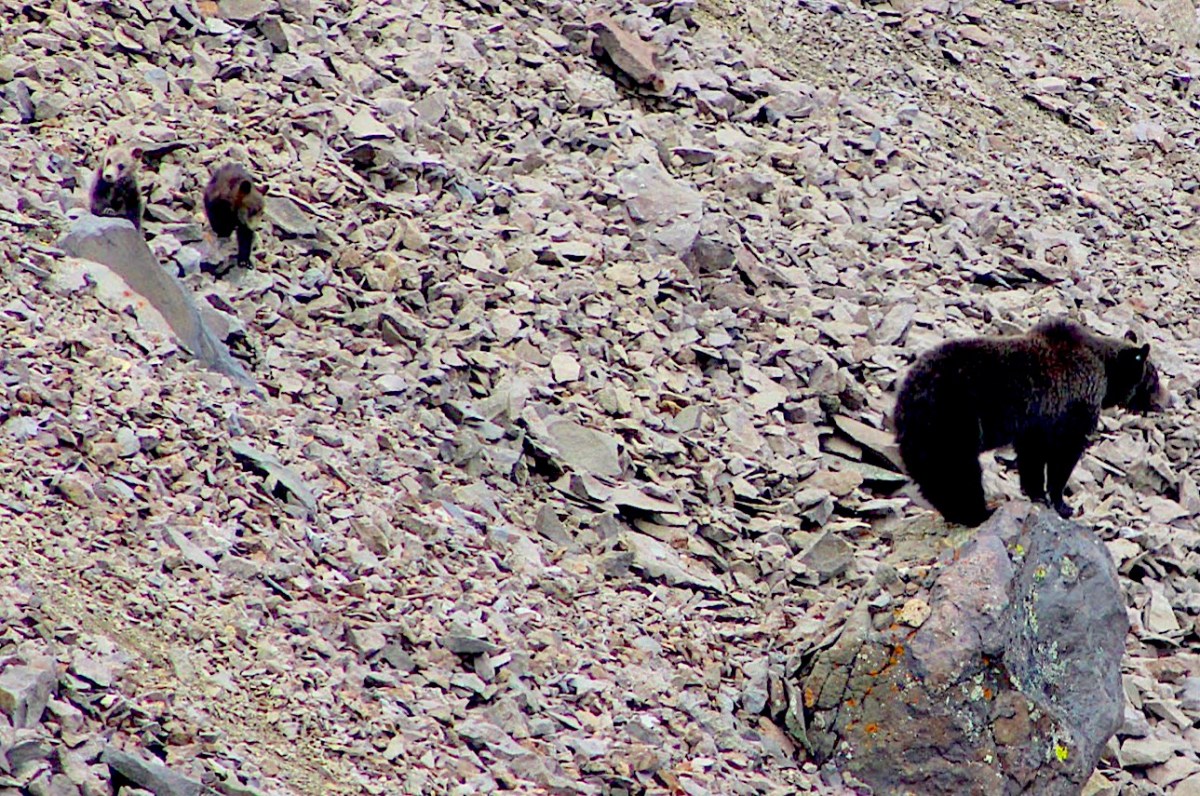
CODY—Hundreds of moth-eating grizzly bears will gather in backcountry talus fields in the months to come. It’s a high-altitude gathering similar to coastal bruins’ seasonal salmon feasts that serve as well-publicized spectacles.
But land and wildlife managers face hard choices when it comes to spreading word of the Greater Yellowstone Ecosystem’s remarkable natural phenomenon, which occurs chiefly in the Absaroka Range. Backcountry travelers should know about it — the grizzlies can be easily displaced from the sites. Yet, educational information aimed at keeping people safe and grizzlies undisturbed can also have unintended consequences.
“We don’t want to encourage people to visit moth sites, although we realize some people are going to do it anyhow,” Shoshone National Forest Wildlife Biologist Andy Pils told a room full of grizzly managers on May 1 in Cody.

“There’s kind of that fine line between providing enough information to people that they can make good decisions about their safety,” Pils said, “without doing stuff to actually encourage more people to show up.”
A grizzly that’s in moth-gobbling mode can down 40,000 of the insects daily, but land and wildlife managers believe there are not too many people showing up to compromise the bears’ access to the calorie-rich food source.
That’s among the findings of the Shoshone National Forest’s first-ever management plan for the roughly three dozen known army cutworm moth sites distributed around the Abasoka Range.

Pils presented the plan to the public for the first time at the Cody meeting, a gathering of the Interagency Grizzly Bear Committee’s Yellowstone Ecosystem Subcommittee. Someday, he explained, there may be a need for measures like permitting systems to access moth sites or restricting travel to designated trails.
Monitoring of the sites and human use of the area would continue under the plan. Every three years, Pils said, grizzly and land managers will look at the latest data and make recommendations for any changes, should the need arise.
Seldom visited
Currently, only one moth site — and Pils and others didn’t identify it — sees anything more than very occasional human use. WyoFile visited the site with the wildlife biologist in summer 2022 and watched as grizzly bears scattered upon seeing peak-bagging humans and a dog. The interaction aligns with research from former Montana State University graduate student Erika Nunlist, who observed 43 human-bear interactions in 2017 and ‘18 and found that moth site grizzlies walked or ran away from people 80% of the time.
Using trailhead surveys, registers and peak logs at the same site in 2024, Pils and colleagues found that human use of the most trafficked moth site had not significantly increased.
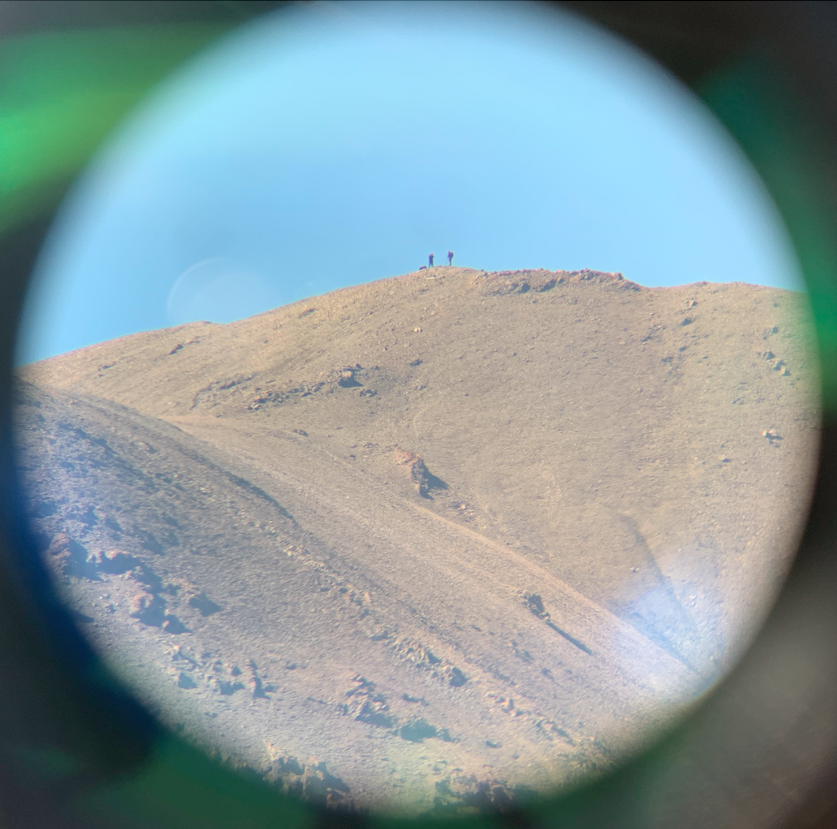
Human use of the other 35 moth site areas is mostly restricted to ungulate hunters, who come in the highest numbers after grizzlies’ seasonal feast has slowed.
The Shoshone National Forest has been assessing its moth sites in consideration of management changes since 2015, when it completed its Forest Plan. Before that, around 15 years ago, Yellowstone region managers prioritizing grizzly bear issues identified the moth sites as a top-three issue in the ecosystem, U.S. Forest Service biologist Dan Tyers told the room in Cody.
Moth bear basics
Subsequently, a team of researchers launched into years-long studies, gathering information about human-grizzly interactions, where army cutworm moths are coming from and what grizzlies are eating in the subalpine aside from the fatty insects. They learned — and presented to the Interagency Grizzly Bear Committee’s subcommittee — that the moths come from many directions, which insulates the moth bears against regional declines. Additionally, biscuitroot was identified as a key supplementary food source for the bears.
Wildlife managers have also ramped up routine monitoring of the moth sites and the hundreds of bears that use them. A decade ago, they conducted census flights to count every individual bear that was using the rock fields and adjacent alpine meadows.
“We counted upwards of 220 bears on these sites,” Wyoming Game and Fish Department Large Carnivore Biologist Justin Clapp told the room in Cody. “That was somewhere between 20 and 25% of the entire population estimate.”

Spatially, the sites represent less than 1% of the grizzly-occupied landscape, he said. The moth grizzlies, in other words, are highly concentrated.
Aided by aerial captures — a technique that debuted for grizzlies in Wyoming — wildlife managers have also been able to get tracking collars on 85 individual bears that use moth sites. The location data those collars produced show that, on average, grizzlies arrive on July 12 and depart on Sept. 8, Clapp said.
During that couple of months, grizzlies are taking it relatively easy: Moth site-users move about 50% less, Clapp said.
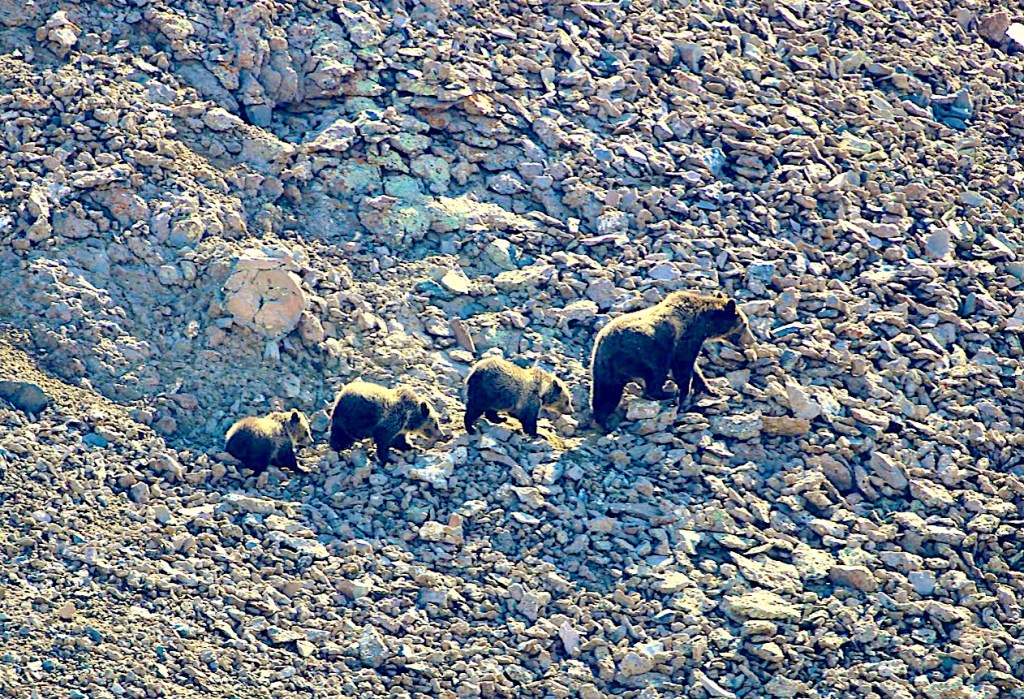
Females, the biologist said, are especially fond of the moth sites. Sows are a disproportionately high segment of the moth bear population, and they arrive earlier and stay later.
“It does seem to be a space where females can take cubs in close proximity to males,” Clapp said, “and not have high concerns about infanticide.”
Game changer?
While Shoshone National Forest officials have not yet signaled the need for any rigid regulations to safeguard moth sites, there are scenarios where restrictions would become much more likely. Given the extraordinary nature of the phenomenon, it’s within the realm of possibilities that an internationally renowned documentarian could set his or her sights on the grizzlies lapping up moths high in the Absarokas. Just like that, Wyoming’s moth-eating grizzlies could become much better known.
“That’s why we want to track this stuff over time,” Pils told WyoFile.
Commercial film permit requests have come in pulses, he said, but since the Shoshone Forest Plan was completed in 2015, all have been denied.
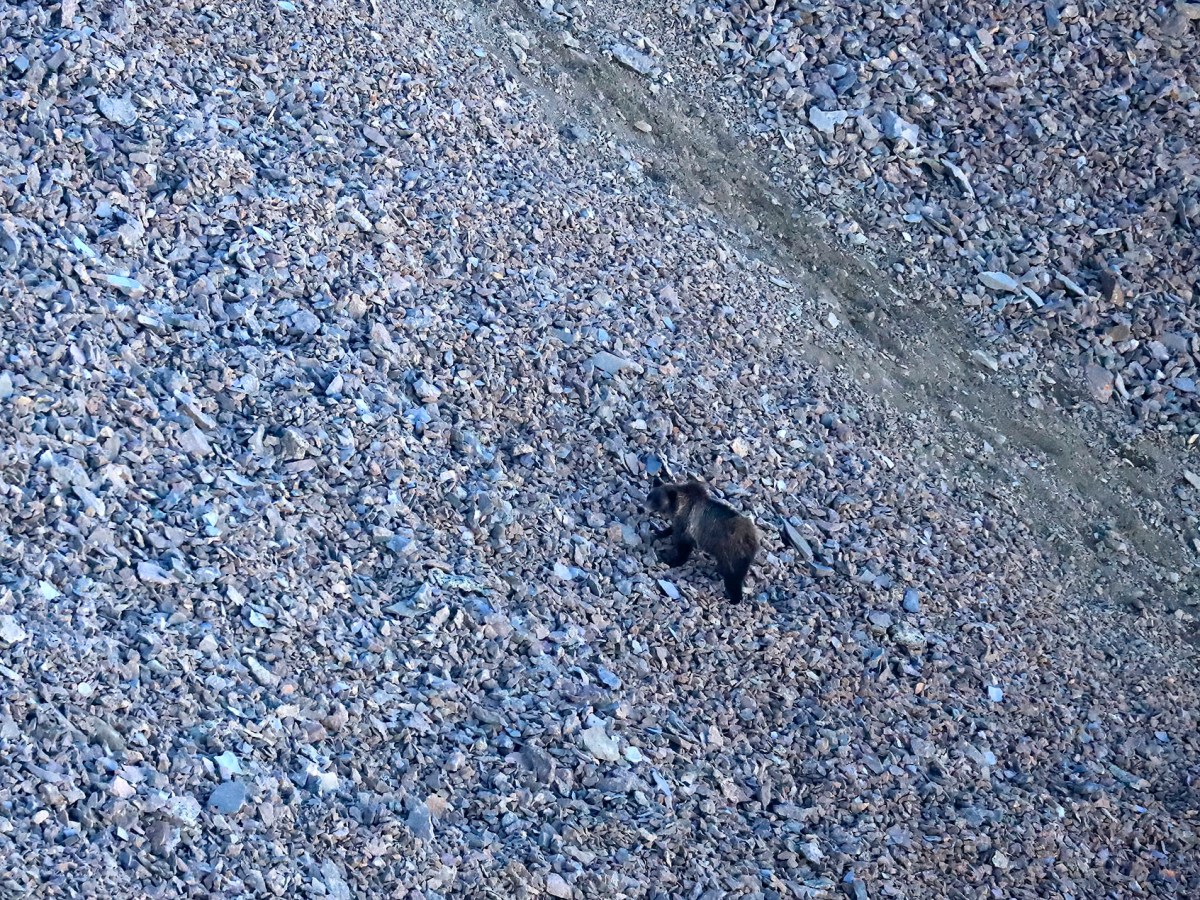
With a moth site management plan now in place, there’s a “framework” going forward for evaluating the requests, Pils said.
“It’s going to depend on the specifics of what they want to do,” he said. “Ultimately, it’s the forest supervisor that’s going to make the decision.”
Currently at the Shoshone National Forest, that’s Ken Coffin. At the Cody meeting, he told WyoFile that there’s a “fine line” between good and bad exposure, but that he’s committed to reviewing commercial filming requests on a case-by-case basis.

There’s good that comes from telling stories about the Yellowstone ecosystem, like the grizzly bear moth sites, he said.
“But it brings more notoriety,” Coffin said. “It’s good, but it’s also concerning.”
For now, the locations of moth sites are being closely guarded. Overview maps presented at the Cody meeting marked the Absaroka Range sites, but the markings were redacted from documents since uploaded online.
“Specific moth site locations … it really is considered sensitive data to us at this time,” Clapp said.

Recent years have seen threats to important traditional griz food sources:
1. Cutthroat Trout displaced by Lake Trout in Yellowstone Lake tributaries.
2. Whitebark Pine nuts.
3. Human and climate interference with cutworm army moth hatch sites at high altitude.
Those sites exist on other forests as well, but the locations see only a few human visitors. Awsome places to go, a treat to go there, but only occasionally.
Great story on the moth sites. The real problem with public access to moth sites comes from the linked SNF powerpoint, in which a user complains that the “road sucks.” Well, not only should the road suck, there shouldn’t even be a road.
Granting public access to moth sites was one of my objections to the Shoshone Forest Plan in 2014. I wanted the Forest to close the sites to general public access and handle film company requests for access on a case by case basis. Well, at least so far all filming requests have been turned down, as you report, but it’s a mistake not to impose an absolute ban on tourists. At least the Shoshone is keeping the site locations officially secret, but many of them are already known locally, and there are always local people who’ll blab.
Ten years ago we already knew that human presence near these high elevation sites would cause bears to move. Now we have enough science to back up a total, seasonal ban. These sites are simply too important to bear survival to risk letting casual tourists blunder in just to check off a block on the bucket list and post photos on Instagram of bears running away.
I understand getting the story out about grizzly bears, even about the importance of moth sites, but it seems to me that if we talk too much about it, tourists most certainly will visit the sites and make a mess of things. That’s already happening in many areas of the Greater Yellowstone–for example, the arrogant, ignorant, disrespectful mobs blocking traffic on Togwotee Pass as they ogle bears