

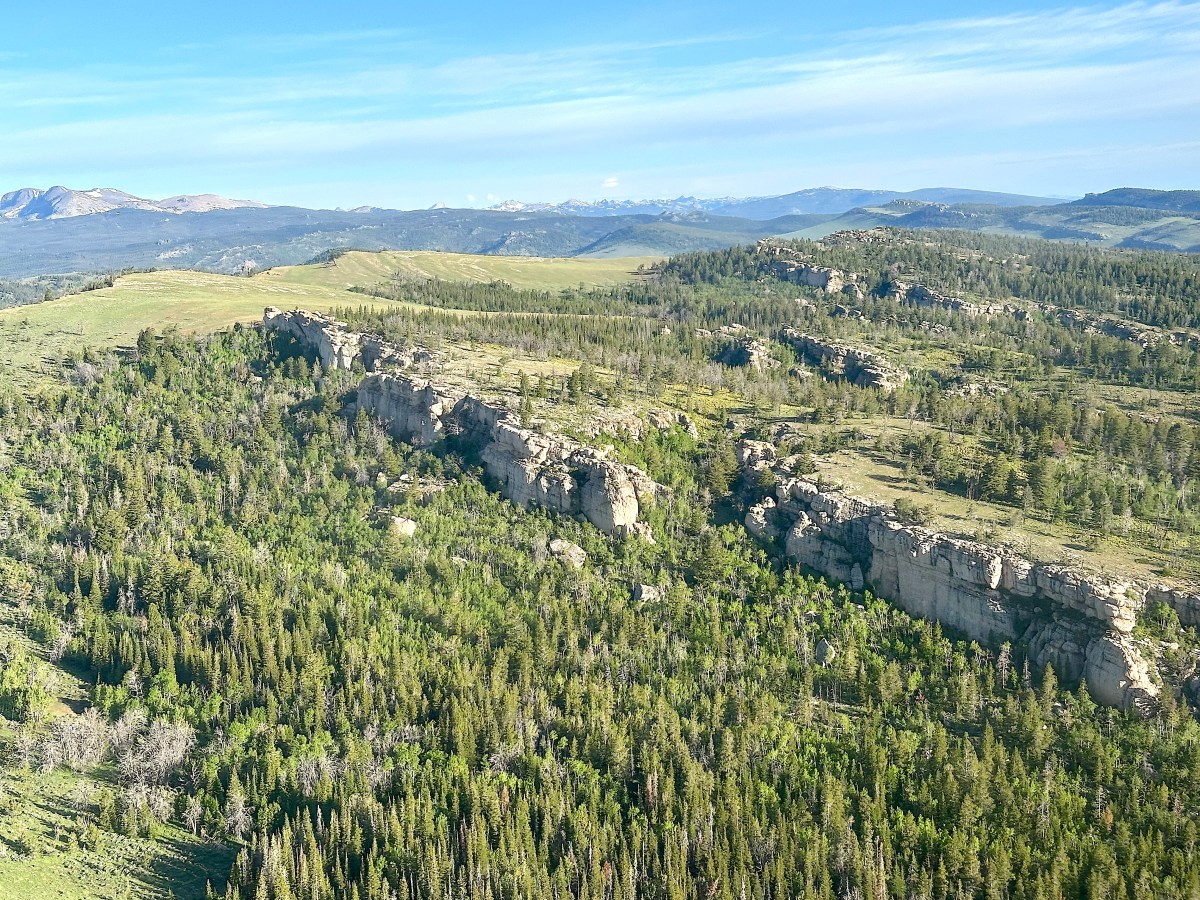
The Trump administration is ending an environmental protection policy that opens up nearly 59 million acres of federal land in the United States — a Wyoming-sized expanse — to roadbuilding and timber harvest.
U.S. Department of Agriculture Secretary Brooke Rollins announced Monday she was rescinding the heavily litigated 2001 Roadless Rule. The pronouncement came while state executives met in Santa Fe, New Mexico, for the Western Governors’ Association conference.
“Time and again, this Clinton-era policy has proven faulty and misguided,” Rollins said in her keynote address to Gov. Mark Gordon and others. “That’s why I’m excited to announce today, here with you for the first time, our intent to repeal the disastrous roadless rule.”
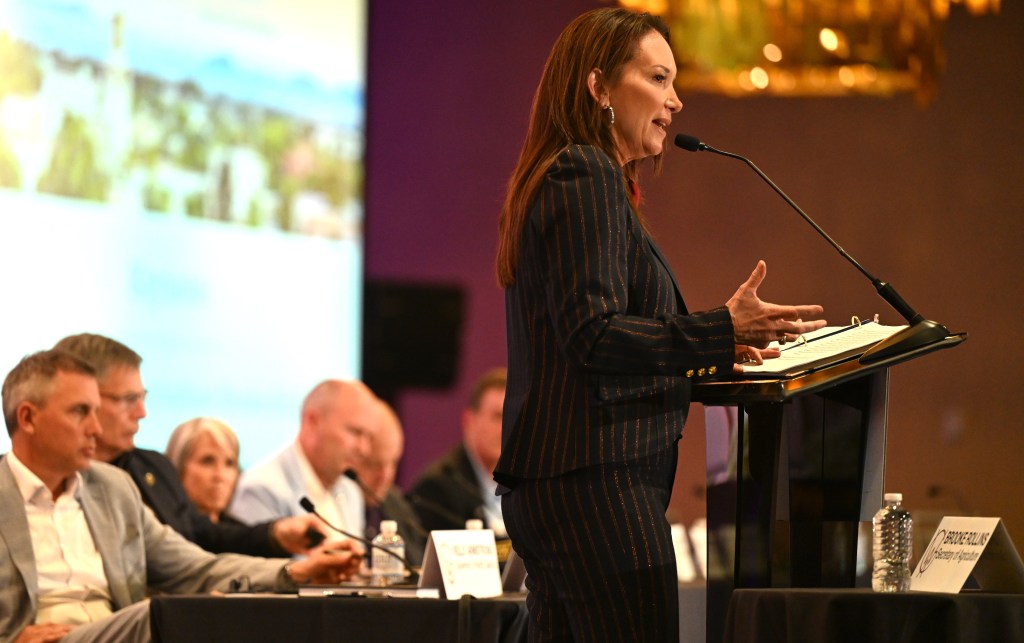
The rescission was another “aggressive” move, the native Texan told the governors, to help achieve President Donald Trump’s agenda of increasing American logging. In the last six months, the administration has both initiated an executive order and a more-specific secretarial order intended to stimulate commercial federal timber harvesting — though the industry faces major headwinds that may prove insurmountable, including in parts of Wyoming.
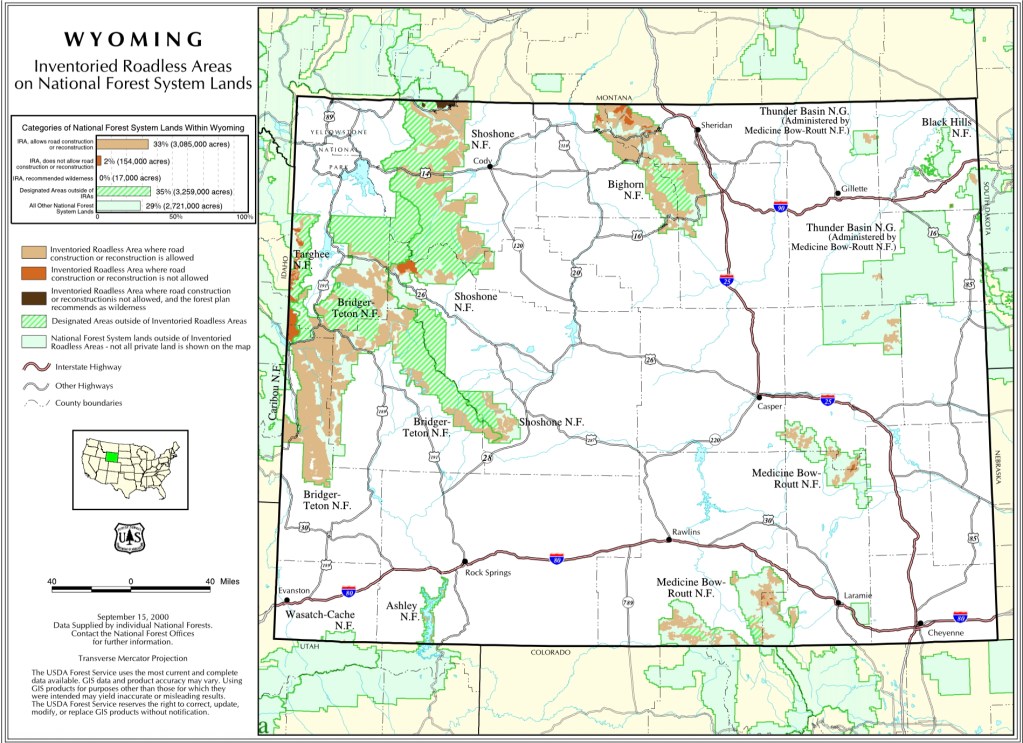
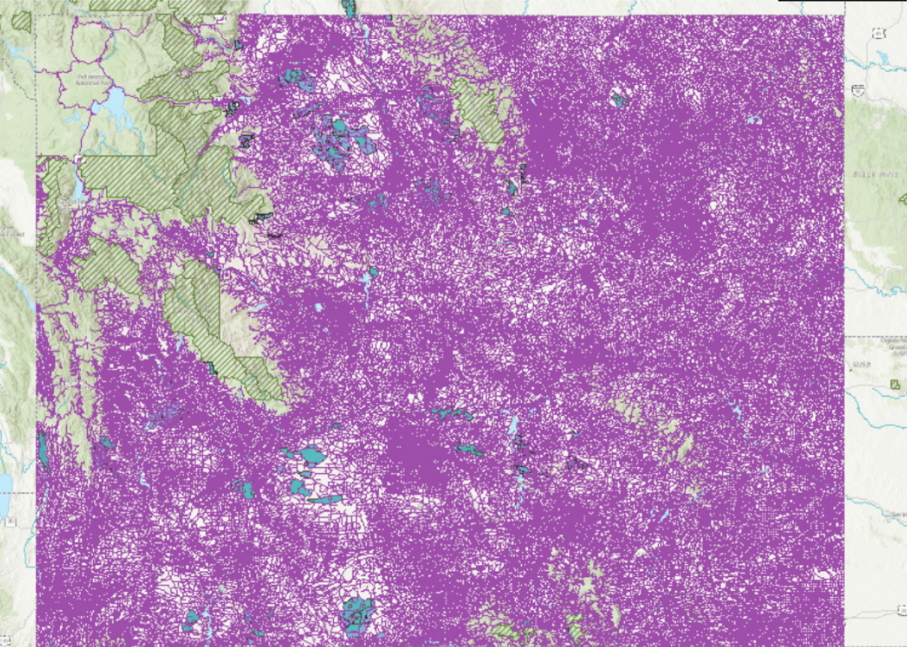
Rollins’ repeal will directly affect the administrative status of 3.26 million acres of inventoried roadless area in Wyoming.
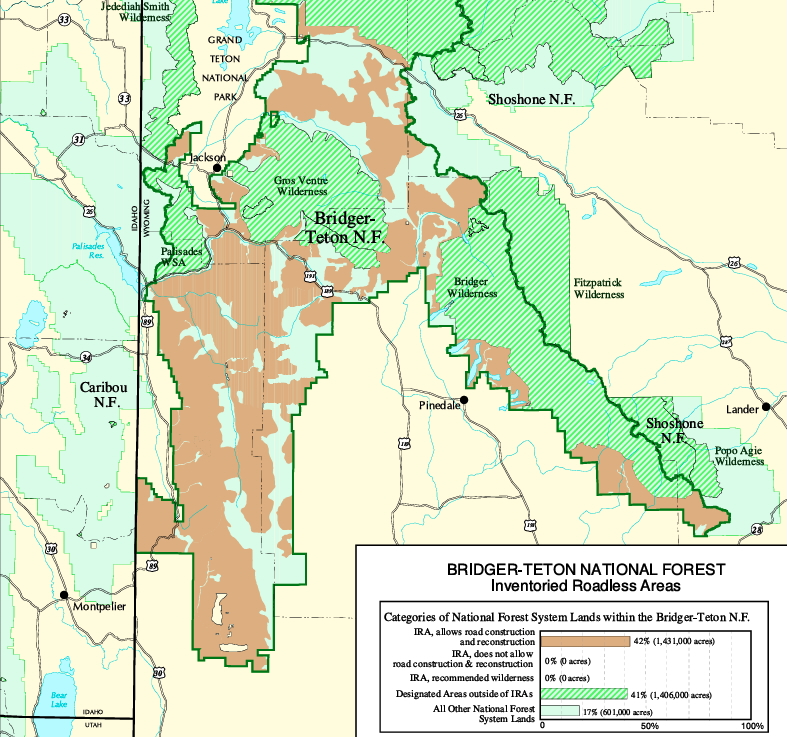
Impacted forestland within the state ranges from a few small tracts of roadless area bordering Flaming Gorge Reservoir on the Ashley National Forest to 1.43 million acres of the Bridger-Teton National Forest that’s adjoining towns like Alpine, Star Valley Ranch, Jackson and Pinedale and treading far into the backcountry.
Some members of those communities are eager for the change.
The week before Rollins’ announcement, the Wyoming Legislature’s Select Federal Natural Resource Management Committee met in Pinedale and discussed roadless areas.
“If there’s a prime target, where you can actually access some of the stuff in roadless [areas], it’s probably the Greys River,” Lincoln County Commissioner Kent Connelly told the state lawmakers.
The lack of logging in the roadless-designated Salt River and Wyoming ranges, he said, puts Star Valley communities at risk from wildfire.
“Alpine is totally in trouble if we catch the Greys River on fire,” Connelly said. “There’s no way to defend it. Or Star Valley Ranch. That’s all there is to it. You’re going to have to watch it burn.”
Nationally, nearly half of all inventoried roadless areas — some 28 million acres — are considered high or very high risk for wildfire, Rollins said. Since Clinton imposed the rule in 2001, more than 8 million acres of roadless areas have burned, U.S. Forest Service Chief Tom Schultz said in a statement supporting the rescission.
Roadless areas in Wyoming and beyond have their benefits, especially ecologically. Even adaptable species like elk eschew roaded habitat, research has found, and wilderness-like roadless regions on the landscape can prove surprisingly rare.
The end of the roadless rule delivers a “major blow” to the state’s values, Wyoming Wilderness Association staffer Peggie dePasquale told WyoFile in an emailed statement.
“The Roadless Rule has been a keystone in maintaining beloved wild landscapes across Wyoming for almost 25 years,” dePasquale said. “Clean water, clean air, healthy wildlife populations and opportunity to escape into pristine landscapes that aren’t crisscrossed by roads, are all characteristics that define Wyoming, and are all characteristics we stand to lose with the rescission of this long standing and critical rule.”
Hook-and-bullet advocacy groups have also come out in opposition to Rollins’ roadless rule rescission. National forests already have twice as many miles of roads as the entire U.S. National Highway System, Backcountry Hunters and Anglers lobbyist Kaden McArthur wrote in an emailed statement.
“Repealing the Roadless Rule isn’t about improving forest management—it’s about expanding a development network that threatens intact landscapes hunters, anglers, and wildlife can’t afford to lose,” McArthur wrote.
In early June, U.S. Rep. Andrea Salinas, an Oregon Democrat, reintroduced the Roadless Area Conservation Act, legislation that sought to codify inventoried roadless areas in the National Forest System so that they could only be rescinded by an act of Congress.
Observers had been anticipating changes to the roadless areas.
“It’s a Forest Service rule, and the Forest Service can take a look at changing their rules,” Wyoming State Forester Kelly Norris told members of the Wyoming Legislature’s Federal Natural Resource Management Committee last week.


Elimination of roadless areas in Wyoming will clear up some inconsistencies in the books, according to Norris. Several national forests located inside the Equality State operate under plans that predate the 2001 Roadless Rule, including the Bridger-Teton, Bighorn and Medicine Bow-Routt. As a result, their guiding land-use plans are at odds with roadless areas that were layered on top, she said.
“There are over 300 miles of roads in roadless [areas] in the Bighorn National Forest,” Norris told WyoFile. “There’s been talk of doing corrections for years.”

Between this proposal and the public lands sales, imagine how many wild places all of us who enjoy outdoor recreation will have that we can even gain access to. At least we might have some kind of public road to look at private land and logged lands from. Please, NO!
There’s 640 miles of ATV trails in Wyoming. There are many miles of forrest service roads for vehicles. How many illegal roads for ATV’s? I was born and raised in Wyoming and I can tell you roads destroy wild lands and stress wildlife.
True story….an archery hunter who hiked into a roadless area, hoping to fill his elk tag, was surprised first, and angry second when his hunt was disrupted/ruined by an ATV traveling on an illegal trail close by.
Ever notice how everyone loves to play the catastrophic wildland fire card? Truth is, roaded areas and roadless areas stand the same chance of catching fire from lightning. And, oh yes, 8 million acres of roadless areas have burned since the implementation of the roadless rule. Here’s some meaningful stats; in the last decade ending in 2023 a total of 70 million acres have burned and from 2001 thru 2023, approximately 161 million acres have burned. Kinda puts things in perspective, doesn’t it.
And lastly, let’s address logging. Ever see the mess that is left behind after timbering. Skidder trails where all vegetation is obliterated, and at the end, instead of reseeding these trails, they just pile slash on slopes to prevent erosion. Noxious weeds proliferate, and roads are built to facilitate logging traffic. It’s not a pretty sight folks.
My question is how will this apply in the grizzly bear DMA? My understanding was that if there’s a new road, then another has to be decommissioned. Grizzlies are really sensitive to roads and in the recovery plan are road restrictions.
Yup. Over 40 years I’ve seen it in the Bighorns. When people take their entire house and every vehicle they own ‘camping’, it’s bound to destroy things. Now multiply that by thousands of people on any given weekend and….they gotta close roads. The world is not a conspiracy theory constantly rotating around the people of Wyoming.
“The world is not a conspiracy theory constantly rotating around the people of Wyoming.”
Love this, describes most peoples feelings perfectly. So many things are face value and people spend every waking hour figuring out how its a conspiracy.
Want roadless? There’s plenty of Wilderness areas for that.
The National forests are multi-use to include renewable resource timber.
Enabling access to public lands via roads benefits everyone.
Again, you want roadless, Wyoming has more than its fair share of wilderness areas that will never have roads.
There are many places you can move to if you like roads.
I have seen countless national forest and BLM roads blocked and decommissioned in the past 30 years from Washington State to Wyoming effectively turning them into wilderness areas minus the rules.
The Feds have been increasingly restricting access to the Public across the western US. Not just roads but generations long dispersed camping sites blocked with boulders, roads gated without explanation, in WA. state some areas blocked as to make even foot traffic difficult.
We’re currently going through a fight to keep our Public lands public, but what good are they when the Government blocks our ability to access them?
Road closures are never about power tripping feds locking people out for their ideals, they are almost always because of abuse from the public and extensive natural resource damage from overuse.
What “extensive natural resource damage” is there from an elk hunter walking into an area on a restricted no motorized traffic “White Arrow Road” and later that day using the same road to haul out an elk he shot, rather than having to drag or pack it out in pieces? I have been stopped and ticketed by a ranger for doing just that, while all day there were “road -runners” on the same road using 4-wheelers and side by sides to do their “hunting”. When I told the ranger about it, she replied: “I didn’t catch them, I caught you.” FYI, they were all back the next day doing the same thing, with no ranger there to catch them again. Point is, if you’re going to make such rules, you need to have enough people to do an equal, full-time enforcement. Ticketing someone for making a one time trip to retrieve an animal is not equal enforcement, when there were other vehicles running around in there every day.
So how come you didn’t quarter and hike your kill out, or use a pack animal. I’m thinking that your plan all along, should you be fortunate enough to harvest an animal, was to “drive” something in to retrieve it. See where I’m coming from….you knew the area was non motorized, but you chose to ignore that cause it was no longer convenient for you. Actions have consequences, stop whining….you made the decision and you got caught.
There have never been enough LEO’s/FPO’s to cover, there are even less now thanks to our current administration.
You have an interesting point.
But how do wilderness areas remain wild when they can be filled with people in cars, trucks, quads, side-by-sides, etc?
Kenneth, Wyoming has 15 Federally designated Wilderness Areas totaling 3+million acres that will never have roads regardless of this recent action.
Bicycles are not even allowed on trails, let alone motorized vehicles.
One thing that’s shrinking yearly, wild lands. We need more not less. Once it’s gone it’s gone forever.
Gordon, most forest/BLM roads I have traveled in multiple states across the west, in my lifetime, didnt make the land any less “wild”.
Depending on the season and area, you could drive hundreds of miles of forest roads in a day and pass less people than you can count on one hand.
“Wild” isnt necessarily synonymous with road free.
One thing i’ve learned from the Trump administration is that it can’t be trusted and American values are non existent.
The Trump administration can’t just throw out the Roadless Rule. It is a long standing part of the Code of Federal Regulations. To change it or throw it out, the Administration has to follow the Administrative Procedures Act (APA) by proposing in the Federal Register to get rid of the Rule, give rational and factual reasons why it’s necessary to rescind the Rule, and provide a public comment period. If the Administration bypasses the APA, the courts will stop it.
Regarding the Shoshone National Forest, the above map presents the Dunoir Special Management Unit (SMU) as an Inventoried Roadless Area. It is not. The Dunoir SMU was created by the 1972 Washakie Wilderness Act. The law required the Forest Service to manage the SMU as wilderness until Congress made a final decision about its status. To date, Congress has taken no action on the SMU. This means no roads and no logging in the SMU regardless of what happens with the Roadless Rule. In other words, the SMU has separate legal status and the Forest Service can’t just open it up.
Also, the Shoshone NF published its current Forest Plan in 2015. The next legal requirement after the Plan was to put together a Travel Management Plan (TMP), that is, to structure the road system to achieve the goals of the Forest Plan. Technically speaking, the Shoshone NF cannot build new roads to support additional logging in former Roadless Areas until the TMP is completed and implemented. That itself will be a long process. In any case, the TMP was started, then postponed indefinitely to deal with fire threats.
As with everything else in the Trump administration, no one has thought repealing the Roadless Rule through. There are a lot of scientific, ecological reasons to keep it, primarily to keep roads out of places where they are not needed, where they will do damage to watersheds, soils, and wildlife.
According to that map, even our lakes have roads crossing them…?!?
Are you maybe interpreting the dark blue areas as lakes? I made the same mistake at first, but they are actually wilderness study areas.
Thank you Max, the map makes sense now.