


Federal Medicaid cuts in President Donald Trump’s “Big Beautiful Bill” could cost Wyoming nearly 200 jobs per year and shrink the state’s economy by $140 million over five years, a new economic analysis finds.
The Wyoming Medicaid Cuts and Expansion Economic Impact was released Friday. The Natrona Collective Health Trust and several health-care-related organizations hired Regional Economic Models, Inc., to conduct the nonpartisan study. The intent was to compare the effects of the newly enacted federal cuts with the potential economic gains Wyoming could enjoy under a different scenario: Medicaid expansion.
The Health Trust released the study on the heels of the bill’s narrow passage into law — which makes the prognostications related to cuts even more relevant.
“The impacts here start in the health care sector, but they really spread throughout the entire economy, in terms of across different industries,” said study author Dr. Peter Evangelakis, senior vice president of economics and consulting at REMI.
Those impacts include an estimated loss of 192 jobs per year — with just over half of those in health care, followed by construction, retail and government. The state’s gross domestic product will shrink by $27.8 million per year, the report finds, and residents will have $14.6 million less annually in disposable personal income. The hardest-hit regions will be the ones home to Wyoming’s two largest towns: Casper and Cheyenne.
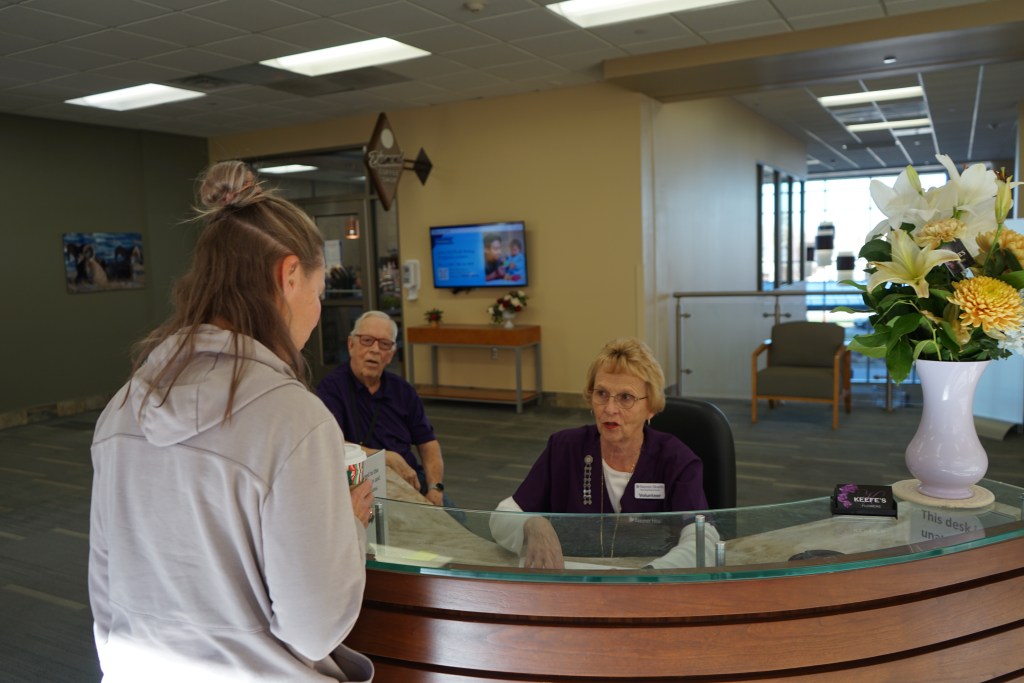
The study offers a look into the broader economic consequences of a policy many advocates say will have detrimental impacts on Wyoming’s health care landscape. At least 12,000 Wyoming residents are projected to lose health coverage under the law, health-care advocates say.
Evidence-based resource
Natrona Collective Health Trust commissioned the study after seeing a similar analysis performed on the state of North Carolina, Rachel Bouzis, director of policy and learning at the organization, said in an online press conference Friday.
“After that report was released in 2019, policy leaders, businesses and communities used that data to inform decisions that ultimately improved both health and local economies,” Bouzis said.
The trust wanted a similar resource for Wyoming, she said. Along with the Wyoming Community Foundation, Wyoming Hospital Association, Banner Wyoming Medical Center and American Cancer Society, it commissioned the study — which is the first to evaluate the economic impacts of Medicaid policy in Wyoming, Bouzis said.
For the study, consultant REMI compared the effects of cuts — which were still just a possibility at the time of analysis — with the potential economic gains Wyoming could see under Medicaid expansion.
The two scenarios correspond with two significant pieces of national legislation.
The Big Beautiful Bill is projected to reduce federal Medicaid spending by $793 billion over 10 years, resulting in 10.3 million fewer people enrolled nationally, according to the Congressional Budget Office. Changes include increased work requirements and potential penalties for states that have expanded Medicaid.
The Affordable Care Act of 2010, also known as Obamacare, allowed states to expand Medicaid to cover more residents. Some 41 states, including Washington, D.C., have expanded. Wyoming is among the 10 that have not.
Where the cuts will lead to a shrinking state economy, the study found, expanding Medicaid in Wyoming would do the reverse. Expanding enrollment could lead to 440 new jobs over five years and a $60.9 million yearly increase in GDP, the study found. That includes a $41.5 million increase in disposable personal income per year, which breaks down to about $160 per family.
“This report confirms what many experts in health care and economic policy have long understood: Medicaid is not just a health program — it has a direct economic impact on Wyoming’s communities,” Natrona Collective Health Trust CEO Beth Worthen said in a release.
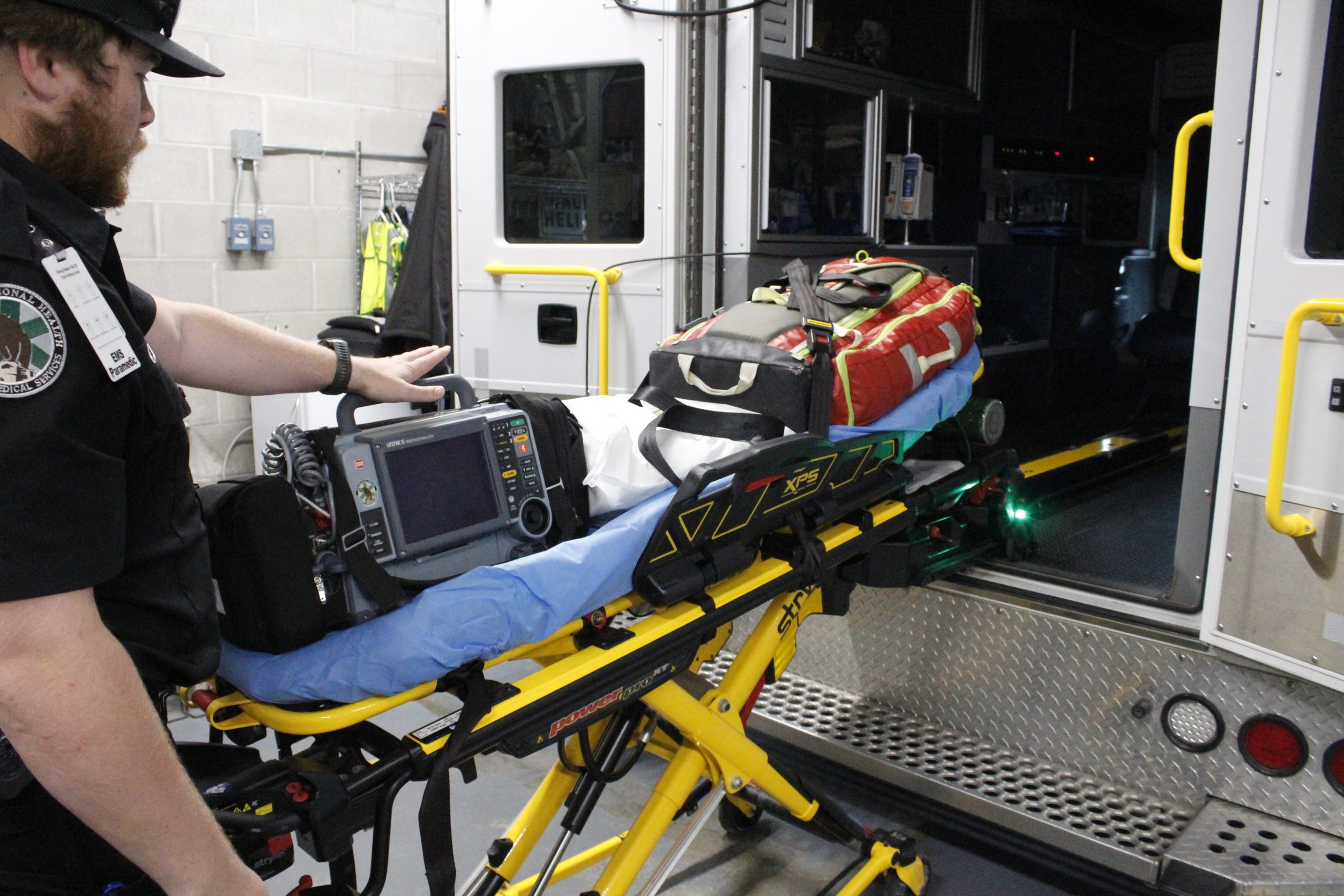
The net five-year difference between Medicaid cuts and expansion is a loss of 3,160 jobs, $444 million in GDP and $260.5 million in personal income, the study finds.
“So we do see overall, a kind of a lost opportunity, given the negative impact of cuts, and even stronger positive impacts of what an expansion could have brought,” Evangelakis said.
REMI honed in on the time window from 2026-2030 for the assessment. Medicaid cuts are set to be phased in over several years, according to news outlets.
Medicaid in Wyoming
When REMI began the study, Evangelakis said, his team attempted to base estimates of cuts on the most severe reductions that could result from what then was draft legislation.
“We thought that our estimate would be the worst case,” he said. “It actually turned out that the cuts [in the Big Beautiful Bill] were a little bit bigger. But this should still give us a good sense of what the impacts will be.”
For the cuts, he said, the direct economic impact will be a loss in revenue for health care providers — everything from outpatient providers like dentists to rural hospitals and retail pharmacies. The largest impacts of the cuts would take place in the state’s “metro areas” that include Cheyenne and Casper.
“But there are significant impacts across the state,” Evangelakis said.
The study bolsters arguments of health-care advocates that the federal legislation will harm Wyoming’s rural hospitals and lead to less access to health care here.

Still, the Health Trust and its other partners had no agenda in mind when they commissioned the study, Bouzis said.
“This report is not in any way prescriptive,” she said. “We are just providing information from expert sources.” Then it’s up to the communities, policymakers and business owners to decide what to do next, she added.
Wyoming’s congressional delegation, Republican Sens. Cynthia Lummis and John Barrasso and Rep. Harriet Hageman, voted in support of the bill.
“In Wyoming people are thrilled @potus singed [sic] the One Big Beautiful Bill into law,” Barrasso, a physician, posted Thursday on X. “It’s going to fulfill our promise to make America safe and prosperous again. America is getting back on track.”
Defending the bill during a weekend appearance on NBC News, Barrasso said Medicaid had become a magnet for waste, fraud, abuse and corruption.

I worked for 10 years as a grant writer in a small rural hospital in eastern Idaho in a community adjacent to Wyoming so when this bill came up for consideration, my first concern was the small rural hospitals in Wyoming where the communities are so spread out. This bill does a huge disservice to the people living in rural states like Wyoming. These communities need their local hospitals; the hospitals need help from the Federal government to survive.
I think this bill is a big pile of garbage and I told our three lawmakers this. How is it helping Wyoming to cut Medicaid and close hospitals. I am afraid if rump is still president for four years I will lose my Medicare and social security. He’s a rotten, fascist president, deporting people who actually work for us rather than playing golf all day.
Our voters were warned that this was likely to happen if we voted this felon into office. But in the tried and true Wyoming way, because Trump sported a big R as his platform, the majority of Wyoming voters believed his lies and the lies of our congressional reps. And I bet Wyoming is doomed to repeat it, no matter how it destroys our state.
Just imagine the outcry had Obama done this to us. Instead, he gave our low income citizens affordable health care and a boost to our health care industry. Trump, Barrasso, Lummis and Hageman want to take it away. After all, each of them has all they need in life – why care about the rest of us? Next time, vote for a Democrat or an Independent – they won’t have a criminal bully to kowtow too.
All three elected abominations have lied about fraud, abuse and how Wyoming will “not” be affected by the Medicaid cuts. Our rural Healthcare is being destroyed by our state elected legislature and their focus on driving physicians out of the state with Draconian laws about reproductive health for women. It is long past time to say enough is enough. Our employment workforce continues to decline as people move away for these very reasons and the population is growing only with seniors retiring here. This is a real Healthcare bomb that is going to explode. Wyo.ing people need to wake up and recognize that to have nice things, as in Healthcare, they need to be funded. If we won’t take care and provide for our own citizens, this mess will destroy Healthcare for everyone.
Keep putting this information out there so, hopefully, those 12,000+ Wyoming folks affected by that horrible BBB will remember who not to vote for in the 2026 election. Vote for those that support you, not those that take away your health care and jobs.
The king of bankruptcy is going to drive people into the ground, all while the wealthy get richer. Also, the medicaid cuts don’t go into effect until AFTER the 2026 midterm elections. Wyoming’s sneaky three are indeed against you (us).
Barrasso will say anything to support Trump; all the better if he can be photographed next to our felon president. Our entire delegation in DC knows the real impact of their Big Beautiful Bill, but they don’t give a damn. Wyoming residents deserve better!