


Conservationists on Monday decried the Trump administration’s decision to repeal the Bureau of Land Management’s Public Lands Rule — a 2024 Biden administration decree that put conservation on equal footing with other uses of public lands. Gov. Mark Gordon, meanwhile, applauded the news.
A Federal Register notice of publication presages the action, which is scheduled to publish Tuesday.
Wyoming elected officials — along with mining, energy and grazing industries — challenged the rule in court and elsewhere, calling it an example of the BLM overstepping its authority. The agency proposed rescinding it 2025.
“This action restores balance to federal land management under the principles of multiple use and sustained yield by prioritizing access, empowering local decision-making, and aligning the BLM’s implementing regulations with statutory requirements and national energy policy,” reads an unpublished copy of the final rule from the Federal Register.
“The 2024 Rule introduced unnecessary complexity and placed operational constraints on the BLM’s planning and permitting processes,” the unpublished copy continues. “It also inappropriately elevated conservation as a discrete ‘use’ of the public lands, contrary to FLPMA’s intent and statutory framework.”
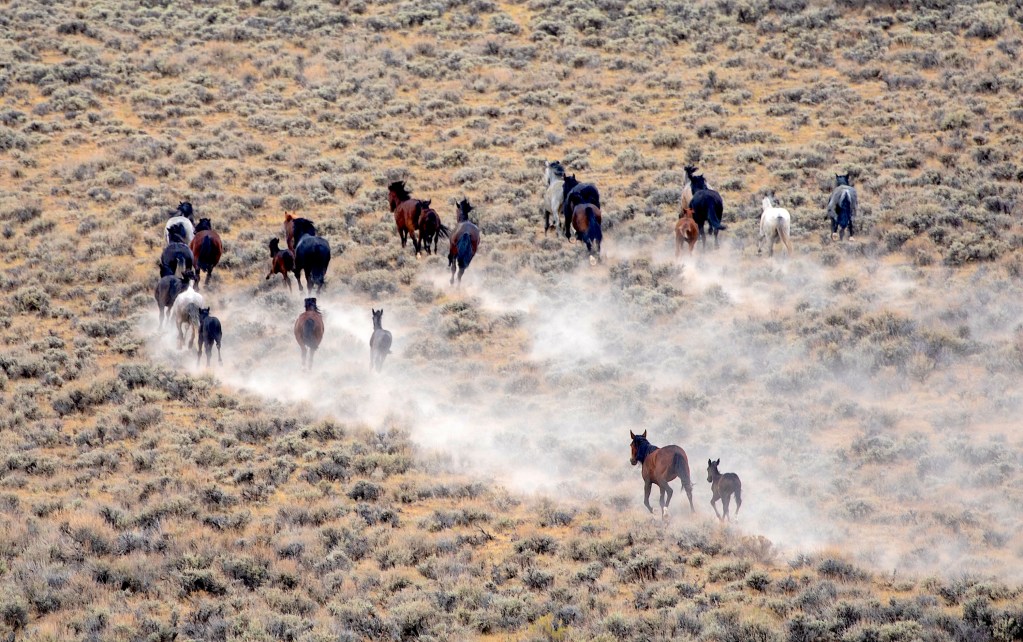
Conservation groups bemoaned the Department of Interior’s rollback as a short-sighted action that will harm critical wildlife habitat, popular recreation areas and Indigenous sites.
“Today’s repeal of the Public Lands Rule abandons progress at the same moment climate change, chronic drought and accelerating habitat loss demand better stewardship from BLM,” Maddy Munson, a Defenders of Wildlife policy specialist, said in a Monday press release.
Conservation and multi-use
The Public Lands Rule advanced the BLM’s multiple-use and sustained-yield mission by addressing the health and resilience of public lands, according to a 2024 agency announcement of the rule.
The rule categorized “conservation” as a use within the BLM’s multi-use framework for the lands it manages. It also revised regulations to reflect the agency’s prioritization of designating and protecting so-called Areas of Critical Environmental Concern.
“Conservation is a use of public lands on equal footing with other uses and is necessary for the protection and restoration of important resources,” the BLM stated in the 2024 announcement. “The Public Lands Rule will help safeguard the health of our public lands for current and future generations by ensuring we: protect the most intact, functioning landscapes; restore degraded habitat and ecosystems; and use science and data, including Indigenous Knowledge, as the foundation for management decisions across all plans and programs.”
The rule established two new categories of leases for land use — mitigation leases and restoration leases — as well as a process for entities seeking to restore public lands or to offset impacts to secure them.
When it was finalized in April 2024, it followed a year-long process and what the agency described as “the longest comment period on a rulemaking in recent history.” During that period, more than 200,000 comments poured in. One analysis of public comments found overwhelming support for the rule.
Within months of its release, Wyoming and Utah, which are home to more than 41 million BLM acres, filed suit, claiming the federal agency sidestepped the National Environmental Policy Act at the peril of economies and landscape health when it finalized the rule. The suit asked the court to vacate the rule.
A coalition of energy, mining, ranching and farming groups — including Wyoming Farm Bureau Association, American Petroleum Institute and Western Energy Alliance — also challenged the rule in court. Rule supporters, meanwhile, attempted to intervene in Wyoming and Utah’s legal skirmish to defend the rule.
In September 2025, the BLM, now under the purview of the Trump administration, proposed to rescind the rule.
“The BLM has determined, based on a review of the Conservation and Landscape Health Rule, that the 2024 Rule is unnecessary and violates existing statutory requirements,” the proposal stated.
What they are saying
Gov. Gordon, who testified against the rule to a U.S. House Committee in 2023, lauded its repeal. The action “is a welcome return to the statutory principle of true multiple use on our public lands,” Gordon said in a statement.
“I appreciate the administration’s recognition that the BLM’s mission is different from its sister agencies as set in federal law,” Gordon continued. “Agenda driven interpretations, as the Biden Administration attempted, are no longer how Washington does business.”
Conservation groups and others released a spate of statements condemning the repeal as part of a larger Trump administration effort to strip crucial protections from the country’s public lands.
“Repealing the Public Lands Rule is the clearest example yet that the Trump administration will stop at nothing to sell out our country’s precious landscapes to private industry,” Sierra Club’s Lands Protection Program Director Athan Manuel said. “By now, the administration’s playbook is clear – disregard the will of the American people, refuse to protect our public lands, hand control over to corporate polluters, then dispose of these landscapes entirely.”
The Mountain Pact, an organization that works with bipartisan local elected officials in Western mountain communities, also blasted the repeal as deeply disappointing.
“Western communities depend on well-managed public lands to support our economies and our outdoor way of life, and the BLM Public Lands Rule ensures that conservation of these irreplaceable landscapes is given equal consideration,” Mountain Pact Executive Director Anna Peterson said.


Kinda sounds like the Trump administration should declare two classifications: “Public Land” and “Not Especially”.
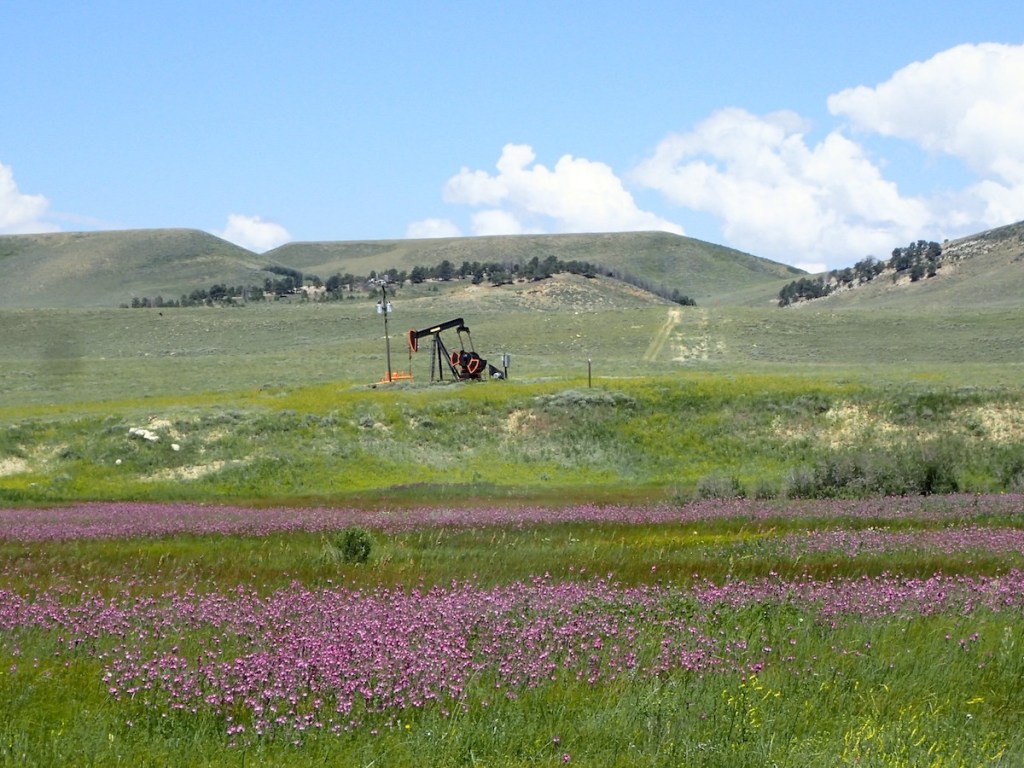
Wyoming’s BLM lands are world class habitat with world class opportunities to explore, recreate, and reconnect. Anyone who has breathed in the smell of dew on sagebrush in the morning knows this. To not appreciate and protect these disappearing undisturbed lands is shortsighted.
The sky is falling because they rescinded a 2 year old rule? How did we ever survive before 2024?
We shouldn’t corrupt this corruption, as some commenters have done here. Conservation, preservation, call it what you want, but some areas, such as The Oregon Buttes and the WSAs and ACECs and other notable landscapes are the right of all Wyomingites and Americans, wildlife, and landscape itself. If corporations can have “personhood,” this concept can be extended. Welfare ranchers, and, yes, welfare oil companies, are pathetic parasites; if cost all of us money to keep these losers around. The current administration has just stabbed in the back all those who value western public lands, many of whom mistakenly voted for this. Will they ever learn?
“Call it what you want?” No. Conservation and preservation are NOT the same thing. While preservation can be appropriate for special status areas like Oregon Buttes, WSA’s, and some ACEC’s, most BLM is legally mandated under FLMPA to be managed for conservation instead.
Yeah! Nothing says we care about the land like a well pad every 40 acres! Or maybe a coal pit mine for true inspiration!
Awesome. The Public Lands Rule had nothing to do with conservation. It was about preservation instead. They are not the same thing.
“Conserve” means to keep something safe or from being damaged or destroyed, and to use it carefully to prevent loss or waste. “Preserve” means to keep in perfect or unaltered condition; maintain unchanged. Most land management agencies (USFS, BLM, USF&W, and state counterparts) have had decades long policies and practices to “conserve” resources and manage them for sustainability for future generations. Some public areas have been managed for “preservation” (National Parks, Wilderness areas, historic sites, etc.).
Starting in the ’70s the growing environmental movement started to conflate preservation with conservation. Most advocate groups mean “preservation” when they say “conservation.” There lies the controversy.
This article advanced the sentiments of conservation groups but failed to clearly articulate and explain the actual Federal law that was violated under this Biden administration rule.
Could you explain in detail what federal law or laws were violated the act?
Thank goodness BLM is getting back to it’s multiple use mandate. If you want public land to continue to exist, nothing will erode public support faster than managing it like a National Park. Conservation is defined as wise use of the land, meaning that responsible resource extraction IS conservation. Let’s not forget that.