Wyoming’s ungulates know better than to linger too long when a vehicle slows and stops, especially in the fall. Oftentimes, it’s a source of danger: next comes a door opening and a human hunter emerging.

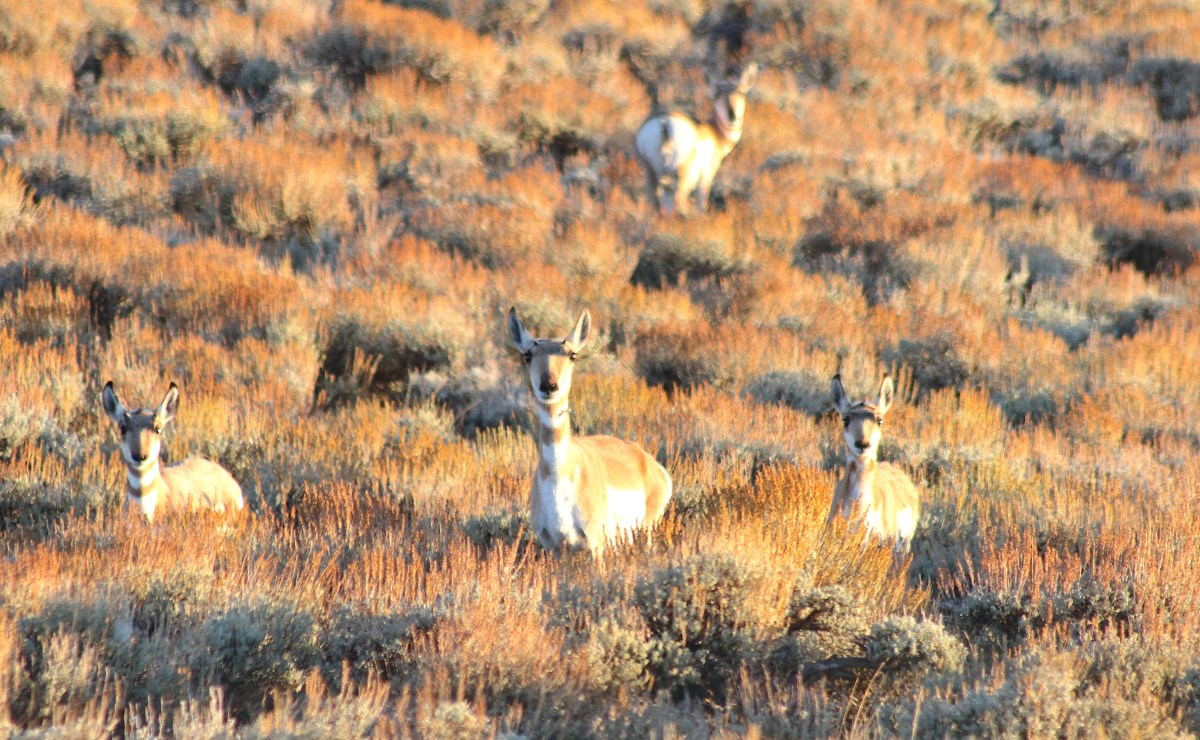
But early on Sept. 24, a small bunch of pronghorn, mostly does and fawns, tested fate for a few moments in view of the Lander Cutoff Road. 

They paused from breakfast-hour foraging, which allowed for a few photographs, in the so-called Golden Triangle — a region known for retaining the largest and most unsullied, intact tracts of sagebrush left on Earth. Those plants glistened, looking gold themselves, in the morning light. 

Within moments, the herd wisely bounded off, fleeing the potential source of danger.
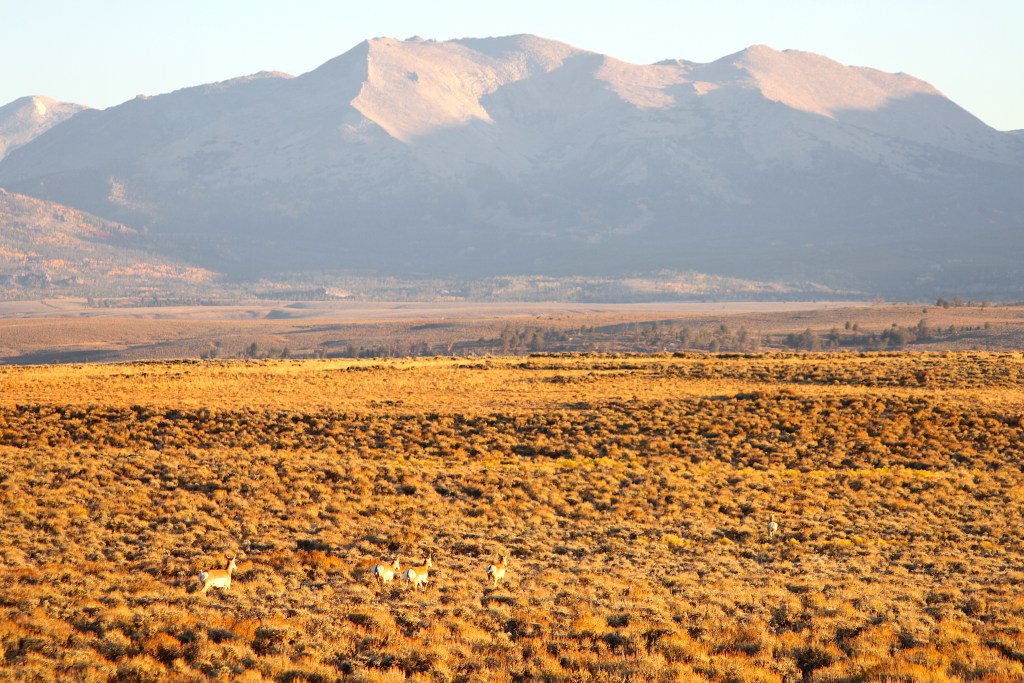
A herd of pronghorn trots away from the Lander Cutoff Road along the southern Wind River Range in September 2025. (Mike Koshmrl/WyoFile)

As the days shorten and temperatures drop in the weeks and months ahead, the same animals will likely be headed south from their summer range near the Prospect Mountains to their lower-elevation winter range near U.S. Highway 191 down toward Rock Springs. Their migration paths are part of a spaghetti-like complex of corridors traveled every fall and spring by the Sublette Pronghorn Herd, a 2.6-million-acre expanse that extends from Interstate 80 all the way north to Grand Teton National Park. 
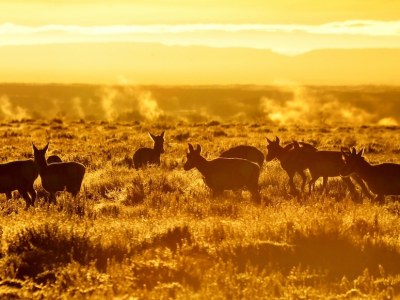
Unbeknownst to the fleeing pronghorn, they’d recently been the subject of a political dispute. Their migration routes, known as the “East of Farson” segment, were in line to be excluded from protections under Wyoming’s migration policy. The Wyoming Game and Fish Commission, however, put the kibosh on that plan, voting that the “East of Farson” and Red Desert pronghorn ought to be included and protected.

Mike Koshmrl reports on Wyoming's wildlife and natural resources. Prior to joining WyoFile, he spent nearly a decade covering the Greater Yellowstone Ecosystem’s wild places and creatures for the Jackson...

Join the Conversation

3 Comments

WyoFile's goal is to provide readers with information and ideas that foster constructive conversations about the issues and opportunities our communities face. One small piece of how we do that is by offering a space below each story for readers to share perspectives, experiences and insights. For this to work, we need your help.

What we're looking for: 

  • Your real name — first and last. 
  • Direct responses to the article. Tell us how your experience relates to the story.
  • The truth. Share factual information that adds context to the reporting.
  • Thoughtful answers to questions raised by the reporting or other commenters.
  • Tips that could advance our reporting on the topic.
  • No more than three comments per story, including replies. 

What we block from our comments section, when we see it:

  • Pseudonyms. WyoFile stands behind everything we publish, and we expect commenters to do the same by using their real name.
  • Comments that are not directly relevant to the article. 
  • Demonstrably false claims, what-about-isms, references to debunked lines of rhetoric, professional political talking points or links to sites trafficking in misinformation.
  • Personal attacks, profanity, discriminatory language or threats.
  • Arguments with other commenters.

Other important things to know: 

  • Appearing in WyoFile’s comments section is a privilege, not a right or entitlement. 
  • We’re a small team and our first priority is reporting. Depending on what’s going on, comments may be moderated 24 to 48 hours from when they’re submitted — or even later. If you comment in the evening or on the weekend, please be patient. We’ll get to it when we’re back in the office.
  • We’re not interested in managing squeaky wheels, and even if we wanted to, we don't have time to address every single commenter’s grievance. 
  • Try as we might, we will make mistakes. We’ll fail to catch aliases, mistakenly allow folks to exceed the comment limit and occasionally miss false statements. If that’s going to upset you, it’s probably best to just stick with our journalism and avoid the comments section.
  • We don’t mediate disputes between commenters. If you have concerns about another commenter, please don’t bring them to us.

The bottom line:

If you repeatedly push the boundaries, make unreasonable demands, get caught lying or generally cause trouble, we will stop approving your comments — maybe forever. Such moderation decisions are not negotiable or subject to explanation. If civil and constructive conversation is not your goal, then our comments section is not for you. 

Your email address will not be published. Required fields are marked *

  1. We sacrificed the country south of Wamsutter. We sacrificed the Pinedale Anticline. There’s a long list of sacrifice areas. Are we better off because of those sacrifices? We are not. I pray we learn from those mistakes.

    1. Well, Walt, the question is not whether or not ”we” are better off but ”who” is better off because of the sacrifice of these wild areas. Indeed these are ”we” areas that are largely owned by ”we the people” of the United States not just the residents of Wyoming. Wyoming residents may have seen an unnoticeable tax savings from the plunder of these wild areas but the enormous financial gain of the energy companies would be staggering to all but the most wealthy among us. It seems we live in a time where nothing has value unless it can be turned into dollars that line the pockets of the rich. Shame shame shame!

  2. Thank goodness the Game & Fish Commissioners stood tall in protecting these two vitally important segments of the Path of the Pronghorn! Sure wish our Game & Fish Department would have done the same thing instead of capitulating to the wishes of a single area rancher (Jim Magagna), Executive Vice President of the Wyoming Stock Growers Association. The public should firmly expect that our Game & Fish Department to stand up for the needs of our wildlife populations instead of constantly kowtowing to the wishes of the Wyoming Livestock Association.