

CASPER—It’s the Friday before Thanksgiving, and Bree Uresk is trying to wrangle her students to sit quietly. She knows the last day before a holiday break is particularly hard for 6- and 7-year-olds to be still. “You guys are being extra silly today,” she tells her eight students.
It’s a typical school scene, but with fewer kids than your average public school classroom. Powder River Prep, where Uresk teaches, serves only 10 families. And that’s what the women who founded it envisioned: smaller class sizes with an emphasis on student-led learning, parent involvement and conservative values.
Tiffany Gamble, along with her friend and fellow mom Kayleigh Clark, started the microschool after a search for a satisfactory kindergarten program for her child led to nothing but dead ends.
Touring established schools in Casper, Gamble was troubled when teachers told her they didn’t take their kindergarten classes out in the community because there’s “nothing to do in Casper,” she said.
“There’s plenty to do in Casper,” she told WyoFile. “But I have no idea how you would take [a class of] 24 kindergarteners to do it.”
What if, she thought, a parent wants their child to go on biweekly nature studies, or help out at a senior living facility, or take a karate class during the school day?
So Gamble and Clark set out to start their own school, and Powder River Prep emerged as a functioning microschool (so named because of its size) in August. The microschool combines parent involvement with class time led by licensed teachers like Uresk.
In her classroom, Uresk’s eight students wriggle around on a large checkered rug. Morning sunlight pours in from windows behind them. A papier-mache beehive hangs from the ceiling, and educational posters line the walls.

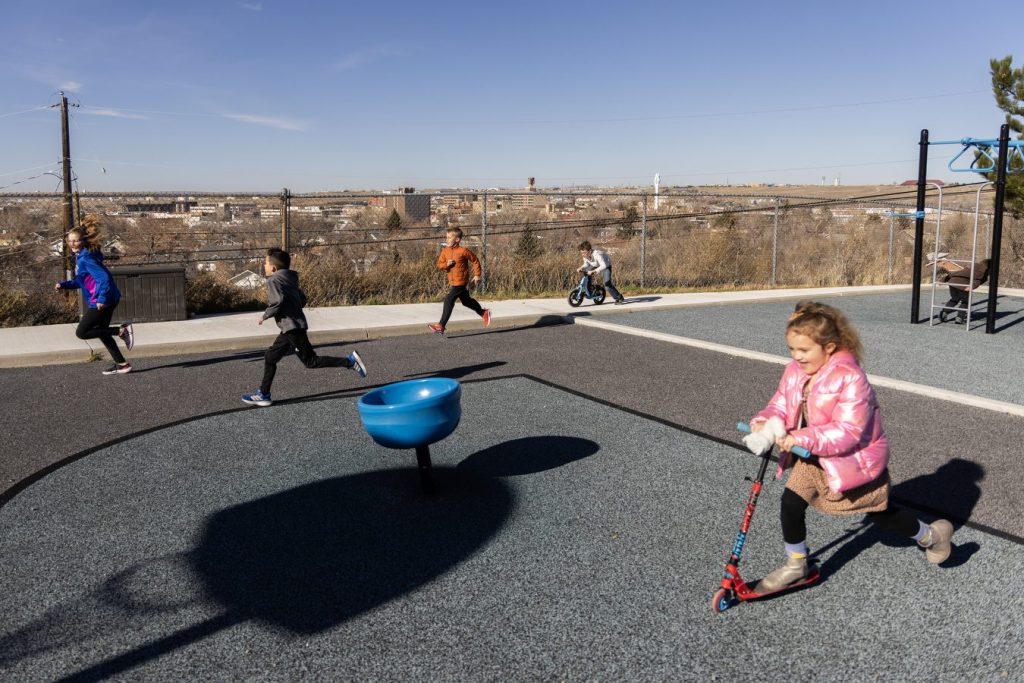
At 10:46 a.m., an older student pops into Uresk’s classroom. “Recess,” he whisper-yells, before darting away to follow his classmates outside.
Powder River Prep, which co-founder Clark described as a “school family,” is one of a growing number of alternatives to traditional public education in Wyoming.
Numbers-wise, public schools still reign supreme in the state. Just shy of 80,000 students were enrolled in the state’s public school system across all grade levels and school districts in 2024-2025, data from the Wyoming Department of Education shows. Much fewer were the families who registered to homeschool their children that same academic year — just over 4,500.
A new addition to the state’s education funding plans might grow that number. The Steamboat Legacy Scholarship Program, created last year by state lawmakers, would offer $7,000 to Wyoming families for K-12 non-traditional schooling costs, such as tuition for alternative education programs like Powder River Prep. There’s no income requirement to qualify for education savings accounts for K-12 students. The program is also available for pre-K education, but to qualify for those services, families’ income must be at or below 250% of the federal poverty level, WyoFile reported.
More than 4,000 families have signed up for the ESA program. Seven of those would have enrolled their children at Powder River Prep.
But whether they ultimately get that money remains an open question.
A June lawsuit by the Wyoming Education Association, and then an August injunction from Laramie County District Court Judge Peter Froelicher, blocked the state from giving out the funds after the program was approved in last year’s legislative session. The Wyoming Education Association, along with nine parents of school-aged children, see the potential funds as constitutionally questionable, they argued in their lawsuit. The Wyoming Department of Education, however, wants the program money to be freed from court.
Some policymakers view the possible funds as uplifting to families in the state who, for various reasons, decide not to utilize public schooling. State Superintendent of Public Instruction Megan Degenfelder is one of those.
“Every student learns differently, and ESAs are a very meaningful way to empower parents to find the best educational options for their children,” she wrote to WyoFile in an email.
But other elected officials, such as Sen. Chris Rothfuss, D-Laramie, are concerned that the funds would detract from the constitutional obligation for Wyoming lawmakers to invest in public schools.
“There’s no indication or even suggestion that the education they’re receiving with these funds, assuming it was somehow constitutional, would be an equitable, high-quality education,” he said.
The lawsuit’s outcome will have big implications, both for the Casper microschool and nontraditional schooling in Wyoming. It could slow the momentum of the alternative education movement — homeschools, microschools and other such programs — just as new schools, like Powder River Prep, are opening their doors. Or it could allow the schooling experiment that Wyoming is pursuing to welcome many more students, at a time when traditional public schools are experiencing declining enrollment.
“Alternative forms of schooling tend to take money away from public schools and tend to compete with public schools for resources,” Rothfuss said. “Homeschooling traditionally hasn’t. But now there is some desire — not among all, but among some — to draw away resources towards homeschool, and this will potentially hurt — further hurt — and erode public education.”
An untraditional classroom in a traditional school building
Not all Wyoming families utilizing non-traditional education methods would be dependent on education savings accounts. WyoFile spoke with one family who relies on reimbursements from other programs and with another who homeschools because they travel for much of the year. Almost everyone emphasized that what they do works for their family, even if it might not be right for others.
“As long as our kids — my kids, in particular — are thriving here, learning and they want to be here, and this is a good fit for us, that’s as long as we’ll do it,” Gamble said. “I’m all in.”
Neither Gamble nor Clark could find existing kindergarten options they liked enough for their kids.
“It is significantly limited,” Gamble said of the educational options in Casper, where she and Clark live. “It is actually very disheartening. So we thought, ‘Let’s just start our own school.’”

The endeavor was massive, they soon realized. What if there was an existing educational program that they could join, and by joining, use their abilities to improve?
“Doesn’t exist. It’s not happening,” Gamble said.
So they decided they would have to start their own, one with smaller class sizes, more parent involvement, faith-based curricula, hands-on learning and “conservative values,” they said. (Gamble and Clark explained that “conservative values,” for them, are largely based on the Code of the West.)
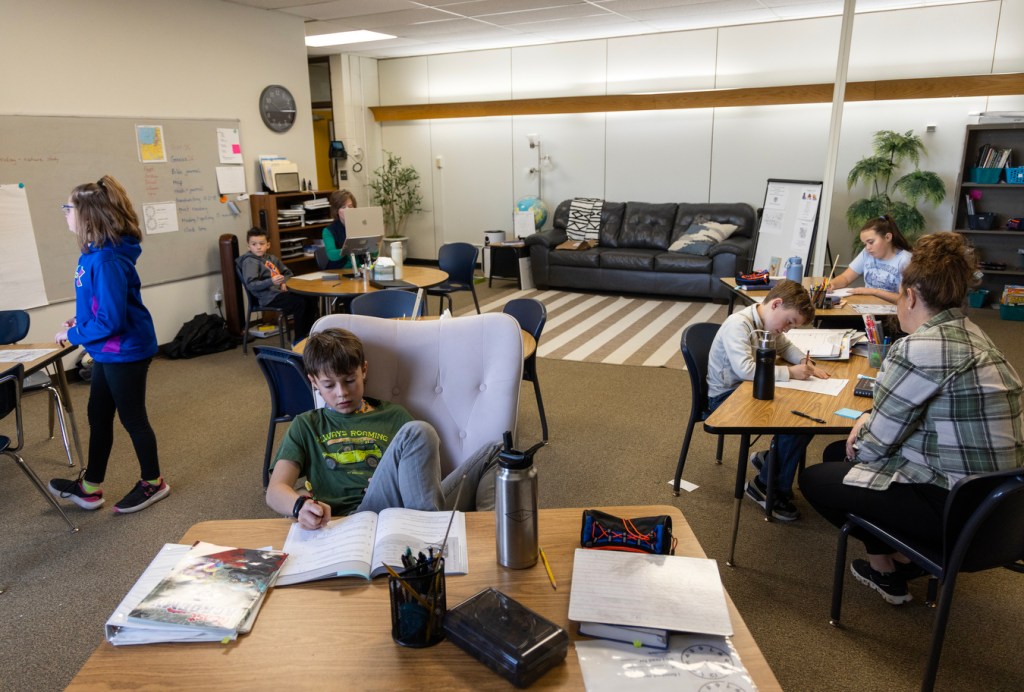
The old Jefferson Elementary in Casper houses the microschool, though not all of its classrooms are currently in use. (As part of their commitment to student-led learning, school leaders are designing certain learning spaces for more niche interests, like sewing or woodworking.) The women told WyoFile that they closed on the building in August. Shortly after, they began their first academic year.
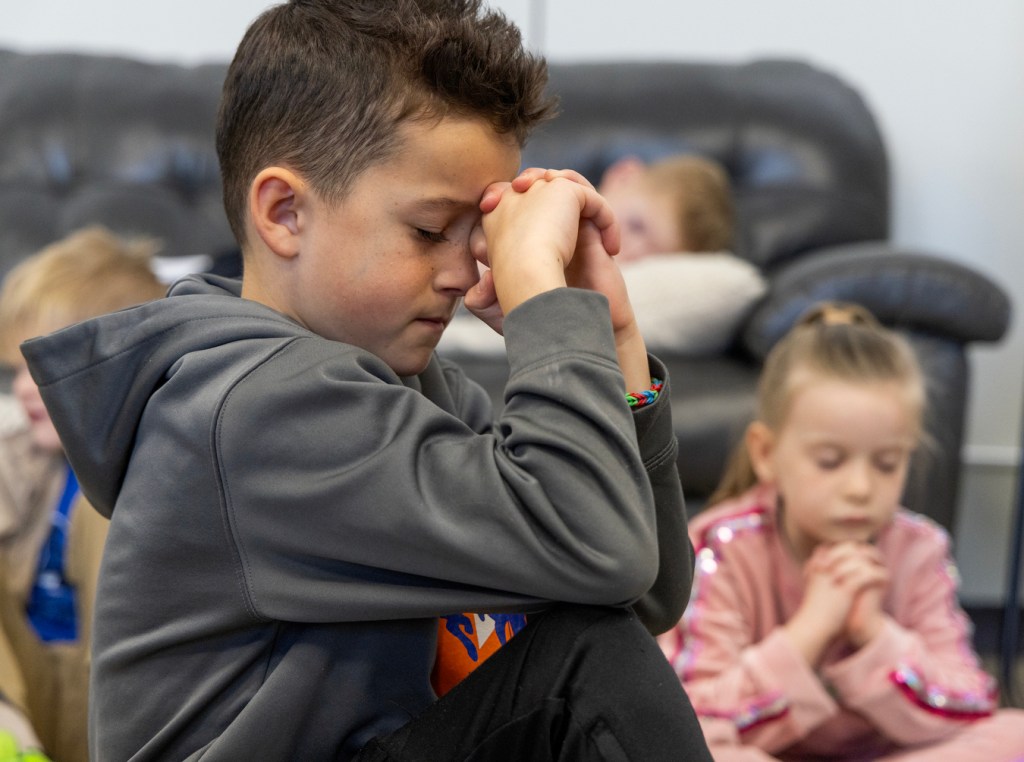
Their story echoes the feelings of many people who are unsatisfied with public schools — and even private and charter schools — for their children’s education. At Powder River Prep, Gamble and Clark could marry their desire to be active educators for their families, but not carry the full responsibility of traditional homeschooling.
Neither woman has ever worked in the education field, they said. According to their website, Powder River Prep employs three teachers, all of whom are licensed educators in the state.
On that blustery Friday morning before Thanksgiving break, one of those educators, Lisa McQueen, told WyoFile she enjoys a lot of support in teaching second, third, fourth and fifth graders. (The microschool is kindergarten through fifth grade, currently.)
“There’s a challenge to it, but given the pieces that I have been given — I have parent support, I have a small class size, I have the ability to adjust and change curriculum if we need to, I have experience, I’ve done it,” McQueen said of leading that wide a grade range. “Everything has its challenges, right? But not to that point where I’m stressing and going ‘Oh, this will never work.’”
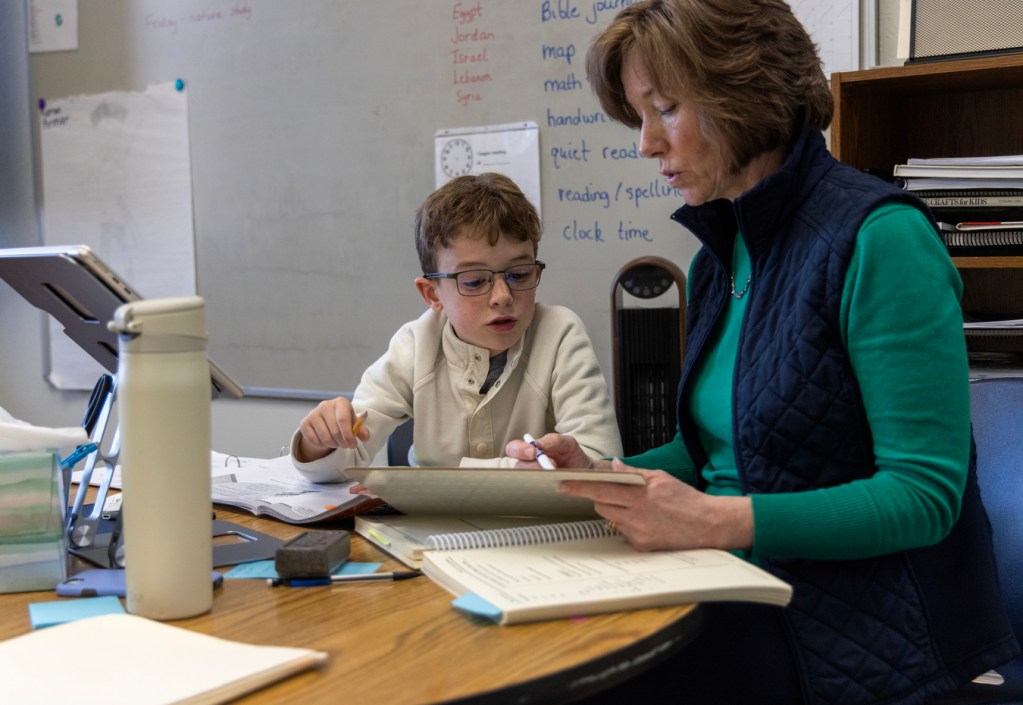
For their first year running a functioning school, both Clark and Gamble think it’s going well.
But it’s hard for them not to ask the question: What if the state money, those ESAs, hadn’t been tied up in court? Gamble thinks that the doors to more microschool models would have opened.
“The lack of flexible state funding is not helpful to coming up with innovative changes to education. That is a definite barrier to more of these popping up,” Gamble said.
“This should be happening in Wyoming. This is really sad to me,” she lamented a few weeks into the 2025-2026 academic year. “It’s not like we’re the first to come up with this idea, [but we are] the first to put hard work into what this means for our youth.”
Learning in a literal schoolhouse
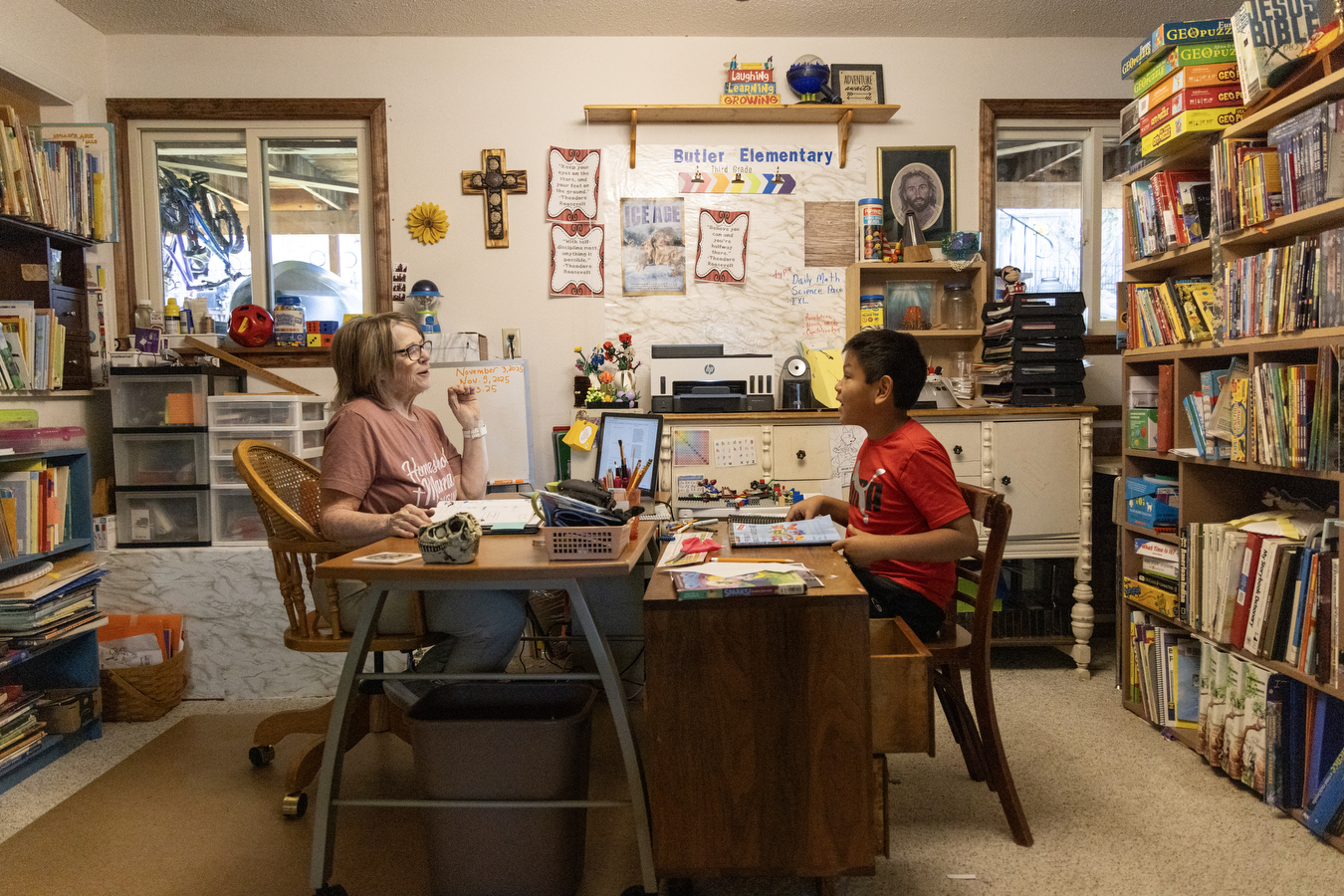
Regardless of who wins the ESA fight, Laura Butler will continue to homeschool her son, Darren. Laura and Darren attend school every day in the basement of their Casper home, a portion of which Laura has organized to be a classroom space. That’s what she calls it, she said: the classroom.
Laura uses a program called Braintree Academy, which reimburses her yearly for various education-related expenses and provides virtual resources like clubs for Darren, an energetic, STEM-minded third grader. It’s not quite an online school, aside from the clubs, because Darren doesn’t have to log on at specific times. Laura gets to lead the day as she sees fit. But it does provide her with some resources that she wouldn’t have otherwise. Her only obligation is to send in a “progress check” for Darren every couple weeks, she said.
“Braintree is what I call my ‘group,’” Laura said. She receives $1,800 per academic year from the organization. The program requires testing twice per year, which Laura considers her “report card.”
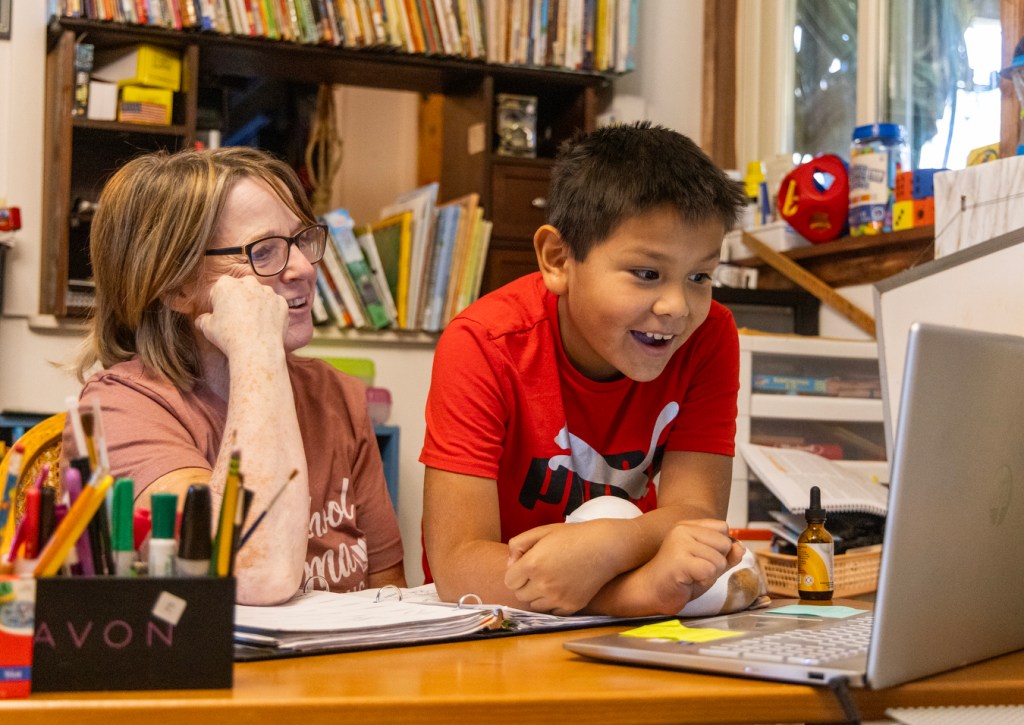
For Laura, homeschooling is a chance to structure Darren’s academic and social life in accordance with her evangelical Christian worldview.
“School’s not — public school’s not the environment that I want Darren to have,” she said. “I don’t want everyone else’s viewpoints to come in to him. … I will choose who influences Darren as long as I can.”
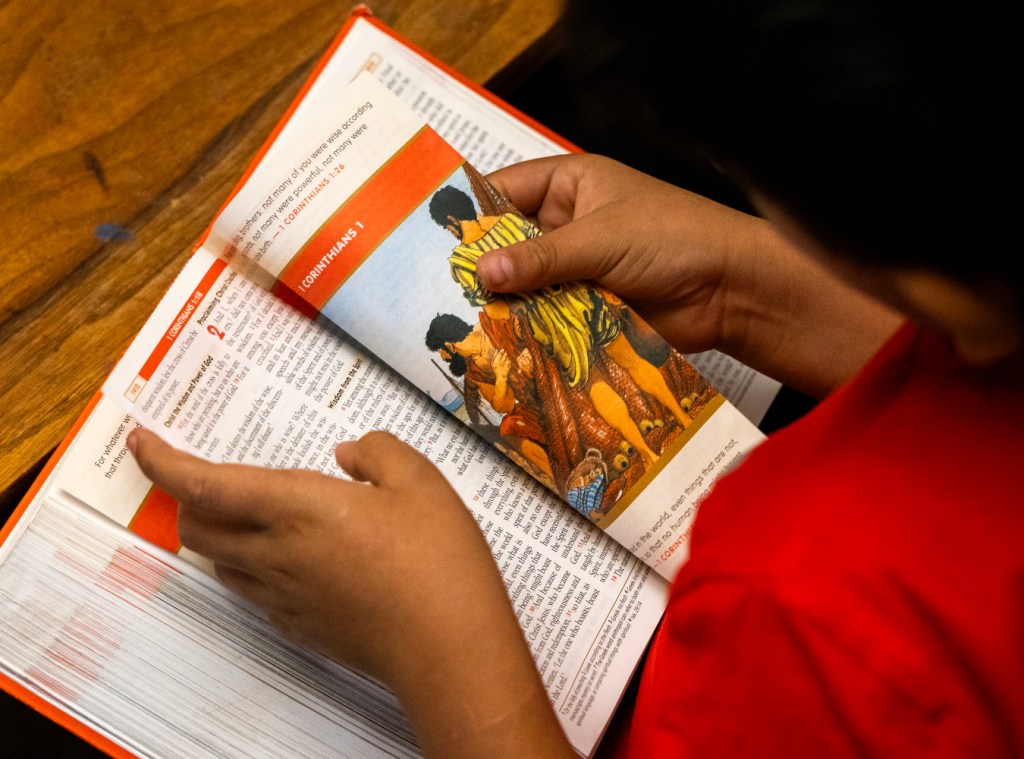
Darren goes to birthday parties, a weekly Bible club and plays with the neighbor kids when they are home, Laura explained. On Fridays, she takes him to Jump Craze, the trampoline park in east Casper. That might be the closest thing Darren gets to public school socializing — “playground stuff,” as Laura puts it.
“Is Darren socially awkward? No different from any other kid, I think,” she said. Social cues “are all a teaching thing.”
And she’s OK with putting in a little more effort to ensure Darren experiences the kinds of social interactions that might happen more organically in a traditional school setting.
Paired with Laura’s desire to oversee who is influencing Darren is the desire to respond to his interests. Sometimes, that means utilizing a spur-of-the-moment teaching style.
“Actually, whenever I get curious and grab something, my mom just wants to learn about it,” Darren explained to WyoFile on a Monday morning in October. The first part of that morning was spent learning about the Swiss Army Knife, European geography, how to pronounce the word “Scandinavia” and where various surnames come from.
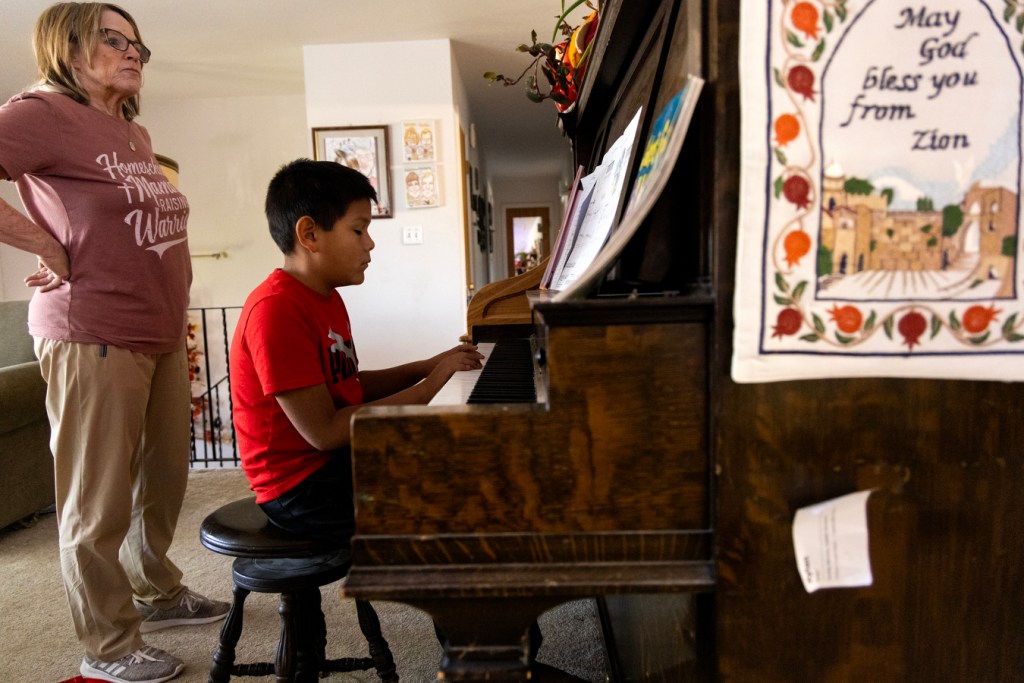
Homeschooling is often associated with religion, as is the case with Laura and Darren, and conservative beliefs, like Powder River Prep. But homeschooling has become less religious and more diverse as a movement since the COVID pandemic, a 2023 Washington Post-Schar School poll found. In 2012, 63% of homeschool parents cited religious instruction as motivation for their decision. By 2023, that number had fallen to 34%.
When asked why they’d chosen to homeschool their children, 74% of parents cited concern about the school environment. While providing moral instruction was another top answer, so were dissatisfaction with school instruction and school shooting worries.
A maritime classroom
Some parents want the opportunity to travel with their school-aged children — and not just during summer breaks. Just a few hours to the south of Laura and Darren, Karen Vaughan was spending the fall in Laramie, waiting until she and her family were able to get back to their boat, where they live about eight months out of the year. (As of publication, Vaughan told WyoFile, they are in the Caribbean.) Her two children, who are 14 and 11 years old, use an online program for their schooling, which allows them to be active members of “boat life,” as Vaughan calls it, as well as active students.
It was Vaughan’s husband who first suggested the idea of boat life. With internet on their sailboat — Vaughan specifically mentioned Starlink satellite Internet as a huge asset to them — homeschooling that is heavily dependent on online classes made sense for her son and daughter, she told WyoFile.
Vaughan is another mother who doesn’t foresee her family being dependent on ESA funds. Public money or not, they’re unaffected, she said.
“We heard about it [the potential disbursal of funds] and were like, ‘Oh my God! We could pay for windsurfing lessons!’ Like, joking — but that’s extracurricular. We don’t have a basketball team, but we do have other things,” she said.
“I don’t know if those things would fly, and we’re not in it for the money,” she added. “We want to educate our kids, and this is how we do it.”
Each year, everyone in Vaughan’s family has to agree that continuing boat life for another season — and thus homeschooling, too — is the right choice. It’s not at all traditional, she acknowledges. But that’s the flexibility of homeschooling, or, as boating people say, “boat-schooling.”
“I don’t think we would be homeschooling if it wasn’t for the lifestyle choice we made,” she said, “but now that we are doing it, it’s awesome.”
The future of homeschooling in Wyoming
It’s not certain, in hard numbers, what would change if the courts allow education savings account money to flow to the 4,000 Wyoming families who signed up for those dollars. It is possible, however, that more microschools or microschool models would emerge. It’s possible more people would turn to education programs outside of public schools. It’s also possible that students would be able to explore more niche extracurricular activities.
There might also be unforeseen financial consequences. After Arizona implemented a school voucher program in 2022, the costs forced the state to reevaluate whether the program was worth it, according to a 2024 article from the Arizona Luminaria, a nonprofit news organization. To continue to afford its voucher program, Arizona ultimately slashed funding for water infrastructure projects, improvements to highway expansions and highway repairs in Phoenix, air conditioning additions to state prisons and budgets for the state’s community colleges.
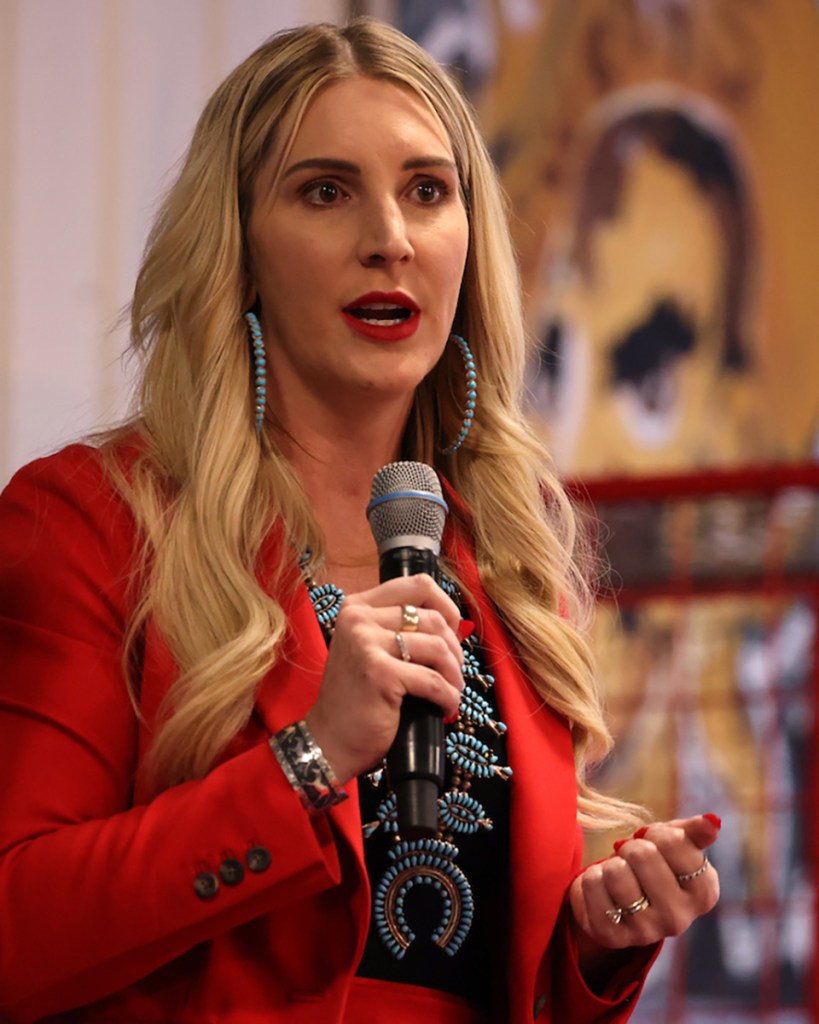
For Degenfelder, Wyoming’s superintendent of public instruction, the parameters that officials here have put in place around ESAs give her confidence in the program’s success, she said. ESA students are required to take Wyoming’s state assessment or another nationally normed assessment, and their parents can spend the money only on providers approved by the Wyoming Department of Education.
Besides, she added in an email to WyoFile, “ESA students receive a fraction of the money a student in the public system would receive.”
“With less money,” she wrote, “comes less accountability.”
Degenfelder is a staunch supporter of school choice generally and education savings accounts specifically. And she’s not worried that what happened in Arizona could replicate itself in Wyoming.
“Yes, we did an enormous amount of homework with other states who have ESAs to avoid any pitfalls when launching our program,” she wrote. “We benefited from not being the first mover and learning from their mistakes.”
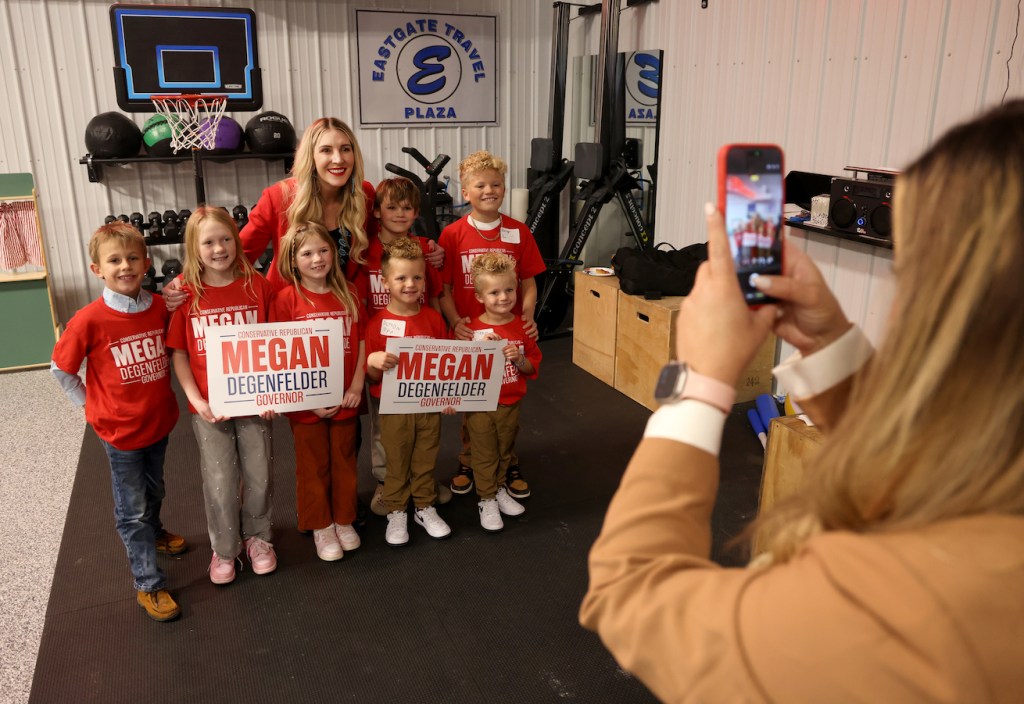
For Clark and Gamble, the microschool founders, Degenfelder’s support for ESAs is especially meaningful. At a January rally for Degenfelder’s bid for governorship, both women said they fully back her. Gamble and her husband provided the space for the event, WyoFile reported.
While ESAs have received considerable support from Wyoming politicians, they do have their critics, such as Sen. Rothfuss. While he’s “pro-student,” he said in an interview with WyoFile, he is not pro-ESAs. Utilizing state dollars incorrectly is one of the issues with it, he explained.
“Just at face value, the idea of providing money to individuals — and we have all these machinations in place to try to make it constitutional … they don’t work. And the courts understand that when dollars go to private enterprises, even when they’re passed through machinations, that that’s against the spirit of the [state] constitution,” he said.
Rothfuss, who is a University of Wyoming professor, refuted the notion that Wyoming’s proposed ESAs would have an appropriate number of parameters. But he does feel that providing ESAs for pre-kindergarten students would be beneficial, he added.
“I am hopeful that that gets used and is not blocked by the court,” he said.
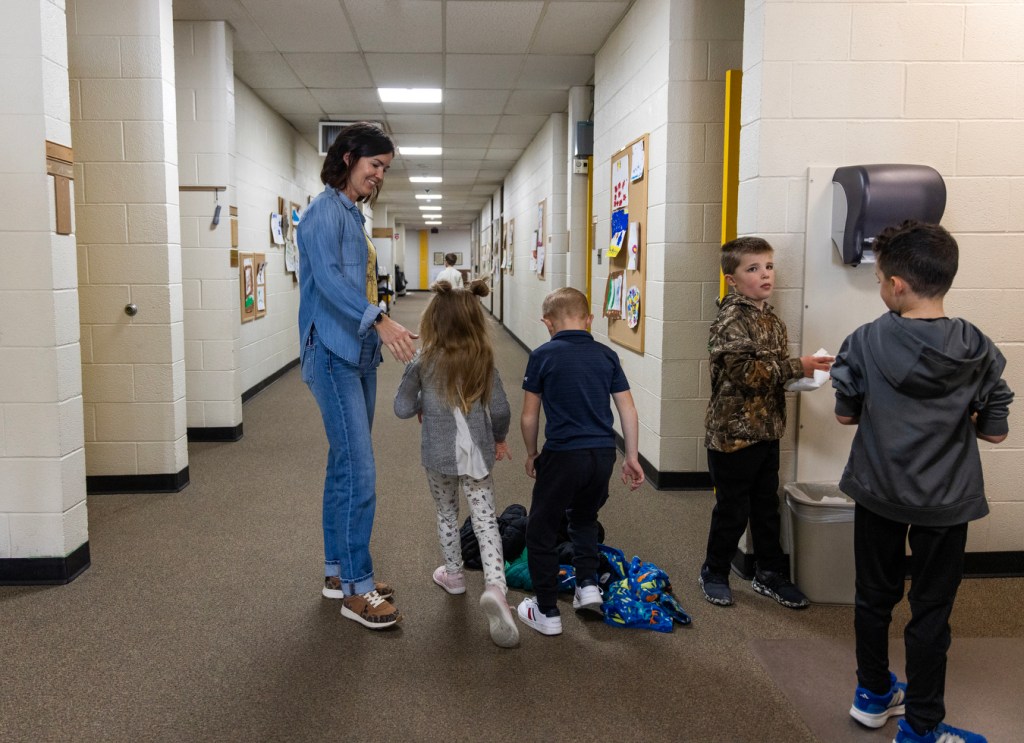
There’s a tension when it comes to how education should be funded, Rothfuss said. On one side, parents and guardians have a right to choose what they feel is the best educational program for their children. On the other, he believes there is a “societal interest” in ensuring that students have access to the best possible education.
There is, of course, no magic wand to wave in this situation. There aren’t dollars to dole out, either — at least not currently. There’s just these two competing interests, Rothfuss said, and the nuance that shades both of them.
“At the end of the day, our responsibility as a state is to provide an educational opportunity to all of our students,” he said. “And I think that gets lost on some people … the reality is that we should all be pro-student, pro-child, pro-education, and ensure that the state is giving the best access to a high-quality education that they can receive.”

Micro or religious based home schools –private schools that have roughly 4500 families using them and they will continue to use them with or without the $7K from public school money. Why take $28 MILLION from an already over burdened and lean public school system to give to these private-home schools? Lastly, National education ranks Wy public education 13th in the nation which is great given the population in this large state. The top 3 states with best public school systems are NY, Connecticut, Massachusetts — all states with lots of money. Taking money from public education will certainly drop WY performance in the public education that has benefited the majority of their population.
Public dollars should not be going to private entities, period. Especially when these private entities can openly reject students based on race, religion, disability, or family makeup( we have a private school locally that rejects children with single parents). They can feel special on their own funding. We need strong public schools, not Christian nationalist indoctrination camps. Parents are already free to raise and indoctrinate their children as they wish, on their own time and dime. Are public schools perfect? No, but they are still good. Let’s invest in making them better for ALL our children.
Good article. I’m sorry that Wyoming continues to dilute it’s Public Education by proposing public funds for ‘school choice’ (code for using State dollars for private schools).
Public schools should be funded by public dollars! If people want to send their children to private school, they should pay for it! Degenfelder is bad for Education and she would be a poor Governor. She will be controlled by the Freedom Caucus and maga!
Every time I see the name or face of Megan Degenfelder, Wyoming’s Superintendent for Public Instruction (a darling of Moms for Liberty and now a candidate for governor!!), who would deny kids summer meals to save them from becoming welfare sops, I wonder what’s wrong with using state education funds to pilot homegrown programs which might teach bigoted social studies and flat earth science?
Good article. Very even-handed.
I am for being able to make choices. I am NOT for expecting others to fund the choice for private school, which home school is. I chose to send my daughter to private schools but I paid for it!!!
There’s a not so hidden agenda with these private schools- religious cults. No public money for private schools.