


State officials grilled Water Development Office Director Jason Mead this week over ballooning costs and uncertainties dogging three dam projects after he told them one project on the Colorado border would cost $150 million, nearly double the original estimate of $80 million.
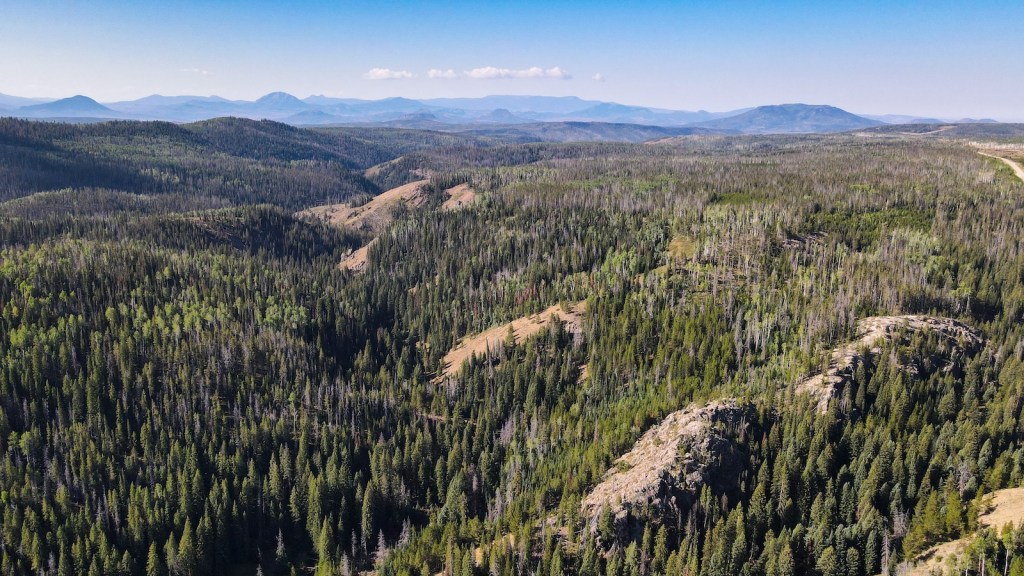
Mead provided the new estimate for the proposed West Fork Dam above the Little Snake River Valley while seeking an additional $500,000 to study it. The controversial plan would swap state land for Forest Service property to enable construction of a 264 foot-high, 700-foot long concrete dam. Forty-four irrigators have expressed interest in purchasing water for supplemental irrigation, although prices have yet to be set.
Mead also will seek $1.5 million more to research easement problems dogging the proposed Alkali Dam above Hyattville, he told members of the Wyoming Legislature’s Select Water Committee on Tuesday. The Legislature has earmarked $59 million for that project. Officials in 2017 estimated it would cost $35 million, but it could be as expensive as $113 million.
Mead’s construction director also outlined a $315,000 need for safety monitoring and other work at the Middle Piney Reservoir, which was rebuilt atop a natural landslide that leaks. “We’re not sure whether it’s a concern or not, which is why we want it monitored,” Bill Brewer told the legislative panel that met with the Wyoming Water Development Commission.
“I gotta catch up, sometimes, to how fast and how easily and how effortlessly we allocate dollars — just boom!”
Mike Gierau
Sen. Mike Gierau of Jackson, a Democrat, said water developers operate in a different world than the rest of Wyoming.
“I sit in a lot of meetings,” he said, “and everything I hear is ‘we don’t have any money. We’ve got to cut spending. We’ve got to end programs. We’ve got to cut across the board, 20, 30, 40%,’” he continued. “We’re like fighting in hedgerow country over 50 bucks.
“Then I come to select water,” Gierau said of the committee, “and I feel like I’m walking into a casino … an alternate reality. I gotta catch up, sometimes, to how fast and how easily and how effortlessly we allocate dollars — just boom!”
Not making sense
Sen. Ogden Driskill, a Republican from Devils Tower, said the proposed West Fork Dam, which would have 8,000 acre feet of active storage on the West Fork of Battle Creek, would be “the highest priced water project we’ve ever built on a per-acre-foot basis.” Further, the irrigation flows would be “supplemental” — for late-season watering — not “primary” flows used for conventional summer-long hay and forage production.
Even with the irrigation water he gets for free in his Crook County ranching community, “it’s hard to make it work [financially],” Driskill said. He compared his irrigation supply to the West Fork plan asking: “Would it be logical to expect that this [West Fork water] is going to cost about 1,000 times as much per acre foot — delivered?”
Given the costs, Driskill said, irrigators are going to say “we can’t afford it,” while Wyoming and the federal government will have to pay “99.997%.” Considering there are other projects that could be built for $150 million, “is there any way that any part of this economically ever makes any sense?” he asked.
The Natural Resources Conservation Service is estimating a benefit-to-cost ratio of “a hair above 1.0,” which suggests a profitable project, Mead said. He agreed with Driskill.
“It’s heavily subsidized water,” Mead said.
It’s impossible now to decide whether the West Fork project is worthy, given uncertainties surrounding funding sources and irrigators’ ability, or inability, to pay the true cost of the water, Gierau said. Driskill agreed.
“I’m having a hard time getting the math pulled together from my end of it,” Driskill said. “At some point we’ve got to make a decision if we’re going to subsidize ag water to [such] an incredible degree.”
Mead said the price of water was “the price of what we all value in Wyoming — and that’s open spaces and agriculture,” plus wildlife and fisheries. With additional water storage, ranchers “won’t have to sell their properties, potentially, [to] out-of-staters that are going to have a little bit different management idea.
“Most of our small communities,” Mead said of Wyoming’s social tapestry, “are propped up from the surrounding agriculture.”
The proposed reservoir would release stored water into the Little Snake River, which flows back and forth across the Colorado border before leaving Wyoming for good, flowing into the Yampa, Green and Colorado rivers. The dam and reservoir would allow Wyoming to use more water from the Colorado River Basin, where states are at loggerheads over how to share oversubscribed flows.
Ultimately, the panel voted to extend an agreement to study the dam and to add $130,000 to a consultant’s contract to further investigate a wide array of issues, from the temperature of water released from the proposed dam to sediment buildup behind the structure and scouring of creek banks downstream.
Holdouts
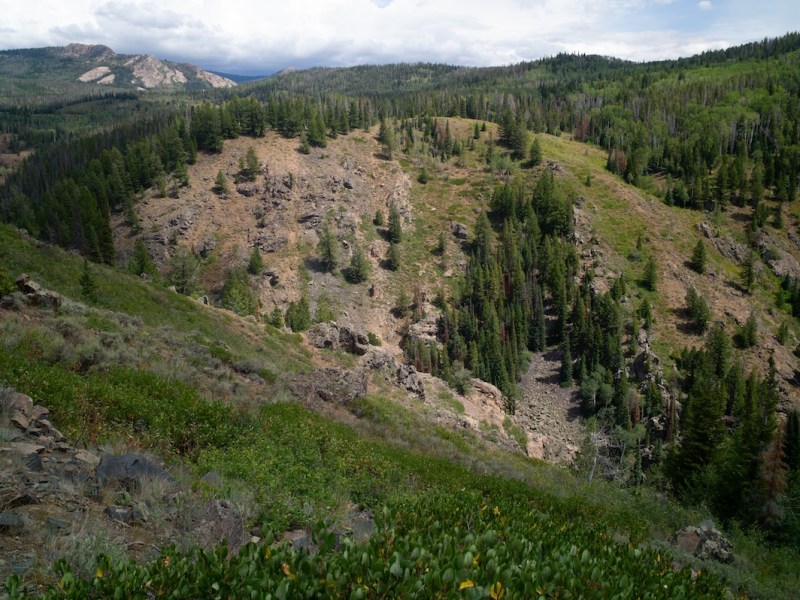
At Hyattville and the site of the proposed Alkali Dam and reservoir, Mead said his office is trying to resolve conflicts over needed easements with neighboring landowners. Some are holding out because they would be impacted by the project but not necessarily benefit from it.
To entice them, his office may go beyond traditional water-storage amenities to, among other things, design center-pivot irrigation systems, an undertaking that would be an exception to the office’s rule for such projects. The Alkali project also could provide livestock watering on nearby public land and additional water diversion structures — add-ons that aren’t a core part of the proposed dam and reservoir.

“We’ve at least got verbal feedback that if all those things can happen, then they’re willing to sign option agreements when they’re put in front of them,” Mead said of the easement holdouts.
Water commission member Liisa Anselmi-Dalton said she would vote for extending a consultant’s contract — the Legislature will have to approve $1.5 million to fund the additional work — but will likely oppose “the next $1.5 million.”
“We’re being held captive [by] some people,” she said, referring to the neighbors, “some people putting things in and saying, ‘hey, you’re stuck here with us now.’”
Gierau agreed with Anselmi-Dalton. “I think we’re being held hostage,” he said.
Tim Gardiner, a neighbor to the planned dam, saw it differently. He’s worried about the dam, which is proposed right above his Twisted Tippet Ranch and assumed in planning documents to be a high-risk structure, he said in an interview. He wants proponents to provide him with flood insurance, among other things.
“They’re trying to bribe [holdouts] with taxpayer dollars,” Gardiner said.
Water commissioners agreed to extend a consultant’s contract for the Alkali Creek project.
The Legislature will have to provide the additional $1.5 million to fund further work on the changing proposal.
Seepage
For the Middle Piney Reservoir, the committee and commission agreed on another $315,000 to add remote control devices at the hard-to-reach dam site and install flow monitors to keep track of the leaking landslide that underlies the rebuilt dam. Completed in 2023, the reservoir hasn’t filled up in the last two summers.
The additional funding would extend a contractor’s responsibilities until the U.S. Forest Service, which owns the underlying property, signs off on the project’s completion.
A dam was built atop a landslide in the 1940s, water office construction director Brewer said. The Forest Service ordered the gates to be locked open 20 years ago. Because the reservoir, in the Colorado River Basin, holds valuable water rights, the Water Development Commission rebuilt parts of the structure atop the landslide.
“We do get some seepage through that natural landslide,” Brewer said. “Both us and the Forest Service [would] like to see a little more information on how much seepage we’re getting.
“It does not appear to be serious,” he said, “but it is something we want to look at, at least to make sure we’re not moving any material.”
The leak amounts to “a small spring trickling along one area,” he said.
This article has been corrected to describe the location of Sen. Driskill’s ranch as Crook County — Ed.


I bet the 44 irrigators who benefit from this dam also dont want SNAP recipients to buy food because its “socialism”
West Fork Dam: my simple calculations show the $150 Million divided by 44 irrigators = $3,409,090.91 (I rounded up a penny) per irrigator. For a State that proudly promotes rugged independence, $3.4 sounds about right….right?!
John Wesley Powell was right.
as anyone ever heard of one of these water projects actually being built for their estimated construction cost? Normally they end up costing three, four, or five times what was estimated. You don’t suppose the estimates are low-balled on purpose do you?
The West Fork Dam is the boondoggle project that just won’t die. Another $500000 for study to add to the money already spent studying a project that is not supported by anyone in the state except 44 late season irrigators to raise extra hay.
Have to give Mike Gierau credit for calling out the biased slant of legislators whenever a water project is being considered. The same legislators that cannot find the funds to expand Medicaid for needy folks or WYDOT to maintain highways for everyone.
I’m not sure when Driskill’s ranch got moved, but to the best of my knowledge it’s in Crook Cnty by Devils Tower not Campbell Cnty.
$500K to study why the estimate is $70M higher, $1.5 M to research easement problems, $ 300K to monitor leakage. Do we not have any one in our state employment that has the intellectual capability to do these tasks? Must we always farm this work out to “consultants”.
“Mead said the price of water was “the price of what we all value in Wyoming — and that’s open spaces and agriculture,” plus wildlife and fisheries. With additional water storage, ranchers “won’t have to sell their properties, potentially, [to] out-of-staters that are going to have a little bit different management idea.”
I don’t know if I can get on board with this philosophy. People seem to feel that Ag is already too heavily subsidized, and the remark about selling properties is totally out of line. I do know that everyone needs to realize that water is a precious commodity. We need to place a higher value on water conservation because there are no new sources of fresh water waiting to be tapped.
“Most of our small communities,” Mead said of Wyoming’s social tapestry, “are propped up from the surrounding agriculture.” What?! The “surrounding ag” that will be propped up by the insanely expensive dam paid for by the taxpayers of the state and nation are propping up small communities??? Does this make any sense to anyone? The rest of the country is finally tearing down dams and this committee just threw away another $130,000 on a dam that has already been considered and found to be financially unviable.
150 million for supplemental irrigation water for 44 ranchers does not seem a wise use of funds. And, it is likely that the cost will be even more after the 500,000 additional dollars are spent to study the potential project. Oh and did anyone mention the 400-600 million shortfall for WYDOT.
A few weeks ago (Oct. 13) there was an article here (WyoFile.com), whereby the Wyoming Energy Authority proposes a $100 million grant be awarded to an “energy project” here in Wyoming, to a firm that recently received just over $3 billion dollars, from the Federal Government…for their work in Tennessee.
Maybe we can put a hydro or two at these dam sites and use those $100 million Wyoming Energy Authority funds to offset costs, in the spirit of economic development for the irrigators?
We all knew it would be this way. If I recall correctly the vast majority of the public is against these cowboy welfare projects. Just say NO.
Senator Gierau nailed it. All sense of fiscal restraint seems to go out the window when talking about water projects. And there’s never any looking back on whether the projected benefits used to create the cost-benefit ratios for past projects actually materialized (High Savery Dam comes to mind). Let’s see the data supporting the assertion that surrounding agriculture props up our small communities and, even if so, whether the level of propping would justify the level of subsidy. When our state has crying needs for basics like education, roads, and health care, the devil-may-care spending on water projects is indefensible.
I like Gierau’s “We’re like fighting in hedgerow country ….” At least someone in the legislature knows history well enough to make a good analogy.
water is the # 1 issue in the west.
wyoming needs this water to expand business & help the local farmers.
talking down any water retention is not in the best interest of wyoming.