

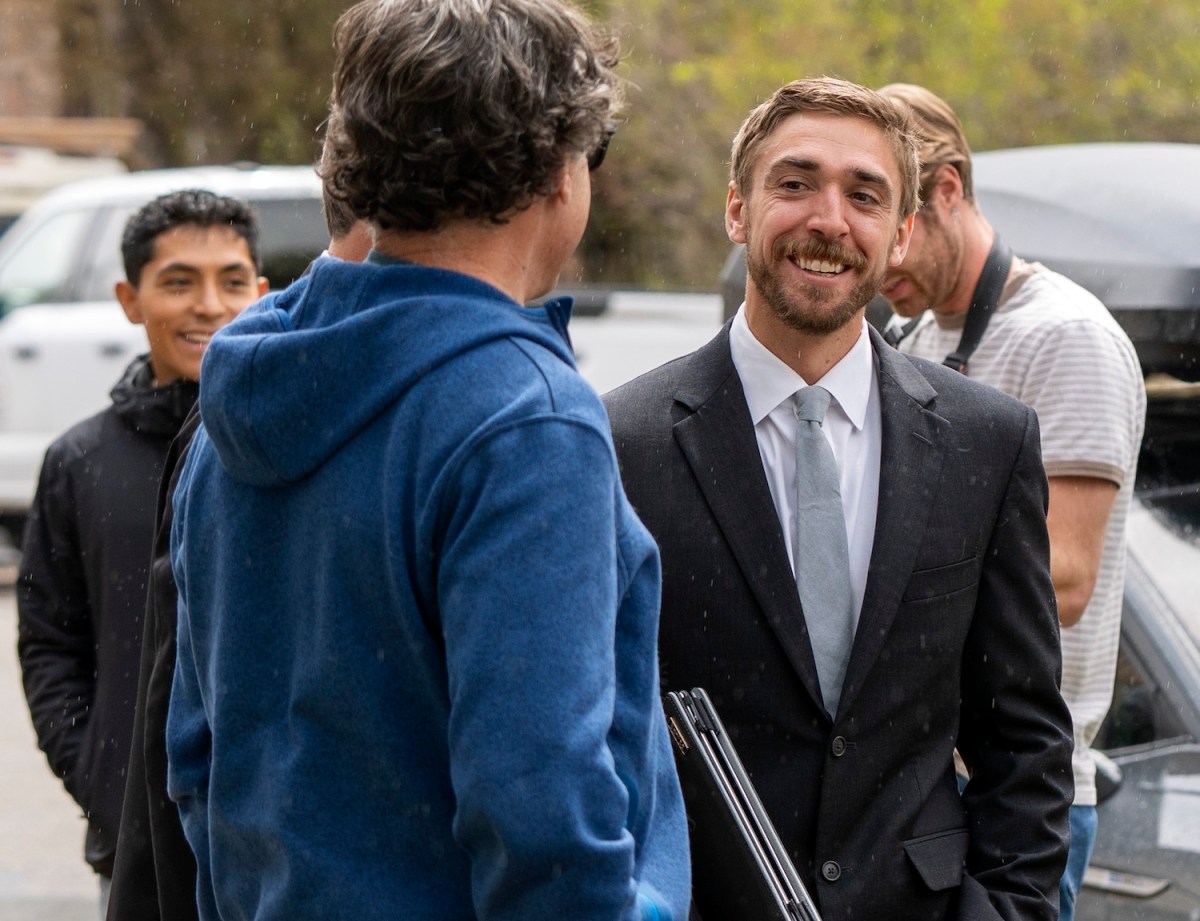
The ordeal over Michelino Sunseri’s 2024 shortcut on the Grand Teton — which spurred a federal trial and garnered Congressional notice — came to an unexpected conclusion Monday when President Donald Trump pardoned the speed runner.
It was an appropriately unexpected ending to an incident that snowballed into something Sunseri never could have imagined, he noted in a Monday Facebook post alongside images of the pardon.
“Seriously. You can’t make this stuff up,” he wrote. “It’s only fitting that something this absurd from the start ends in an equally surreal way.”
Sunseri was attempting an out-and-back speed record on the 13,775-foot crown of the Teton Range on Labor Day 2024 when he cut a switchback, opting to take what some call the “old climber’s trail” down the mountain.
That choice proved hugely consequential. Because of it, the arbiter of alpine speed records, Fastest Known Time, refused to acknowledge Sunseri’s scorching 2:50:50 time as the new record. The trail transgression ignited a high-profile debate about alpine-sport ethics and what constitutes overcriminalization in national parks. Park rangers cited Sunseri, which led to a two-day trial in a federal courthouse in Jackson.

Sunseri’s legal team also did extensive advocacy to raise awareness of what they say are outsized penalties for federal misdemeanors. That included talks with Wyoming’s U.S. Rep. Harriet Hageman, who agreed that cases like Sunseri’s represent a problem of overcriminalization that Trump targeted in a May executive order.
Those efforts resulted in Sunseri’s case landing on Trump’s radar, defense attorney Alex Rienzie said. Still, the pardon was unexpected, he said.
“I feel happy for Michelino,” Rienzie said. “He can finally put this behind him and we can all move on to more productive pursuits.”
Sunseri echoed that sentiment.
“I’m absolutely, incredibly grateful,” he said on Facebook. “But, it never should’ve gotten this far. This case was a massive waste of taxpayer money and government energy from the start — something that should’ve easily been resolved back in September 2024 when I offered community service to close the trail for good. Unfortunately, instead of working with me, the system tried to make an example of me.”
The shortcut felt around the world
During his speed attempt, Sunseri cut a switchback to avoid hikers on the designated route. He described his decision in a Strava report shortly after the feat, writing that “If I had to make this choice again, I would 100% make the exact same choice.”
Some previous record holders also had taken that shortcut, but Sunseri was the first to face formal consequences. Fastest Known Time rejected his submission due to the offense. Shortly after, Grand Teton National Park rangers cited him for violating 36CFR2.1(b), which prohibits “leaving a trail or walkway to shortcut between portions of the same trail or adjacent trail in the national park.” The citation carries a maximum penalty of $5,000 and six months in jail.
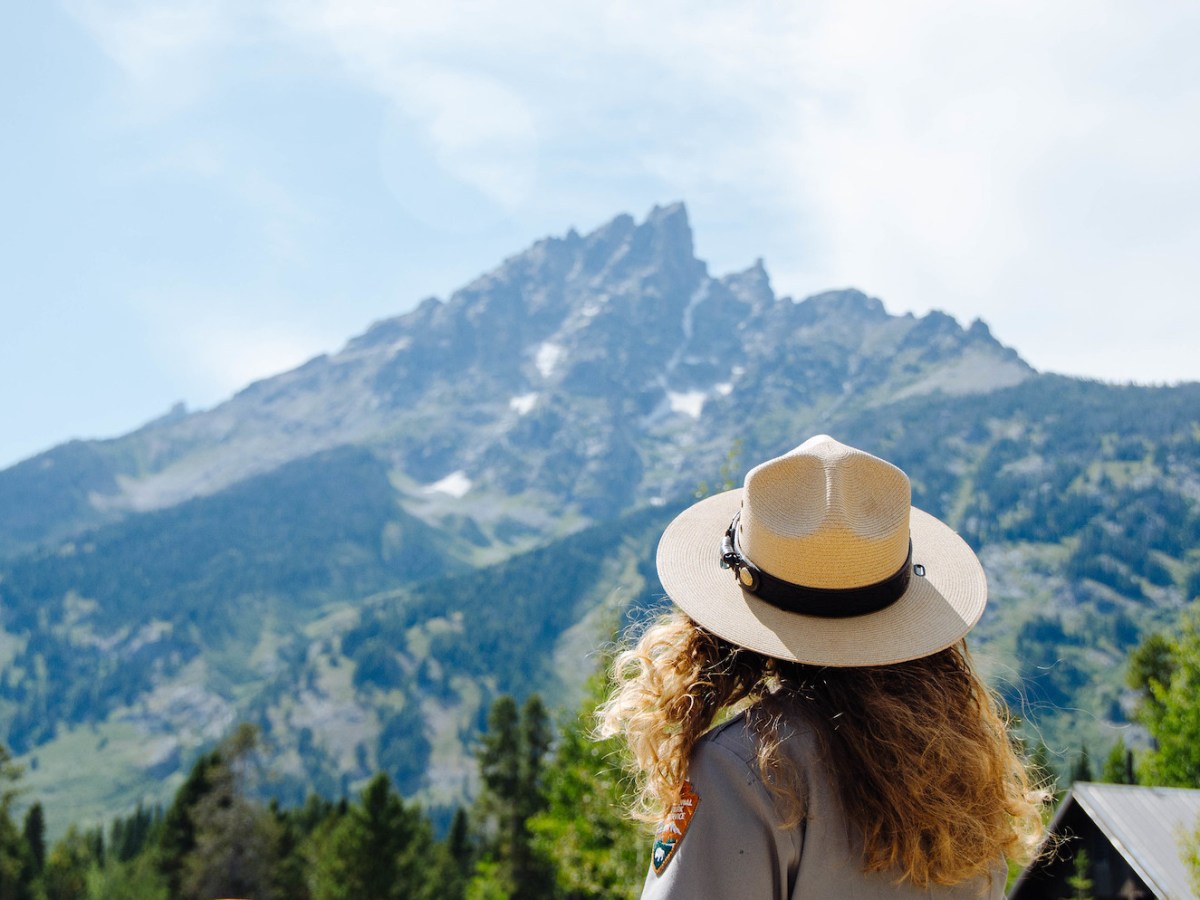
Grand Teton rangers have reportedly struggled for years to keep people off of the old climber’s trail, a faint singletrack with small signs near the top and bottom that read “short cutting causes erosion” and “closed for regrowth.”
When offered a plea bargain of a misdemeanor conviction, a five-year ban from the national park and a fine, Sunseri opted to challenge the charges. The penalties were too steep, he argued. That led to the May trial.
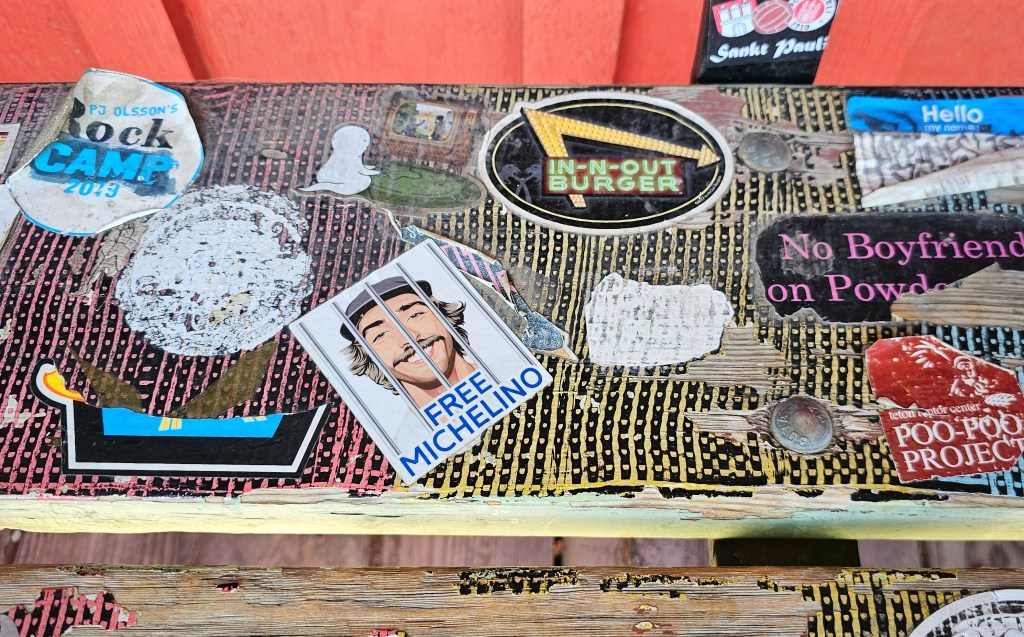
Meanwhile, the court of public opinion also weighed in. Sunseri supporters made T-shirts, stickers and social media posts accusing the National Park System of a heavy hand. Others, including Jackson Hole athletes, said Sunseri was setting a poor example of trail stewardship as a sponsored athlete.
Over the day-and-a-half trial, which unfolded in the Clifford P. Hansen Federal Courthouse in Jackson before Magistrate Judge Stephanie Hambrick, eight witnesses took the stand. They included professional athletes and older climbers who had scaled the peak hundreds of times, park rangers and a trails management expert.
A fitting punishment?
During the trial, attorneys zeroed in on the historic conversation around and use of the switchback-cutting route; the procedures by which park rangers discern whether a citation is appropriate; the private conversations Sunseri had regarding his route and the semantics around trails considered either “established,” “maintained” or “designated.”
The lawyers’ arguments centered on whether the Park Service properly notified the public of the closure and fairly cited Sunseri.
In a September decision, Hambrick sided with the prosecution when she determined the trail closure was valid and the park properly communicated the closure, and thus Sunseri was guilty.
Sunseri’s team appealed that ruling, arguing the decision gives park superintendents power well beyond what the Constitution affords them.
But on the eve of sentencing, Sunseri’s team struck a deal with newly appointed U.S. Attorney for Wyoming Darin Smith. The deal would dismiss the misdemeanor charge from Sunseri’s record if he completed community service and an educational class.
“U.S. Attorneys have discretion to make prosecutorial decisions based on what they feel is in the best interest of the public and the justice system, without consideration of outside influences,” read a statement Smith’s office sent to WyoFile in October. “This decision is not a rejection or criticism of the good work of the National Park Service, the Court, or the parties in this matter. It is an evolution of what is right and was made to preserve prosecutive and judicial resources while upholding the best interests of the public and the justice system.”
Hageman had previously voiced her opinion that agreed Sunseri’s proposed penalties did not match the crime. Along with Andy Biggs, R-Arizona, she penned a July letter to acting U.S. Attorney Stephanie Sprecher stating that Sunseri’s “prosecution appears to be a prime example of the problem of overcriminalization.”
New routes
The pardon does not automatically trigger a reversal of FTK’s decision on the Grand speed record. It’s an independent arbiter that rejected the record before rangers issued a citation.
For now, Andy Anderson still holds the men’s FKT record for the Grand Teton for his 2012 effort, when he ran and scrambled the 13.2 miles and 7,064 feet of elevation gain in 2:32:02. Jan Maus, meanwhile, broke the women’s record in August with a time of 3:45:34.
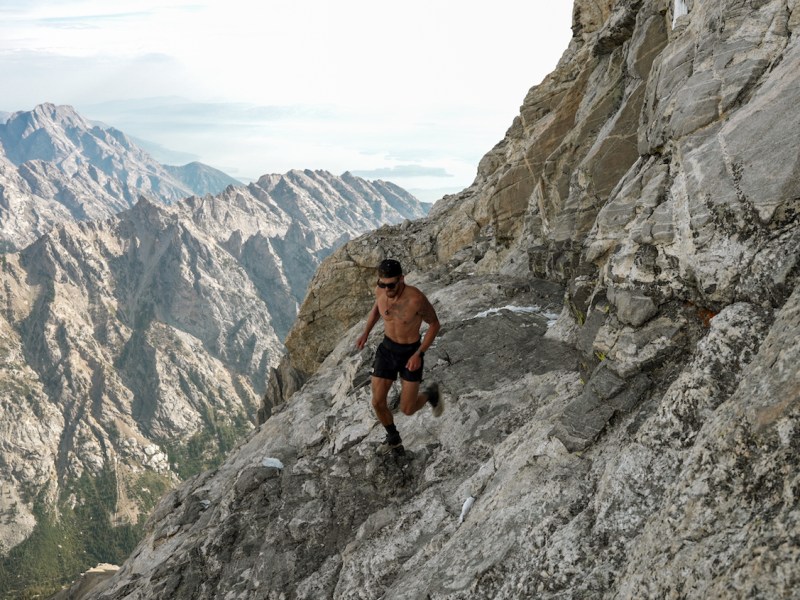
Fastest Known Time, however, has updated language on its Grand Teton entry page to emphasize what it calls the “Modern Route” up and down the mountain. The route, which both Anderson and Maus followed, does not use the old climber’s trail.
“The Jenny Lake Rangers now prefer that runners stick to designated and maintained trails (where available), which aligns with this Modern Route,” the page reads. “FastestKnownTime indicated it will not accept future submissions using the Historical Route, though it remains an integral part of the mountain’s history and lore.”

Well, I guess the pardon means we can drive on any closed roads and wilderness areas controlled by the USFS or the BLM or is it just for this entitled person?
Speaks volumes, The rules don’t matter. Hmmm. Good example for kids. This is pretty sad when these type of shortcuts are seen as no problem. Remember when that Chinese guy faked being disabled to participate in an event for the disabled?
Cutting switchbacks on heavily used trails causes resource damage and erosion and there should be some penalty. Perhaps a $50 citation. But up to a $5000 fine and 6 months in jail?!? That absolutely was excessive overreach.
Excessive overreach is what government does best.
National Park rangers are a good thing, National Park Law Enforcement Officers not so much.
Are National Park rangers and National Park Law Enforcement Officers actually the same people?
No, they are separate titles.
With a convicted felon in the White House, it’s good time to be a criminal.
🫵 You nailed it.
“I offered community service to close the trail for good.”
But if given the opportunity he’d still do the wrong thing?
“If I had to make this choice again, I would 100% make the exact same choice.”
If you are going to use Wyoming’s wild spaces for personal gain and profit, is respecting the land too much to ask?
Seems the government overreach is the frivolous use of the pardoning power.
Birds of a feather
Hmmm..
Unexpected resolution.
Trump is transactional. I wonder what he got out of the pardon?