



Conservationists blasted a federal rewrite of a sage grouse protection plan endorsed by Wyoming, saying it strips safeguards from Wyoming’s fabled Golden Triangle, site of the world’s largest breeding ground for the imperiled bird.
The Bureau of Land Management on Monday released its rewrite of plans governing the use and development of about 50 million acres of public land in eight Western states, including 26.6 million acres in Wyoming. The framework for Equality State management spans 66 pages, not counting maps and appendices, and applies to an area larger than Kentucky.
Conservationists criticized the rewrite as “reckless” and “a holiday gift to private industry,” while promising to sue the Trump administration.
“We’re not letting these dancing birds go without a fight, so we’ll see Trump in court.”
Randi Spivak
“Every president starting with Obama has screwed over these iconic Western birds,” Randi Spivak, public lands policy director for the Center for Biological Diversity, said in a statement. “We’ll keep fighting until these beautiful dancing birds and the places they live get the protection they deserve.”
The new plan for Wyoming reflects updated scientific information, changing land uses and local habitat, Wyoming’s acting BLM director Kristina Kirby wrote in the document’s introduction. The regulations meet the BLM’s multiple-use mandate, conserve grouse, avoid endangered-species listing and minimize regulatory burdens, she wrote.
Bob Budd, chairman of Wyoming’s Sage Grouse Implementation Team, said he feels good about the federal plan and Wyoming’s own gubernatorial sage grouse core-area order. “Protections are still there,” Budd said. “The commitment to manage [for conservation] is as strong as it’s ever been.”
In revising the plans, the BLM deferred to states, including Wyoming, which started addressing grouse conservation decades ago. “The BLM accepted the State of Wyoming’s recommendation to use their existing adaptive management approach,” she wrote.
The state with the most
Wyoming possesses the highest concentrations of greater sage grouse in the world. It is home to almost 40% of the bird’s population. Because of long-term declines — down nearly 80% between 1968 and 2023, according to the Center for Biological Diversity — the grouse were eligible for federal protection under the Endangered Species Act in the early 2010s.
To save the species, the government employed BLM management plans instead of a more sweeping ESA listing. But, “many protective measures from the 2015 plans were never implemented and the plans were again revised and further weakened in 2018 and in 2024,” the Center for Biological Diversity said in a statement.
Conservation groups say safeguards are now further undermined. “Endangered Species Act protection for the bird will probably be necessary,” Eric Molvar, executive director of Western Watersheds Project, said in a statement.
The groups say reductions in required “hiding cover” — standards that require seven inches of grass in nesting areas — is one shortcoming.
“Science-based grass-height standards for grazing management have been eliminated, potentially allowing livestock to remove the tall grasses and shrubs that provide essential concealment during nesting season,” WildEarth Guardians’ Endangered Species Advocate Joanna Zhang said in a statement.
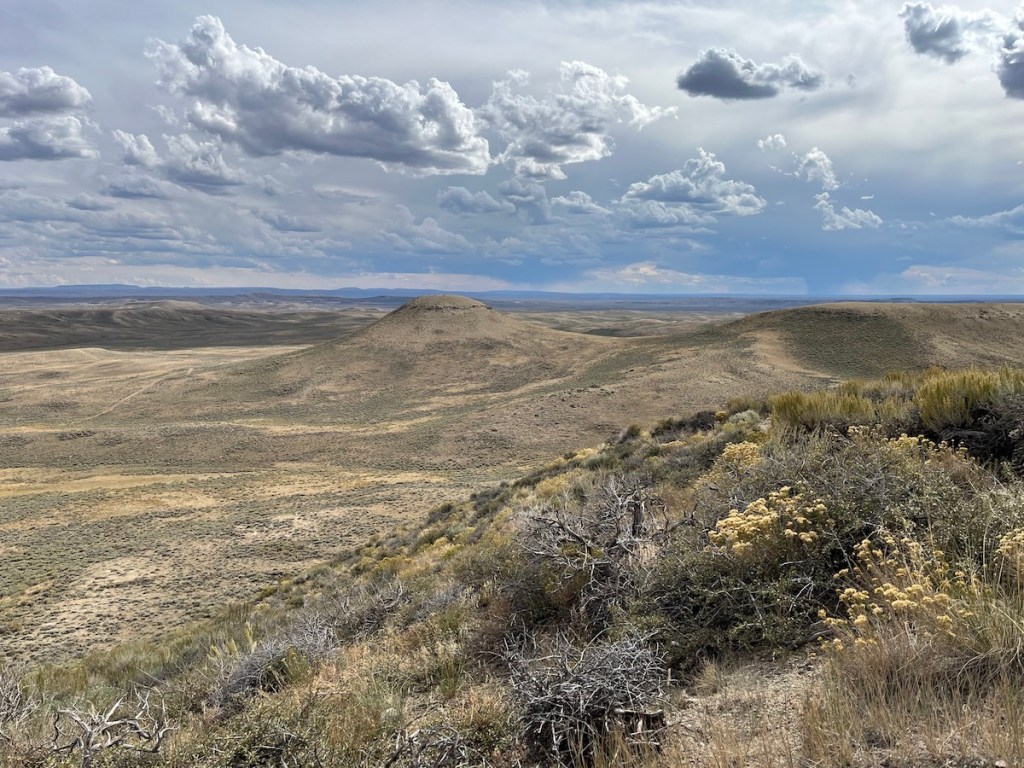
Under the new plan, the Golden Triangle would no longer be designated as an “area of critical environmental concern.” That swath of sagebrush sea northeast of Farson that’s about 40 miles on each side is home to the largest sage grouse breeding ground or lek in the world.
BLM protections in the previous management plan covering the Golden Triangle were one factor that led the agency last week to reject a nomination to develop a 2,194-acre parcel there. An oil and gas prospector sought rights to lease the plot that’s within two miles of the Divide Lek.
The plan also removes a development prohibition called “no surface occupancy” from key sage grouse habitat, critics say. That opens the landscape to potential “surface disturbance” — the bulldozing of sagebrush for roads, pipelines and drilling rigs.
“This will result in emptying public lands of sage grouse and other sensitive wildlife,” Molvar said.
“We’re not letting these dancing birds go without a fight,” Spivak added. “So we’ll see Trump in court.”
Core-area strategy remains
Gov. Mark Gordon said the plan acknowledges six decades of Wyoming conservation — leadership spanning three gubernatorial terms. “We will continue to invest in sage-grouse conservation alongside responsible development,” he said in a statement.
Budd further defined Wyoming’s protections and how they will conserve greater sage grouse. Regarding the 7-inch hiding cover, he said that’s not something that can be attained everywhere every year.
The 7-inch standard creates “a false narrative that can’t be met,” Budd said.
Instead, “what you manage for is healthy ecosystems,” he said. “That’s now what we have in the new version.”
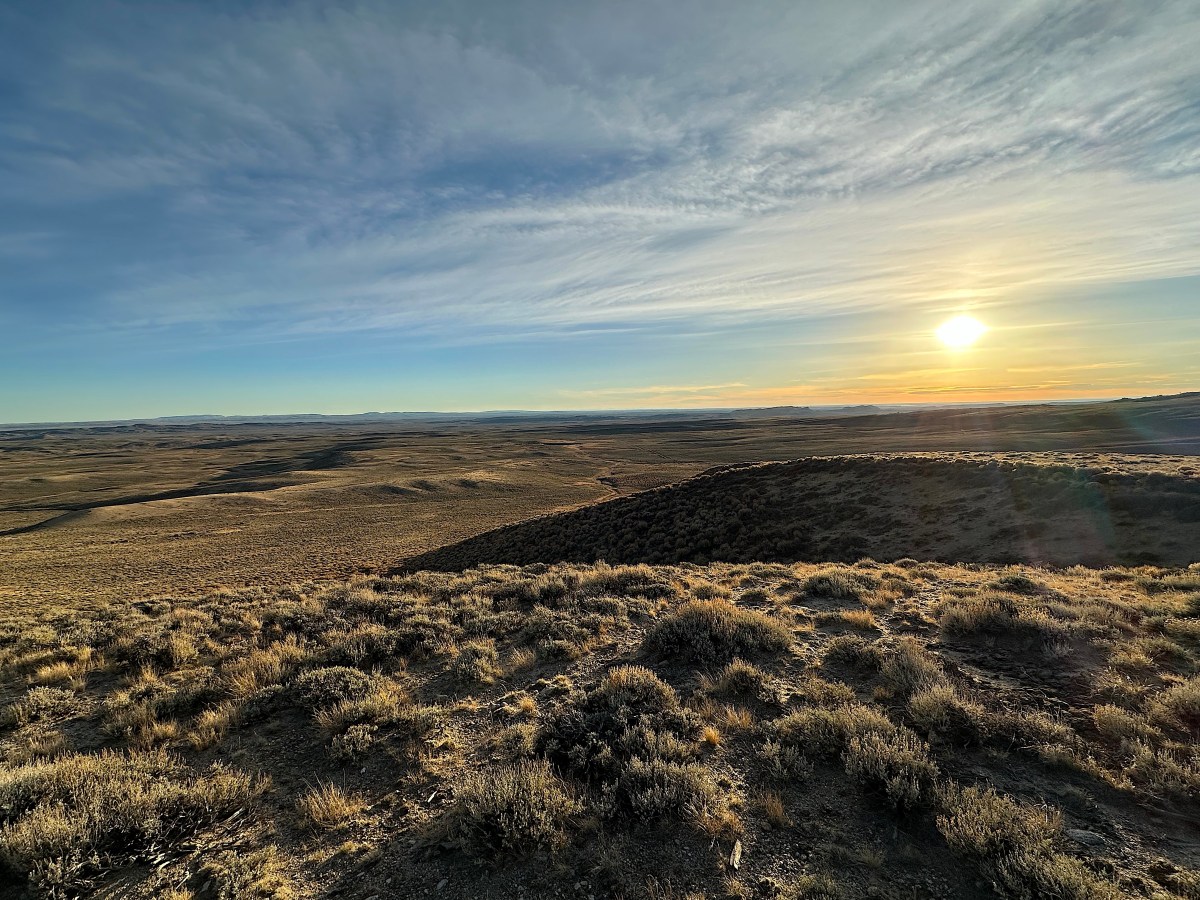
The Golden Triangle remains protected as part of Wyoming’s core-area strategy, Budd said. Removing “no-surface occupancy” restrictions doesn’t mean drilling rigs will move in, he said. The new plan “still allows an NSO, if that’s the best way to protect grouse.”
He couldn’t say whether the new plan would prohibit leasing the recently rejected Golden Triangle parcel. Wyoming’s executive order and core area strategy would not allow a drilling rig “right on top” of the potential lease site, he said.
Directional drilling technology has advanced so it’s possible to access oil and gas from miles away, he said. Drilling remotely might be permitted with various seasonal restrictions, he suggested.
“We wanted to be strategic, surgical and correct things,” Budd said of the state’s involvement in the new rewrite. The adopted changes “addressed the reality that’s out there.”

We seem to be completely ignoring the “better science” in lieu of our own “opinions.”
Just build a wind farm there, then nobody will care..
More progressive dribble!!
I wasn’t going to comment again but just can’t help it. Regarding the 7 inch stubble height and where it can/can’t be met could easily be determine with ecological site descriptions, a method that gives you most everyone, and especially the “potential” of the site. We seem to want to ignore the science necessity to maintain and enhance this birds population, even though it exists.
What is really sad to me, is the the state of Wyoming has an opportunity to do something right in this large area. There are many opportunities that the untrained eye will never see. I’m wondering if anyone remembers the term Habitat Management Plan? BLM did those at one time and the Golden Triangle deserves that, and more; especially when you consider all of the deer, Pronghorn and elk that use it.
I think what Mr. Budd meant to say is that the seven inch grass height for hiding nesting cover is never met anywhere, every year. And yes it is attainable if the BLM and State of Wyoming would actively manage livestock grazing on lands they administer. Take off the rose colored glasses, please.