

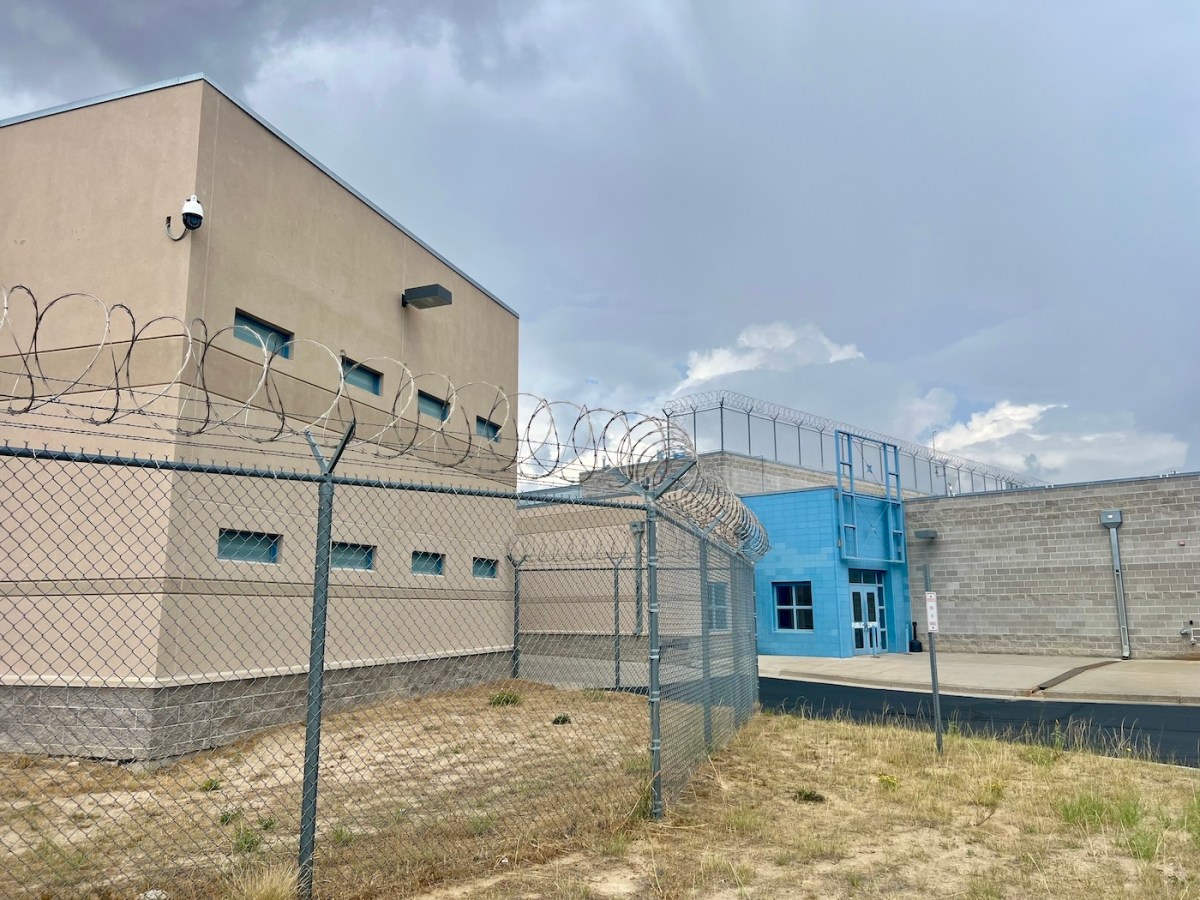
At times during the first year of Donald Trump’s second presidency, it seemed Wyoming would be left out of the upheaval of his administration’s aggressive crackdown on undocumented immigrants.
Though exact numbers are unknown, the state has a low population of such folks. A 2023 estimate by the American Immigration Council put the number of undocumented immigrants in Wyoming — a challenging statistic to document — at around 9,800, largely of working-age adults.
Wyoming also lacks a major city with liberal-leaning politics — the type of places where the Trump administration performed some of its most headline-grabbing enforcement actions, like the president’s use of military and national guard troops in Los Angeles or the intensive activities of federal agents in Chicago.
But by summer, as U.S. Immigration and Customs Enforcement agents conducted operations in Teton County and other parts of the state, it had become clear Wyoming was not isolated from the Trump administration’s efforts to dramatically increase deportations. Wyoming’s undocumented population also encountered more hostile policies at the state and local level than it did a year ago, driven by state legislators, Gov. Mark Gordon and some county sheriffs.
The year began with conservative lawmakers in Cheyenne seeking to thrust the state into immigration enforcement, long the purview of the federal government. Lawmakers passed several bills to that end. One new law bans sanctuary cities (though Wyoming has none, technically). Another invalidates driver’s licenses that some other states issue to undocumented immigrants.
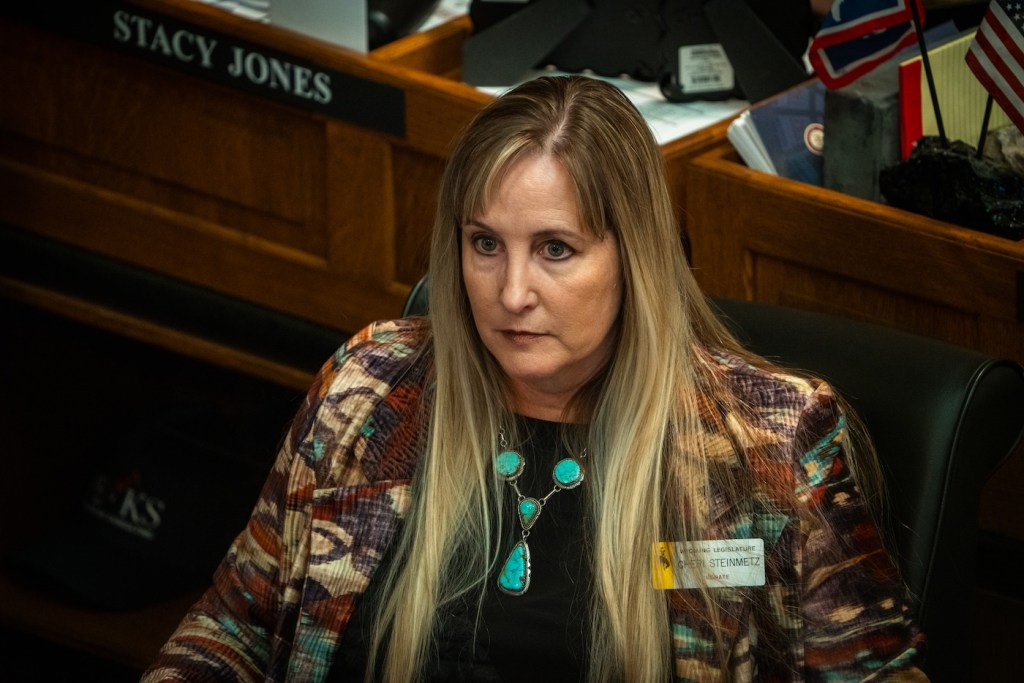
The Wyoming Senate rejected one of the more extreme measures, a bill from Torrington Republican Cheri Steinmetz that, as originally written, would have forced state law enforcement officers to question people about their immigration status during routine police work. Other parts of the bill made it a crime to carry an undocumented person in your car — something opponents said would criminalize large swathes of U.S. citizens, including friends and family members of immigrants.
Senators, worried about unforeseen consequences, tossed the bill in February, about halfway through the 2025 legislative session.
But over the next nine months, officials governing large swathes of Wyoming upped their involvement with immigration enforcement. Gov. Gordon directed the Wyoming Highway Patrol and the state’s National Guard to ink agreements with the U.S. Department of Homeland Security to play varying roles in immigration enforcement. Six county sheriffs signed on as well.
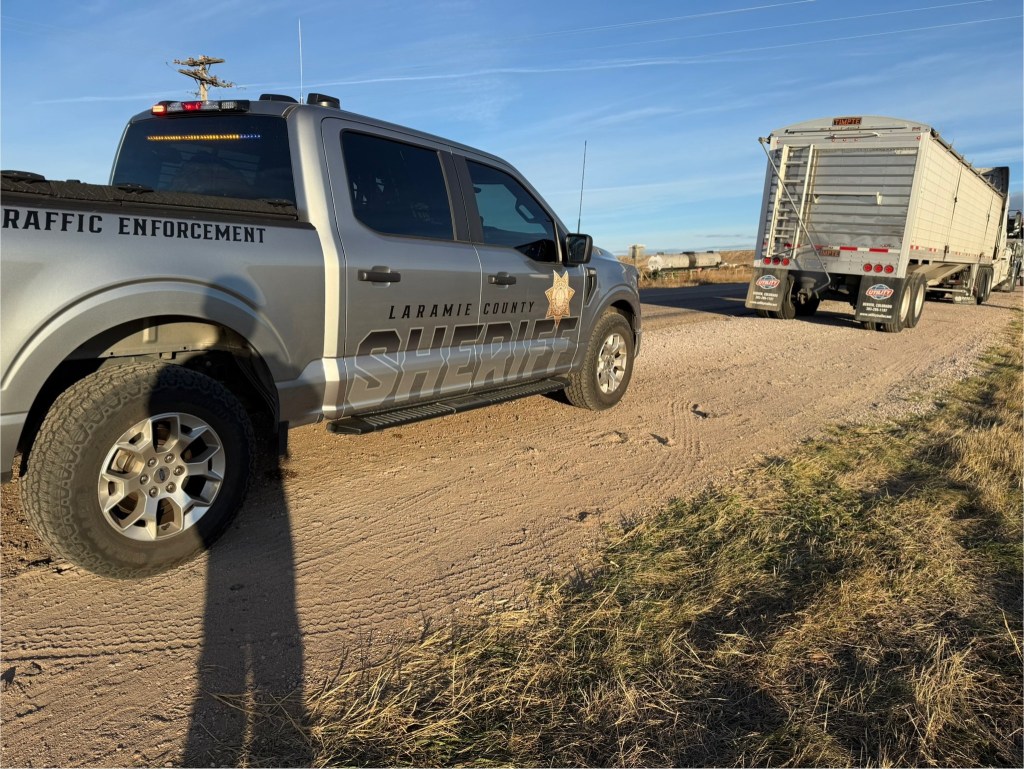
The most significant example is likely Sheriff Brian Kozak of Laramie County, who in October announced that he and 25 of his deputies had all joined a federal program where they received training on checking immigration status and detaining people on behalf of ICE. Though Kozak promised deputies would detain people only following interdictions on suspicion of other law breaking, his strong alliance with ICE sparked fears among local immigrant advocates that deputies would engage in racial profiling.

Kozak’s disclosure in late November that his deputies had detained an estimated 30 people for ICE, largely following traffic stops, fueled advocates’ criticism.
But Kozak’s partnership with ICE is popular with Wyoming conservatives. That same week, the Wyoming Freedom Caucus cheered a special operation by Kozak’s department, ICE and the Wyoming Highway Patrol that led to the detention of 40 truck drivers. “Countries have borders. Wyoming is proud to help enforce ours,” the caucus wrote on Facebook.
The post’s unnamed author drew a connection between this year’s new law to outlaw driver’s licenses that other states issue to undocumented immigrants — a priority of the Freedom Caucus — and the enforcement operation. It’s unclear whether any of the truckers arrested during the three-day November campaign were driving with such a license.
In the upcoming legislative session, lawmakers are likely to push for more restrictions on people living in and traveling through the state without legal U.S. residency. Already, the Legislature’s Joint Transportation, Highways and Military Affairs Committee has advanced a bill draft to mirror in Wyoming statute a federal crackdown on the English proficiency of commercial drivers.
Wyoming sheriffs, like Trump and officials in his administration, have pitched the enhanced enforcement as targeting people not only here illegally, but who also have a criminal record, a group they have referred to as “the worst of the worst.” ICE’s arrest data, however, shows that the majority of people being placed in immigration detention by federal agents do not have criminal convictions. That trend holds true for arrest numbers from Wyoming and Colorado, which WyoFile analyzed in collaboration with the Colorado Sun in July.
Over the course of the year, WyoFile spoke to undocumented immigrants who work in the state’s energy industry, its construction industry and in health care. Those workers described stalled asylum cases and logistical and financial hurdles barring access to legal status, despite paying taxes and participating in Wyoming’s economy for years. And as the Trump administration ramped up its deportation dragnet, they also described living in increasing fear.
An exact accounting of who has been arrested and deported from the state is difficult to come by. But WyoFile and reporters at other outlets we collaborated with tracked some people into ICE’s detention system. They included a Mexican laborer who was a 25-year resident of Jackson Hole, a Romanian national with a misdemeanor DUI, a Nicaraguan barber in Cheyenne and a Cuban immigrant who was detained at a regular check-in with ICE in Miami.
The Cuban man, who was attempting to renew his work permit when detained, came to Wyoming through the Natrona County Sheriff’s agreement with ICE to hold people when the federal agency needs more bed space for people it’s holding in the region. He described his 40-day stay in a Casper jail cell, far from home and uncertain at the time what his fate may be, as “hell” that wore on his psyche. Other men placed in the jail with him on July 18 remained there at least through the end of November.
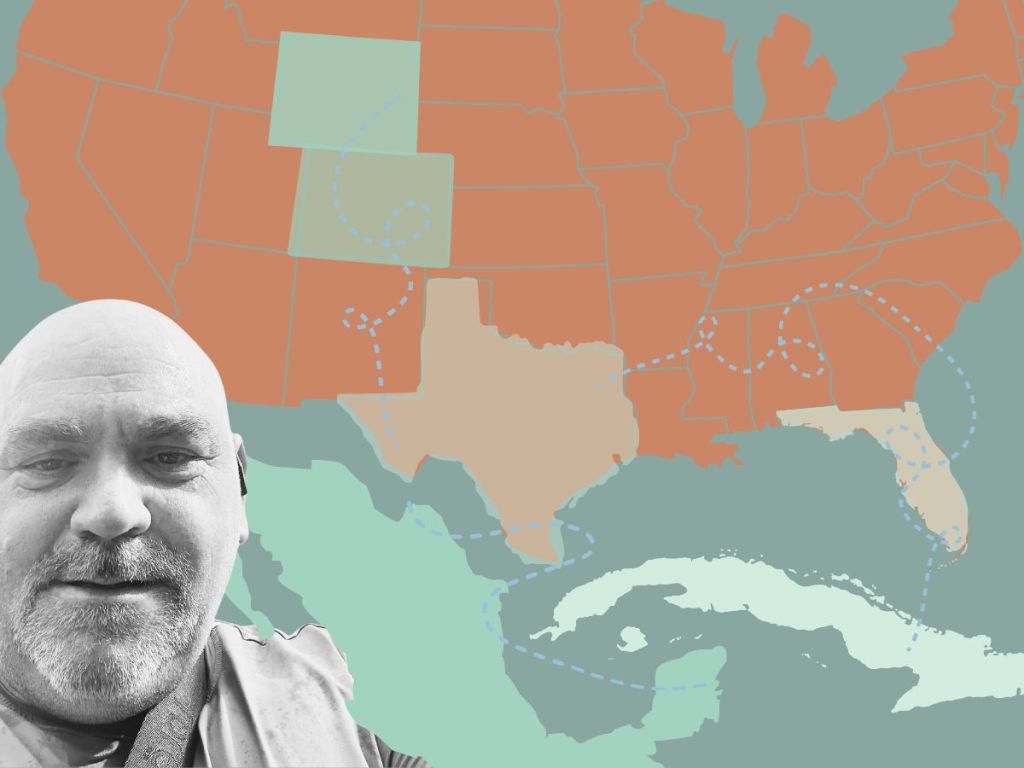
The Cuban immigrant, Josue Rodriguez, was then deported to Mexico, a country to which he had no ties.
Rodriguez’s saga showed how ICE agreements entangle local agencies in the Trump administration’s crackdown well beyond Wyoming’s borders.
In Uinta County, Sheriff Andy Kopp has offered his jail beds to ICE as a lucrative revenue source. He is using the money to raise his deputies’ salaries in tough fiscal times driven, in part, by the Wyoming Legislature’s cuts to property taxes.
This fall, that arrangement briefly drew Kopp’s appearance in federal court, although in a nominal and procedural capacity, after one Mexican national captured by ICE during a sprawling operation in Idaho sued for his freedom. Though Kopp, like other sheriffs and elected officials at the state and national level, has said they want to remove dangerous criminals from the country, the Idaho man doesn’t fit that bill. He appears to have no criminal record and is the father of five children who are U.S. citizens, who were left without his support during his detention.

We are caretakers of one of the world’s greatest geological treasures. All of our inhabitants were immigrants or are progeny of immigrants. We owe it to the World to continue to welcome all (with the exception of violent criminals) those who want to share in our uniqueness/resources. Where is the Wyoming I moved to in 1972? Tourism provides 1/3 of our GNP. We are no longer a welcoming haven of nature. And we ask ourselves why our youth leave and why we can’t attract physicians and industry. The Freedom Caucus has become the party of choosing winners and attacking “losers” and small Wyoming communities have become big losers.
It’s worth noting that Albany County Sheriff Aaron Appelhans has refused to work with ICE. Conditions in the Albany County Detention Center are dramatically different from those in Laramie County’s. I visited a client in Laramie County and found that more than 80% of prisoners in one Pod were there on ICE holds. Many of them were here legally, with work permits or pending asylum hearings.
Why aren’t contractors who knowingly hire illegals fined or prosecuted ? Seems to be the biggest reason to try to get to the US.
Because we need them.
Maybe some legislation that would improve everyone’s ability to get work visas would help.
Illegal immigrants must go home.
Great news and great job Wyoming and Federal agents it’s amazing how many people sneak into the USA illegally and just expect taxpayers to support them with subsidized housing, medical and food. When I travel to other countries I must get through customs with identification that is accurate and acceptable and it’s only allowing me to visit,not to work,not to take money from social services or cut in front of people to obtain work income $. Legal immigration is a must no exception.
Cubans get citizenship when they step foot on US soil and yet the gentleman was deported to Mexico prior to receiving his gift. Cubans finally getting treated like any other hispanic has resulted in a Democrat getting elected to the mayorship of Miami for the first time in 30 years.
Congress sets the immigration policy and due to large number of bigots that get elected to that body, it should be no surprise that policy is inhumane and no surprise that the Wyoming Republican voter would cheer for these clearly bigoted processes. See the comments for examples of that fact.
Official correct term is ‘illegal alien’.
P.s.
Forgot to include the 3,000 $ stipend tax free you get if you self deport,which in most countries will get you through the trouble of living in your own country until your application for legal entry into the USA !
If you are an illegal immigrant & self deport,you go to the head of the line for legal immigration.
If you are a illegal immigrant & due not self deport,you get a free plane ticket.
If you are a legal immigrant & break the law,you will be deported after jail.
Simple rules to follow.any ?
I am continually amazed, not surprised at how many republicans I speek with and work for, honestly still believe the administration is only after the “ bad” guys. No eyes, or ears open. They continue to eat out, have their houses cleaned, driveway shoveled. Claim to love “ these people” and yet are Trumpers. We need to deport all the law breakers regardless of color.
Borders are arbitrary historic artifacts–mine, yours; in, out; legal, illegal. The politicians of the world shame themselves by deploying the jack-boots of oppression on their own species. Wake up!
There is a lot more this story than the “hardworking immigrant gets detained” version in this article. Many of the people arrested were trafficking drugs or involved in other illegal enterprises. We can agree that on a national level ICE has done a lot of shady and illegal things and innocent people have been caught up in their operations. That said, spin in either direction isn’t useful.
Well said Janet Schultz
I have no sympathy for anyone detained. We have s legal system for citizenship. The fact that an illegal is in this country and fathered so many children without seeking citizenship is disturbing. Doesn’t have any network in countries deported to? They obviously didn’t when they entered illegally. All these problems are the cause of breaking our immigration laws and being legally faced with the consequences. It is that simple. Our societal structure is falsely altered by their presence. Jobs, housing, schooling, health care right on Down to our census and elections. Accept it. They must leave and Stop wasting our tax dollars
Sadly we gave a legal system that does not apply to the wealthy. Trump and his minions should be in prison.
have a legal system
I love your reporting, Andrew. As an immigrant myself and longtime Wyoming resident, mt heart goes out to the families suffering these traumas.