


Wyoming’s top energy agency is recommending a combined $11.7 million in taxpayer-funded grants to support carbon capture at power plants, to produce rare earth elements from Powder River Basin coal and to conduct a University of Wyoming analysis of developing petroleum from the Mowry formation.
Peabody Energy, the largest coal producer in the state and in the nation, would receive $6.25 million to “establish a new, secure domestic source of rare earth elements from unconventional deposits located within Peabody’s Powder River Basin coal operations in Wyoming,” according to the company.
Laramie-headquartered Carbon GeoCapture would get $4.95 million to “filter” and “store” smokestack carbon dioxide emissions in “unmineable coal seams.” UW’s School of Energy Resources would receive $480,400 to help petroleum producer Continental Resources study strategies to tap the tricky-to-produce Mowry shale formation in the Powder River Basin.
As implied in the name, the state’s Energy Matching Funds program requires the recipient and/or its partners to contribute non-state funds.
The three grant requests are not necessarily in competition with one another, and Gov. Mark Gordon makes the final decision.
The Wyoming Energy Authority is accepting public comment on the proposed grants through Monday. You can comment on the proposals by emailing the Energy Authority at wea@wyo.gov.
Critical minerals from coal
Researchers have known for years that Wyoming’s bounty of coal contains rare earth, or critical, minerals, which are increasingly in demand as building blocks for everything from magnets to batteries, cell phones and other modern technologies.
Though initial coal targets were primarily slag and ash — toxic waste byproducts from coal-burning power plants — the focus has expanded to raw coal. And Wyoming is home to billions of tons of the stuff.
In addition to Ramaco Resources, which says it is reactivating the Brook Mine near Sheridan to process critical minerals from coal, Peabody Energy says it has both the coal reserves and existing infrastructure to set up a pilot processing facility.
The publicly traded, St. Louis-based company, with international assets and worth an estimated $4 billion, says it would use the $6.25 million grant to build a pilot processing facility at its Rawhide mine just north of Gillette. It would produce “market-ready mixed rare-earth concentrate,” according to a Peabody document submitted to the state. Once complete, the facility would support 55 new jobs.

Peabody indicated it is also pursuing private and federal funds for the project.
“By producing a domestically sourced intermediate product, the pilot validates a new revenue stream that provides substantial scalability, contributing royalties and taxes and attracting private capital,” Peabody said.
Peabody also owns and operates the North Antelope Rochelle and Caballo coal mines in northeastern Wyoming. Rawhide shipped 9 million tons of coal in 2024, according to federal data, while Caballo produced nearly 11 million tons and North Antelope scooped nearly 60 million tons. The company employs more than 1,400 coal miners in Wyoming.
Peabody reorganized after filing for bankruptcy and laying off 235 Wyoming miners in 2016.
Coal as a CO2 sink
Gordon has championed carbon capture at coal smokestacks as a strategy to stem Wyoming’s shrinking coal-fueled power plant market. But doing so has not proven economically viable, despite a state mandate that has tapped Wyoming ratepayers for millions of dollars to help utilities make the technological leap.
Carbon GeoCapture says it’s been working on a solution on the storage side of the equation.

Once captured at the coal or natural gas smokestack, the greenhouse gas can be injected into otherwise “unmineable” coal seams in the state. Doing so, according to the company, provides a more affordable storage method. Plus, the pumping action would squeeze out marketable methane gas that resides in the coal, “enabling for the first time cost-effective carbon management for power plants and providing a viable and sustainable path to meet the fast-growing power needs of data center, residential and industrial users,” the company said.
The process could produce 360 trillion cubic feet of natural gas from Wyoming coal, according to Carbon GeoCapture, a volume that represents potentially billions of dollars in payments to mineral owners and the state.
If Carbon GeoCapture is awarded the $4.95 million grant, Black Hills Energy, which operates coal-burning units in northeastern Wyoming, would match it with another $4.95 million to test the technology, according to the company’s project description.
Tapping the Mowry shale formation
Engineers at the University of Wyoming have worked alongside industry for years to figure out how to economically tap the massive Mowry formation, particularly in the Powder River Basin.
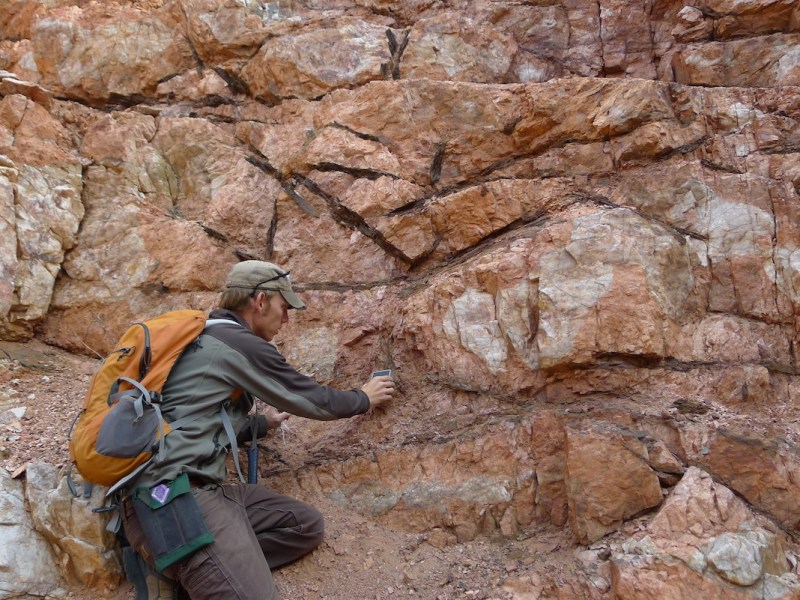
Though considered “one of the state’s most significant” oil and gas resources, Mowry shale is highly complex, presenting a financial risk for drillers, according to a description of the project.
If approved, the university’s School of Energy Resources would leverage the $480,000 grant with project partner Continental Resources to drill a deep well, analyze core samples, test well stimulation methods and create modeling scenarios at the university’s new Multidisciplinary Advanced Stimulation Laboratory. Doing so would help “de-risk” the Mowry formation and entice future extraction, the university said.


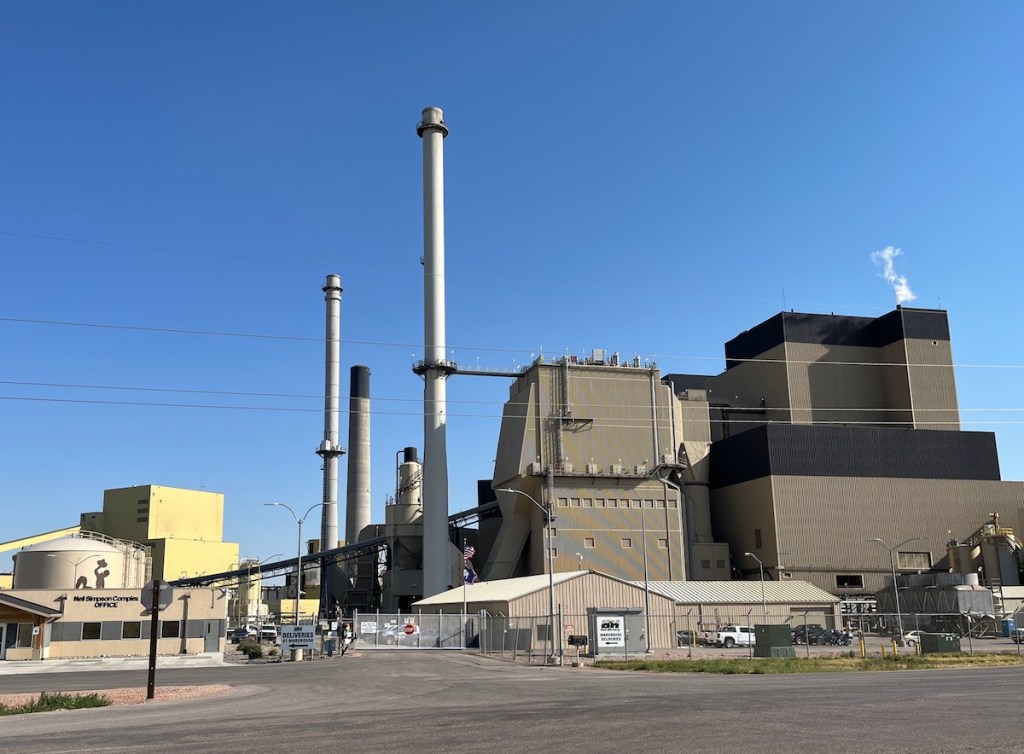
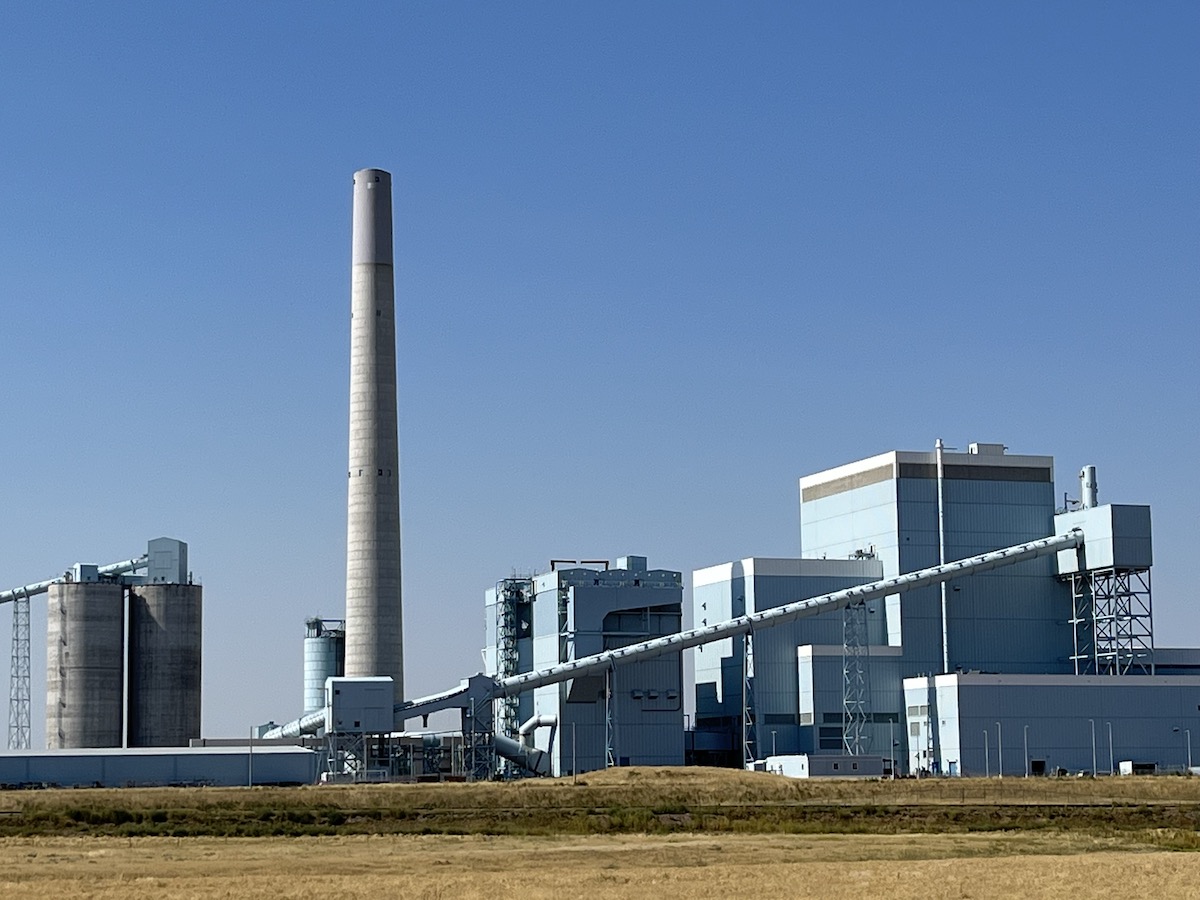
@Dustin, your picture caption is completely inaccurate. There is no such thing as the Wyodak complex. Your picture shows Neil Simpson II with the Wyodak plant in the background. There is the Neil Simpson Complex that is Owned by BHE, with four coal plants and 2 CTs, and the very much separate Wyodak plant which is majority owned by Pacificorp and operated by RMP. Do better.
Carbon capture is just a scam to continue burning coal. It will never make financial sense. Keep the carbon in the ground. Same with mining more coal for possible mineral extraction when the minerals are already concentrated in incalculable quantities in ash pits left over from decades of coal burning in our power plants. The last thing we should be doing is using state funds to reward the coal industry for the pollution they have caused.
I’m sure Rep. John Bear will remain ideologically pure and express his moral outrage that Wyoming is considering providing funding to a private entity.
Right?
Right?
Bueller?
A reminder that Continental Resources’ annual revenue is $7.38 billion. That’s $20.2 million a DAY.
Peabody earns $4.24 billion. That’s $11.6 million a day.
These are not scrappy startups looking to gain a foothold in the market with an innovative product. Or a small, mom-and-pop business trying to navigate their way through messy, bureaucratic red tape so they can export abroad.
These are multinational behemoths. I think they can afford to do their own research and development.
They’re rich. Off of our mineral resources. Why should we hand taxpayer money to them?
Extracting unique minerals and metals from raw coal or fly ash actually makes some chemical engineering sense. It might even be ( maybe ) economical. There is a genuine demand. Jury still out on the environmental consequences, however. Getting rare earths etc. from coal is potentially a saving grace for the dirty organic carbonized rock.
Having said that , Carbon Capture and CO2 sequestration will never be worth it. The laws of thermodynamics can be bent but they cannot be broken. Burning coal exclusively to generate electricity is no longer a viable business model. There are literally hundreds of ways to generate electricity and store it. Burning coal is so medieval ; anachronistic… besides being climatically stupid when it comes to the biologic health of the planet.
Be honest with yourselves, Wyoming. The days of selling north of 400 million tons of PRB coal annually are long gone and not coming back.
There are actually only two ways to generate electricity. There maybe a hundred different ways to provide to motive energy to do so, but there is only two ways. There is practical way to store large amounts of electricity. Try physics, it helps.
If rare earths is a viable thing, we shouldn’t have to give a giant company like Peabody Energy 6 million dollars. I thought the republican party was all about capitalism? There’s no such thing as free enterprise, just companies that grift off of the average person/family. Of course, there’s the super grifters like Trump.