


CASPER—An effort to repeal Wyoming’s controversial coal carbon capture mandate failed Tuesday on a vote divided between the Senate and House members of the Joint Minerals, Business and Economic Development Committee.
Seven of eight representatives in attendance voted in favor of the committee sponsoring the “Low carbon energy standards-repeal,” draft bill, while only one of five senators — Rock Springs Republican Sen. Stacy Jones — voted for the measure. The division suggests a rift between the powerful Freedom Caucus in the House and their Senate counterparts over the value of cutting carbon dioxide emissions from coal while tapping Wyoming ratepayers to cover the cost.
The Freedom Caucus took to social media shortly after the vote, noting that the panel voted to continue the state’s carbon capture mandate on coal on the same day that the U.S. Environmental Protection Agency announced it would rescind its 2009 “endangerment finding” in an effort to roll back emission regulations on coal.
“Trump’s EPA is repealing woke carbon capture mandates on our coal producers,” the Freedom Caucus posted on Facebook. “As this announcement was made, liberal Wyoming republicans voted to keep state-level mandates in place, killing a bill to repeal them.”
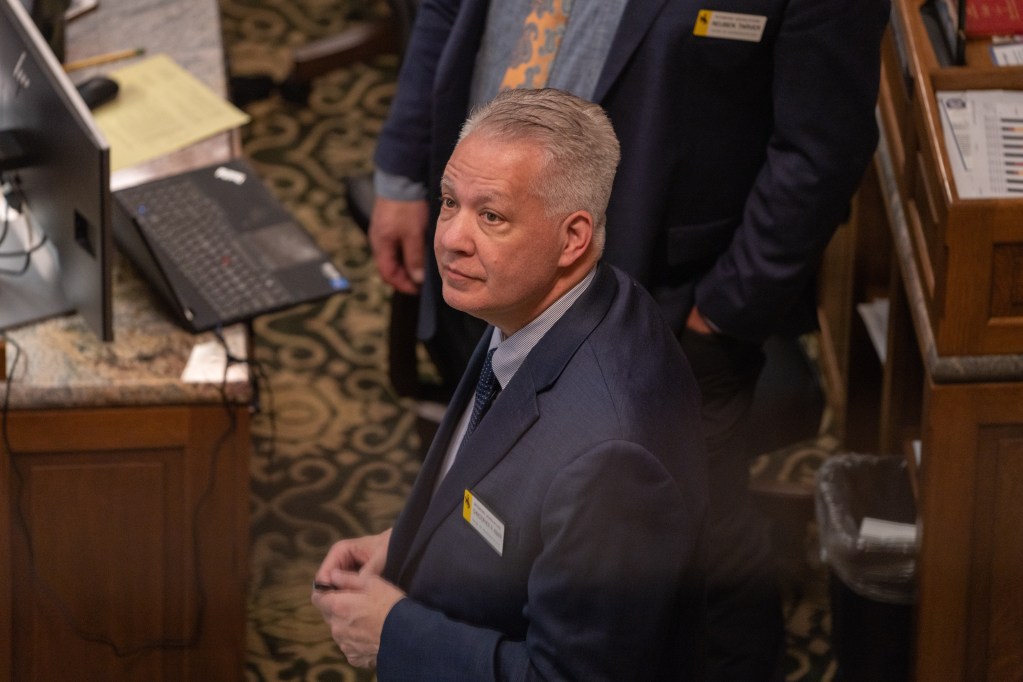
Gillette Republican Rep. Christopher Knapp brought the legislation to the committee after a similar measure he sponsored earlier this year failed.
“I’m going to bring it, probably, as a personal bill again in the session,” Knapp told WyoFile. “It may not pass, but we won’t give up, because we’re exposing the [ratepayers] to increasing costs that maybe we never needed.”
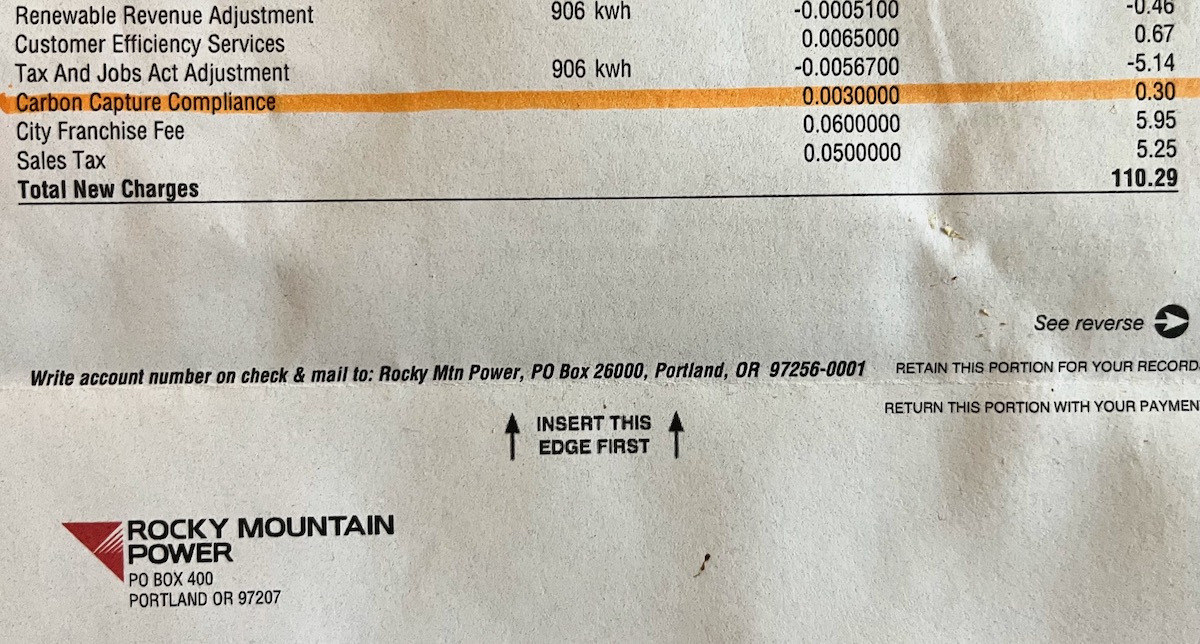
So far, Rocky Mountain Power — the largest utility operating in Wyoming — has tapped its Wyoming electric customers for about $3.9 million to conduct technical and economic feasibility analysis to comply with the state’s mandate, according to a Wyoming Public Service Commission report. Cheyenne Light, Fuel and Power has tapped its Wyoming customers for about $883,000.
After several years of analysis, both utilities say they still don’t have a commercially viable path to retrofit any of their Wyoming coal-burning power units with carbon capture technology.
Cheyenne Light, Fuel and Power’s parent company, Black Hills Energy, said the most viable technology it found would come with a price tag of about $500 million — a huge expense to pass on to its approximately 45,000 customers in the Cheyenne area. Plus, the retrofit — at the Wygen II power plant outside Gillette — would knock down the coal plant’s electric generation capacity by more than 30%, forcing the company to replace about 30 megawatts of lost power.
“It just wasn’t economically feasible to bolt on a carbon capture unit to the Wygen II power plant,” Black Hills Energy Governmental Affairs Manager David Bush told the committee.
Rocky Mountain Power officials noted that they have reduced the carbon capture surcharge for their Wyoming customers because the utility found a partner to cover part of the cost of the mandated research and analysis effort. But so far, it still hasn’t found an affordable carbon capture technology for its aging coal units in the state.
“We believe there is some value in completing the work that we’ve begun,” Rocky Mountain Power Vice President of Government Affairs Thom Carter testified. “There’s some value in finding out, as the Public Service Commission discussed, if this technology is viable because of the whipsaw [in federal coal emission policies] that we are experiencing.”
How we got here
Lawmakers, with enthusiastic support from Gov. Mark Gordon, passed House Bill 200, “Reliable and dispatchable low-carbon energy standards,” in 2020. Also known as “Low-Carbon Energy Standards,” the mandate requires regulated electric utilities to evaluate the economic and technical viability of retrofitting their coal-burning power plants in the state with carbon capture.
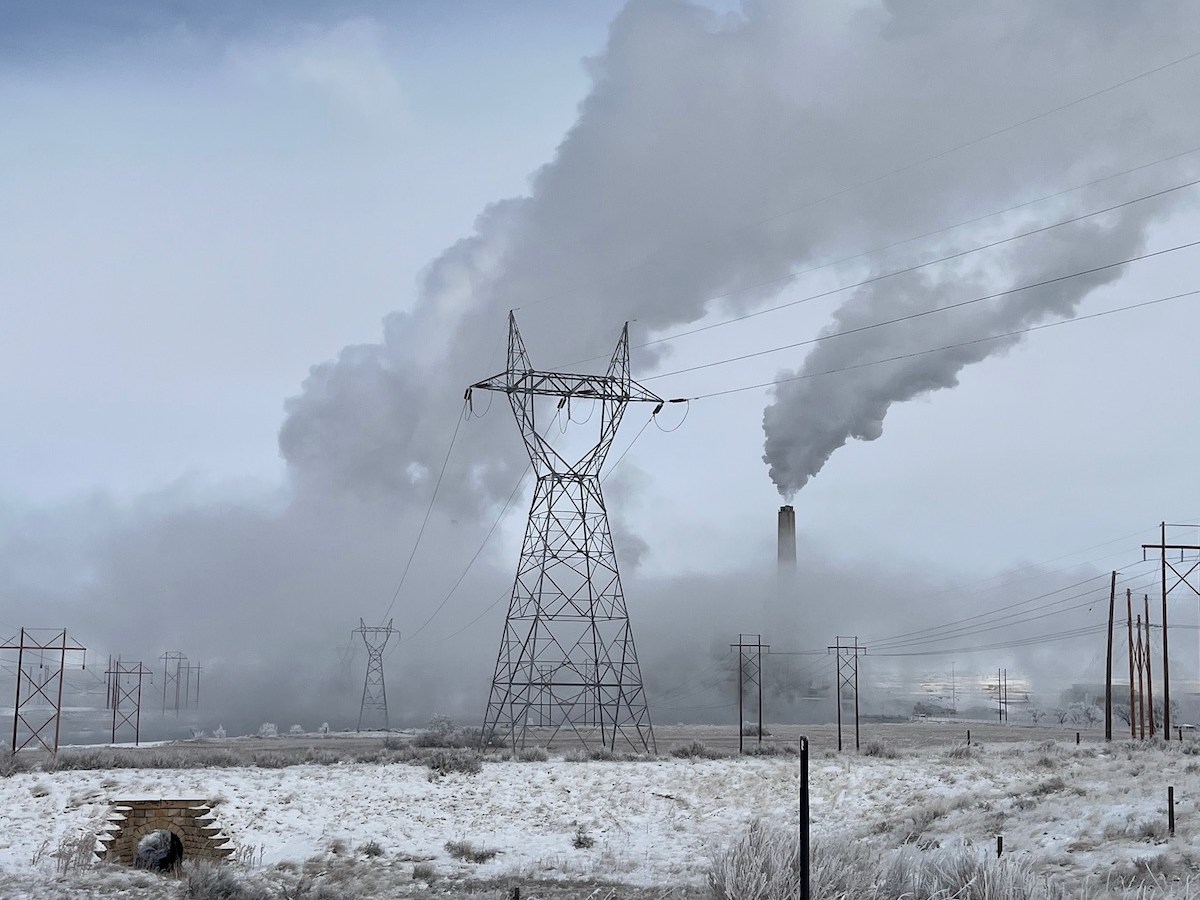

The goal at the time, according to Gordon and other proponents, was to prove that American utilities that burn Wyoming coal could lower their carbon dioxide emissions to comply with federal and state standards rather than retire the units. Even with President Donald Trump rolling back federal regulations on coal emissions, many utilities that buy Wyoming coal still must contend with state-level emissions standards, Gordon’s policy director, Randall Luthi, told committee members. Eleven of the 24 states where Wyoming coal is shipped have renewable portfolio standards that add pressure on utilities to retire coal-burning power plants, he noted.
“If those states are concerned about their CO2 footprint, Wyoming can help with that solution,” Luthi said, “if we get the technology and the cost of that technology to come down.”
But lawmakers have come under increasing pressure in recent years to stem double-digit cost increases that have hit most electric ratepayers in the state. Adding a surcharge on top of those rising rates, Knapp said, for a technology that might still be years from commercial viability, doesn’t make sense.
“Why are we continuing to charge the end user for something that probably will not pan out?” he said.

This is fascinating. The left wants to fund carbon capture to reduce CO2 emissions. The right wants to defund it because it is “woke.” Neither of them has any idea of reality. Carbon capture funding is just a subsidy to fossil fuel producers and users. There is no chance that it will be economically practical or that it will capture a noticeable fraction of CO2 emissions. This is one case where I support the Freedom Caucus, for reasons they can’t understand. Politics makes strange bedfellows.
It’s a shame to see WY legislators so dug in on this failed law. Carbon capture is too expensive, as demonstrated by the utility companies, and doesn’t work that well. Why should ratepayers keep footing the bill?
While every day Wyomingites enjoy the jobs and taxes received from industry we are selling the real Wyoming to outsiders and that industry which has taken advantage of us since the 1960s. As Ag and tourism drops in the percentage of our GDP we keep losing our heritage.
Bye bye more ratepayer money. No other state has a regulatory mandate remotely close to this and it boggles the mind that Wyoming lawmakers are still supporting it.
Carbon capture is simply a waste of energy and a mythical pipe dream. No one has made it work after millions of dollars.