

This story is part of an ongoing collaboration between WyoFile and the Jackson Hole News&Guide.
A controversy that began Monday when a conservative activist handed out checks on the floor of the Wyoming House of Representatives has spread to the Senate.
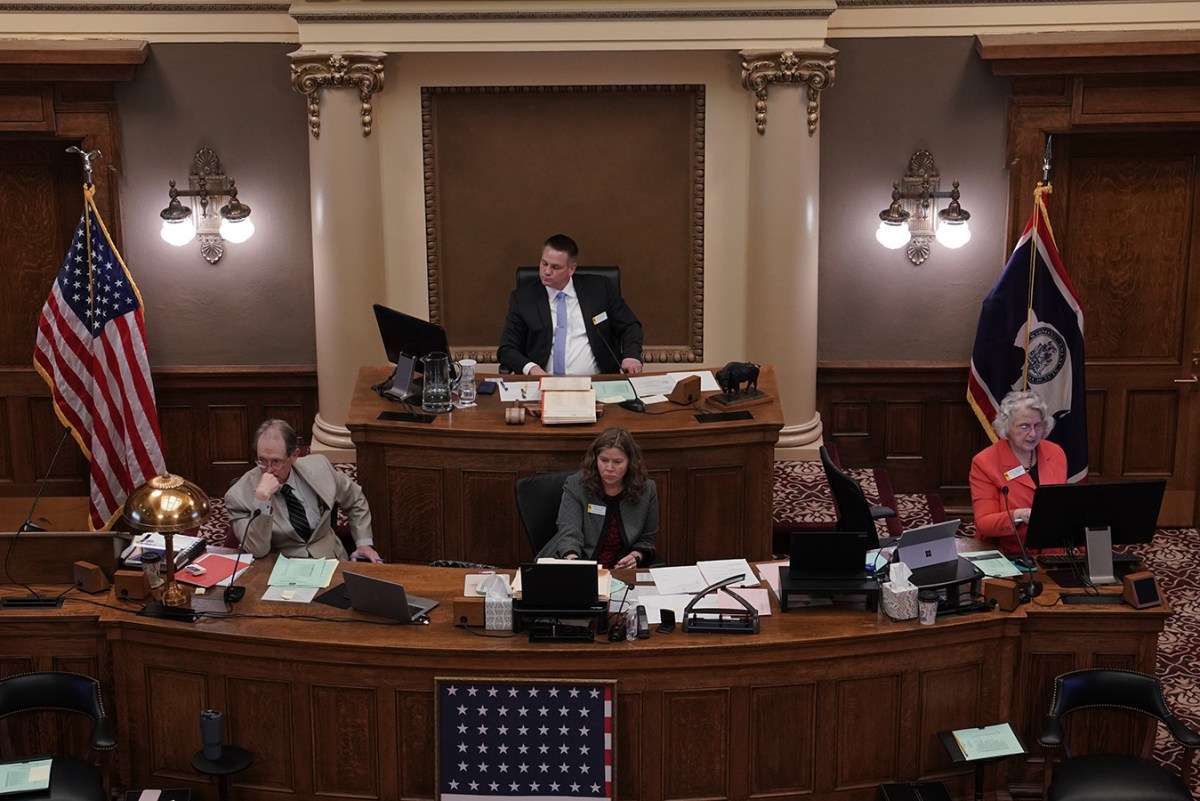
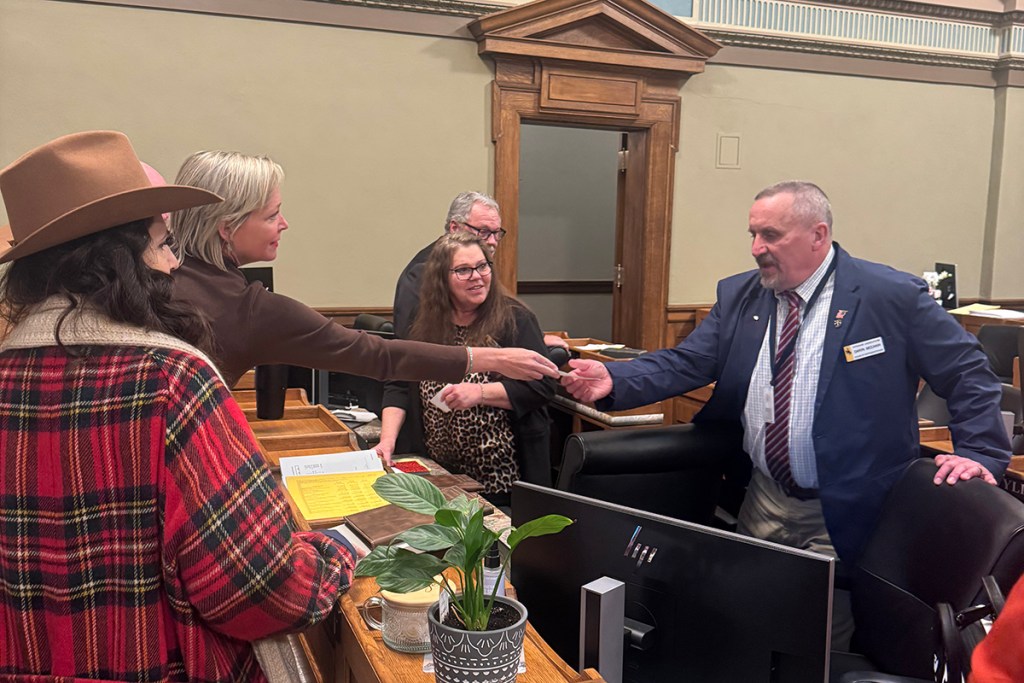
Senate leaders opened an investigation of their own and confirmed Thursday that Jacksonite Rebecca Bextel brought a campaign donation check to at least one lawmaker in the upper chamber while in the Capitol this week. Bextel has acknowledged handing certain lawmakers checks, but says she was delivering them on behalf of an unnamed Teton County donor.
Those leaders now plan to crack down on financial dealings in the Capitol, proposing an outright ban in Senate rules on receiving campaign contributions during a legislative session. They also may go further, making it illegal to do so under state law.
The Wyoming Senate also “unequivocally” condemned the “practice of distributing campaign contributions to legislators during the legislative session while measures affecting the donors, clients or interests are actively under consideration,” according to a letter signed by lawmakers
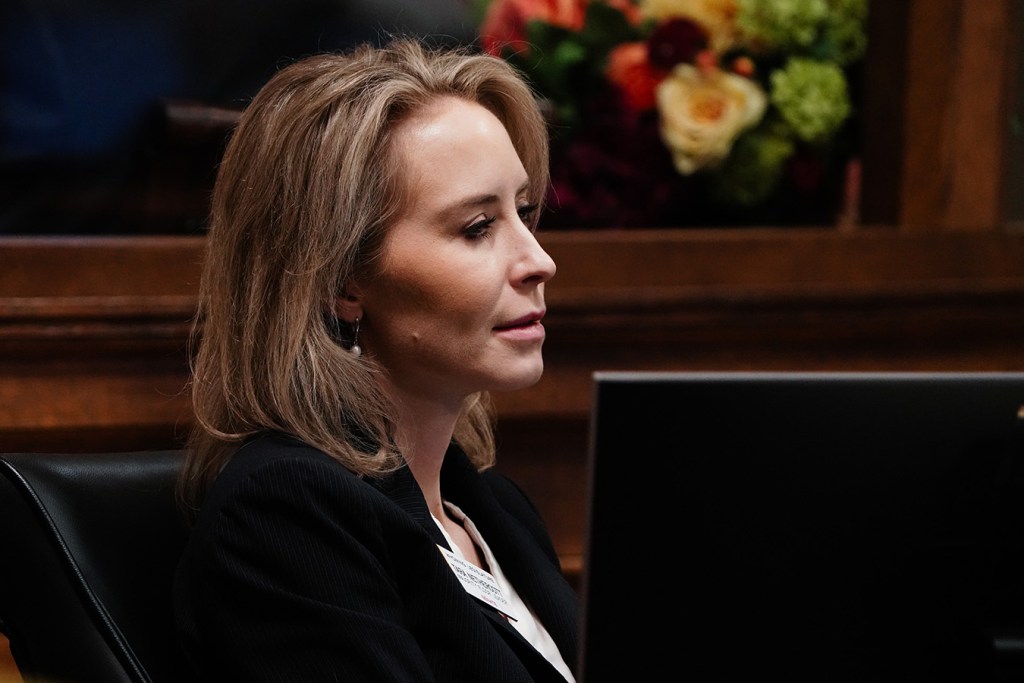
“The integrity of the legislative process depends upon public confidence that policy decisions are made on the merits, based on law, evidence and the best interest of the people of Wyoming — not influenced by the timing of political contributions,” states a version of the letter, read by Senate Majority Floor Leader Tara Nethercott, R-Cheyenne, at a Senate Rules Committee meeting Thursday. “The distribution of campaign checks in proximity to committee hearings, floor debate or pending votes creates, at minimum, the appearance of impropriety and risks undermining trust in this institution.”
The Jackson Hole Daily was not given access to that letter. The specific language of rules debated Thursday were not put to paper yet. Quotes in this story rely on recordings of lawmakers’ readings of both.
House lawmakers, meanwhile, are taking action of their own.
In the lower chamber, lawmakers voted 59-0, with three lawmakers excused, to form a special committee to investigate the incident, WyoFile reported. The decision came less than 24 hours after the situation spilled onto the House floor Wednesday when Rep. Mike Yin, D-Jackson, raised concerns about the checks during a debate on a bill that Bextel backs. That measure, House Bill 141, would strip the town of Jackson and Teton County of a key funding source for affordable housing projects, “mitigation fees” charged on commercial and residential development.
Wyoming Freedom Caucus members called the allegations “unsubstantiated” before asking the House to register a “protest” against Yin.
At the time, WyoFile and the Jackson Hole News&Guide had not yet publicly confirmed Bextel’s actions, which were substantiated by interviews, a photograph, security footage and Bextel’s own statement on Facebook.
Freedom Caucus Chair Rep. Rachel Rodriguez-Williams, R-Cody, said handing out checks would essentially “be bribery and unethical.” She also accused Yin of defamation.
On Facebook, Bextel denied wrongdoing and said she was “delivering lawful campaign checks from Teton County donors.” She initially told a reporter her actions were “nobody’s business.”
Senate business
The entire Senate held a private caucus meeting about the imbroglio at 8:30 a.m. Thursday before heading to committees and the Senate floor, where they conducted legislative business while the House spent the morning debating its proposed investigation.
In the caucus meeting, Senators produced the letter condemning political contributions during the session, Senators had until 1 p.m. to sign. By press time Thursday, 29 out of 31 had, according to Sen. Mike Gierau, D-Jackson.
Four of the Senate’s five leaders also met during lunch Thursday in a Senate Rules Committee to discuss next steps: Nethercott, the Majority Floor Leader; Senate President Bo Biteman, R-Ranchester; and Sens. Gierau and Chris Rothfuss, D-Laramie. Sen. Tim Salazar, R-Riverton, could not attend because he chairs the Senate Appropriations Committee, which was meeting at the same time.
After the meeting, Nethercott told the Jackson Hole Daily that some senators were offered and accepted checks. The Senate is conducting its own investigation now, Biteman said.

Senate leaders declined to name anyone who did and said they didn’t know exactly how many were offered or received checks.
But Senate leadership has at least one check in its possession, according to Nethercott and Biteman. They have seen the donor and recipient’s name. Bextel didn’t sign the check, but did distribute it in the Senate, according to Nethercott.
Bextel didn’t respond to a request for comment Thursday.
“These checks were written two weeks ago, and were not handed out while the House or Senate were in session,” Bextel said Wednesday on Facebook.
Nethercott said leadership is still determining what to do about members who accepted the checks.
Maintaining order
But lawmakers are already making efforts to crack down on campaign activity in the Capitol.
Though members of the Rules Committee discussed specific allegations Thursday with a reporter, it officially met to discuss how to maintain “public order in the Senate.” Only one lobbyist, a handful of legislative staff and Sen. Eric Barlow, R-Gillette, attended the noon meeting in person.
One of the main vehicles for enforcing decorum is Senate Rule 15, which addresses everything from who can and can’t be on the Senate floor to forbidding lobbying in Senate chambers. Senate leadership from both sides of the aisle discussed amending that rule.
Senate leaders proposed an addition aimed at banning campaign contributions during the legislative session.
The first language they proposed was: “No person shall solicit, offer, deliver, accept or receive a campaign contribution in any area under the control of the Senate, including, but not limited to, the Senate chamber, Senate gallery, Senate floor, adjacent corridors, the Senate lounge, lobby areas, committee rooms assigned to the Senate and any other areas under the control of the President of the Senate.”
This building should be free of fundraising.
Sen. Mike Gierau, D-Jackson
Committee members worked to agree on a final version of that language for over a half hour. They discussed where in the Capitol the Senate had authority; when the rule would apply; if online campaign donations or fundraisers outside of the Capitol during the session would count; what enforcement would look like; possible loopholes; and how to align with current bribery laws.
They also compared their proposal to rules in other states.
Twenty-eight states either have a rule that specifically prohibits receiving campaign donations during legislative sessions, Nethercott said. She was particularly fond of Alaska’s, which reads: “A legislator or legislative employee may not on a day when either House of the Legislature is in regular or special session, solicit or accept a contribution or a promise or pledge to make a contribution for a campaign for the state legislature.” Alaska law makes an exception for the 90 days immediately preceding an election if contributions are made outside of the capital, Juneau.
Some lawmakers questioned whether the change would impact campaign fundraising efforts outside of the Capitol.
“We are in session for 20 days and then 40 days,” Nethercott said. “There are plenty of other days within the year to have fundraisers and to receive campaign donations. So, to protect the institution, I’m fine with that sacrifice.”
Senators said even if the rule wasn’t perfect at first, they were pressed to put a rule on the books. The committee wants the Senate to be “held to the highest standard.”
“This building should be free of fundraising,” Gierau said.
At the end of the meeting, Rothfuss proposed the latest version of rule the committee will consider: “No person shall knowingly solicit, offer, deliver or accept, by affirmative act, a campaign contribution within any area under the control of the President of the Senate, pursuant to Senate Rule 2-F at any time.” His proposal would also bar lawmakers from soliciting or accepting campaign contributions any time the Senate is in session.
The rule would apply in areas set apart for Senate officials, as directly as the floor and the gallery or possibly as broad as a committee room.
The consequence of breaking the proposed rules could be removal from the building for the person handing out the campaign contribution and censure or expulsion from the Senate for a lawmaker accepting it.
The committee didn’t decide what language to adopt during its noon meeting. Senators tentatively plan to meet Friday at noon to revisit the proposed rule and vote, after work on the budget ran late on Thursday.
If the committee adopts the rule change, it will have to pass the entire Senate before becoming a rule.
Senators may take other actions as well.
Senate leadership is also weighing whether or not it will suspend the upper chamber’s rules early next week to introduce a bill that would possibly make a campaign contribution in the Capitol a crime.
For more legislative coverage, click here.

Yea, do the honest thing. They could just use Quickbooks like the rest of us and send out an invoice as soon as the enrolled bills are ready.
Dark money sees the light. …turning the legislature into a Dollar Store– if you’re for sale… step forward. Why did lawmakers allow a “shopper” onto the house floor? And more outrageous are the servile accepting their payments in public. If anyone besides WyoFile and it’s subscribers is watching, the legislature approved paying for “flat earth” home-schooling, and to defund the U of W. Isn’t this sort of thing usually done at night in an alley? A little decorum, please!
If the checks were written 2 weeks ago and yet Bextel waited until the first week of the session when her bills of interest were being discussed, and only THEN distributed campaign donations in perfect timing before a crucial vote…then doesn’t this timeline reveal how purposefully orchestrated this “pay for votes” stunt really is?