

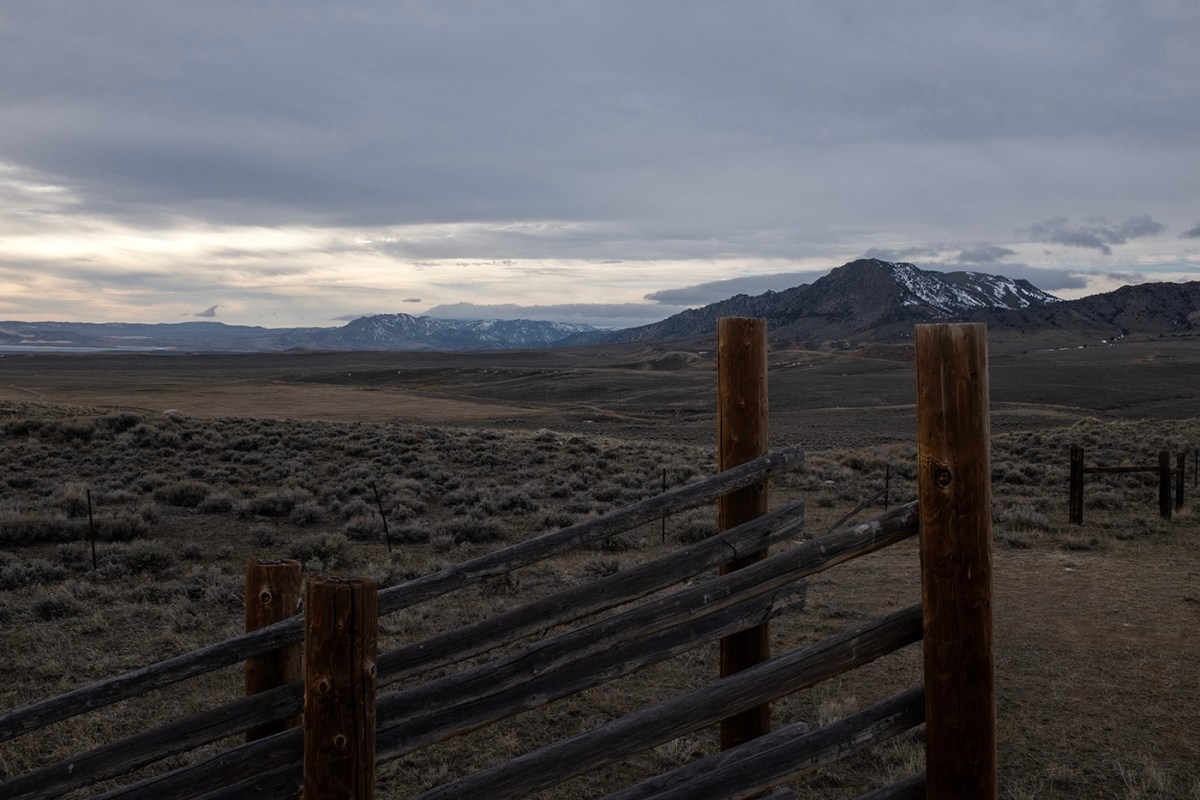
I’m fairly certain that I came from the factory with a faulty reverse gear. Going backward always makes me feel uneasy. I need to see the world coming directly at me, instead of receding from my eyes like it’s trying to escape. If I’m going to backtrack, I need a damn good reason.
A reason like Dad’s concho.
Opinion
The story I heard was that the pair of silver conchos was a wedding gift to Dad from his grandfather-in-law, Scotty McKay, my mother’s grandfather and a founder of the Wyoming Wool Growers Association. Heavy German silver and about the diameter of a beer can, tooled and filigreed around the edges, they were convex like a small cup or half a globe. The gold “M” on each concho stood for McKay, not Miller, but our horses didn’t understand the alphabet and didn’t care.
Dad put them on his bridle, one on each side, where the cheekpiece and the throatlatch crossed. They were about the only adornments that Frank Miller ever tolerated. Dad was never very showy, but I’m sure he liked to watch those conchos twinkle in the sun when he rode.
I was 12 or 13 years old, just a junior varsity cowboy, when I lost one of Dad’s conchos and learned an important lesson about backtracking.
We were moving pairs from one big pasture to another, and Dad let me use his bridle for the day, since he planned to irrigate while we cowboyed. I remember the day was blistering hot, one of those high desert scorchers that makes you use up half a tube of ChapStick just to keep your lips from burning off.
The momma cows moved sluggishly in the heat and the calves at their sides made things move even slower. By the time we got the whole shebang through the gate and into the next pasture, critters and cowboys were tuckered and grouchy, and it felt good when I closed the gate behind the herd and we headed back home.
Dad met us in the cool shade of the barn to ask us how the work had gone, and before I unsaddled, he said matter-of-factly, “You’re missing a concho.” I looked and saw that he was right. One of the conchos was gone. My heart dropped to the pit of my stomach. It wasn’t exactly panic that I felt, but rather a disappointment in myself because I’d been trusted with something important to someone I love and I’d lost it somewhere out there.
Frank Miller never raised his voice or got angry, but his unblinking eyes and how he held himself said all that needed to be said. I hopped back into the saddle and retraced my horse’s steps to see if I could find what I had lost.
Even my tired horse sensed that we were going against the natural order of things by covering country that we had just covered. He wanted to rest in the cool barn and eat his oats. I recall feeling a needle-in-the-haystack sort of hopelessness that I’d ever find something so small in a country so big. But I remembered Dad’s voice and the look in his eye, so I kept backtracking.
It was way past suppertime, and the setting sun was stretching out the sagebrush shadows when I got to the gate after meandering back and forth over about a township of Wyoming with my eyes glued to the ground. My horse must have rubbed his sweaty face against the gatepost and dislodged the concho when I closed the gate behind the herd earlier that day. The bright, gold M winked up at me from the dust. It didn’t matter whether that M stood for Miller or McKay, I found what I was looking for.
The relief I felt was like a weight of the expectations of generations lifted from my shoulders. It was 7 or 8 miles back to the house, but each step was lightened by the feel of that concho in my pocket.
That hot day was over 60 years ago, but writing about it now brings back the memory of the exhilaration of finding what I was searching for, and the look of pride on my father’s face when I put it in his hand.
So, as I said, backtracking has always seemed unnatural to me. But I have never forgotten the lesson that, if something is truly important, occasionally the only way to find it is to retrace your steps over ground you have already covered.
Great story. I always enjoy Rod’s articles.
Great lesson, Great story, Rod!
Wonderfully written, enjoyed it tremendously. I wonder if today’s youth and their parents would be able to 1) command the same level of respect and expectations that Rod’s father did with just a look, and 2) whether the youth would feel that same level of disappointment in themselves that spurred Rod to back track to find the missing concho. I sure hope so, but sadly, I’m not too sure.
We are going to have to retrace a lot of steps and paths once we get the current Administration and their traitorous syncophants out of power and out of the picture. I hope we are able to find the conchos and reestablish the rights, responsibilities and accountabilities that we as citizens have come to expect and deserve in the USA. It was far from perfect before the orange felon but compared to now …
That’s a nice story Rod about a period that’s obviously very important to you. Thanks for sharing it.
Enjoyed your piece about 3 fingers of Copenhagen, etc. Another wyoming truism would be, “Did you get your elk?”
This story is so spot on. We’re too worried about going forward to remember where we have been. Wonderful message and I miss Wyoming every day. God bless!